They wore flannel

They wore flannel

Scarlet red.

A riot

against a green

Impressionist’s backdrop,

Van Gogh’s colour wheel

whispering

yearning in

Roerich’s ready moment.

A theatre

heaving:

the systems and

structures rattled

and bellowing,

like a giant ship

thundering from steam.

Primordial screams

from the mouths

of elderly elites,

pagans, all,

and a quivering

bassoon:

a vision

bursting from the

confines of its

frame

admonishing and wry

lit in ancient blue light.

Circles, circles

and rounds

and ground.

A sinking incorporation

with a marble mask

and limbs

out of joint.

We ravishers

our flesh made fabric

In flannel, flannel

to cool

to slow

to remember

our pounding

relationship with

the expansion and

contraction,

the soils of our

lifeblood and its

freshness and

sweetnesses

long lost

long found.

A kiss seals,

stamping certifies

we are knit

awaken

awaken

awaken:

the rip-roaring

of a womb’s

subjects

partying and prancing:

whilst the void, it

lurks,

and bears abound.

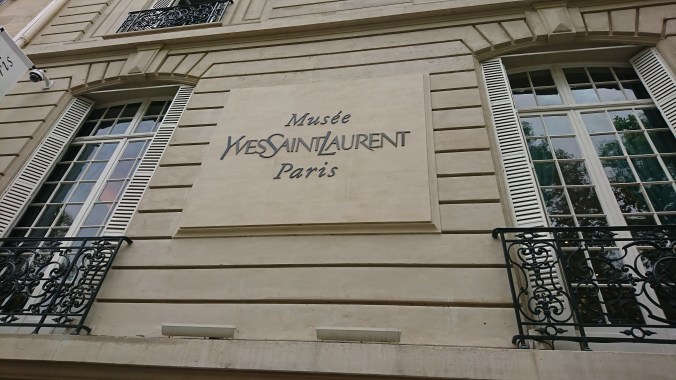
Love Note – Yves Saint Laurent photo reel

This week has been, in a word, intense.

I went on the hen weekend to end all hen weekends last week (6 hours sleep in 48 hours); in a related move, I am now hideously ill and was confined to my sickbed all day yesterday sneezing, coughing and croaking my way through seminal teen film ‘Clueless’ and ‘Animal Farm’ by George Orwell; and I started my PGCE in English on Monday. There are emotions, curricula and pathogens flying all over the place in this house.

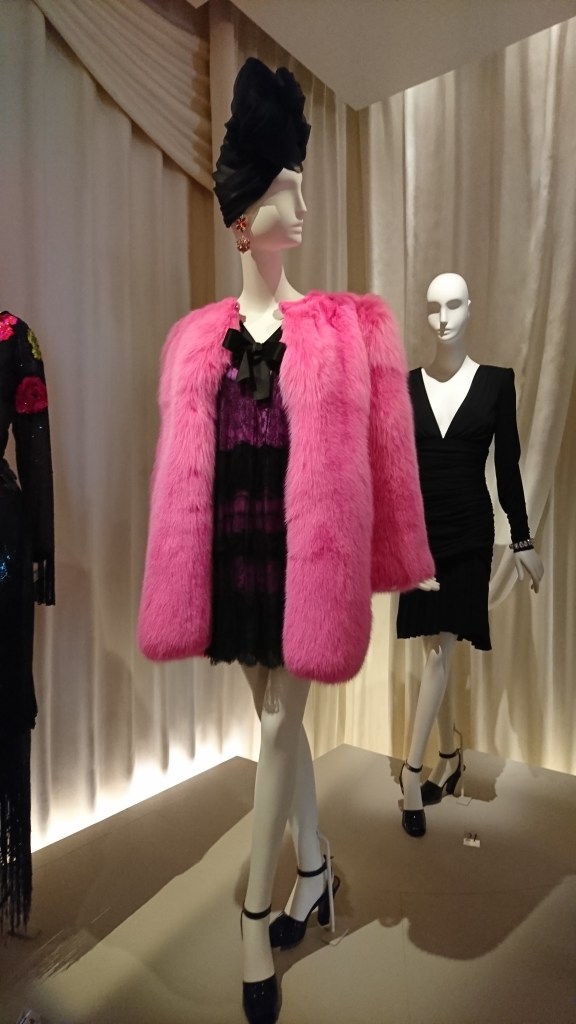
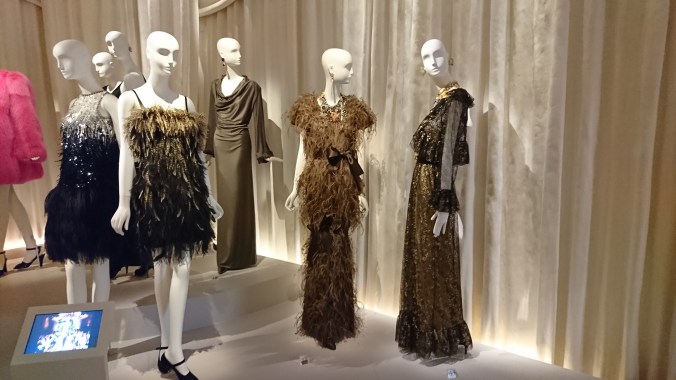
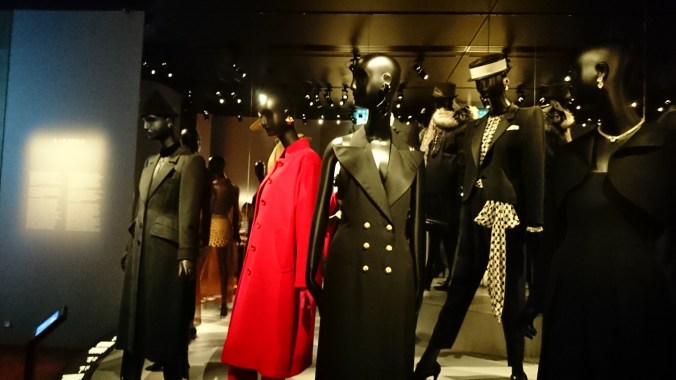
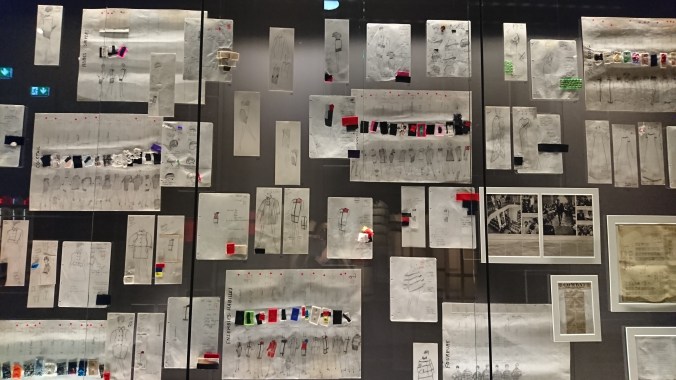
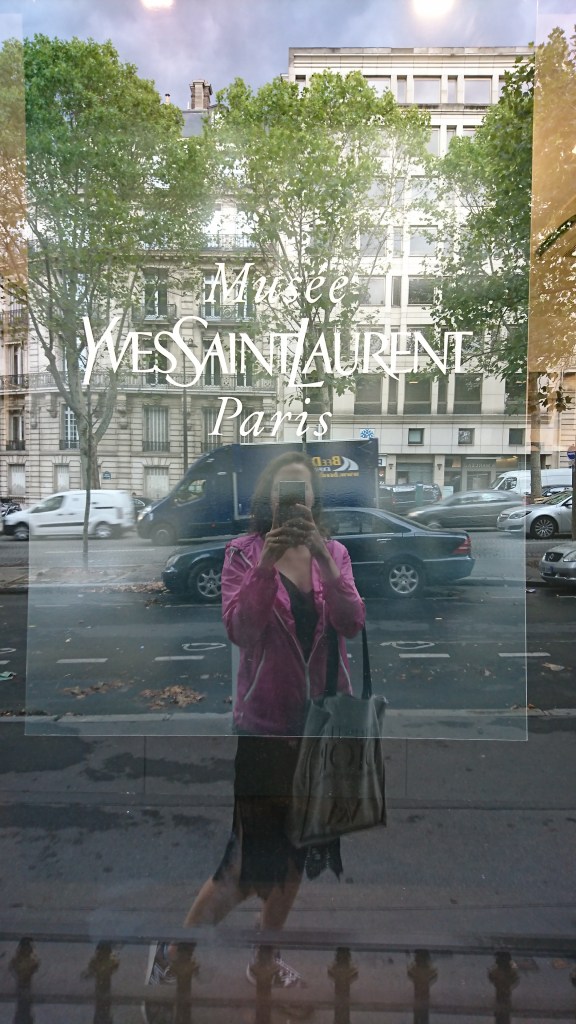
As such, and whilst still in the thick of my pity party, I am going to post the photos from my trip to the Yves Saint Laurent Museum in Paris. We’re in the thick of Fashion Month, with Paris just round the corner, so it feels pretty time-appropriate; plus there is nothing like pretty clothing to raise your spirits when you’re spluttering your way through multiple life transitions.

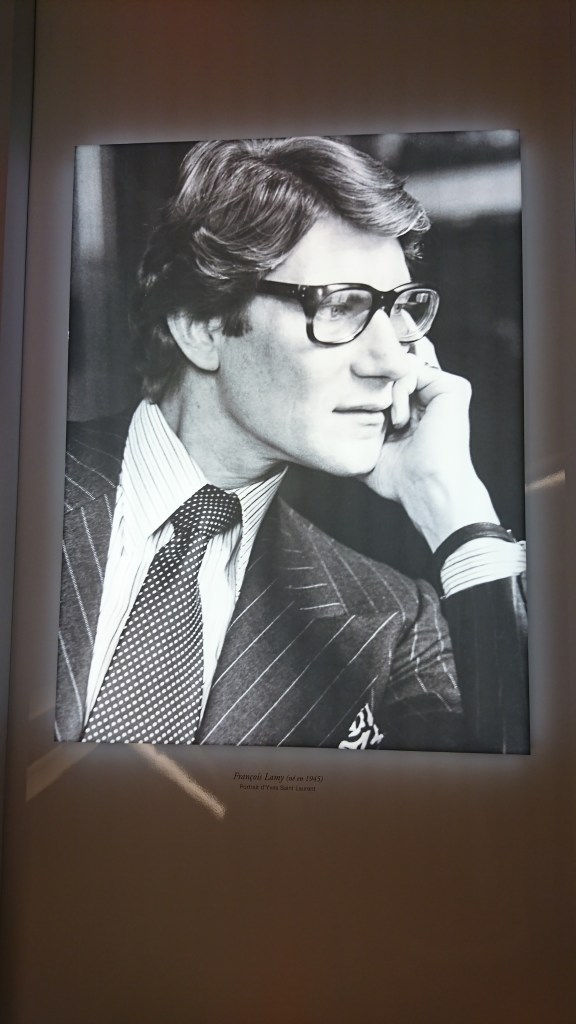
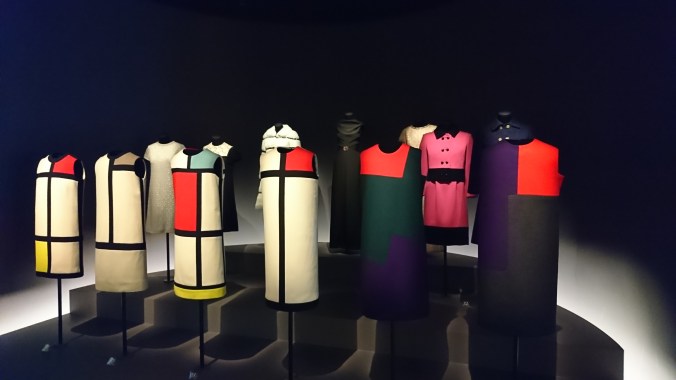
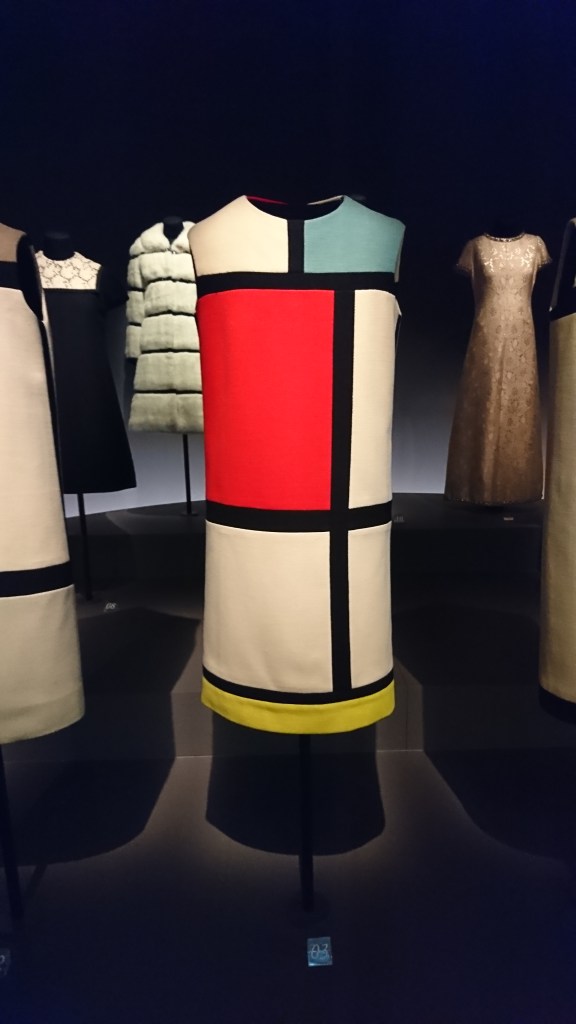
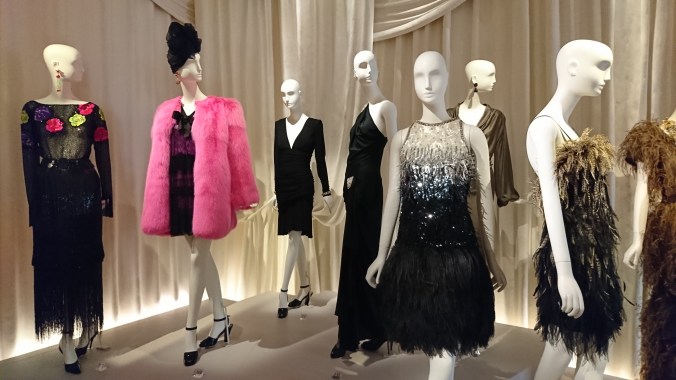
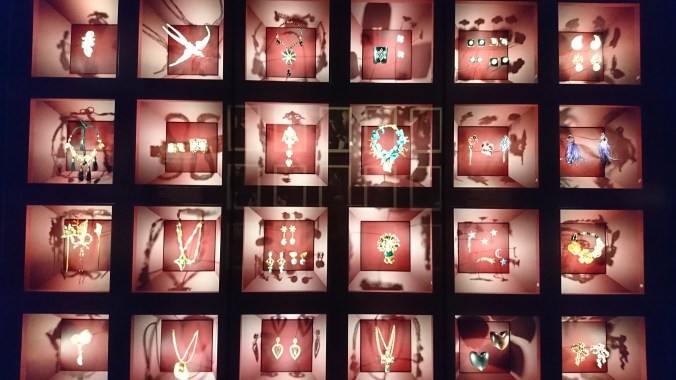
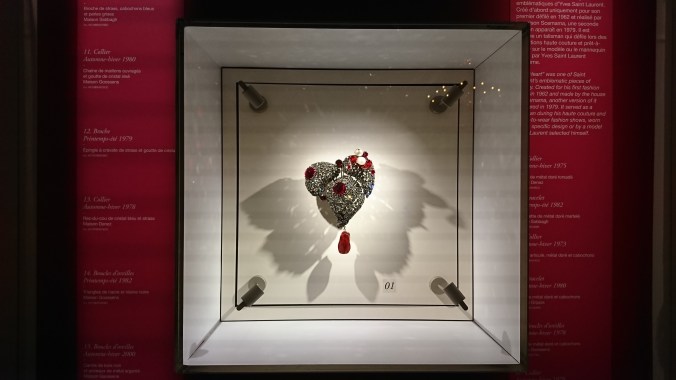
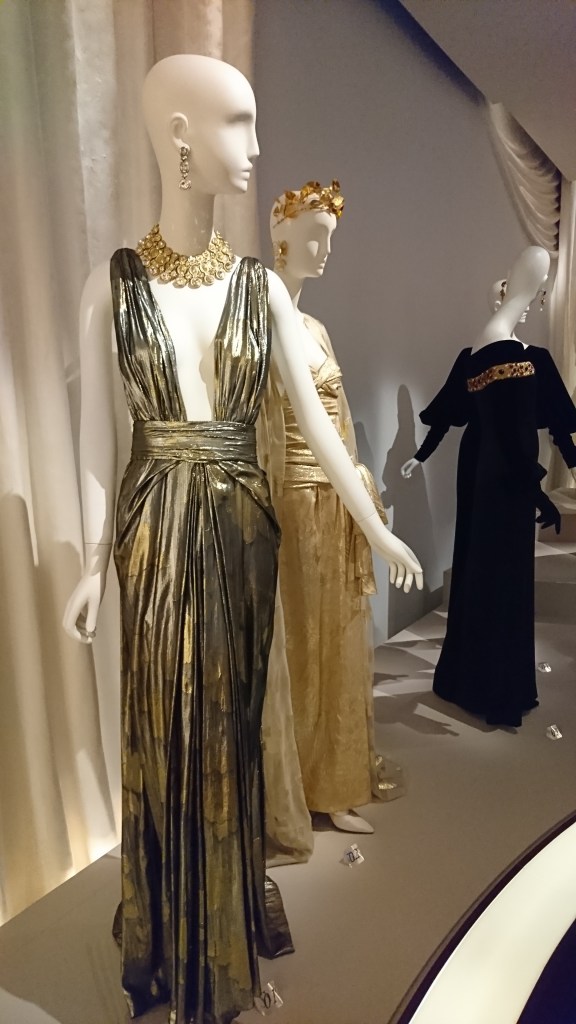
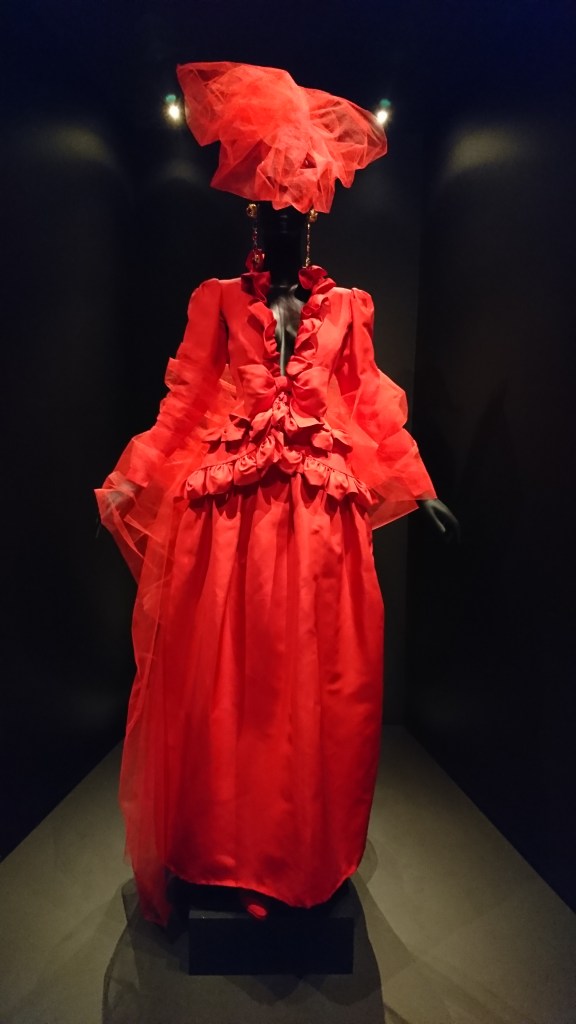
So here we have it, Yves Saint Laurent, with his epoch-changing Mondrian dresses, elegant evening wear and exquisite accessories. I also managed to get a snap of his reconstructed studio and design notes, which made the whole experience even more magical and intimate. If this doesn’t pick your spirits up on a rainy day, I don’t know what will.

DSC_4347


DSC_4342


DSC_4344


DSC_4351


DSC_4352


DSC_4353


DSC_4346


DSC_4345


DSC_4356


DSC_4354


DSC_4355


DSC_4350


DSC_4357


DSC_4361


DSC_4340

Rodin and the politics of sculpture

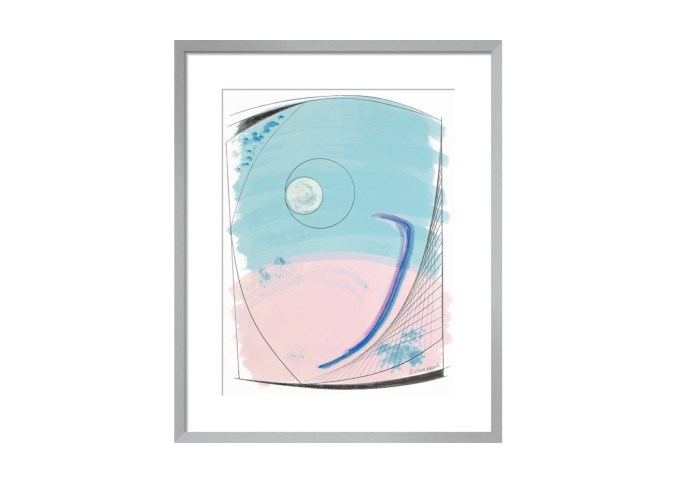
I didn’t start deeply caring about sculpture until I saw Auguste Rodin’s The Kiss at the National Museum of Wales in Cardiff.[1] Prior to that visit, I had a vague admiration for Barbara Hepworth, but found more enjoyment in her abstract painting Winter Solstice:

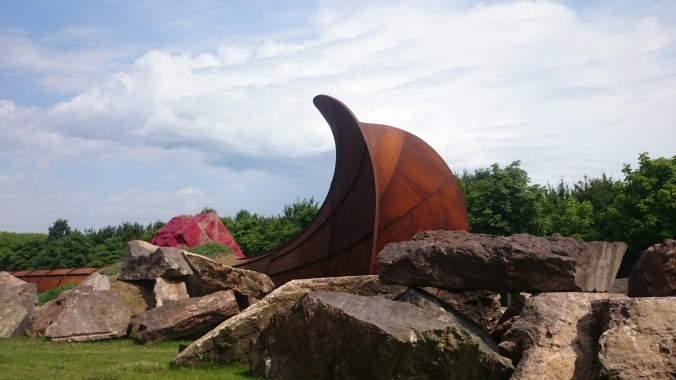
BARBMy dad had also instilled in me an appreciation for Anish Kapoor, whose Sky Mirror is pride of place outside the Nottingham Playhouse theatre, and who created a rusty horn bursting out of the immaculate gardens of Versailles in 2015:


DSC_0858.JPG

On a very basic level, I just didn’t understand sculpture. A childhood filled with questionable pottery lessons chiselled down my interest in the form, even though I have long thought of all art as important. Just because I did not feel able to understand sculpture did not mean that there was nothing to it. For a long time, sculpture did not have the appeal to me that painting, film and other art forms have.

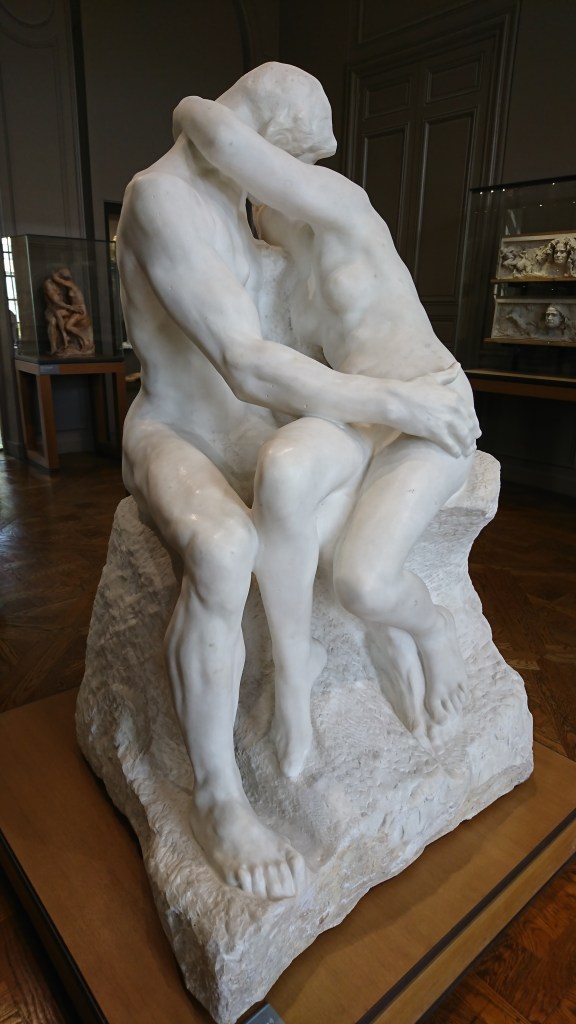
However, it was seeing two figures entwined and necking that really captured my imagination and re-framed what I thought sculpture was all about. I am sure there are many wonderful sculptors that I am overlooking in this capacity, that Rodin is an unimaginative choice to fawn over and that I am probably incapable of conveying academically why I think Rodin’s work is so brilliant, and yet here I am. A critic of art and art history I am not, but I am an enormous fan and advocate for both, and I am inspired enough to write a little something about some works that I have really connected with, starting with The Kiss.

Whilst in Paris earlier this month, we visited the Rodin museum on the Left Bank and it was perhaps the best museum we went to all holiday. The sculpture garden is endlessly dreamy and the chateau, Rodin’s home for a time, was charming and delightfully  littered with Rodin’s sketches, plaster casts, practice sculptures and works he’d collected himself, including pots and fragments from antiquity, as well as a couple of Monet , Munch and Van Gough paintings dotted about. The Kiss was here too:

The Kiss

We can see, as with many of Rodin’s marble sculptures, that he was influenced by Classical figures from Ancient Greece. And yet, in his portraiture of people through sculpture, Rodin does not merely recreate or appropriate Classical styles. He uses Classicism as a base note, but goes on to mold his ideas through the language of limbs, faces, the fluidity of bodies in a way that is nothing other than modern. It is hard to comprehend just how challenging the blatant sexuality and passion of this sculpture would have been to receive at the turn of the century when it was produced. Additionally, the sculpture seems to have been carved with a nod to what Charles Baudelaire described as ‘the transient, the fleeting, the contingent’ that defines modernity:  as with many of his sculptures, Rodin employs here the technique of juxtaposing the smooth carvings with marble left rough and rugged, not just at the base, but rising up and between the intricately rippling bodies. It appears the exquisite smoothness of the marble is reflected in the unbridled intimacy of the figures kissing, a flicker of bright, divine and transcending light bursting out of the obscurity of what is rough and earthly. And yet, the figures could so easily return to rubble. By maintaining the rough marble and bringing it into the structure of the figures kissing, Rodin has created a piece of work that recognises the transitory moment of modernity: the Classical-style bodies occupying the eternal and the marble left rough indicating the flighty present, nigh-on impossible to pin down.

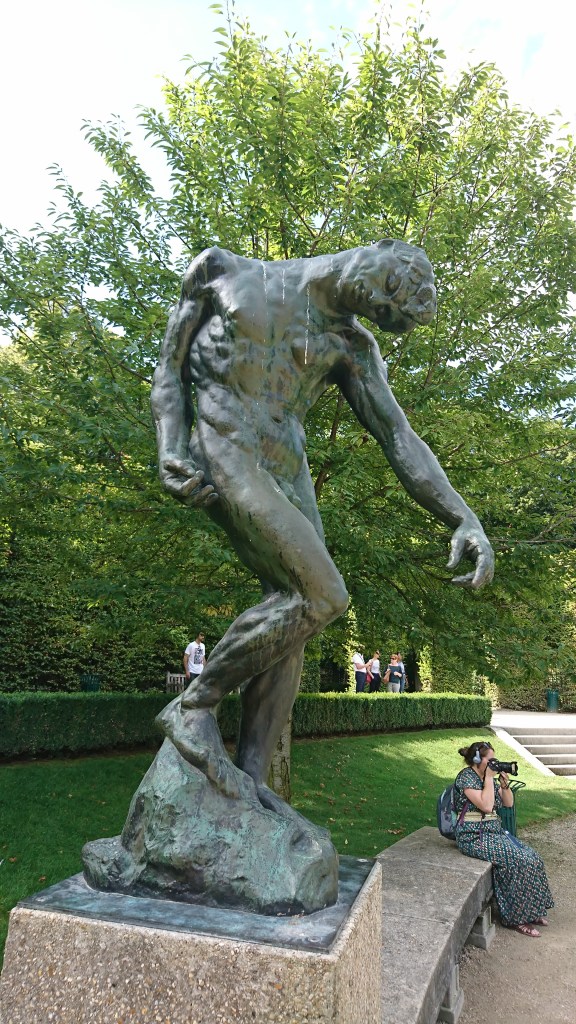
This is an idea that is seen everywhere in his sculptures: in the marble with what is jagged and uneven left propping up or invading the figures represented, or in bronze where forms rise out of the molten into something vaguely less fluid. What I loved about Rodin’s bronze work was how these majestic figures rise from the oneness of liquid bronze embodying the impulse and awkwardness of individuation and self-determination. To show this, Rodin ensured that he injected quirks and oddities in his work to create a sense of visual discomfort. In one sculpture, the head- the centre of Cartesian rational thought and the Jungian ego-mind- is heavy, too heavy, as though burdened with the constant, revolving noise of the mind, dangling awkwardly to the side and creating one long awkward line from the neck across to the shoulder.

Awkward Rodin

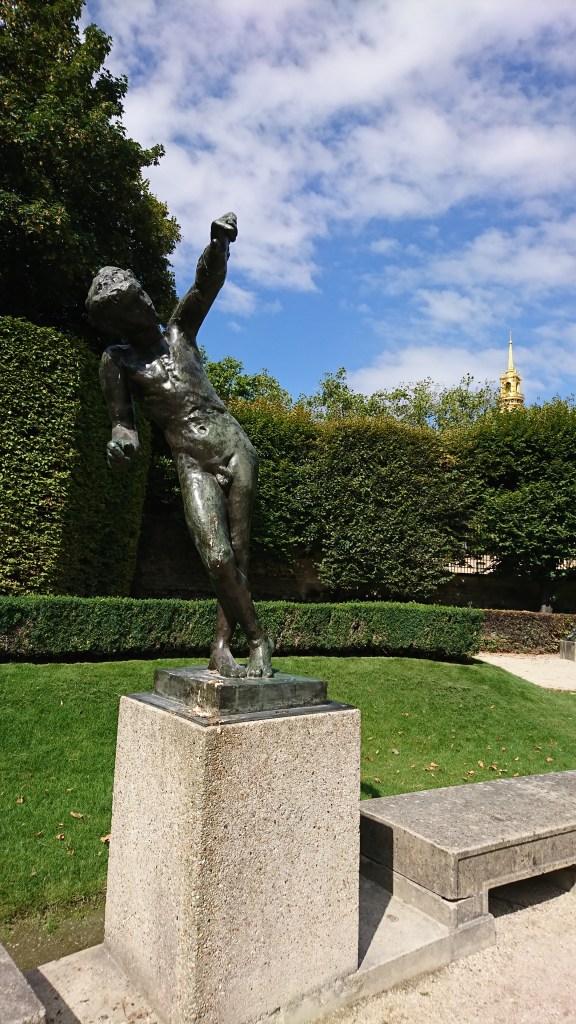
Elsewhere, a sculpture leans over slightly too far; it looks uncomfortable, like the sculpture is in danger of falling: the arms are flung out as though for balance; emergent from what is whole and one, bursting forth but still reliant on the whole to provide it with strength and structure. In these sculptures in particular, I would argue that Rodin could be making a criticism of the modern world, defined as it is by commodity capitalism, where the drive and inevitable fallout of being an individual, separated and alienated from the collective, is mired in suffering, contortion and pain.

Leaning Rodin

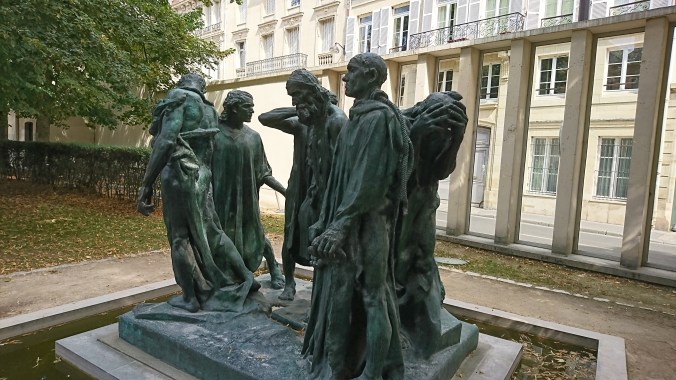
The final sculptures that really stood out for me were a series of bronze sculptures called The Monument to the Burghers of Calais, made in 1887. These six sculptures commemorate six dignitaries who surrendered themselves and the key to the city of Calais to the King of England during the One Hundred Years War. I was neither familiar with these works nor the story surrounding them until our visit to the Rodin museum. On display were the six grouped together, as well as the six individual sculptures dotted around elsewhere.

Burghers Six.jpg

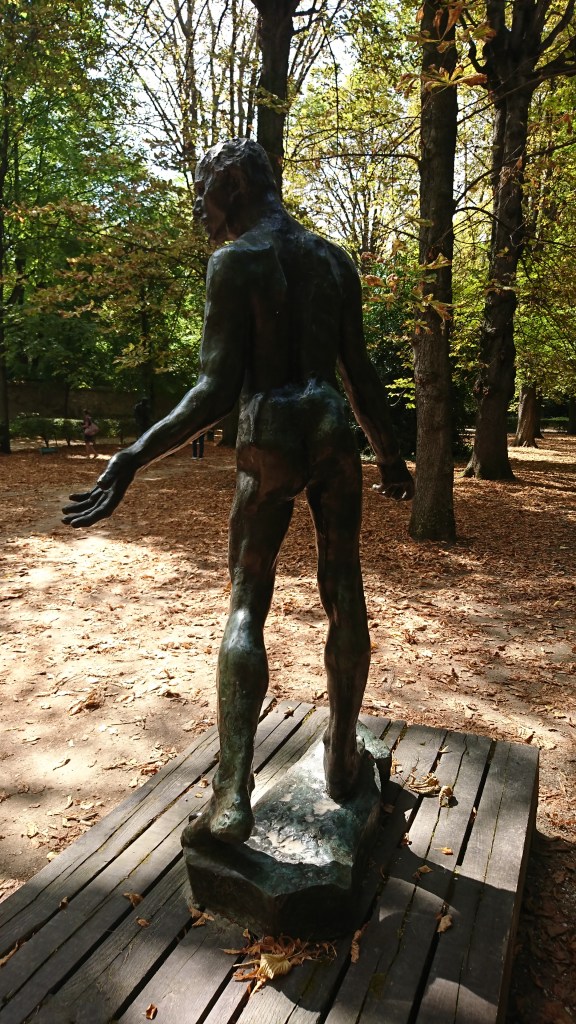
There are lots of ideas and emotions conveyed in these sculptures, the predominant being incredulity, despair, sadness, dignity and acceptance. Some of the sculptures are fully clothed, regal in their gait; others are naked and exposed. The Burgher that stood out to me the most was naked, arms outstretched, enquiring and admonishing, barely believing the cruelty of his own fate and asking on-lookers, at the time and of tourists traipsing around the Rodin sculpture garden whether we are going to settle for the injustice that attempts to quell and control us.

Burgher naked

They felt pertinent to me at the time for a number of different reasons: because I have such a limited knowledge of the One Hundreds Year War; that they are a reminder of the suffering that has occurred throughout history that I feel barely able to comprehend or quantify; and of the vulnerability of being a human being, tossed around and seemingly inconsequential in the rough seas of man-made war, devastation and chaos. Here, again, we can see why art is so important. The attempt to capture these seemingly obscure men from a time long since past is both an act of remembrance and an act of resistance. What fools we are if we believe that the turmoil we face today has not been passed down, like a chain of trauma, throughout the generations. Art offers us the insight and the ability to cut through the churned up homogenous events that we might call ‘history’; to give us the mirror and the platform to reflect and re-think our assumptions and orthodoxies. It is and always will be vital; no wonder the Tories don’t want people studying it.

On a day like today, where the British government, helmed by Boris Johnson, has decided to prorogue Parliament, I think about the Burgher of Calais sculptures: I think about the Burgher standing with his arms outstretched imploring his viewers to think about who they are and what they are doing; I think about the frosty-faced Burgher, handing of the keys to the city, a metaphor for freedom, both personal and societal, a moment where freedom is now longer a gift or a right, but something that has been forfeited. Maybe it is no coincidence that I am more attracted to sculpture at this present cultural moment. We are living in a time where our freedoms feel so much more restricted, that large societal forces, whether it’s Facebook, Amazon, Google, Apple, the Government, fossil fuel companies and others, are hell-bent on controlling us, harvesting our data, relentlessly trying to sell us things and destroy our planet. In sculpture, we see space being claimed and occupied. Much like Rei Kawakubo’s iconic fashion house Comme des Garcons, whose pieces verge on the sculptural in every single collection, there is power in sculpture’s ability to take up space, be large, voluminous, making it impossible to ignore. Maybe the Kapoor sculpture at Versailles was my biggest clue before my full on awakening with Rodin. Kapoor’s disruption of the sanctity, historical and otherwise, at the clipped and coiffed Palace of Versailles, appealed to me and began to broaden my understanding of what sculpture does. Our ability, as tourists, to take photographs of the pristine lawns and fountains was disrupted by this rusty looking horn, which had erupted out of the ground, churning up the grass. The stronghold of France’s ancien regime and absolutist monarchy was ripped up, long after the first flickers of revolution in the 18th century. I enjoyed the frustration.

The radicalism of sculpture lies in its ability to take up space and to morph and manipulate visual reality. What I love specifically about Rodin’s work is that it revolves around people and their bodies, making his work deeply vulnerable, personal as well as political. I was greatly impressed by his work, highly recommend the museum in Paris, that is completely self-funded, and relish future opportunities to explore and learn about sculpture. In these times where the world becomes scarier and where democracy and freedom do not feel or look like absolute givens, sculpture is an art form that offers challenge and defiance.

Le Penseur

[1] Two sisters, Margaret and Gwendoline Davies, together amassed an enormous collection of Impressionist and 20th century art, 260 works in total, which they then bequeathed to the public. The collection is on display and free to access in the Welsh capital. I can’t recommend it enough.

Love Note – Paris report

We’ll always have Paris.

I have just returned from seven days in Paris and, predictably and gratefully, had a wonderful time. Prior to the trip, I concocted a three page day-by-day itinerary filled with activities, but also consciously carved out some time for some more spontaneous and impulsive things too (anxious traveller, moi? Absolutement).
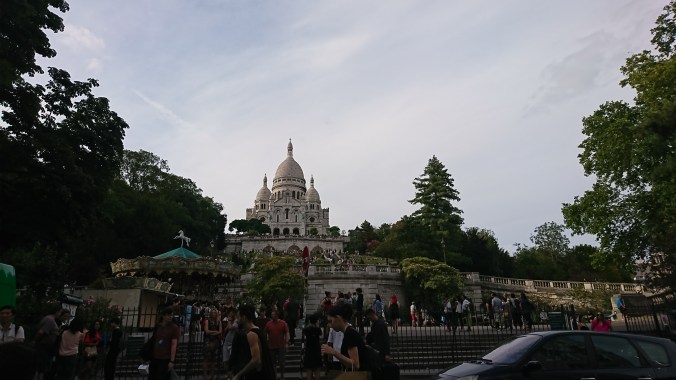
Sacre Coeur

August is a famously quiet time in the city because many of the locals go away on holiday. However, we found the first week in August to be a pretty excellent time to visit: our Eurostar tickets (booked in November) were £52 each for a return (less expensive than it is to get from Nottingham to London on the train…); certain museums in the city are free to enter on the first Sunday of the month and, because it was quieter, the queues were short (we managed the Musée de l’Orangerie and the Musée d’Orsay for free, but also available were The Louvre, the Musée National d’Art Moderne at the Centre Pompidou and many others); and going later in the summer meant that even with temperature highs of 29°C, we avoided the sweltering and sticky heats of June and July.

The benefit of spending a whole week in Paris is that we left barely any of the city unexplored. From our AirBnB base near the Place de Clichy in the 18th arrondissement, a delightful intersection of four arrondissements and in close proximity to my all-time favourites Montmartre and Pigalle, the whole city was at our fingertips. I would like to share some of my favourite places and moments from the trip. These may be food for thought if you are or intend to go to Paris at any point in the future, or if you just want to while away an afternoon thinking about those cobbled streets, beautiful buildings and all the amazing food. Like I will be.

Vegan food

Virginia Woolf’s old adage ‘One cannot think well, love well, sleep well, if one has not dined well’ is one that I take very personally, seriously and ecstatically live my life by. Therefore, first thing’s first: the food we ate. We did a lot of our own cooking to cut down costs, but we did have some fantastic vegan meals out:

Abattoir végétal

Abattoir Vegetal.jpg

This is a lovely restaurant in the 18th arrondissement with a neon sign outside, fresh-feeling interiors and lots of hanging plants. They specialise in seasonal dishes, organically sourced food and organic wines by the glass and bottle. We went a couple of times to this restaurant and sampled the Green Augustine Buddha bowl of legumes, raw and cooked vegetables, smoky tofu and fresh leaves in a smoky balsamic glaze; the Funky Burger made with beetroot, vegan cheddar, pickles and sweet potato fries on the side; and the Hot without Dog made with falafel, grated carrot, red cabbage, ketchup, mustard and sweet potato fries. For dessert we had chocolate cake, and drank our way through both meals with a bottle of organic red. I couldn’t deal with it then, I can’t deal with it now. So much yumminess.

SO NAT – Notre Dame de Lorette

SO NAT

If I went into this trip sceptical about the tastiness of Buddha bowls and their capacity to actually fill you up, I stand completely surprised and corrected. The large Buddha bowls at this cute little café in the 9th arrondissement, down from Pigalle and just before Opéra, were delicious, hearty and required no emergency snack afterwards. My Buddha bowl contained breaded aubergine, pomegranate seeds, lentil dahl, all sorts of colourful veggies and leaves, vegan sour cream and red quinoa. It was ridiculous. MW’s had ginger, rice, BBQ tofu and, again, veggies on veggies on veggies. It was all fresh, came in big portions, was so healthy and tasted rich and delicious.

Maoz

One of the many amazing things we encountered on our trip to New Zealand last year was the healthy fast food franchise Pita Pit: a Subway of sorts that features meat but also specialises in falafel. Add to that some humus, pitta bread and multiple veggie accompaniments (lettuce, tomatoes, cucumber, red onion, carrot, sweetcorn, jalapenos, olives etc.) and you have the beginnings of an addiction. We visited roughly 15 over the course of six weeks and have no regrets. We have found nothing to compare in Nottingham, so when we found Maoz, a falafel and pitta shop, in the Latin Quarter, we were stupidly excited. The novel difference here? The assortment of Middle Eastern fillings (pickles, fatoush, salads, onions etc.) was presented as self-service. We had a joyful time stuffing our own pita pockets full to bursting with fresh, perfectly seasoned toppings. Maoz is unmistakeably a delicious, quick vegan lunch option, right next to Notre Dame Cathedral and Shakespeare and Company.

Bike Rental
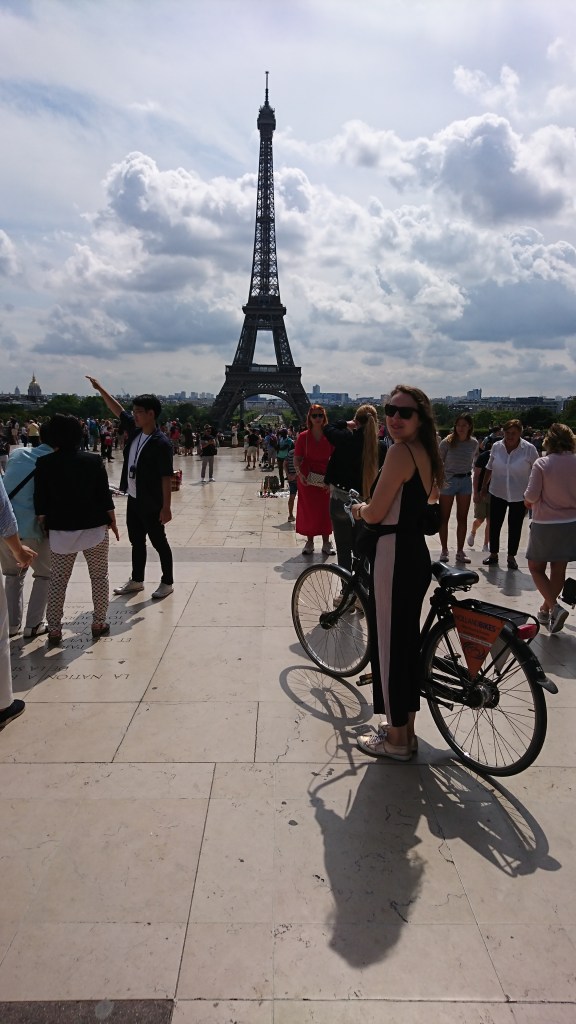
Holland Bikes

In a city like Paris, tours of all shapes and sizes are prolific. We would have loved to have done a tour: I had high ambitions for some form of a champagne booze cruise. Alas, this did not happen but we were very much content to explore on our own. Holland Bikes are a well-reviewed tour and rental service in the city and around France, so we decided to use the Pick and Go service to rent two Dutch bikes from the Arc de Triomphe depot. Renting a bike is so much fun and you can cover so much ground in a short space of time. Plus, Paris has excellent infrastructure for cyclists and e-scooter riders, so despite the heavy traffic in parts (we categorically avoided the wacky races of Place de la Concorde and Étoile de Charles de Gaulle) it felt very safe getting around. We cycled from the Arc de Triomphe down to and around the Bois de Boulogne, then back up and around to Trocadéro, the Champs de Mars, Invalides and along the Seine. We had so much fun.

Parc Monceau
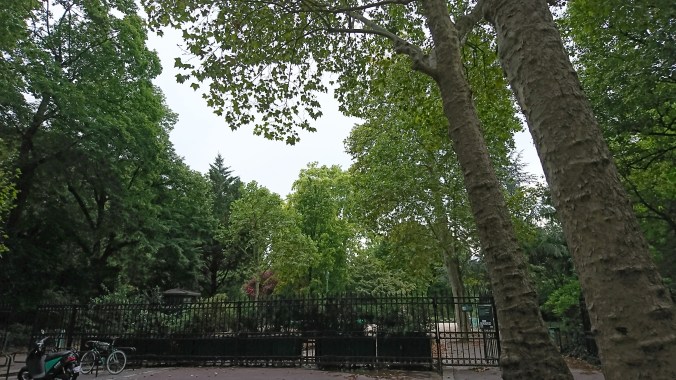
Park Monceau.jpg

There are so many beautiful and shaded places to relax in Paris, which I am sure were absolutely essential during the 40°C+ heats the residents experienced this summer. The Place de Vosges in Le Marais came highly recommended, and we enjoyed the classic Tuileries gardens and Luxembourg gardens on the Left Bank. Whilst walking home on our last afternoon, we headed for the Parc Monceau which is in the 8th arrondissement, just off the Boulevard de Courcelles. Although the park has stylised elements like a little Venetian bridge, a Classical colonnade to emulate ruins and the most charming old carousel, there was something about more primeval about this park, compared to the more clipped and manicured lawns of the big jardins. We sat on a little green bench people-watching for a good long time in this prettyish wilderness.

Musée Yves Saint Laurent Paris
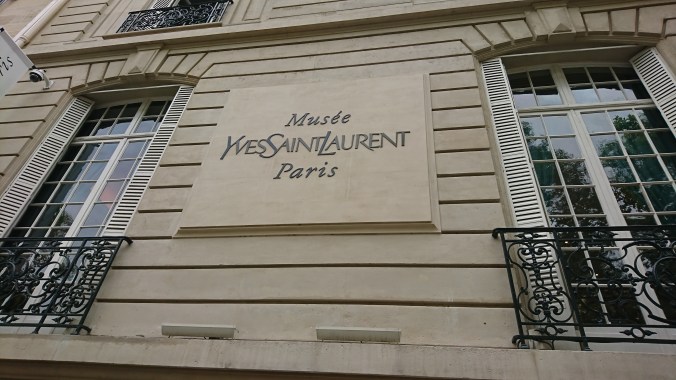
YSL Museum.jpg

Oh boy. Pour moi, a trip to Paris was never going to be complete without a slice and dice of fashion history. I plan to write a longer post about the YSL Museum, but it’ll summarise it briefly here for now. Yves Saint Laurent never used to be one of my favourite designers; perhaps controversially, I have been more of a fan of the edgier Saint Laurent incarnation of the brand under Hedi Slimane and Anthony Vaccarello. I was, however, aware that he is an inescapable part of fashion history, after being made head of Dior at the age of 26 and for the successful couture house he built in his own right. What became clear to me from the exhibits in the museum was that, like Christian Dior (you can read my analysis here), Saint Laurent’s prime aim in design was to make a woman feel her most confident and beautiful. I find this to be such a validating and comforting thing. Even though fashion is so much to do with comparison, beauty standards, perfectionism, ageism, white and able-washing, what I have noticed is that oftentimes at the centre of a brand is a sensitive, empathic and deeply creative person who just wants to make women feel good. I really appreciate that in Yves Saint Laurent and his contributions to fashion. Furthermore, he was famously one of the first designers to champion the use of non-white models, pioneered the trouser suit and established his Rive Gauche collection to make fashions accessible and affordable to ordinary people.[1]
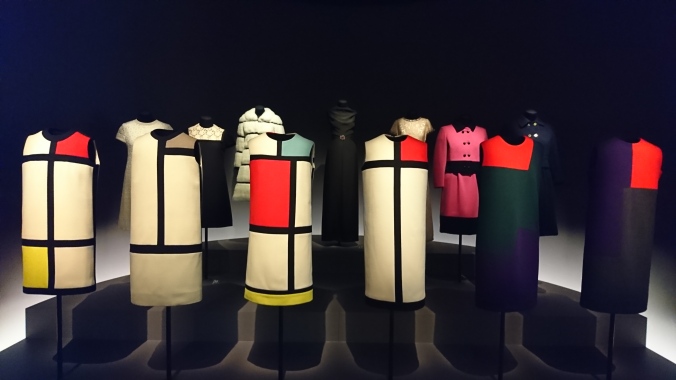
Mondrian dresses.jpg

The building on the Avenue Marceau is home to his formidable archive, including the epoch-defining Mondrian dresses, the extensive jewellery collection and this absolutely perfect ensemble:
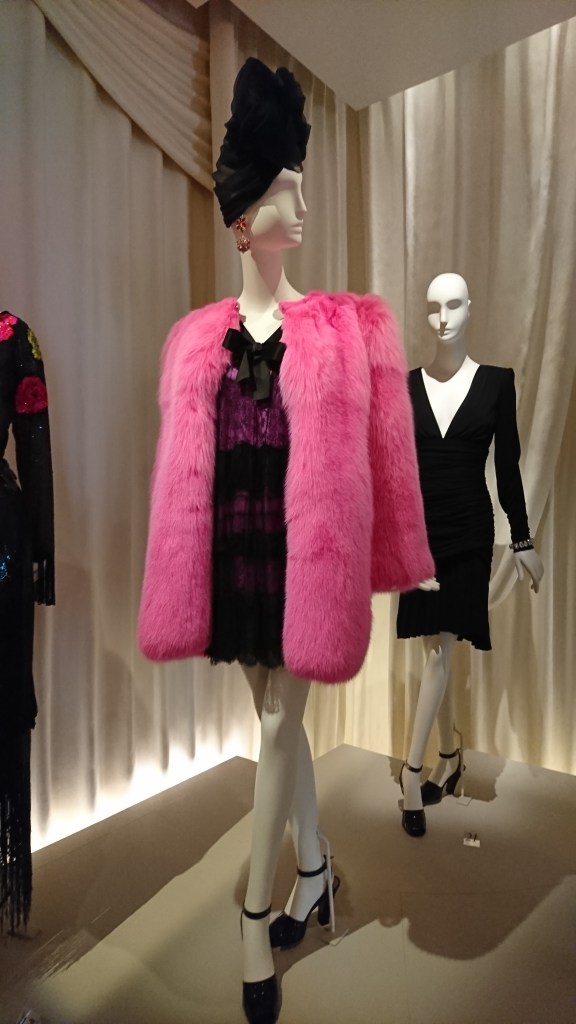
YSL dress


I was able to walk through a reconstruction of his study, watch films about his work and his partner Pierre Bergé and soak up the beautifully presented collection pieces. I must also add that the museum is wonderfully air conditioned, was relatively quiet and, all-in-all, a genius way of preserving Saint Laurent’s creative legacy.

Montmartre cemetery

Montmartre Cemetery.jpg

This was a go-to last time we came to Paris and, being so close to our apartment, was definitively on our itinerary again. Cemetery-visiting may seem like quite a morbid activity, but I believe that visiting cemeteries helps to really contextualise a place and the people in it. To really know and understand a city and its different people, to get an insight into what they value, treasure and, ultimately, to understand their approach to living life, a clue can be found in exploring how they treat their dead and the way they design and use their communal and private spaces of remembrance and reflection. Even if we have not visited Paris, many people are aware that it is a city associated most commonly with love, art and revolution. This, I would argue, is reflected in their cemeteries, which are uniquely Gothic and gorgeous. There is a joie de vivre and gravitas evident in the Parisian cemetery, and Montmartre in particular, which makes it a space in which life, family and creativity are celebrated and revered. Of course, I couldn’t help thinking that it is only the wealthy and respectable who could have afforded such exuberant graves. Additionally, in no other cemetery have I felt that the burial of the dead is used to so confirm and validate the people left behind. It is in this capacity that I think gloom seeps into the cemetery: both in the potentiality that the wealthy dead were desperate to be remembered and that the living left behind were so desperate to build something in place of their lost loved ones.

Many famous people are buried in this city, and their resting places are free to visit and open for visitors to pay respects. Whilst Père Lachaise is one of the biggest and most famous- we saw the graves of Edith Piaf, Oscar Wilde, Jim Morrison and the Mauthausen Holocaust memorial- Montmartre cemetery is smaller and nestled into the Western corner of the village. Stretching underneath the Rue Caulincourt bridge, it is easily visible from the road and its fantastical rows of grand crypts and family sepulchres look like something from The Phantom of the Opera. We visited specifically to lay a rose at the grave of Vaslav Nijinksy, the lead dancer of the Ballets Russes, choreographer of The Rite of Spring and, I recently found out, a passionate vegetarian. I have mentioned here before that The Rite of Spring has been a very important piece of music and dance to me, and I wanted to show my gratitude to this extraordinary sensitive and surreally gifted man who helped collaborate on and create such an awe-inspiring piece of cultural history.

Nijinsky


[1] https://www.nytimes.com/interactive/projects/cp/obituaries/archives/yves-saint-laurent-models-couture [accessed 14:41, 13th August 2019].