Love Note series – Meg

Meg, Hercules, 1997

Hercules Meg

Hercules really is the unsung hero of the Disney oeuvre (if you excuse the pun). This film is a fun anachronistic re-telling of the Greek myth, which introduces Ancient Greece and its mythology to gospel music, American consumerism (Thebes is the Big Olive and Hercules fronts an Air-Herc mosaic advertising campaign) and Danny DeVito as Philoctetes. It also introduces us to Megara, whose friends call her Meg, or at least they would do if she had any friends.

Have nice day

Now, if you are familiar with the original Greek myth, you will be aware that Hercules actually kills Megara and all of their children when he is driven mad by Hera, thus initiating himself into completing the twelve arduous labours to redeem himself. Disney devolved significantly from the ancient myth, for obvious reasons, and instead of killing Meg off, the animators created a super sassy, fabulous woman who also has her fair share of emotional wounds to negotiate and free herself from. Meg combines witticism and fiery comebacks with deep-rooted pain and vulnerability. Prior to the main action of the film, we learn that she sold her soul to Hades, the god of Death no less, to save the man she loved, who then dumped her for someone else. Ouch. I mean, we’ve all had bad experiences in our love lives, but that is as about as shit as it gets.

Meg Wounded

Meg’s journey, in many ways, sees her learning to open up her heart and allow herself to be emotionally healed enough to accept the love being offered to her by a kind, emotionally available man who really bloody likes her. This may sound a bit patronising, melodramatic or wishy-washy, but is there any arena in human experience that feels as vulnerable and, sometimes, scary as being in a safe, loving relationship, especially when situations you have found yourself in previously left you hurt, distrustful and determined to close yourself off? I’m not sure. Meg is determined to keep up her walls up and her heart closed to Hercules, whose honesty and desire to help other people makes him one of Disney’s most endearing men. Ultimately, Meg proves that she is one of the most fearless Disney women when it comes to love. She throws herself under a column to protect Hercules when he is at his most vulnerable, putting her own life on the line for him; who then puts his life on the line to save her soul from the Underworld.

Now, I’m obviously not suggesting that we all start throwing ourselves under collapsing buildings or finding our way to Hell for the people we love, but if we look through a metaphoric lens here, I think there is very little difference. Healthy, loving relationships, no matter if they’re with a romantic partner, family or friendships, are absolutely worth protecting, require commitment to your own inner work and wellbeing, even if that means dragging yourself through the depth of your own personal hell to deal with issues like trust and intimacy, and embracing your loved ones with an open, accepting and trusting heart. If Meg taught me anything, it was about freeing yourself from the chains of low self-esteem; that the idea of a femme fatale can be a veneer for a huge amount of insecurity and emotional damage; and that allowing yourself to be loved fully by good, kind people around you, is the scariest but life-affirming thing in the world.
Love Note – Vincent Van Gogh

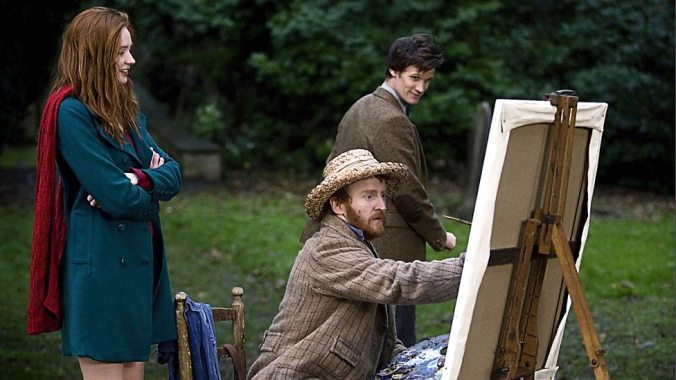
This is an anticipatory Love Note for when I get round to seeing a new film starring Willem Dafoe called At Eternity’s Gate. Dafoe stars as Vincent Van Gogh and charts the final years of his life in the South of France. I haven’t seen the film yet, so cannot possibly review or attest to how good the film is, but I am nevertheless excited to see one of my favourite painters depicted on screen. This is not the first time Van Gogh and his life has been depicted on screen: one of my favourite episodes of Dr Who brought Van Gogh to life through a very moving performance by Tom Curran.

vincent and the doctor

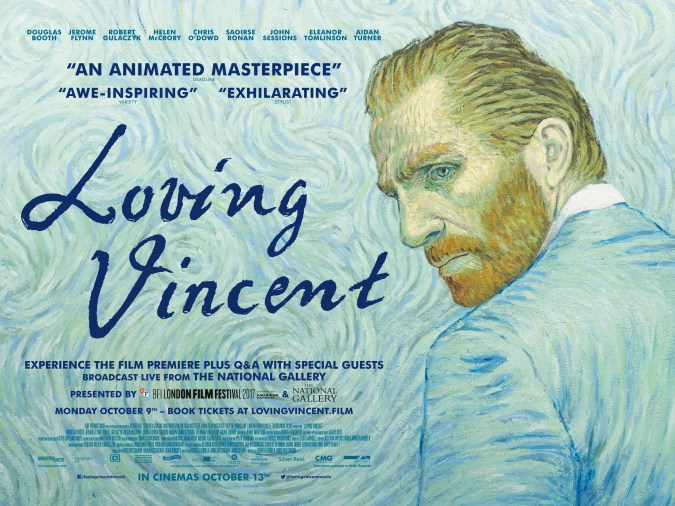
He was also represented in the visually stunning Loving Vincent, a truly extraordinary animated film that saw artists fluent in Van Gogh’s style paint frames telling the story of his final days. In both, Van Gogh was presented as tortured, immensely sensitive, almost living and breathing his wonderful art and terminally underappreciated and misunderstood.

loving vincent

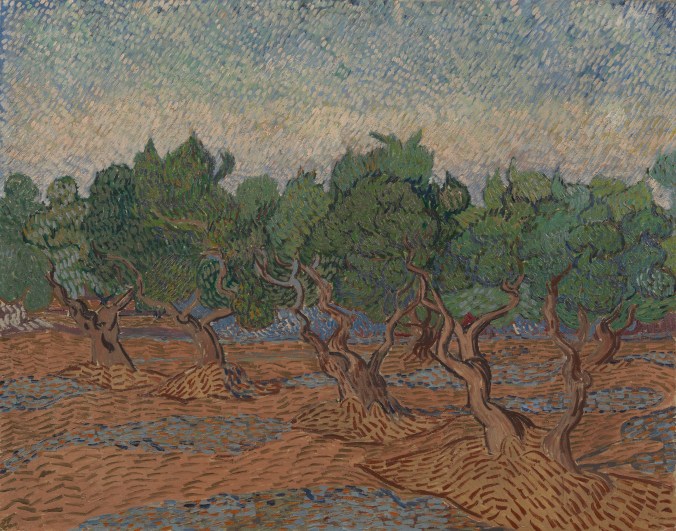
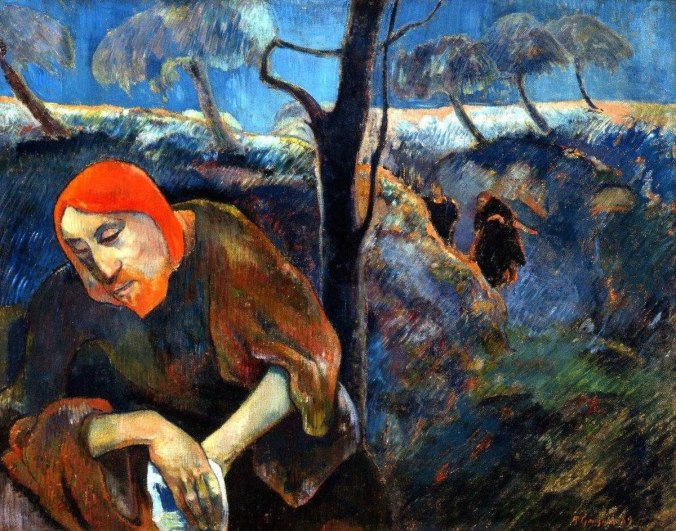
I have loved Van Gogh for a very long time and I think what made him extraordinarily gifted was his capacity to paint both places and people. His style captures the nuance and intricacy of whatever it is he is looking at, and his paintings almost hum with vibrancy, no matter whether he’s painting a field scene or exploring the lines of a weathered and weary face. Additionally, he only ever painted or represented the world around him. He may have done this in an utterly original and inspired way, but it was always a reflection of what he could actually see. This put him at odds with his contemporary Paul Gaugin, who drew from his imagination to create people and figures in his paintings. Van Gogh, on the other hand, would never do this. This aesthetic and practical difference can be seen in Van Gogh’s Olive Grove and Gaugin’s Christ on the Mount of Olives:

Van Gogh Olive Groves

1200px-Gauguin-christ-in-garden

This is not to say that Gaugin’s work is inferior in any way to Van Gogh’s (I actually think his Christ looks remarkably like Van Gogh in this painting, which is interesting), but it demonstrates a very interesting dynamic at work in Van Gogh’s art. His commitment to reflecting the world around him accurately, but with his own unique insight, makes his work at once highly personal and imaginative but always grounded in what is physical and real. It is endearing and almost egoless to bring such consciousness and attention to what he saw, rather than to emphasise the world by applying a story to it. Through Van Gogh’s art, we learn that the world itself is a story to tell, we don’t need to apply grand narratives of religion or myth to elevate it as such.

I have been fortunate enough to see Van Gogh’s paintings in the paint at both the Van Gogh museum in Amsterdam and from the Davies collection at the National Museum of Wales. What I learnt and what absolutely stood out to me, more than the tragic circumstances of his depression and his death, was that he was a masterful and learned technician. Whilst a lot of emphasis has been placed in popular culture on his naiveté and the impressionistic and emotional ecstasy of his paintings, what I learned was that he had an almost academic approach to art. Van Gogh developed his technique out of dedicated and meticulous study and practice. He took lessons from Anton Mauve in the Hague, studied colour theory through Charles Blanc’s colour wheel and through analysis of Eugène Delacroix’s paintings, explored pointillism and the un-mixing of colours through the work of Georges Sauret, experimented in a Japanese style through a study of Japanese woodcuts, and from his friendships with Toulouse Lautrec and Émile Bernard learnt about the versatility and vibrancy of pastels. Passionate and zealous as he famously was with his impressions and interpretations of the world around him, Van Gogh was a learned and masterful technician. I don’t think this should be overshadowed by the turbulence of his relationships or his volatile mental health. He may have found inspiration in his pain and darkness, but his expression of it came from hours, days and years of practice and development.

Here are some of my favourite pieces of Van Gogh’s work:

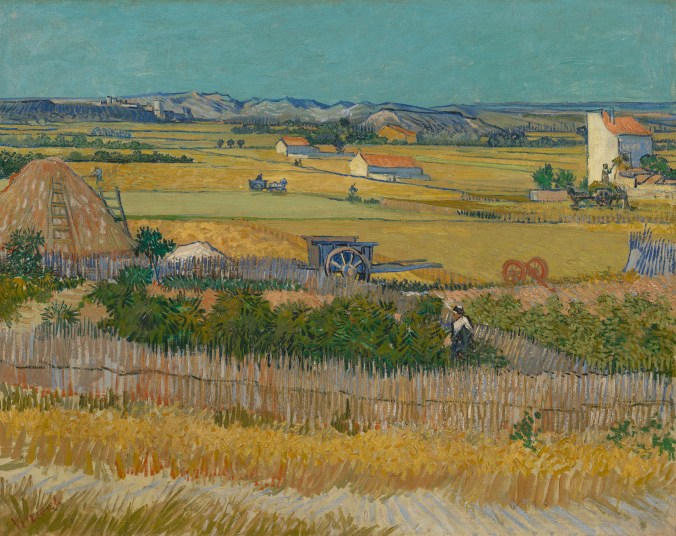
Van gogh the harvest

The Harvest, June 1888 – The warmth of the sun radiates in this painting, everything that summer should be.

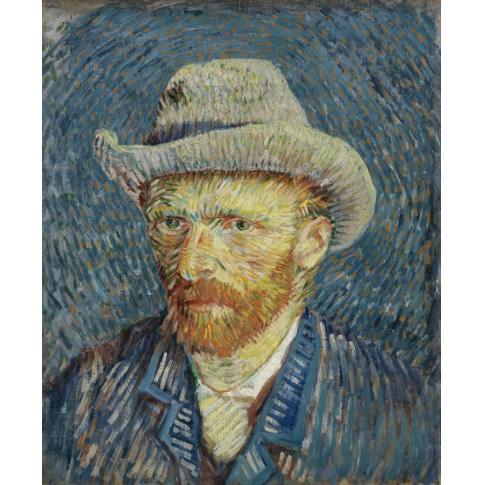
van gogh self portrait

Self Portrait with Grey Felt Hat, c.1887 – I have this painting on a postcard hanging up in my flat and I think it is beautiful. The sun-scorched orange of his beard complements the bright blue of his clothes and background, and the green tinges around his eyes and brow convey his deeper emotional sensitivity.

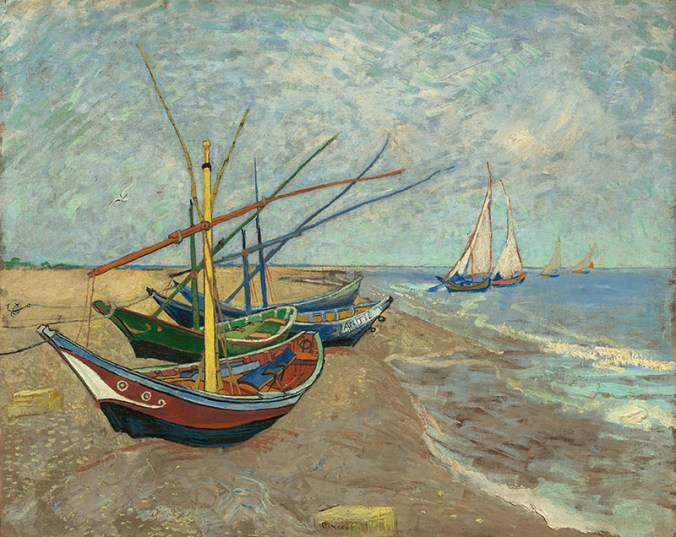
Vincent-van-Gogh-Vissersboten-op-het-strand-van-Les-Saintes-Maries-de-la-Mer-V006

Fishing Boats on the Beach at Saintes-Maries, June 1888 – This is another painting on a postcard that I have hanging in my flat (courtesy of my boyfriend who loves this particular painting). It is reflective of Van Gogh’s interest in Japanese art.

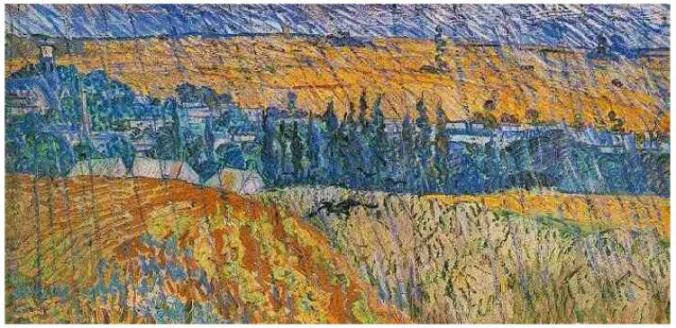
van-gogh-rain-auvers-1890

Rain – Auvers, 1890 – I saw this painting at the National Museum of Wales in Cardiff and it brought tears to my eyes. There is a battle going on here between the sunny warmth of the land and the deep, dark despair of the rain. It reminds me that no matter how depressed, anxious and afraid we may feel, the land needs to be watered to flourish; goodness, light and clarity come from embracing and moving through the dark and difficult times.