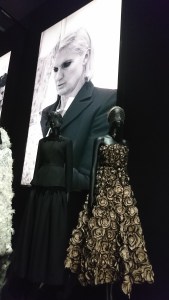
Love Note – Yves Saint Laurent photo reel

This week has been, in a word, intense.

I went on the hen weekend to end all hen weekends last week (6 hours sleep in 48 hours); in a related move, I am now hideously ill and was confined to my sickbed all day yesterday sneezing, coughing and croaking my way through seminal teen film ‘Clueless’ and ‘Animal Farm’ by George Orwell; and I started my PGCE in English on Monday. There are emotions, curricula and pathogens flying all over the place in this house.

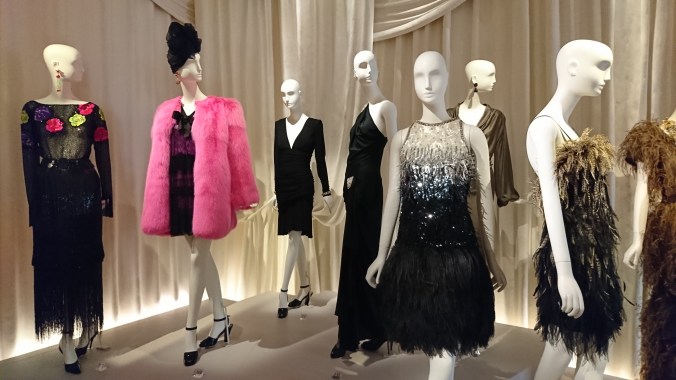
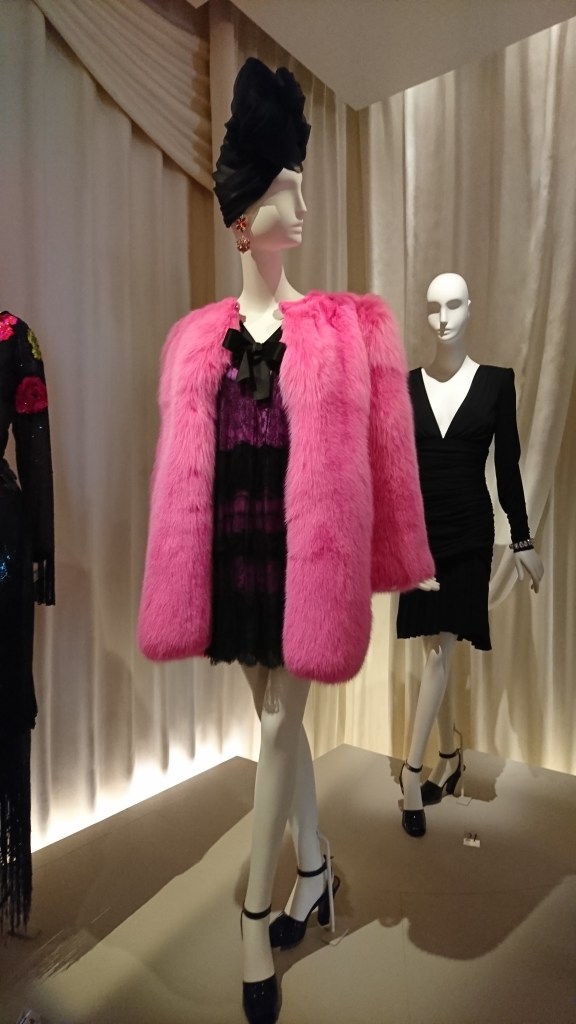
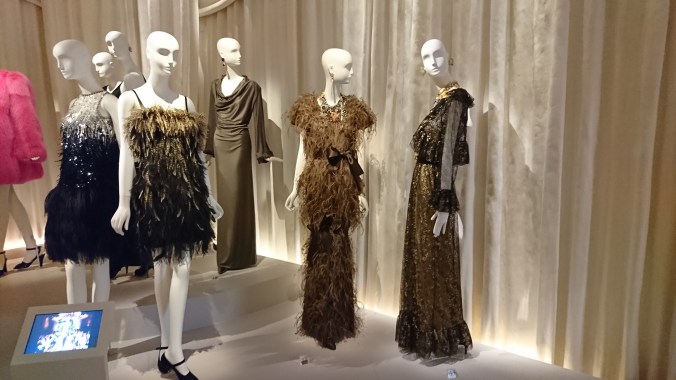
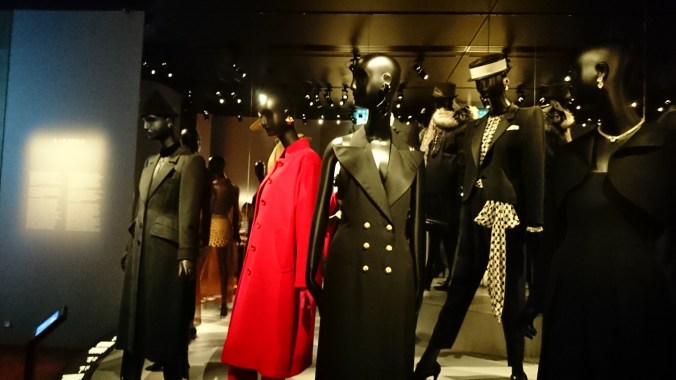
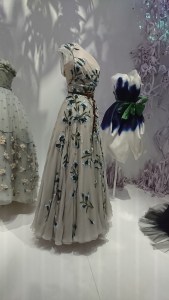
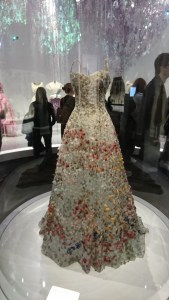
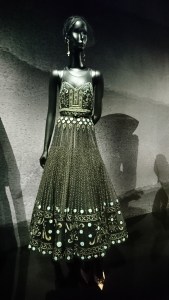
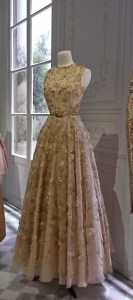
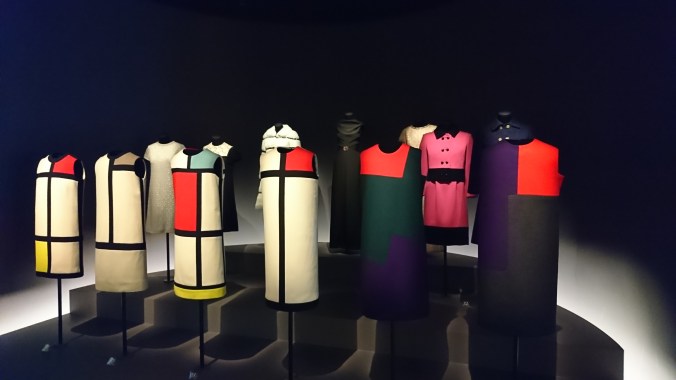
As such, and whilst still in the thick of my pity party, I am going to post the photos from my trip to the Yves Saint Laurent Museum in Paris. We’re in the thick of Fashion Month, with Paris just round the corner, so it feels pretty time-appropriate; plus there is nothing like pretty clothing to raise your spirits when you’re spluttering your way through multiple life transitions.

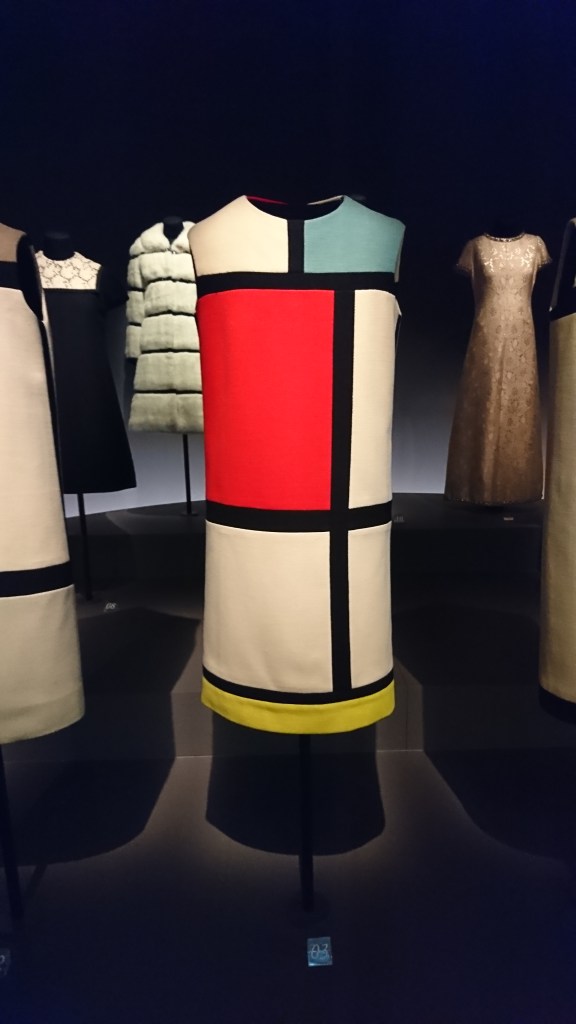
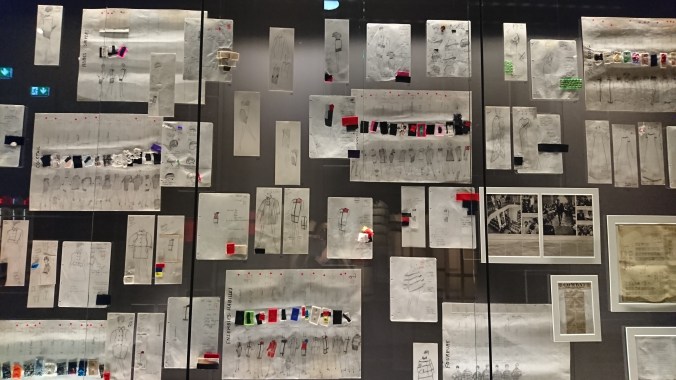
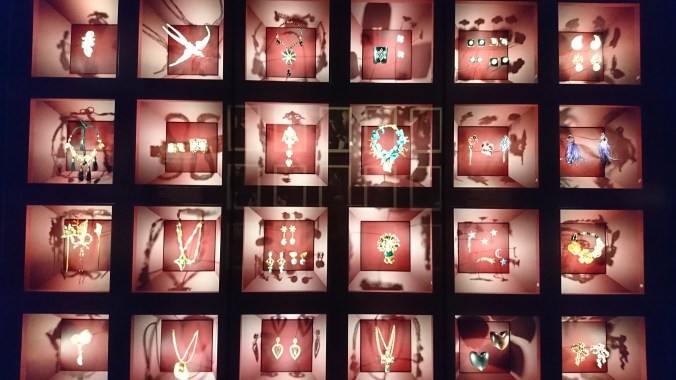
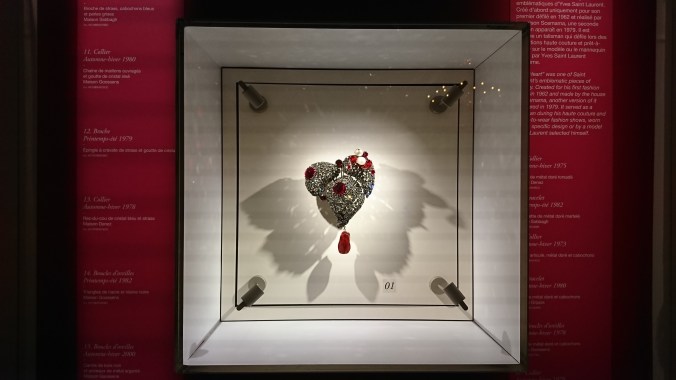
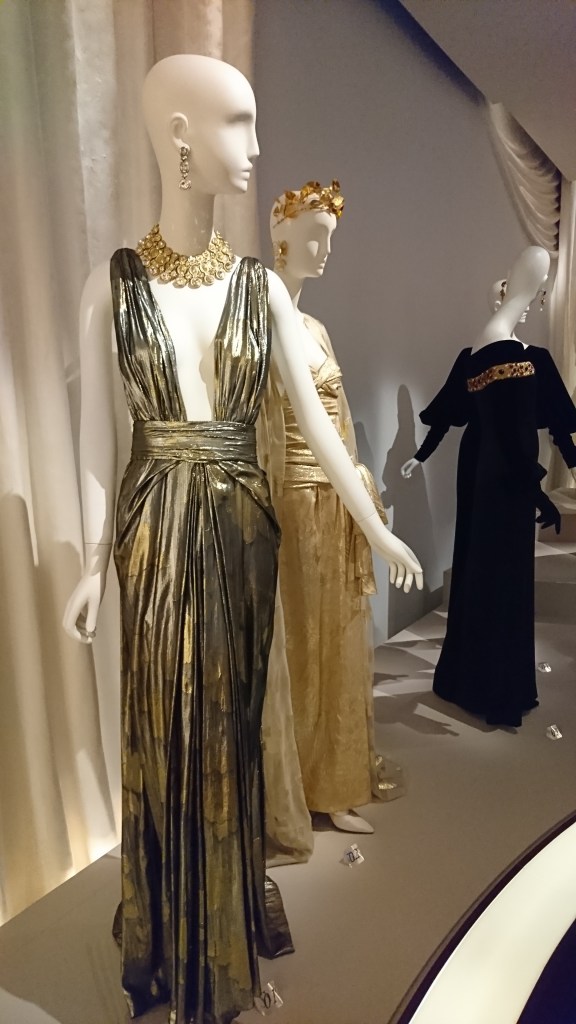
So here we have it, Yves Saint Laurent, with his epoch-changing Mondrian dresses, elegant evening wear and exquisite accessories. I also managed to get a snap of his reconstructed studio and design notes, which made the whole experience even more magical and intimate. If this doesn’t pick your spirits up on a rainy day, I don’t know what will.

DSC_4347


DSC_4342


DSC_4344


DSC_4351


DSC_4352


DSC_4353


DSC_4346


DSC_4345


DSC_4356


DSC_4354


DSC_4355


DSC_4350


DSC_4357


DSC_4361


DSC_4340

Love Note – Paris report

We’ll always have Paris.

I have just returned from seven days in Paris and, predictably and gratefully, had a wonderful time. Prior to the trip, I concocted a three page day-by-day itinerary filled with activities, but also consciously carved out some time for some more spontaneous and impulsive things too (anxious traveller, moi? Absolutement).
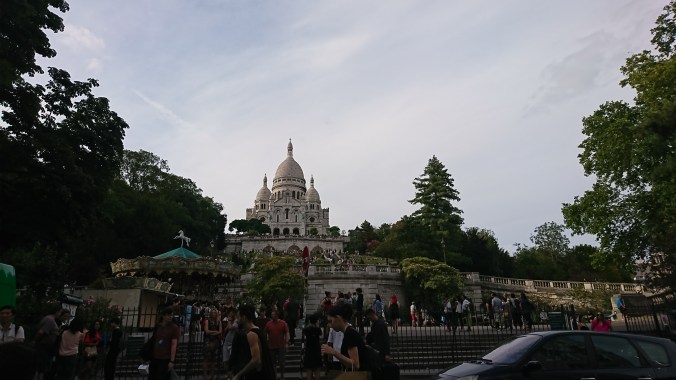
Sacre Coeur

August is a famously quiet time in the city because many of the locals go away on holiday. However, we found the first week in August to be a pretty excellent time to visit: our Eurostar tickets (booked in November) were £52 each for a return (less expensive than it is to get from Nottingham to London on the train…); certain museums in the city are free to enter on the first Sunday of the month and, because it was quieter, the queues were short (we managed the Musée de l’Orangerie and the Musée d’Orsay for free, but also available were The Louvre, the Musée National d’Art Moderne at the Centre Pompidou and many others); and going later in the summer meant that even with temperature highs of 29°C, we avoided the sweltering and sticky heats of June and July.

The benefit of spending a whole week in Paris is that we left barely any of the city unexplored. From our AirBnB base near the Place de Clichy in the 18th arrondissement, a delightful intersection of four arrondissements and in close proximity to my all-time favourites Montmartre and Pigalle, the whole city was at our fingertips. I would like to share some of my favourite places and moments from the trip. These may be food for thought if you are or intend to go to Paris at any point in the future, or if you just want to while away an afternoon thinking about those cobbled streets, beautiful buildings and all the amazing food. Like I will be.

Vegan food

Virginia Woolf’s old adage ‘One cannot think well, love well, sleep well, if one has not dined well’ is one that I take very personally, seriously and ecstatically live my life by. Therefore, first thing’s first: the food we ate. We did a lot of our own cooking to cut down costs, but we did have some fantastic vegan meals out:

Abattoir végétal

Abattoir Vegetal.jpg

This is a lovely restaurant in the 18th arrondissement with a neon sign outside, fresh-feeling interiors and lots of hanging plants. They specialise in seasonal dishes, organically sourced food and organic wines by the glass and bottle. We went a couple of times to this restaurant and sampled the Green Augustine Buddha bowl of legumes, raw and cooked vegetables, smoky tofu and fresh leaves in a smoky balsamic glaze; the Funky Burger made with beetroot, vegan cheddar, pickles and sweet potato fries on the side; and the Hot without Dog made with falafel, grated carrot, red cabbage, ketchup, mustard and sweet potato fries. For dessert we had chocolate cake, and drank our way through both meals with a bottle of organic red. I couldn’t deal with it then, I can’t deal with it now. So much yumminess.

SO NAT – Notre Dame de Lorette

SO NAT

If I went into this trip sceptical about the tastiness of Buddha bowls and their capacity to actually fill you up, I stand completely surprised and corrected. The large Buddha bowls at this cute little café in the 9th arrondissement, down from Pigalle and just before Opéra, were delicious, hearty and required no emergency snack afterwards. My Buddha bowl contained breaded aubergine, pomegranate seeds, lentil dahl, all sorts of colourful veggies and leaves, vegan sour cream and red quinoa. It was ridiculous. MW’s had ginger, rice, BBQ tofu and, again, veggies on veggies on veggies. It was all fresh, came in big portions, was so healthy and tasted rich and delicious.

Maoz

One of the many amazing things we encountered on our trip to New Zealand last year was the healthy fast food franchise Pita Pit: a Subway of sorts that features meat but also specialises in falafel. Add to that some humus, pitta bread and multiple veggie accompaniments (lettuce, tomatoes, cucumber, red onion, carrot, sweetcorn, jalapenos, olives etc.) and you have the beginnings of an addiction. We visited roughly 15 over the course of six weeks and have no regrets. We have found nothing to compare in Nottingham, so when we found Maoz, a falafel and pitta shop, in the Latin Quarter, we were stupidly excited. The novel difference here? The assortment of Middle Eastern fillings (pickles, fatoush, salads, onions etc.) was presented as self-service. We had a joyful time stuffing our own pita pockets full to bursting with fresh, perfectly seasoned toppings. Maoz is unmistakeably a delicious, quick vegan lunch option, right next to Notre Dame Cathedral and Shakespeare and Company.

Bike Rental
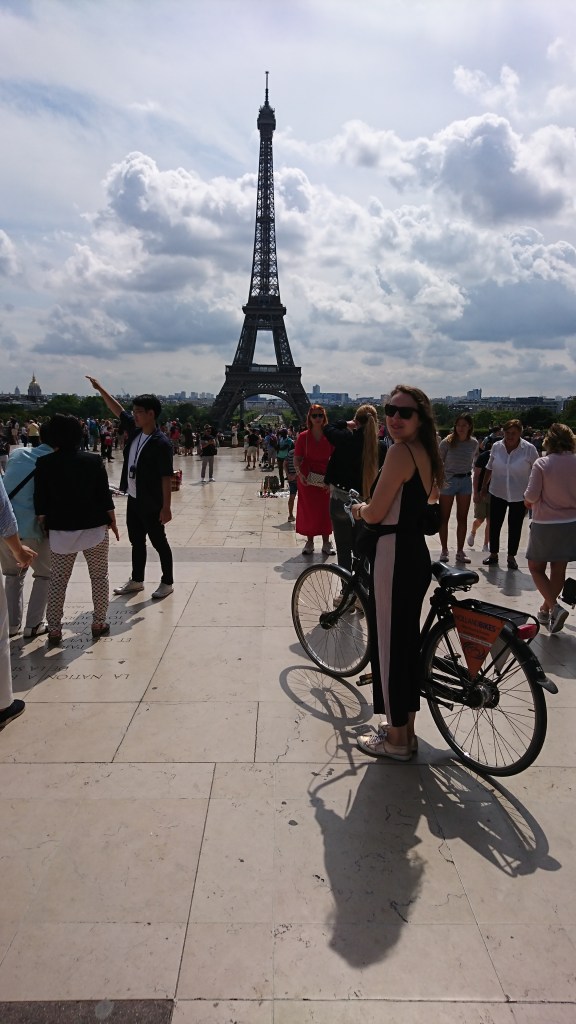
Holland Bikes

In a city like Paris, tours of all shapes and sizes are prolific. We would have loved to have done a tour: I had high ambitions for some form of a champagne booze cruise. Alas, this did not happen but we were very much content to explore on our own. Holland Bikes are a well-reviewed tour and rental service in the city and around France, so we decided to use the Pick and Go service to rent two Dutch bikes from the Arc de Triomphe depot. Renting a bike is so much fun and you can cover so much ground in a short space of time. Plus, Paris has excellent infrastructure for cyclists and e-scooter riders, so despite the heavy traffic in parts (we categorically avoided the wacky races of Place de la Concorde and Étoile de Charles de Gaulle) it felt very safe getting around. We cycled from the Arc de Triomphe down to and around the Bois de Boulogne, then back up and around to Trocadéro, the Champs de Mars, Invalides and along the Seine. We had so much fun.

Parc Monceau
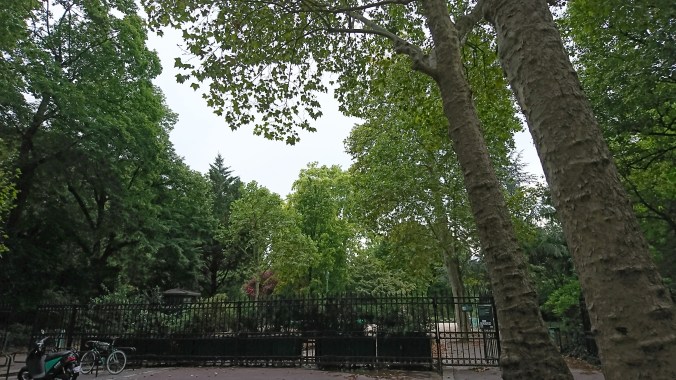
Park Monceau.jpg

There are so many beautiful and shaded places to relax in Paris, which I am sure were absolutely essential during the 40°C+ heats the residents experienced this summer. The Place de Vosges in Le Marais came highly recommended, and we enjoyed the classic Tuileries gardens and Luxembourg gardens on the Left Bank. Whilst walking home on our last afternoon, we headed for the Parc Monceau which is in the 8th arrondissement, just off the Boulevard de Courcelles. Although the park has stylised elements like a little Venetian bridge, a Classical colonnade to emulate ruins and the most charming old carousel, there was something about more primeval about this park, compared to the more clipped and manicured lawns of the big jardins. We sat on a little green bench people-watching for a good long time in this prettyish wilderness.

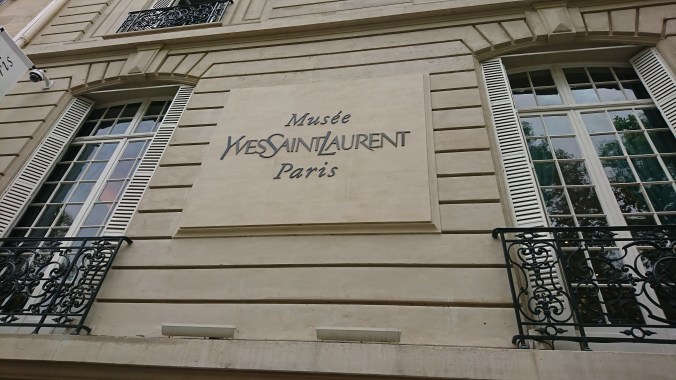
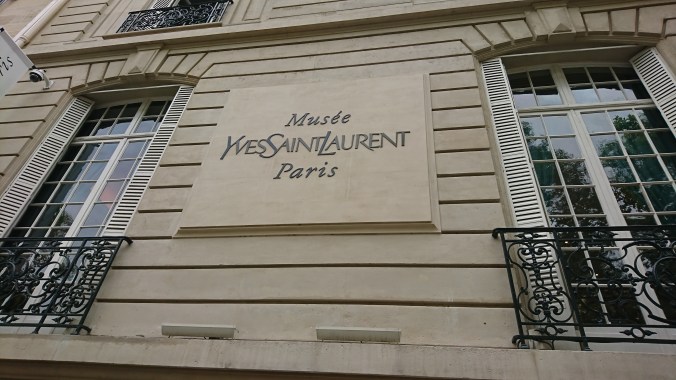
Musée Yves Saint Laurent Paris
YSL Museum.jpg

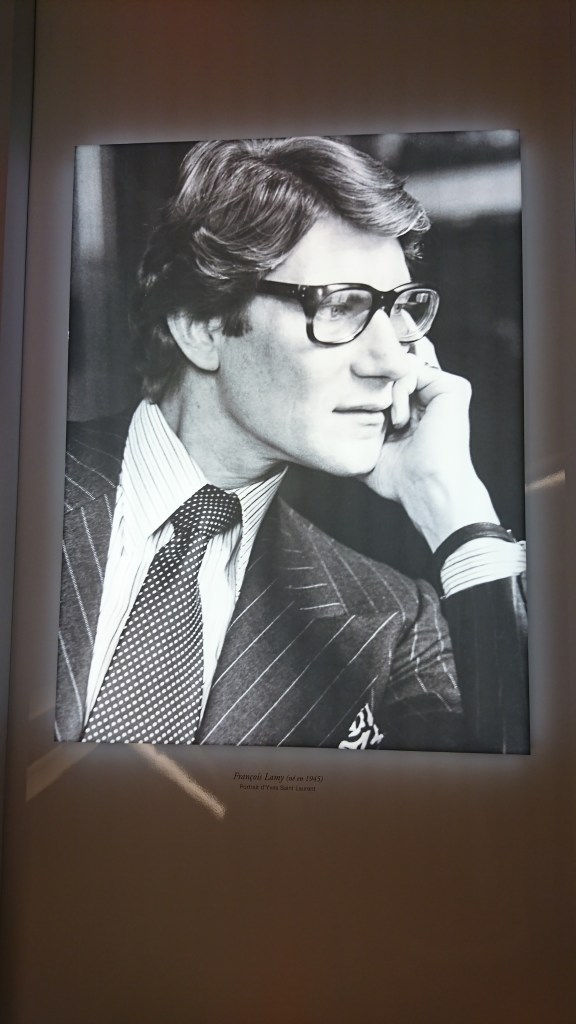
Oh boy. Pour moi, a trip to Paris was never going to be complete without a slice and dice of fashion history. I plan to write a longer post about the YSL Museum, but it’ll summarise it briefly here for now. Yves Saint Laurent never used to be one of my favourite designers; perhaps controversially, I have been more of a fan of the edgier Saint Laurent incarnation of the brand under Hedi Slimane and Anthony Vaccarello. I was, however, aware that he is an inescapable part of fashion history, after being made head of Dior at the age of 26 and for the successful couture house he built in his own right. What became clear to me from the exhibits in the museum was that, like Christian Dior (you can read my analysis here), Saint Laurent’s prime aim in design was to make a woman feel her most confident and beautiful. I find this to be such a validating and comforting thing. Even though fashion is so much to do with comparison, beauty standards, perfectionism, ageism, white and able-washing, what I have noticed is that oftentimes at the centre of a brand is a sensitive, empathic and deeply creative person who just wants to make women feel good. I really appreciate that in Yves Saint Laurent and his contributions to fashion. Furthermore, he was famously one of the first designers to champion the use of non-white models, pioneered the trouser suit and established his Rive Gauche collection to make fashions accessible and affordable to ordinary people.[1]
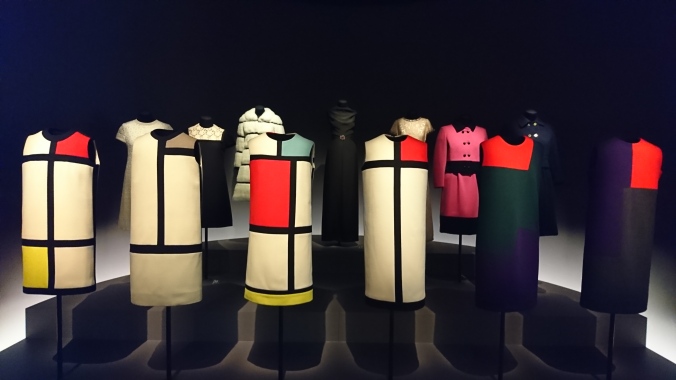
Mondrian dresses.jpg

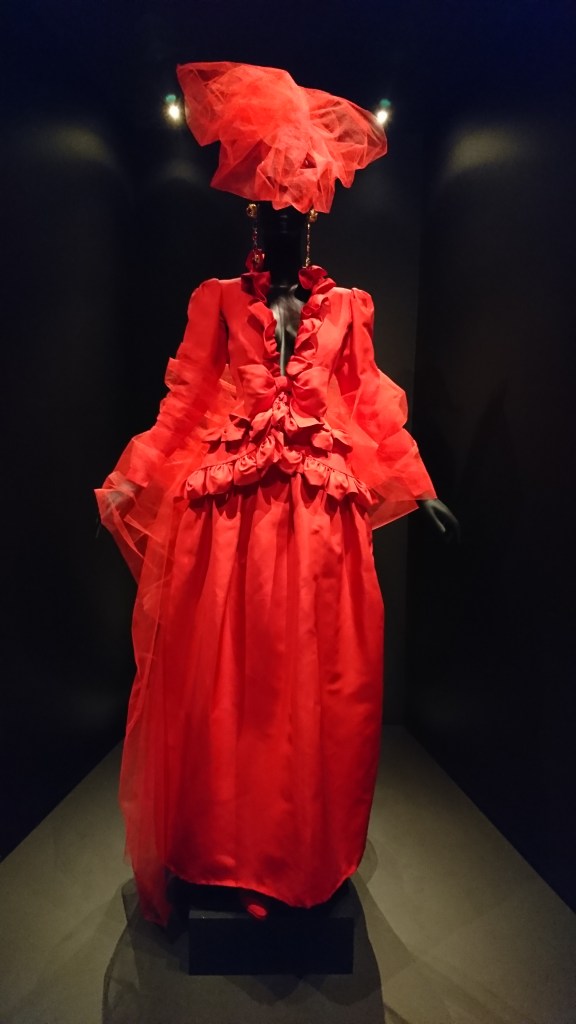
The building on the Avenue Marceau is home to his formidable archive, including the epoch-defining Mondrian dresses, the extensive jewellery collection and this absolutely perfect ensemble:
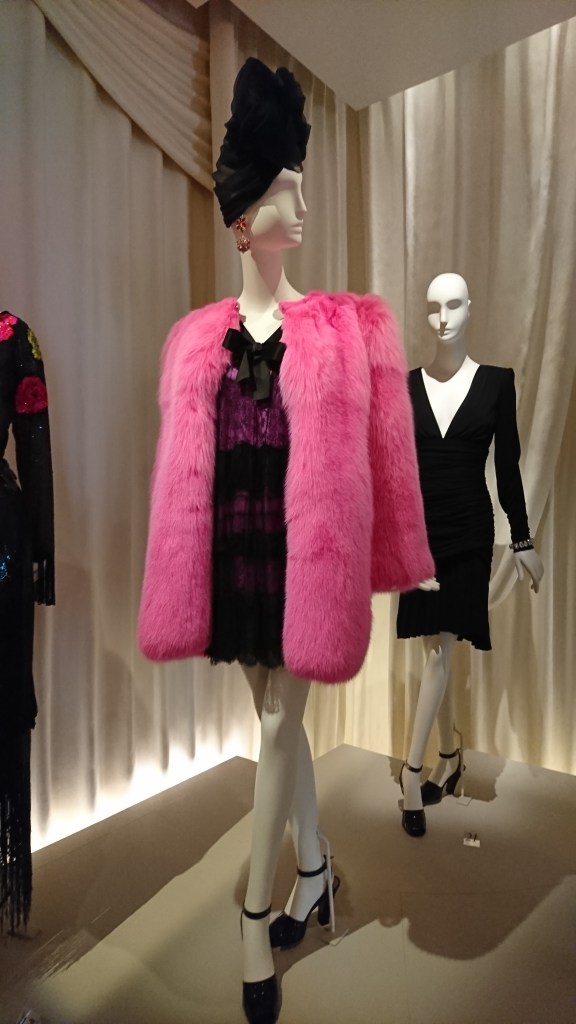
YSL dress


I was able to walk through a reconstruction of his study, watch films about his work and his partner Pierre Bergé and soak up the beautifully presented collection pieces. I must also add that the museum is wonderfully air conditioned, was relatively quiet and, all-in-all, a genius way of preserving Saint Laurent’s creative legacy.

Montmartre cemetery

Montmartre Cemetery.jpg

This was a go-to last time we came to Paris and, being so close to our apartment, was definitively on our itinerary again. Cemetery-visiting may seem like quite a morbid activity, but I believe that visiting cemeteries helps to really contextualise a place and the people in it. To really know and understand a city and its different people, to get an insight into what they value, treasure and, ultimately, to understand their approach to living life, a clue can be found in exploring how they treat their dead and the way they design and use their communal and private spaces of remembrance and reflection. Even if we have not visited Paris, many people are aware that it is a city associated most commonly with love, art and revolution. This, I would argue, is reflected in their cemeteries, which are uniquely Gothic and gorgeous. There is a joie de vivre and gravitas evident in the Parisian cemetery, and Montmartre in particular, which makes it a space in which life, family and creativity are celebrated and revered. Of course, I couldn’t help thinking that it is only the wealthy and respectable who could have afforded such exuberant graves. Additionally, in no other cemetery have I felt that the burial of the dead is used to so confirm and validate the people left behind. It is in this capacity that I think gloom seeps into the cemetery: both in the potentiality that the wealthy dead were desperate to be remembered and that the living left behind were so desperate to build something in place of their lost loved ones.

Many famous people are buried in this city, and their resting places are free to visit and open for visitors to pay respects. Whilst Père Lachaise is one of the biggest and most famous- we saw the graves of Edith Piaf, Oscar Wilde, Jim Morrison and the Mauthausen Holocaust memorial- Montmartre cemetery is smaller and nestled into the Western corner of the village. Stretching underneath the Rue Caulincourt bridge, it is easily visible from the road and its fantastical rows of grand crypts and family sepulchres look like something from The Phantom of the Opera. We visited specifically to lay a rose at the grave of Vaslav Nijinksy, the lead dancer of the Ballets Russes, choreographer of The Rite of Spring and, I recently found out, a passionate vegetarian. I have mentioned here before that The Rite of Spring has been a very important piece of music and dance to me, and I wanted to show my gratitude to this extraordinary sensitive and surreally gifted man who helped collaborate on and create such an awe-inspiring piece of cultural history.

Nijinsky


[1] https://www.nytimes.com/interactive/projects/cp/obituaries/archives/yves-saint-laurent-models-couture [accessed 14:41, 13th August 2019].
Dior: Designer of Dreams

On Friday 5th April, I trundled down to London to visit two very excellent friends. We have partaken in a number of cultural weekends in the capital over the past few years, with trips to see the Savage Beauty exhibition at the Victoria and Albert Museum, The Vulgar: Fashion Redefined at the Barbican, the Vogue 100 exhibition at the National Portrait Gallery, the West End production of Tennessee Williams’s Cat on a Hot Tin Roof starring Sienna Miller and Jack O’Connell (where somehow we managed to get seats in a box, very jammy), amongst many other lovely, fun activities. This weekend was in every way just as lovely: in spite of a sketchy visit to a fancy restaurant off Regent’s Street where we were made to feel like actual scum, we shopped in Arket, visited the new Archlight cinema in Battersea, drank all the Taddy Lager at a Samuel Smith’s next to Liberty’s and spotted BBC Middle East correspondent Jeremy Bowen at Denmark Hill station and started smirking at him by accident. He definitely thought we were insane. The highlight of the trip, however, amongst all the other loveliness, was our visit to the Dior: Designer of Dreams exhibition at the Victoria and Albert Museum.

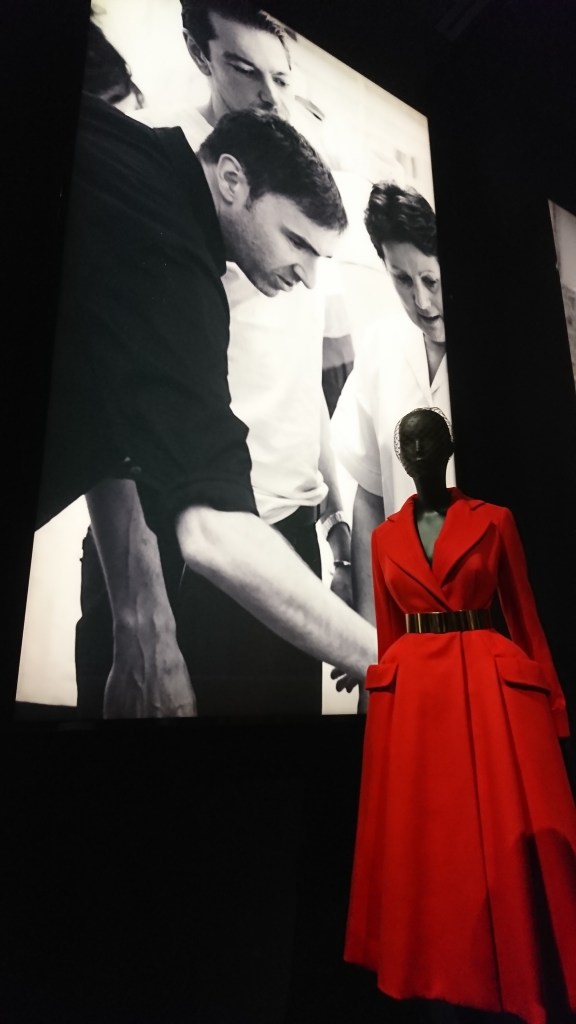
My first academic introduction to Dior came through the documentary, Dior and I: a fly-on-the-wall film that followed Belgian designer Raf Simons as he took up the mantle of creative director in 2012. I had been aware of John Galliano’s tenure, largely thanks to Lily Cole who was a veritable goddess in his designs, but had little actual passion for the house of Dior beyond that. I have a penchant for the theatrical in fashion, but I was more into Alexander McQueen, Vivienne Westwood and Marc Jacobs at Louis Vuitton at the time. Galliano was famously fired from Dior after an anti-Semitic rant outside a café in Paris, and this created a space at Dior for something new and different. The film introduced us to Raf Simons, with his refreshingly modern aesthetic and his endearing emotionality. Reading from Christian Dior’s autobiography and discussing art, it became clear that Dior was on the cusp of being reimagined for a new generation. I fell for the brand then and there.

Raf

I came to learn from Dior: Designer of Dreams that the fact that there is even a house of Dior is nigh-on miraculous. Christian Dior founded the label in 1947, creating the ‘New Look’: he divined an ultra-feminine silhouette, re-introducing women to sensuality after the austerity, deprivation and destruction that encompassed life during the Second World War. In no more than ten years, he built a booming, globally successful fashion house, placing his love for women at the very heart of his work. He introduced the H line, the Bar jacket and many other ingeniously crafted designs to emphasise curves, create drama and indelibly flatter. Tragically, he died in 1957; but in the short but very sweet time he had, he laid the foundations for one of the best-loved fashion houses of all time.

I believe the key to Dior’s success in his lifetime and beyond can be attributed to his commitment to women. Indeed, he seems to have dedicated his whole sartorial life to making women look and feel beautiful. He said:

‘Deep in every heart slumbers a dream, and the couturier knows it: every woman is a princess’.

It is one thing for men to say that they love and support women, but it is almost overwhelming how much Christian Dior repeatedly practiced and demonstrated that love through his creations. He knew how to make women feel special through the alchemical combination of silhouette, colour and craftsmanship. He in no way objectified women: instead, he placed womanhood and femininity on a pedestal to be absolutely adored. I used to be very sceptical of traditional notions of femininity: I’ve read my Judith Butler, I understand that gender is performance in many ways. However, where so much disrespect and abject hatred of women and their bodies has been witnessed and experienced throughout history, for a man to be so readily loving and devoted to women, is amazing. Similarly, I do not subscribe to monarchy or regal inequality in any way, but I think the reference to princess-hood can be read more archetypally. His work helps to bring women back to the sense of their own worthiness: that, yes, each one of us is unique and special, with dreams and ambitions, and a powerful capacity for conscientiousness, compassion, joy and love. All of these things make us inherently beautiful. I know a lot of women, including myself, have a hard time believing that, but Christian Dior is here to remind us, in a sartorial, fashionable way, that it is truly is the case.

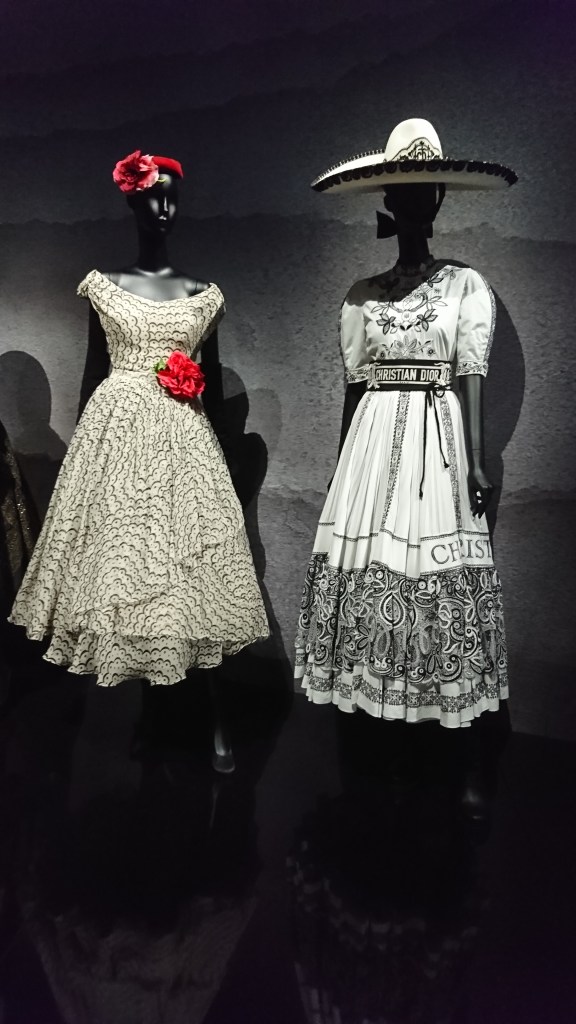
Christian Dior’s legacy has been kept intact thanks to a line of wonderful designers who placed women and what women want at the core of their work. Everyone, from Yves Saint Laurent to Maria Grazia Chiuri, have adhered to his silhouettes and inspirations, but subtly and ingeniously regenerated and refreshed them for each generation of women that passed their way. The exhibition presented and reflected this fact beautifully, placing pieces from all of Dior’s eras next to one another: for example, these two dresses from 1953 and 2019:

Mexican Dior

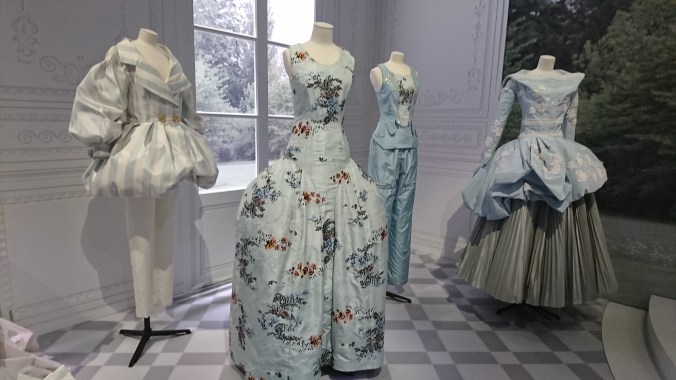
Both of these dresses nod to Dior’s interest in Mexican art and sartorial sensibility, speaking to each other across the years.[1] Although the Dior logo splashed across the dress on the right is a dead giveaway that it is a 21st century piece, they could both feasibly have come from the same collection. Similarly, the 18th century-inspired collections exhibit both continuity within the house of Dior and their individual designer’s unique perspective and flair:

18th century Diors

On the far left we have Gianfranco Ferré’s imagining of an 18th century coat, followed by Raf Simon’s cornflower blue dress with drop-waist hip emphasis; then we have another Raf Simons creation, this time a two-piece of intricately embroidered top with combat trousers; and finally a theatrical John Galliano dress with a billowing top and voluminous pleated skirt. All of the pieces are intrinsically Dior and could have walked down the runway in exactly the same show. But, we are also introduced to the subtle modernity of Simons, somehow taking an archaic hip style and making it contemporary and cool; the free-spirited proportion-play of Gianfranco Ferré; and the drama and craftsmanship of Galliano. The accusation has been levelled (at Simons in particular) that these collections for Dior are archivist; however, we can see clearly how the directors have honoured the history and mystique of the house whilst also exploring their own creative interests and personal aesthetics. It makes the collections personal but also part of a fluid, historical whole.

I will always have the softest of soft spots for Raf Simons because his work is just so polished, interesting and fun; but this exhibition formally introduced me to the work of Maria Grazia Chiuri. Up until now, I have reservedly watched Chiuri’s tenure blossom with popularity from afar. I was not convinced that slapping ‘We should all be feminists’ and ‘Why have there been no great women artists’ onto T-shirts to be sold for hundreds of pounds was particularly intersectional. I am still absolutely sure that capitalising on a buoyant new wave of feminism for commercial gain whilst reinforcing exclusivity and hierarchy is not how I want my intersectional feminism to look. However, this exhibition taught me that this woman bloody well knows how to make fabulous clothing. We wandered around the exhibition, pointing to one exquisite dress after another, exclaiming ‘I want that. I want that. I want that’, most of them originating from her sketchbook. Chiuri’s silhouettes are not as avant-garde as a Galliano, nor are they as refined and modern as a Simons, but they are dreamy beyond belief. Deceptively simple forms make way for frothy, fairytale content: her dresses become canvases for beautiful entwining flowers, embroidered constellations, elegant tulle and third eyes.

MGC3MGC2MGC5MGC6

MGC1MGC4MGC8MGC7

I have a newfound respect for what Chiuri is accomplishing at Dior. Namely, creating exceptionally designed clothing, luxurious without being fussy, whilst also, with those clean and elegant lines, very wearable. I would opt for any of these dresses in a heartbeat (please sartorial gods, please).

Without spoiling the exhibition too much for those who are still to visit, the final room was quite literally breathtaking. We audibly gasped and gaped at the twinkling ballroom setting we found ourselves in, debating whether or not we’d overreacted to the splendour on show. The gasps and squeals that came behind us as others entered the room confirmed not. The whole effect was magical: the glittering dresses, the rosy lighting, the cavernous space, everything. Time permitting, we could have sat in that room for ages just absorbing it all.

Dior: Designer of Dreams was another triumph for the Victoria and Albert museum. The layout and story of the exhibition is pitch perfect, demonstrating seamlessly the historical threads of the fashion house, as well as showcasing the individual contributions of the creative directors. The exhibition is a tribute to everyone who has been involved with the house: from Christian Dior himself and his creative directors, to the petit mains creating the designs at the atelier and the women chosen to represent the brand (it features dresses worn by Natalie Portman, Charlize Theron, Rihanna and Lupita Nyong’o). It celebrates womanhood, femininity and the princess within each woman, and the paradox that is a success built upon a winning and delicate combination of history and modernity. Needless to say, if you can get to it, go.


[1] What was also brilliant was that the curators had taken great pains to stress the pitfalls and damage of cultural appropriation, highlighting the ways in which Grazia Chiuri in particular sought practical help and input from Mexican women in the production and presentation of her Mexican-inspired collection.