Love Note – Lana Del Rey New-Album-Day

No one:

Me: It’s Friday night. This week has been insane. Let’s get self-indulgent.

In honour of the release of Chemtrails Over the Country Club, the new LP from Lana Del Rey, I’ve created something of an homage to one of my all-time favourite songwriters. There is no doubt that Del Rey is a controversial and, at times, problematic figure (see my previous essays on this here and here). Her relationships with power, race and patriarchy have been generally and radically underdeveloped at times, which is being incredibly generous. Additionally, as her recent interview with Annie Mac attests, for someone who captures emotion and feeling with such succinct eloquence and beauty in song, she is terrible at articulating a verbal and coherent viewpoint to herself and others.  

However, I critique because I love her and always expect better (as we all should with the cultural figures we look up to). Her songs are pure poetry and there is simply no one writing and crafting lyrics and music the way she does and has done since she first released Born To Die in 2012. Call it what you like: sadcore, baroque pop, dream pop. Without Del Rey and, I would argue, Frank Ocean and James Blake, we would not have the contemporary musical landscape we have now: vulnerable, melancholy, introspective and, in many ways, increasingly wise. Furthermore, I think we have been lucky to witness her transform from self-objectifying Lolita figure to a woman who runs with the wolves, bedding into the deepest facets of the Wild Woman archetype, and an advocate for healthy masculinity.

No matter how many people criticise her for having glamorised submission and abuse, there is a reason why her stories and her lyrics resonate with so many, in particular young women. Young women who are barely given the hint of a helpful roadmap to navigate the West’s patriarchal, white supremacist power structures with their spirits and souls still intact. She has given voice to the dark, shadowy feelings, experiences and dynamics that women have luxuriated in, surfed, cursed in themselves, acted upon without knowing way, forsaken or indulged over months, years and lifetimes. No wonder she has made people feel both extremely uncomfortable and seen. Those criticising her penchant for playing with façade and persona may not understand how imagery, persona and glamour are means of survival in a world that simply does not accept you the way that you are, in all of a woman’s emotional ebbs, flows, chaos and glory. With Chemtrails Over The Country Club, it seems we have Del Rey at her most retrospective. Without putting too fine a point on it, there does seem to be an eerie quality of finality to it.  

With all this in mind, I give you a comprehensive run down of my favourite things regarding Lana Del Rey’s music, starting with my personal top ten Lana Del Rey songs (in no particular order):

I’ve taken the liberty of listing my favourite Lana Del Rey lyrics and verses, all of which I typed out myself and, indeed, what joy it gave me to re-type and recall such rich and gorgeous words:

‘The poetry inside of me

Is warm like a gun’

‘Bartender’, Norman Fucking Rockwell

‘It doesn’t matter if I’m not enough

For the future or the things to come

‘Cause I’m young and in love’

– ‘Love’, Lust for Life

‘Give me Hallmark

One dream, one life, one lover,

Paint me happy and blue.

Norman Rockwell

No hype under our covers

It’s just me and you’

– ‘Venice Bitch’, Norman Fucking Rockwell

‘Summertime is nice and hot

And my life is sweet like vanilla is’

– ‘Without You’, Born To Die

‘I had a dream that I was fine,

I wasn’t crazy, I was divine’

– ‘I Can Fly’, Big Eyes Soundtrack

‘I don’t care what they say

Drag racing my little red sports car,

I’m not unhinged or unhappy

I’m just wild’

– ‘Chemtrails Over The Country Club’, Chemtrails Over The Country Club

‘Will you still love me when I shine

From words but not from beauty?’

– ‘Old Money’, Ultraviolence

‘Nothing gold can stay

Like love or lemonade

Or song or summer’s day

It’s all a game to me, anyway’

– ‘Music To Watch Boys To’, Honeymoon

‘Catch a wave and take in the sweetness

Think about it

The darkness, the deepness

All the things that make me who I am

[…]

Are you ready for it?’

– ‘Mariners Apartment Complex’, Norman Fucking Rockwell

‘Calling out my name

In the summer rain

Ciao amore

Salvatore can wait

Now it’s time to eat

Soft ice cream’

– ‘Salvatore’, Honeymoon

‘It’s fucking hot, hot

Winter in the city

Something ‘bout this weather

Made these kids go crazy.

It’s hot,

Even for February,

Something ‘bout this sun

Made these kids get scary’

– ‘Heroin’, Lust for Life

‘And who I am

Is a big-time believer

That people can change

But you don’t have to leave her.

When everyone’s talking

You can make a stand’

– ‘Mariners Apartment Complex’, Norman Fucking Rockwell

‘Maybe my contribution

Could be as small as hoping

That words would turn to birds

And birds would send my thoughts

Your way’

– ‘Coachella – Woodstock In My Mind’, Lust for Life

‘Think I’ll miss you forever

Like the stars miss the sun in the morning sky

Waiting’s better than never

And even if you’re gone

I’m going to drive’

– ‘Summertime Sadness’, Born To Die

‘You hate the heat, you got the blues

Changing like the weather

Oh, that’s so like you.

The Santa Ana moves you’

– ‘California’, Norman Fucking Rockwell

‘Sometimes it feels like I’ve got

A war in my mind.

I want to get off

But I keep riding that ride.

I never really noticed that I had to decide

To play someone’s game

Or live my own life.

And now I do.

I want to move

Out of the black

And into the blue’

– ‘Get Free’, Lust for Life

‘I can feel it coming in the air tonight

See you walking on that blue Pacific

I can see you bathing in the summer light

Turning tan and you look terrific

You got game boy’

– ‘Guns and Roses’, Ultraviolence

‘I only mention it

Because it was such a scene

And I felt seen’

– ‘White Dress, Chemtrails Over The Country Club

‘I’d be lying if I said

I wasn’t sick of it’

– ‘Heroin’, Lust for Life

If you are still here, I have compiled a list of the best Lana Del Rey bops. I understand that not everyone wants to spend their evening wallowing in the inky waves of melancholy, so, here are some of her most up-beat songs. No less poetic, but a little more frivolous and fun to keep you from feeling too blue:

  • ‘Fuck It I Love You’, Norman Fucking Rockwell
  • ‘Florida Kilos’, Ultraviolence
  • ‘National Anthem’, Born To Die
  • ‘Burning Desire’, Paradise
  • ‘Doin’ Time’, Norman Fucking Rockwell
  • ‘In My Feelings’, Lust for Life
  • ‘High By The Beach’, Honeymoon
  • ‘Fucked My Way Up to the Top’, Ultraviolence
  • ‘Summer Bummer’, Lust for Life
  • ‘Diet Mountain Dew’, Born To Die

Here are my picks for her most underrated songs:

  • ‘West Coast’, Ultraviolence
  • ‘Coachella – Woodstock In My Mind’, Lust for Life
  • ‘Terrance Loves You’, Honeymoon
  • ‘Brooklyn Baby’, Ultraviolence
  • ‘Change’, Lust for Life

And her, perhaps, most overrated songs:

  • ‘Cherry’, Lust for Life
  • ‘Lust for Life’, Lust for Life
  • ‘High By The Beach’, Honeymoon
  • ‘Gods and Monsters’, Paradise
  • ‘Beautiful People, Beautiful Problems’, Lust for Life

And the biggest question of all: which is the best Lana Del Rey album, so far?

I am very hopeful after my first listen of Chemtrails Over The Country Club. So far, I am loving ‘White Dress’, ‘Tulsa Jesus Freak’ and ‘Not All Who Wander Are Lost’ (any song with a ‘Lord of The Rings’ reference gets a massive thumbs up from me). Ultimately, however, and even in light of the divine Norman Fucking Rockwell, I still think my heart lies with Ultraviolence. I will never get over Del Rey working with Dan Auerbach, and I definitely think it’s her most cohesive and complete work.

I’m curious to know if there are any here with which you agree, disagree or that are missing altogether!  Please feel free to comment or message.

And, because she went there (and in case anyone particularly cares): my moon’s in Taurus, my Cancer is Sun (with Cancer Rising). If you know, you know.

Lana Del Rey and whiteness

Beginning on the 21st May 2020, my phone blew up for a few consecutive days with incredulity, anger and disbelief at Lana Del Rey’s numerous statements directed at ‘the culture’. I still don’t really know what she is trying to define by that term. After the first statement, in which she namechecks numerous black female artists who have allegedly been allowed to sing about ‘being sexy, wearing no clothes, fucking, cheating etc.’ when she has not, I declared to one group chat that I would get our thoughts and analyses, which were extensive, down here. I held off writing straight away and I’m glad I did: what followed were even more spurious statements and rebuttals from Del Rey about how people criticising her had begun a ‘race war’, and that people who ‘misunderstood’ her should ‘fuck off’.  We saw her Instagram fill with images of white Hollywood movie stars, including that classic chauvinist James Bond no less, a GIF of her pole dancing in the ‘Gods and Monsters’ music video, and declarations that ‘no one gets to tell your story’. Del Rey claims that she embodies a ‘delicate’ form of femininity that is currently rejected by feminism, bizarrely claiming that it will be the forefront of a ‘new/3rd wave of feminism that is rapidly approaching’. We are, of course, already in the fourth wave and have been since the early 2010s. I aim to discuss Del Rey in relation to feminism at greater length in another essay.

With regards to race, Del Rey has, unfortunately, proven herself painfully unaware of how much privilege her whiteness affords her, and thereby has been unable to show how race and her question of feminism intersect. I can see why Del Rey believes that she is, in the words of  Ibram X. Kendi, ‘anti-racist’: she cast A$AP Rocky as her JFK in the ‘National Anthem’ video and wrote songs with him for ‘Lust For Life’; she has collaborated numerous times with The Weeknd; some of her best friends are black women who have featured prominently in her music videos and on tour from ‘Lust For Life’ through to ‘Norman Fucking Rockwell’; and she is giving all of the profits from her poetry collections as reparations to the indigenous Navajo community.  She has proven, however, that she is not necessarily anti-racist, with each new comment she released digging her heels into her first problematic statement even further until a defence of her is rendered almost impossible.

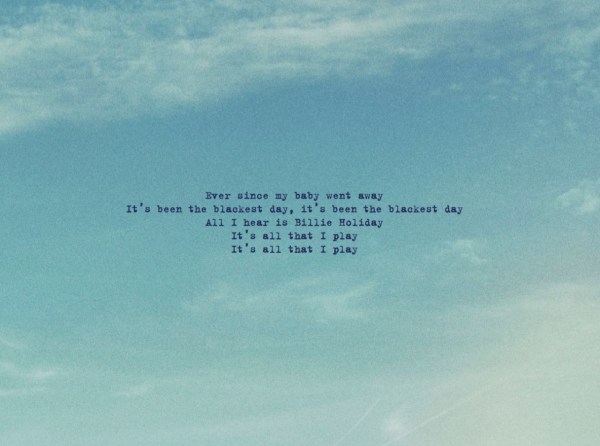
Lana’s original namecheck of predominantly black and Hispanic women, Doja Cat, Ariana Grande, Camila Cabello, Cardi B, Kehlani, Nicki Minaj and Beyoncé, was used to highlight how these women have been celebrated and rewarded by ‘the culture’ for being sexual, provocative and complex whilst she has been maligned. In doing this, she demonstrated a lack of awareness about the more significant barriers that Women of Colour (WOC) face in getting to a prominent position in the music industry in the first place, as well as equating these women, who are already exposed to latent racist exoticisation stereotypes, purely with sexuality and sexual mores. This is deeply ironic coming from someone who has both Nina Simone and Billie Holiday’s names tattooed onto her clavicle and has regularly referenced Holiday in her music, for example in the music video for ‘Summer Wine’ and on the song ‘The Blackest Day’ from the album ‘Honeymoon’.

Blackest Day Higher QUality

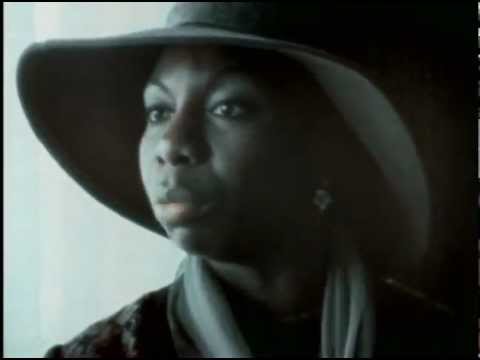
Simone and Holiday both famously used their art to fight racism and empower black youth throughout their careers, for example in the songs ‘Young Gifted and Black’ and ‘Strange Fruit’ and in numerous other contexts. This video of Simone talking about the artist’s duty to reflect the times, particularly with regards to fighting racism, is one that Del Rey has shared herself on her Instagram:

Nina Simone

It is bizarre, then, that Del Rey, who so idolises these black women who spent their careers and lives fighting racism, is unable to acknowledge and concede that bringing WOC into a conversation about how she has been hard done by the music industry is problematic. It does not matter how may times you tell people that you are not racist: if you are making racially coded comments and comparisons, even and especially unconsciously, then refusing to accept the fact that your white ignorance and privilege have been exposed by those very comments, you are being racist. For white people, our racism is often unconscious and unthought of: our work is to bring our assumptions and everything we take for granted as white people into consciousness, to learn, listen and ultimately become allies in the fight against racism, racial inequality and injustice. Not to dig our heels in, take offence and accuse others of starting ‘a race war’.

This need for clarity and consciousness has become even more sickeningly potent in the days after Del Rey’s flurry of racially coded and unapologetic statements. The video went viral on 25th May 2020 of Amy Cooper threatening Christian Cooper (no relation), a black man, that she would call the police and tell them that he was threatening her life when he had asked her to put her dog on a lead in Central Park’s protected nature reserve ‘The Ramble’. Amy Cooper chillingly showed how America’s law enforcement system, well known for its extensive brutality of black people, was geared in her white favour, and that she was more than willing to use it to get her own way at whatever genuinely life-threatening cost to Christian Cooper. Within days, we saw what the outcome could have been: George Floyd, an unarmed black man, suffocated to death by police officers in Minneapolis. In recent weeks, we have already seen how the American justice system values the life of Ahmed Aubrey, who was lynched by a white father and son in Georgia. It seemed serendipitous that we had this public genealogy of white supremacy and racism unfold so compactly this week:  from Lana Del Rey accusing people of starting a ‘race war’ when what she had articulated was racially coded and, yes, racist; to a white woman using her whiteness as a weapon to threaten a black man who left the altercation, thankfully, safe; and yet another terrible and all too familiar example of police officers murdering an unarmed black man. Even though what happened with Del Rey can be interpreted as a celebrity scandal, it does not exist in a vacuum. Every single part of the events of this week are connected, and are expressions of what is normalised and still accepted in a white supremacist society.

This is not, of course, a problem that only exists in the USA. As writer and journalist Reni Eddo-Lodge argues in her amazing book ‘Why I am No Longer Talking to White People About Race’, by focusing on race as something that happens on the other side of the Atlantic, Black British history is ‘starved of oxygen’ and not given the attention it needs. Racism and white supremacy are alive and well in the UK, and we cannot fall into complacency, believing that it is only in the USA that racism exists. I have spent the past few weeks writing an inquiry project for my teacher training qualification (PGCE) about race and curriculum in the UK and there is no doubt in my mind that the National Curriculum devised by Michael Gove, particularly in Key Stage Four English, serves to perpetuate white cultural hegemony, erasing, denying and ignoring the communities and cultural identities of Black, Asian and Minority Ethnic (BAME) pupils and anyone else who identifies as non-white British. White people are profoundly ignorant of the way in which we accept whiteness in all parts of our lives as standard and normal, as though our entire country’s history was not built off the back of slave labour and colonial oppression of BAME people. Now more than ever, white people need to be doing the work to make our unconscious privileges and ignorance, conscious. This is a battle, in part, because ideological vehicles like The National Curriculum hit us when we are young; but as responsible, conscious adults, we must actively educate ourselves. Too many people continue to suffer and we must do our part to fight and stop that.

This essay has been fuelled by anger, to be sure. But I also offer it in the spirit of generosity. I have been critical of Lana Del Rey because I think it is important for white people to call each other out and educate one another about the way our unconscious privilege and ignorance is a form of racial violence. As such, I want to provide a list of materials that have helped and continue to help me, as a white person, to recognise and check my own privilege and ignorance, which, I hope, help me to be an ally to all BAME people and actively fight racism. I recommend the following to all white people:

‘Why I am No Longer Talking to White People about Race’ by Reni Eddo-Lodge

‘About Race’ podcast by Reni Eddo-Lodge

‘Natives: Race and Class in the Ruins of Empire’ by Akala

‘The Hate U Give’ by Angie Thomas

‘Americanah’ by Chimamanda Ngozi Adichie

‘I Know Why the Caged Bird Sings’ by Dr. Maya Angelou

‘A Raisin in the Sun’ by Lorraine Hansberry

‘White Teeth’ by Zadie Smith

‘Becoming’ by Michelle Obama

‘The Ministry of Utmost Happiness’ by Arundhati Roy

‘The Wretched of the Earth’ by Frantz Fanon

‘Orientalism’ by Edward W. Said

‘OJ: Made in America’ by Ezra Edelman

‘Black Panther’ by Ryan Coogler

‘Straight Outta Compton’ by F. Gary Gray

‘Get Out’ by Jordan Peele

‘Mississippi Burning’ by Alan Parker

‘Lemonade’ by Beyoncé

‘Homecoming’ by Beyoncé

‘To Pimp a Butterfly’ by Kendrick Lamar

‘Kiwanuka’ by Michael Kiwanuka

Gal-dem

The Runnymede Trust resources

‘Let Them Drown: the violence of othering in a warming world’ chapter in ‘On Fire: The Burning Case for a Green New Deal’ by Naomi Klein

‘Episode 102: Empire State of Mind: overhauling the history we teach’ by ‘Reasons To Be Cheerful’ podcast

‘Episode 59: Black Revolution and Whiteness Psychosis with Kehinde Andrews’ by ‘Under the Skin’ podcast

The International Slavery Museum, Liverpool


Here are some works that I am yet to start:

‘How to be Antiracist’ by Ibram X. Kendi

‘Brit(ish)’ by Afua Hirsch

‘Things Fall Apart’ by Chinua Achebe

‘Bury My Heart at Wounded Knee’ by Dee Brown

‘Girl, Woman, Other’ by Bernadine Evaristo

‘Women, Race and Class’ by Angela Davis

‘Sister Outsider’ by Audre Lorde

‘If Beale Street Could Talk’ by James Baldwin

‘Ain’t I a Woman: Black women and feminism’ by bell hooks

‘Bad Feminist’ by Roxane Gay

‘Hamilton’ by Lin Manuel Miranda


I am absolutely in need of more recommendations, particularly films, so please do send me anything that you are aware of that will help me in my learning.

Masculinity in crisis: ‘The Catcher in the Rye’ and ‘Norman Fucking Rockwell!’

Trigger warning: this essay has mentions of suicide, self-harm, sexual harassment and sexual abuse.

From the cultural grapevine, I came to be aware of The Catcher in the Rye as both a young man’s coming-of-age-story and, through fraught and bitchy Twitter threads, that liking this novel, in particular men liking this novel, was a hallmark of being a ‘nice guy’ or possessing generally bad literary taste. I don’t take my cues from what my fellow literature graduates lounging about on Twitter say is good or worth reading, but I can honestly say that I did avoid The Catcher in the Rye until recently. I am a big fan of American Literature and writers: Maya Angelou, Kate Chopin, F. Scott Fitzgerald, Arthur Miller, Maggie Nelson, Nathaniel Hawthorne are big favourites,  and the length of Salinger’s novel is hardly anything to get stressed about. Yet, the novel does carry somewhat of a baggy reputation for centring on a privileged young man getting into scrapes in New York and being generally ‘rebellious’. Like Jessie Thompson, in an essay for Penguin, it didn’t necessarily feel like a priority for me to read it.[1] That was, until, my boyfriend told me it was one of his favourite books. In fact, the first time I had a conversation about The Catcher in the Rye was with a friend at university; he said that it was the sort of writing that made him want to write. How could it be that two men I knew well, trusted their opinions, could like a novel that was elsewhere reviled and pointed to poor cultural taste?

At the beginning of the summer, I read the novel for the first time. What I found was sardonically funny, obviously full of angst, but also a profoundly moving piece of writing. I read the story of a young man who feels at odds with the world around him, who sees education as pointless in a world of privilege and bullshit; who suffers from intense self-hatred, and finds his only solace in the company of his sister and some nuns. Although Salinger has Holden Caulfield compare himself, through negation, to David Copperfield, the nineteenth century figure he reads most as an iteration of, I would argue, is Raskolnikov from Dostoevsky’s Crime and Punishment. Of course, the plots of these novels are very different, but the same disillusionment seeps through both. Where, however, Raskolnikov fashions his antipathy, anger and resentment into murder, Caulfield directs his inward; as much as he hates the world and the people in it, famously using the moniker ‘phonies’ to describe people throughout the novel, he struggles with himself the most. So much so, he tends towards self-harm: having obsessive thoughts about being shot (‘what I’d do, I’d walk down a few floors- holding onto my guts, blood leaking all over the place’), purposefully winding people up so that they’ll hurt him (the fight with Stradlater on p.39 sees Caulfield provoke a violent response for two pages), and wandering around Central Park in the freezing cold having wet his head, thinking about his dead brother Allie, ‘pneumonia and dying’.[2]

Not only did this novel move me, but it became obvious that reading it was vital. I have long joked about ‘masculinity in crisis’ when I see or experience sexist behaviour, and I think it is as important to laugh at the likes of Donald Trump as much as to resist and protest him, his disgusting ideologies and all that he represents, with anger and derision. However, it is important that we do have serious, constructive conversations about masculinity and what it means to be an emotionally healthy man. In The Catcher in the Rye Caulfield is explicit about his depression, stating that ‘what I really felt like, though, was committing suicide. I felt like jumping out the window’. It could not be clearer that Caulfield does not see his life as worth living. Furthermore, towards the end of the novel, after hastily leaving his old teacher Mr Antolini’s apartment after an incident verging on sexual harassment, Caulfield reveals that ‘when something perverty like that happens, I start sweating like a bastard. That kind of stuff’s happened to me about twenty times since I was a kid. I can’t stand it’.[3] It is heavily suggested here that he has suffered sexual abuse and harassment as a child which, along with the trauma of losing his brother and seeing a fellow student kill himself, serves as an understandable and very deep root for his depression and disaffection. This novel is not the ramblings and larking about of a ‘rebellious’ teenager, even though it is at points dry and funny; it is about a young man struggling to cope with a plethora of horrifying events. It surprises me that the novel has been, by certain factions, culturally maligned; almost in tandem with the way in which men’s mental health has been diverted from and underplayed since time immemorial.

And yet, what is so beautiful about The Catcher in the Rye is that in spite of Caulfield’s trauma and his anger with his peers and the adults in his life, he evidently cares a great deal about his sister, Phoebe, and children in general. Phoebe is integral to Caulfield’s happiness, and he finds support and comfort in her: ‘Old Phoebe didn’t say anything, but she was listening. She always listens when you tell her something’.[4] Phoebe is presented as an old soul in spite of her youth, who will give him the space and time to talk and be heard. He refers to her repeatedly throughout the novel, even buying a record for her pre-emptively, before accidentally breaking it. He tells her that the only thing he ‘wants to be’ in life, is stood at the edge of a cliff:

‘What I have to do, I have to catch everybody if they start to go over the cliff – I mean if they’re running and they don’t look where they’re going I have to come out from somewhere and catch them. That’s all I’d do all day’.[5]

Caulfield effectively tells Phoebe that he wants to act as some kind of protector or safety net, preventing children from falling to their deaths whilst they are running around and having fun. In spite of all of the pain he carries around with him, Caulfield is ultimately someone who wants to help, who wants to be of service to others, in particular those who are young, innocent and temporarily free from the trappings and traumas of adulthood. It is a really noble aspiration. This cements the idea, for me, that this is a novel about a young man having serious difficulties orientating himself in a world that has made him suffer, full of people who do not acknowledge his and, most likely, their own pain.

*

When I first planned to write about The Catcher in the Rye, I thought a worthwhile comparison could be made with Sylvia Plath’s The Bell Jar, a novel with a challenging and dark insight into depression, trauma and recovery in a young woman. This novel shook me, scared me and deeply connected with me when I first read it in 2014. I think it is important that if we take the representation of mental illness seriously in The Bell Jar, the same gravity should be extended to The Catcher in the Rye; it should not be undermined because it focuses on the suffering a young, white man. When we are living in the middle of an epidemic of young men taking their lives, understanding the root cause of such terrible pain is essential.[6] As such, I am reluctant to draw the two into such a completely direct conversation here, because I do not think it is wise to compare and contrast the experiences of mental illness between men and women in the space of a blog post. The roots of both, I believe, lie, to an extent, in the way in which patriarchy and capitalism prioritise a rampant toxic hyper-masculinity that leaves no place for the more traditionally feminine realm of feelings and emotions. Compounded with trauma, loss and the myriads of emotional pain that a human being is able to experience, depression and anxiety abound. Of course, men and women experience all of this in different ways, and it is important to remember and honour that distinction. Luckily, something else came along only this week that offers a much keener opportunity for comparison of masculinity, whilst also, clearly acknowledging Plath and the experience of women.

NFR

On 30th August 2019, Lana Del Rey released her sixth studio album Norman Fucking Rockwell! It is brilliant in so many ways and whilst I’ve loved all of her work, her interplay of satire and authenticity in this album is at its most sophisticated. Upon listening to it, I noticed that the people and relationships she discussed were separated and mingling between several positions. We had Del Rey’s typical ‘golden bad boy’ and ‘a sad girl in a mess in a party dress’ dynamic; we also have a withering partner who half-lovingly mocks her ‘man-child’ partner who indulges and wallows in his own misery, blaming his bad poetry ‘on the news’.  But we also saw something more obviously serious. We have repeated references to a man struggling with his wellbeing and sense of self in ‘California’, a man who pretends to be stronger than he is, who wishes he was ‘doing better’. In the same breath Del Rey presents a woman who is a fixed point of strength and comfort, telling him ‘And honey, you don’t ever have to act cooler than you think you should / You’re brighter than the brightest stars’. She acknowledges the pressure that this man is under to appear and conduct himself in a certain way in the world, in particular as a strong, cool man who has no insecurities or worries. She is there to tell him, from a position of acceptance, that he is OK, just as he is.

Del Rey expands on this further, and gloriously, in ‘Mariners Apartment Complex’. She tells her partner ‘You lose your way, just take my hand / You’re lost at sea, then I’ll command your boat to me again / Don’t look too far, just where you are, that’s where I am / I’m your man’. This is such an important, playful line because she holds the position of a healthy, anchored woman in this relationship, and yet refers to herself as ‘your man’. It harks to the Leonard Cohen song ‘I’m Your Man’, where Cohen unpicks what it means to be a man in a romantic relationship, by effectively declaring to his partner that he’ll be anything she wants him to be: ‘If you want a driver, climb inside / Or if you want to take me for a ride / You know you can / I’m your man’. Of course, in a healthy relationship, such a degree of self-effacement is problematic, but Cohen’s play with what it means to be a man is nevertheless important. What both singers suggest is that what it means to be a healthy man is a lot more fluid, and maybe, perhaps, feminine, than a dominant patriarchal culture suggests. By feminine, I don’t mean necessarily a defined gender category, but something more archetypal: that which is nurturing, loving and spacious; as opposed to the masculine that is determined by boundaries, order and discipline. All of which, I might add, are absolutely fine and necessary. However, when what is masculine is privileged and prioritised culturally and societally, these morph into authoritarianism, perfectionism and aggression and their offsets: disdain for emotion of any kind, depression, isolation and alienation. In Norman Fucking Rockwell! Del Rey suggests that the conception of hyper-masculinity that her lovers struggle with can be deconstructed; similarly, she presents herself, in these songs at least, as an embodiment of both masculine and feminine, yin and yang; a grounded, integrated woman in a position to offer support, understanding, protection, love and hope. Again, I want to emphasise that this is not a limiting conception of what it means to be a woman or a man, but are archetypal facets that exist in and embody all human beings, no matter which gender you identify with.

As such, we can see that it is, perhaps, not an accident that Holden Caulfield turns to the comfort of his sister and some nuns during his deepening existential break down. As esteemed Jungian psychotherapist Marion Woodman suggests, over centuries we have culturally disavowed, repressed and persecuted the feminine; and yet, the feminine is what we need and yearn for to bring balance to the patriarchal shit show that continues to cause such violence and misery. It was so in the 1940s of The Catcher in the Rye as it is today, as explored in Norman Fucking Rockwell!. After meeting the nuns and giving them money, Caulfield says:

‘I couldn’t stop thinking about those two nuns. I kept thinking about that beat-up old straw basket they went around with when they weren’t teaching at school […] that’s what I liked about those nuns. You could tell, for one thing, that they never went anywhere swanky for lunch. It made me so damn sad when I thought about it, their never going anywhere swanky for lunch or anything. I knew it wasn’t too important, but it made me sad anyway’.[7]

He compares the nuns with other women he knows, his mother and his friend’s mother, who would not get involved with any charity work akin to the nuns’ collecting, if it meant standing out in the cold, being bored or not getting any recognition for giving up their time (or, as Caulfield describes it, ‘the only way she could go around with a basket collecting dough would be if everybody kissed her ass’). I would argue that Caulfield feels sad because the nuns, their charity, their kindness to him and their interest in literature (all displayed in the previous chapter) are marginalised and excluded from ‘swankiness’; the trappings of patriarchal capitalist society, with its expensive restaurants, and its hierarchies predicated on wealth and social class. Furthermore, on a deeper level here, I think he mourns the superficial incarnation of femininity in women that props up the hyper-masculine status quo that being ‘swanky’ represents. He feels sad that the simplicity, honesty and good faith of the nuns is not rewarded or as valuable as status.

Of course, Del Rey’s conversation about masculinity and femininity does not end with ‘Mariner’s Apartment Complex’: she pertinently turns her attention to the specific suffering and demons that women carry with them. In the album’s last searing and deceptively simple waltz ‘hope is a dangerous thing for a woman like me to have – but I have it’, she references The Bell Jar writer by name, as she has been ‘ tearing around in my fucking night gown /  24/7 Sylvia Plath’. Like The Bell Jar, which is full of the vague promises offered by fashion magazines, internships, graduate school and ski trips (the ‘swanky’ mentioned in The Catch in the Rye), in this song Del Rey references the vacuous but toxic draw of superficial perfection: the world of debutantes, pink dresses, bright smiles, yachts and all. She does not find belonging in that world, instead finding home on the stage. And yet, she softly sings that she is ‘A modern day woman with a weak constitution, ’cause I’ve got / Monsters still under my bed that I could never fight off /A gatekeeper carelessly dropping the keys on my nights off’. This suggests that in spite of the work she has done to represent everything that a modern woman should- success, renown, independence, sexual freedom and financial stability- she is still plagued late at night or when she feels emotionally and spiritually weak by the monsters under her bed. The insecurities, fears, shadows and darknesses of psyche that, to an extent, we can never fully get rid of. The song is a defiant ode to the womanhood that is so rejected in patriarchal culture, but also a tentative and terrified look into the malevolent eyes of the difficulties, restrictions and fears women live with and have learnt to internalise.

I believe that The Catcher in the Rye and Norman Fucking Rockwell! speak to each other well on this important issue of masculinity and male pain. I consider the two to be allies in this regard. I think it is important that both texts highlight the potential of the feminine to relieve suffering: if men and women are going to be free from both subtle and overtly blatant violence and injustices of patriarchy, a re-examination of what it is to be a man is essential, which involves re-integration of the much maligned feminine (think about every single time a boy has been told not do x ‘like a girl’). I think a cultural re-reading of The Catcher in the Rye would be extremely useful, so that we can collectively learn not to minimise men’s pain, reducing it to ‘rebelliousness’ or simply angst. Furthermore, I think it is important that Del Rey has made the effort to distinguish clearly between the different types of male and female pain, whilst presenting so many positions and perspectives on her album. She has been careful to not pit men and women against one another, weighing one type of pain or suffering as more important, which I think is a very mature and brilliantly-handled.


[1] https://www.penguin.co.uk/articles/2019/jun/i-thought-catcher-in-the-rye-was-just-for-obnoxious-teenage-boys.html

[2]The Catcher in the Rye, J.D Salinger, (London: Penguin, (1958) p.93; p.140

[3] Ibid., p.174.

[4] Ibid., p.151.

[5] Ibid., p.156.

[6] ‘Suicide is the single biggest killer of men aged under 45 in the UK. In 2015, 75% of all UK suicides were male’ https://www.thecalmzone.net/help/get-help/suicide/ [accessed 4th September 2019].

[7] Ibid, p.103.