Love Note – Paris report

We’ll always have Paris.

I have just returned from seven days in Paris and, predictably and gratefully, had a wonderful time. Prior to the trip, I concocted a three page day-by-day itinerary filled with activities, but also consciously carved out some time for some more spontaneous and impulsive things too (anxious traveller, moi? Absolutement).
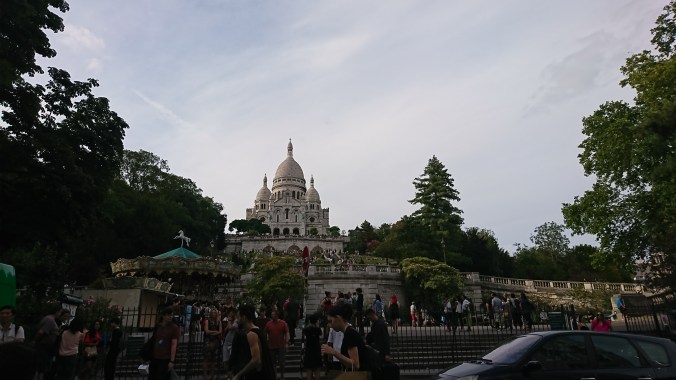
Sacre Coeur

August is a famously quiet time in the city because many of the locals go away on holiday. However, we found the first week in August to be a pretty excellent time to visit: our Eurostar tickets (booked in November) were £52 each for a return (less expensive than it is to get from Nottingham to London on the train…); certain museums in the city are free to enter on the first Sunday of the month and, because it was quieter, the queues were short (we managed the Musée de l’Orangerie and the Musée d’Orsay for free, but also available were The Louvre, the Musée National d’Art Moderne at the Centre Pompidou and many others); and going later in the summer meant that even with temperature highs of 29°C, we avoided the sweltering and sticky heats of June and July.

The benefit of spending a whole week in Paris is that we left barely any of the city unexplored. From our AirBnB base near the Place de Clichy in the 18th arrondissement, a delightful intersection of four arrondissements and in close proximity to my all-time favourites Montmartre and Pigalle, the whole city was at our fingertips. I would like to share some of my favourite places and moments from the trip. These may be food for thought if you are or intend to go to Paris at any point in the future, or if you just want to while away an afternoon thinking about those cobbled streets, beautiful buildings and all the amazing food. Like I will be.

Vegan food

Virginia Woolf’s old adage ‘One cannot think well, love well, sleep well, if one has not dined well’ is one that I take very personally, seriously and ecstatically live my life by. Therefore, first thing’s first: the food we ate. We did a lot of our own cooking to cut down costs, but we did have some fantastic vegan meals out:

Abattoir végétal

Abattoir Vegetal.jpg

This is a lovely restaurant in the 18th arrondissement with a neon sign outside, fresh-feeling interiors and lots of hanging plants. They specialise in seasonal dishes, organically sourced food and organic wines by the glass and bottle. We went a couple of times to this restaurant and sampled the Green Augustine Buddha bowl of legumes, raw and cooked vegetables, smoky tofu and fresh leaves in a smoky balsamic glaze; the Funky Burger made with beetroot, vegan cheddar, pickles and sweet potato fries on the side; and the Hot without Dog made with falafel, grated carrot, red cabbage, ketchup, mustard and sweet potato fries. For dessert we had chocolate cake, and drank our way through both meals with a bottle of organic red. I couldn’t deal with it then, I can’t deal with it now. So much yumminess.

SO NAT – Notre Dame de Lorette

SO NAT

If I went into this trip sceptical about the tastiness of Buddha bowls and their capacity to actually fill you up, I stand completely surprised and corrected. The large Buddha bowls at this cute little café in the 9th arrondissement, down from Pigalle and just before Opéra, were delicious, hearty and required no emergency snack afterwards. My Buddha bowl contained breaded aubergine, pomegranate seeds, lentil dahl, all sorts of colourful veggies and leaves, vegan sour cream and red quinoa. It was ridiculous. MW’s had ginger, rice, BBQ tofu and, again, veggies on veggies on veggies. It was all fresh, came in big portions, was so healthy and tasted rich and delicious.

Maoz

One of the many amazing things we encountered on our trip to New Zealand last year was the healthy fast food franchise Pita Pit: a Subway of sorts that features meat but also specialises in falafel. Add to that some humus, pitta bread and multiple veggie accompaniments (lettuce, tomatoes, cucumber, red onion, carrot, sweetcorn, jalapenos, olives etc.) and you have the beginnings of an addiction. We visited roughly 15 over the course of six weeks and have no regrets. We have found nothing to compare in Nottingham, so when we found Maoz, a falafel and pitta shop, in the Latin Quarter, we were stupidly excited. The novel difference here? The assortment of Middle Eastern fillings (pickles, fatoush, salads, onions etc.) was presented as self-service. We had a joyful time stuffing our own pita pockets full to bursting with fresh, perfectly seasoned toppings. Maoz is unmistakeably a delicious, quick vegan lunch option, right next to Notre Dame Cathedral and Shakespeare and Company.

Bike Rental
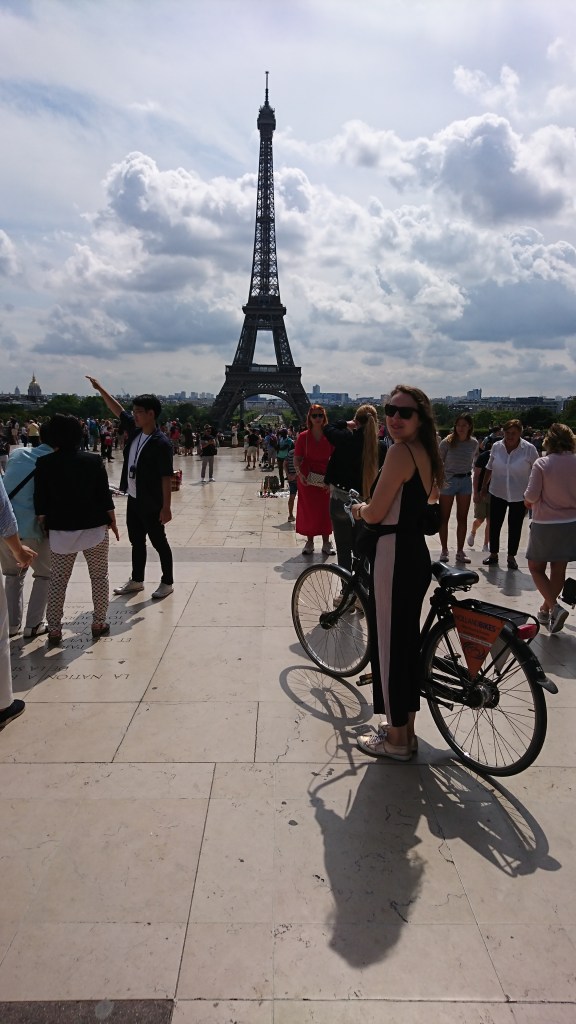
Holland Bikes

In a city like Paris, tours of all shapes and sizes are prolific. We would have loved to have done a tour: I had high ambitions for some form of a champagne booze cruise. Alas, this did not happen but we were very much content to explore on our own. Holland Bikes are a well-reviewed tour and rental service in the city and around France, so we decided to use the Pick and Go service to rent two Dutch bikes from the Arc de Triomphe depot. Renting a bike is so much fun and you can cover so much ground in a short space of time. Plus, Paris has excellent infrastructure for cyclists and e-scooter riders, so despite the heavy traffic in parts (we categorically avoided the wacky races of Place de la Concorde and Étoile de Charles de Gaulle) it felt very safe getting around. We cycled from the Arc de Triomphe down to and around the Bois de Boulogne, then back up and around to Trocadéro, the Champs de Mars, Invalides and along the Seine. We had so much fun.

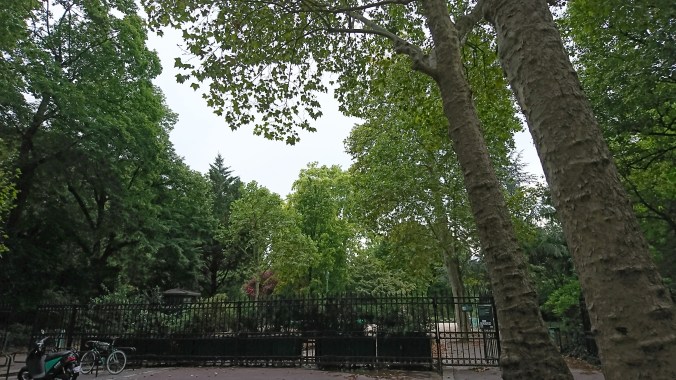
Parc Monceau
Park Monceau.jpg

There are so many beautiful and shaded places to relax in Paris, which I am sure were absolutely essential during the 40°C+ heats the residents experienced this summer. The Place de Vosges in Le Marais came highly recommended, and we enjoyed the classic Tuileries gardens and Luxembourg gardens on the Left Bank. Whilst walking home on our last afternoon, we headed for the Parc Monceau which is in the 8th arrondissement, just off the Boulevard de Courcelles. Although the park has stylised elements like a little Venetian bridge, a Classical colonnade to emulate ruins and the most charming old carousel, there was something about more primeval about this park, compared to the more clipped and manicured lawns of the big jardins. We sat on a little green bench people-watching for a good long time in this prettyish wilderness.

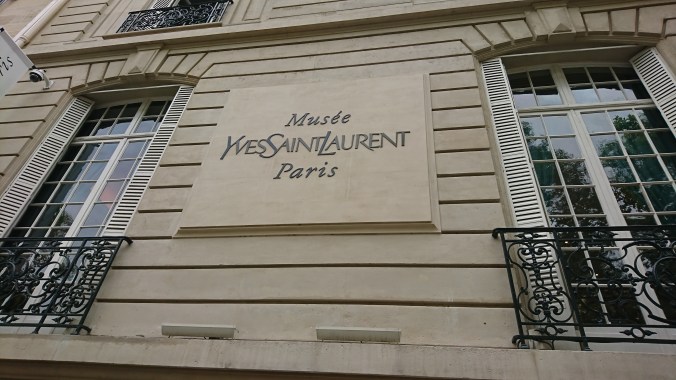
Musée Yves Saint Laurent Paris
YSL Museum.jpg

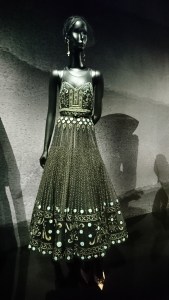
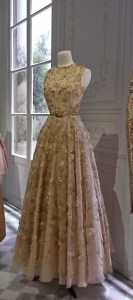
Oh boy. Pour moi, a trip to Paris was never going to be complete without a slice and dice of fashion history. I plan to write a longer post about the YSL Museum, but it’ll summarise it briefly here for now. Yves Saint Laurent never used to be one of my favourite designers; perhaps controversially, I have been more of a fan of the edgier Saint Laurent incarnation of the brand under Hedi Slimane and Anthony Vaccarello. I was, however, aware that he is an inescapable part of fashion history, after being made head of Dior at the age of 26 and for the successful couture house he built in his own right. What became clear to me from the exhibits in the museum was that, like Christian Dior (you can read my analysis here), Saint Laurent’s prime aim in design was to make a woman feel her most confident and beautiful. I find this to be such a validating and comforting thing. Even though fashion is so much to do with comparison, beauty standards, perfectionism, ageism, white and able-washing, what I have noticed is that oftentimes at the centre of a brand is a sensitive, empathic and deeply creative person who just wants to make women feel good. I really appreciate that in Yves Saint Laurent and his contributions to fashion. Furthermore, he was famously one of the first designers to champion the use of non-white models, pioneered the trouser suit and established his Rive Gauche collection to make fashions accessible and affordable to ordinary people.[1]
Mondrian dresses.jpg

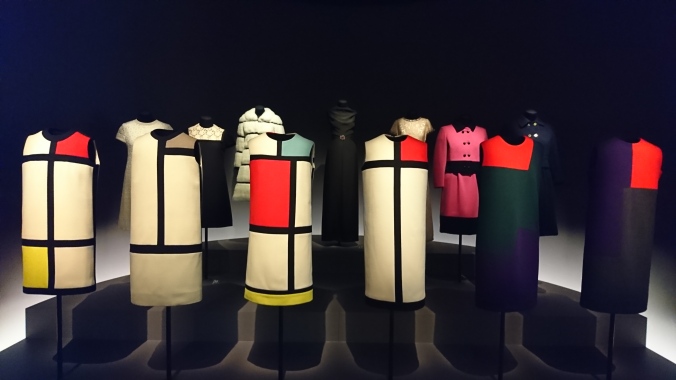
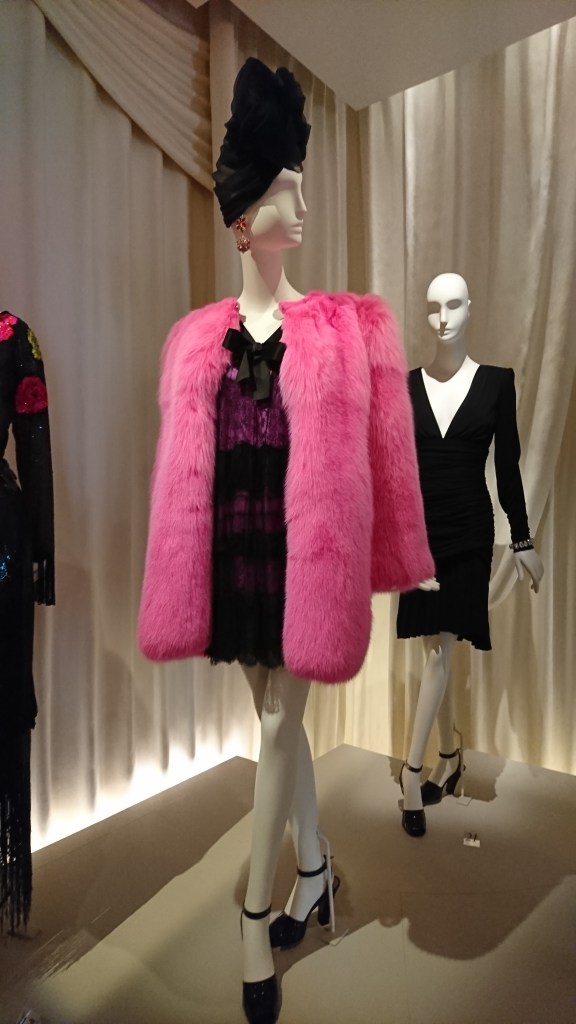
The building on the Avenue Marceau is home to his formidable archive, including the epoch-defining Mondrian dresses, the extensive jewellery collection and this absolutely perfect ensemble:
YSL dress


I was able to walk through a reconstruction of his study, watch films about his work and his partner Pierre Bergé and soak up the beautifully presented collection pieces. I must also add that the museum is wonderfully air conditioned, was relatively quiet and, all-in-all, a genius way of preserving Saint Laurent’s creative legacy.

Montmartre cemetery

Montmartre Cemetery.jpg

This was a go-to last time we came to Paris and, being so close to our apartment, was definitively on our itinerary again. Cemetery-visiting may seem like quite a morbid activity, but I believe that visiting cemeteries helps to really contextualise a place and the people in it. To really know and understand a city and its different people, to get an insight into what they value, treasure and, ultimately, to understand their approach to living life, a clue can be found in exploring how they treat their dead and the way they design and use their communal and private spaces of remembrance and reflection. Even if we have not visited Paris, many people are aware that it is a city associated most commonly with love, art and revolution. This, I would argue, is reflected in their cemeteries, which are uniquely Gothic and gorgeous. There is a joie de vivre and gravitas evident in the Parisian cemetery, and Montmartre in particular, which makes it a space in which life, family and creativity are celebrated and revered. Of course, I couldn’t help thinking that it is only the wealthy and respectable who could have afforded such exuberant graves. Additionally, in no other cemetery have I felt that the burial of the dead is used to so confirm and validate the people left behind. It is in this capacity that I think gloom seeps into the cemetery: both in the potentiality that the wealthy dead were desperate to be remembered and that the living left behind were so desperate to build something in place of their lost loved ones.

Many famous people are buried in this city, and their resting places are free to visit and open for visitors to pay respects. Whilst Père Lachaise is one of the biggest and most famous- we saw the graves of Edith Piaf, Oscar Wilde, Jim Morrison and the Mauthausen Holocaust memorial- Montmartre cemetery is smaller and nestled into the Western corner of the village. Stretching underneath the Rue Caulincourt bridge, it is easily visible from the road and its fantastical rows of grand crypts and family sepulchres look like something from The Phantom of the Opera. We visited specifically to lay a rose at the grave of Vaslav Nijinksy, the lead dancer of the Ballets Russes, choreographer of The Rite of Spring and, I recently found out, a passionate vegetarian. I have mentioned here before that The Rite of Spring has been a very important piece of music and dance to me, and I wanted to show my gratitude to this extraordinary sensitive and surreally gifted man who helped collaborate on and create such an awe-inspiring piece of cultural history.

Nijinsky


[1] https://www.nytimes.com/interactive/projects/cp/obituaries/archives/yves-saint-laurent-models-couture [accessed 14:41, 13th August 2019].
Love Note – Beach Books Reviews

Whilst on holiday, I managed to get through three books out of the stack of four that I took with me and, as you can probably imagine, I took great pleasure in spending the majority of my day reading. I was helped along by the books themselves, and what started off as me playing catch up with the most popular contemporary literature from the past few years became an interesting immersion in literary bingeing. Thanks to a combination of formal and linguistic trickery, the novels I read signalled to me that binge-culture has made one giant leap from television to literature. Of course, there have been many page-turners that people have read at record speeds, with many others being described as un-put-downable, I’m thinking Gone Girl, The Da Vinci Code, every murder mystery or thriller ever published. But, there is something to be said for the novels currently trending that have a swept-away-in-one-sitting quality to them that is immensely enjoyable, but also indicates that we are, perhaps, as bad as ever at taking our time to enjoy our media and entertainment, allowing the experience of enjoying them to mature and mellow over the course of days or weeks. This is not a criticism per se, but something I became quite aware of.

Here are my reviews of the novels I managed to read, and I would love to hear your thoughts!

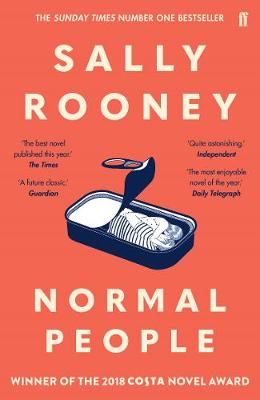
Normal People – Sally Rooney

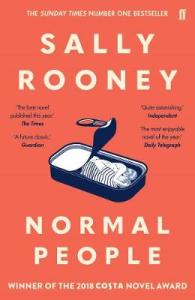
Normal People

I enjoyed reading this novel more than I actually enjoyed the novel itself. The lack of speech marks is one of the most discussed and obviously experimental aspects of the novel and there are a number of reasons why I think Rooney opted for removing formal punctuation. Primarily, its absence helped to propel the pace along as quickly as possible. Speech, internal dialogue and description in the novel melt into one another seamlessly, and before I knew it I was flying through the novel at electric speed. The subtle mingling among and between Connell and Marianne’s internal and external worlds is compelling, and perhaps goes some way to perform the confusion and fluidity of their romantic entanglements. These were powerful, to an extent: Connell’s struggles with social status, class and privilege combined with Marianne’s abusive family trauma form a murky, disorientating bedrock to their sexual and emotional relationship. Yet, whilst they were immersive, these entanglements began to wear thin for me. Of course, culturally and artistically we are rarely given an insight into healthy, responsible relationships to aspire to, but Connell and Marianne’s story really did begin to feel like a rather prolonged game of kiss chase that could have been resolved with some honesty and proper communication. Whilst I enjoyed the fast pace, the story became increasingly frustrating.

The novel has been revered as a refreshing insight into modern relationships, yet all I saw was prolonged adolescence. The question that arose during my reading of it was: why don’t people talk to one another honestly about what they want, need and expect from a relationship? Of course, many people do not have the answers to these questions themselves, which is why the romantic landscape has always been a mass of tension, confusion and a channel for our own neuroses, precisely because the terrain is so horrifyingly vulnerable. I think I would like to see stories where people grapple more with the deeper core fears that relationships can elicit than indulge in surface-level dabbling. This is because for Connell and Marianne, like with everyone else, there is ample emotional material to explore. For example, it is heavily suggested that Marianne has an eating disorder, but there seemed to be no exploration of this, and I think with such a big, important and truly devastating area of mental health, vague allusions are irresponsible. Normal People is absolutely compelling formally, but the story and characters lacked the maturity and deep excavations of relationship politics that I may have come to the novel expecting.

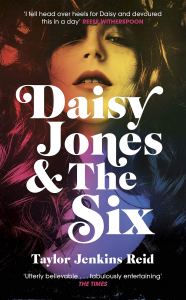
Daisy Jones and The Six – Taylor Jenkins Reid

Daisy Jones

Just as Sally Rooney fiddled with formal punctuation to create a sweeping, pacey narrative for Normal People, Taylor Jenkins Reid did away with conventional prose altogether to construct the mock-oral history that is Daisy Jones and The Six. The language is presented like a play or a screenplay, rapidly interchanging between characters, their opinions and their contrasting perceptions of how past events unfolded.  This, as with Normal People, makes for an extremely fast-paced and romping read, and I scoured my way through the drug-filled emotional and musical rollercoaster that is the rise and collapse of fictional rock band ‘Daisy Jones and the Six’. It does not surprise me at all that Reese Witherspoon picked this up for production so quickly: the screenplay layout of the novel lends itself to a visual medium so well, and the construction of authenticity and, almost, reality of this fictional band is begging for actors and musicians to literally flesh the whole thing out. Additionally, the novel harks back to the seventies and the loves, losses, betrayals and creative headiness of the Fleetwood Mac era; a band history integral to the fictional machinations and dalliances that we see unfold in the novel. It manages to effectively combine warm nostalgia, with, and rightly so, a thorough dissection of emotional pain, addictions and toxic relationships, and I think it is on the whole successful.

The novel follows Daisy Jones, the child of rich, famous and self-absorbed parents who do not seem to care about their only daughter. She seeks refuge in narcotics, drinking and a rock and roll groupie lifestyle on the Sunset Strip at the age of fourteen. Billy Dunne and his brother Graham hail from small town Pennsylvania; their father leaves them early on in their childhoods, and as teenagers, they found a band that goes on to be called ‘The Six’. Billy develops addictions to alcohol, drugs and sex with groupies, whilst his loyal, passionate and amazing wife Camila waits at home for him. In fact, Camila, for me, was the best character in the novel. Whilst Daisy is super beautiful, glamorous and an emotionally tortured Bambi, Karen Karen is a veritable badass, Graham is a sweetheart and Billy is an endearing and somewhat extremely self-righteous mess, Camila is an unwavering beacon of solidity and support whilst the people around her flail and crash about, high on concoctions of drugs, fame, creativity and self-hatred.

Whilst there are many excellent pearls of wisdom and sassy quips in the novel, exploding bullshit around sexism, music, friendship and love, one of her quotes stands out to me the most: ‘I think you have to have faith in people before they earn it. Otherwise it’s not faith, right?’ She supports and believes wholeheartedly in the best versions of her loved ones when they’re at their absolute worst, even when that has meant she has suffered as a consequence of their actions. There are so many times when she could have chucked in the towel with her relationship with Billy, and some would argue that perhaps she should have. Camila, however, doesn’t tolerate terrible behaviour and she definitely does not stay in a relationship where red flags abound: she sets boundaries, expectations and trusts in her husband’s best self and ultimately propels him on his road to recovery. Sure, her story isn’t a romanticised and drug-addled one, which I think, despite a lot of its efforts, the novel still constructs for the enigma that is Daisy Jones, Camila is strong, knows herself and is the responsible adult we should strive to be. It is for this reason that the ending of the novel is incredibly bittersweet and I would love to discuss it here and with people at some point. Send me your thoughts please!

Circe – Madeline Miller

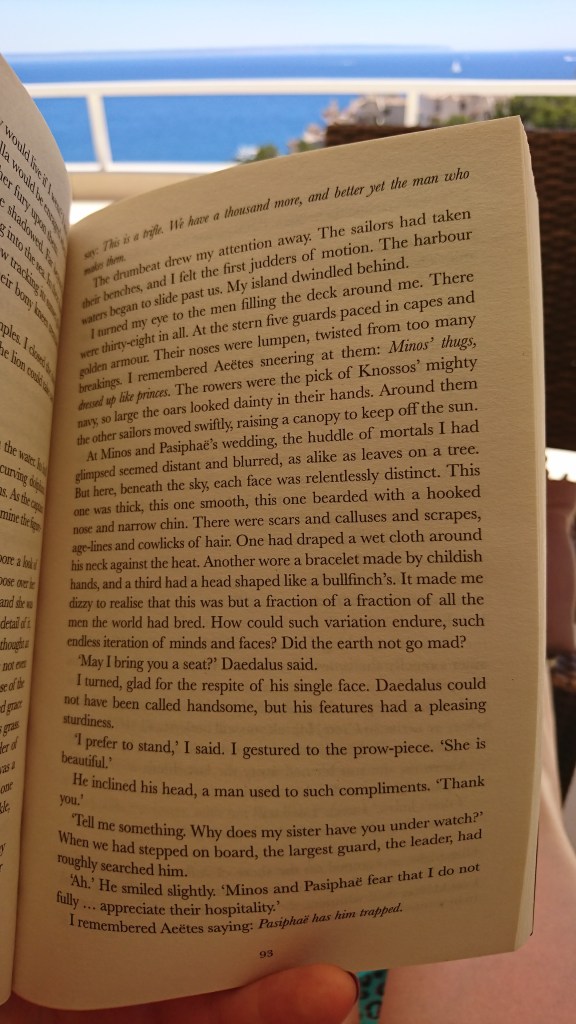
Circe extract

This was hands-down my favourite out of the three books I read (and the only one I thought to take a holiday snap of!). It was heart-wrenching, magical, modern and yet felt beautifully and brilliantly in-keeping with the ancient framework from which it hailed. The story, whilst a reimagining, felt bedded in Homer’s mythology: all the key ancient rituals and practices were present, for example xenia, or guest-friendship, which is illustrated so beautifully in the novel as a dance of wits, manners, generosity and covert motive-seeking between host and visitor. It enlivened what the original treats as a societal staple, illuminating it with nuance and tension. We also got a crash course in the wars of the Titans, various mythological characters like Daedalus, Medea, Jason and Ariadne, alongside the predictable and anticipated arrival of Odysseus, and the very unpredictable arrival of Penelope and Telemachus (I loved this!). The novel was able to powerfully break apart some of the simplistic tropes that the character of Circe has carried with her for thousands of years. No longer does she carry the motiveless malignity of the original: the scheming nasty witch woman who seduces Odysseus and turns all of his men into pigs. She is sensitive, attuned to the natural world, desperate for approval she never gets, uses violent magic in self-defence, but isn’t immune to the fear and anger-based trappings of ego. Ultimately she becomes the source of her own very particular, self-cultivated power, and it is immensely joyful to read.

I did disagree, however, that Miller presented Circe as some two dimensional empowered ‘superwoman’, as reviewed by The Times.[1] This is a novel where the central protagonist constantly aches: she aches for belonging, she aches from the sweetness and loss of love, whether that’s with a partner, siblings or children, and she aches from the bullying and torture at the hands of her horrible family and the all-powerful, oftentimes selfish, meddling gods. This does not mean to say she is weak, but she is certainly not presented as some all-powerful, sassy superwoman. What strength Circe has is developed from her ability to endure, and what a whole host of trials she is forced to deal with. Whether it’s being confined to an island, acting as a midwife at the birthing of the Minotaur, living under the wrath of Athena, being manipulated by Hermes or being raped by sailors, this woman is put through the absolute wringer. She emerges all the more patient and trusting in herself and her capability of putting up with bullshit, but, again, not a superwoman, whatever that even means.

What I loved about this novel was that Miller actively redistributes the motiveless malignity accusation with which Circe has been cast around the hosts of horrors that is the supporting cast of gods, demigods and men, who act with violence, without fear of repercussion, because they can. She is repeatedly trapped and confined by the whims and desires of others and, of course, fate itself. Over the course of the novel, she learns that in spite of having magic, she is powerless to resist the power of the gods, the desires of the human heart, and the unrelenting changeability that characterises life, whether it’s defined by mortality or immortality. 300 years pass over the course of Circe’s story, making it perhaps one of the most comprehensive coming-of-age stories I have ever read, because it spans enough to time to develop that most important hallmarks of maturity: perspective. Maybe that’s why so many of us never get there.

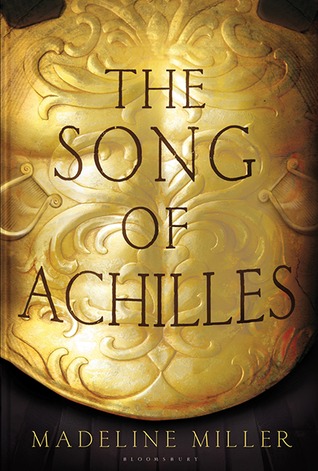
I really could not have enjoyed this novel more and I am racing to get a copy of Miller’s early novel ‘The Song of Achilles’, which tracks the relationship between Achilles and his lover, Patroclus.

Song of Achilles


[1] ‘Circe by Madeline Miller – back as superwoman’, Siobhan Murphy https://www.thetimes.co.uk/article/review-circe-by-madeline-miller-back-as-superwoman-37kctxgss [accessed 10th July 2019].
Love Note – Beach Books

I love reading but, I am going to confess, I am pretty bad at investing in and dedicating time to contemporary literature. I have spent many years covering English and Russian classics from the nineteenth century, being swept away by Shakespeare and his (mostly male) contemporaries and reading novels, poetry and plays from the early twentieth century. Aside from the latest releases from Naomi Klein, Arandhati Roy and Margaret Atwood, I have tended to swerve away from contemporary literature for a long time and I don’t think this is particularly wise. I think reading amazing historical works of literature is always going to be important; but I don’t think this should be completely at the expense of what people are producing and writing right now.

Therefore, to accompany me on my beachy holiday (3 days and counting!) these are the contemporary novels I am packing with me:

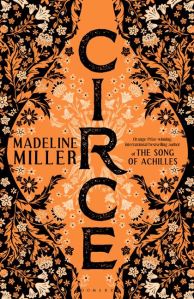
Circe

Circe – Madeline Miller, 2018

Why I’m excited about it:

This is my get out of jail free card: Circe is a re-telling of the Greek myth of Circe, one of the most interesting and famous characters in Homer’s Odyssey. So yes, even though the subject matter here is veritably ancient, it promises to be a contemporary, new perspective of a controversial character. If you’re not in the know, in Homer’s work she turns Odysseus’s men into pigs, seduces Odysseus, puts him and his men up for a year and loses some of her power. I studied Classical Civilizations at A Level where we read the Odyssey in its entirety, and I was always healthily sceptical of Odysseus’s heroic credentials (I am more of an Aeneas fan, but to each their own). In particular, I think the way he gets off with women left right and centre whilst his poor wife Penelope stayed at home for twenty years fighting off suitors is pretty questionable (read Margaret Atwood’s The Penelopiad for more). I am excited to see where Miller takes the Circe character and her story from Homer’s narrative: the whole single, powerful woman must be a witch thing needs a serious rethink.

Daisy Jones

Daisy Jones and the Six – Taylor Jenkins Reid, 2019

Why I’m excited about it:

Reese Witherspoon is a pretty good weather vane for anything pop culture-related (see her performance and production credits for Legally Blonde, Big Little Lies, Gone Girl and Wild). Now, she is set be an executive producer on a TV adaptation of this book, only published in March 2019, which she claimed to have read in one day. Additionally, the first time I actually heard about Daisy Jones and the Six was on Claudia Winkelman’s Sunday evening show on Radio 2, where she absolutely gushed over it for how immersive and compelling it apparently is. My interest: officially piqued. The novel purposes to follow the lives and loves of a fictional seventies rock band, which screams of Fleetwood Mac levels of intrigue. If there is any time to pop on some rose-tinted glasses and have a wallow in seventies rock and roll, it’s on a warm beach.

Normal People

Normal People – Sally Rooney, 2018

Why I’m excited about it:

This book was a bit of a sensation last year and I am curious about this bandwagon. The only bits of it I have seen have come from Zoe Kazan’s Twitter and apparently there are no speech marks. I find this disconcerting but I am willing to embrace the uncomfortable. I once took a crap version of James Joyce’s Ulysses on a Greek island holiday and failed to sufficiently commit to the challenge due to sea, sun and sand-induced lethargy. I am in no way comparing Normal People to Ulysses, but I am thinking it may, potentially, have the right amount of formal, linguistic and emotional difficulty to suit the serious lazing about I have planned. We’ll see what happens. I hear that Normal People is based in Ireland and that it follows a relationship between Connell and Marianne, both from the same rural town but from very different worlds. The novel promises a sweeping and refreshing love story about two people who can’t seem to escape each other or themselves. This excites me.

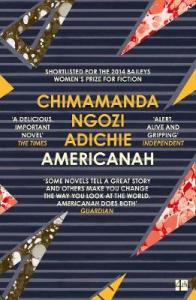
Americanah

Americanah – Chimamanda Ngozi Adichie, 2013

Why I’m excited about it:

Firstly, the cover of this book is beautiful and I like staring at it. Secondly, Adichie is a supremely articulate and intelligent woman. I loved her TED talk about the importance of feminism, the importance of teaching boys about gender equality and deconstructing toxic masculine stereotypes, and I encourage everyone to watch it. You can do so here. Even though this talk has been seen over 5 million times, Adichie is primarily a very successful writer of fiction. I have never read any of her novels or short stories before, and Americanah looks like a great place to start. The novel follows a Nigerian couple separated by war and dictatorship in their home country, who are forced to build new lives separately in the USA and UK. The novel tracks their separation, new experiences abroad, and their reunion. The novel explores the brilliance and pitfalls of globalization including, most specifically, the burden and barriers of race that Africans experience in the West, something these characters in particular don’t feel keenly in Nigeria. Americanah feels like it’s going to be an important, challenging read and I am ready for it.

Love Note – Beach Music

In a couple of weeks I am swapping rainy old England with the warmer environs of Mallorca and I can’t bloody wait. After a very busy year, I am completely ready to park myself on a beach with my stack of contemporary literature (I’m trying to remove myself from the nineteenth century and read more current things), a couple of cold beers and my favourite beachy playlist. I know I am ridiculously lucky to be able to get away from it all for a bit and I am relishing the opportunity to switch off and zone out.

Of course, however, because we are all constantly flirting with burnout, phone-addiction and have the attention-span of goldfish, myself included, it can take a little while to completely unwind from the rat race that is life in twenty first century Britain. Even though I want to just switch off, it feels difficult to do so. Additionally, travel has become slightly more anxiety-inducing for me personally because it removes me from routine, the security I feel from being in my beloved home and because the onset of new sights, sounds, smells and sensibilities can be very over-stimulating. Feeling anxious about going on holiday doesn’t hold me back from travelling, but I definitely have to consciously take stock and ease myself into the groundlessness that new experiences and exciting adventures bring me.

Meditation helps, my gratitude practice helps and of course, music helps to alleviate the kind of liminality that I sometimes experience when I’m on holiday. There is nothing better than a summery playlist to accompany a lazy sojourn on the beach. Here are my favourites from past and present beach trips that help me fully immerse myself in my beautiful surroundings and relieve any anxious quibbles or digital withdrawals I might experience whilst being on holiday.

Lana Florida Kilos

‘Florida Kilos’, Lana Del Rey, Ultraviolence – Old faithful. I actually quite disliked this song when I first heard it. But after a week spent listening to it with a lemon lolly and warm sunshine, I realised that a beach setting for listening to it was all that was missing.

Kendrick Lamar Blow My High

‘Blow My High’, Kendrick Lamar, Section 80 – Super-duper chilled and fun, with tributes to Aaliyah and Lisa Left-Eye Lopes, this is one of Kendrick’s more light-hearted outputs. It bubbles and pops with youthfulness.

Kendrick Lamar The Recipe

‘The Recipe’, Kendrick Lamar, ft. Dr Dre, Good Kid, M.A.A.D City – Kendrick again because he is a babe. A more badass beach song than ‘Blow My High’, but then what would you expect with Dr Dre on board. This is a song for serious sunbathing done seriously and truly allows you to indulge in your good fortune at being on holiday.

Michael Kiwanuka

‘Cold Little Heart’, Michael Kiwanuka, Love and Hate – This song evokes images of the rugged Californian coast thanks to its use as the title music for fantastic HBO show Big Little Lies. The full ten minute version of this song is an epic, bluesy opener to a truly stunning album and is a whole story in itself. Gorgeous song, gorgeous voice, gorgeous situation.

Groove Armada

‘At the River’, Groove Armada, Northern Star – This is a quintessential chillout song that has been a permanent fixture on Harping On holidays since 1998. It is perfect for setting the mood when you arrive at your destination and provides a musical portal to escape from the chaos of modern life.

Mylo

‘Sunworshipper’, Mylo, Destroy Rock and Roll – I can’t convey how wonderful this song is. It is a pure chillout classic, with an optimistic, bohemian otherworldliness to it. Features the classic repeated line: ‘And so I took off on my bicycle’.

All Saints 2

‘Pure Shores’, All Saints, Saints and Sinners – Take me to my bloody beach. This song is so atmospheric and an instant relaxant whenever there is sand, sea and sangria nearby. In fact, it’s an instant relaxant wherever you are.

Rye Rye

‘Sunshine’ ft. M.I.A, Rye Rye, Go! Pop! Bang! – This song was on the soundtrack of Sofia Coppola’s classic film The Bling Ring and is a fun, catchy hymn to summer time. Sings from the same beachy sheet as ‘Blow My High’.

bob-dylan-mr-tambourine-man-cbs-2

‘Mr Tambourine Man’, Bob Dylan, Bringing It All Back Home – The first time I heard this song I was driving home from a festival with two friends and we all cried. It is slightly melancholy, perfect story-telling about free spiritedness and having nothing to do and nowhere to go. Makes me think about that point in your holiday where you start calling your hotel/AirBnB/apartment/flat/other fleeting holiday accommodation, ‘home’.

Tame Impala

‘Feels Like We Only Go Backwards’, Tame Impala, Lonerism – Seductive synth, mind-bending lyrics and a twinkling voice over the top, this song is an effective daydream, perfect for staring out at the sea and warming your feet in the sand.

One for good luck:

Lana West Coast

Lana Del Rey – Paradise, Ultraviolence, Honeymoon, Lust for Life LPs are all generally perfect for the hot beach holiday (windswept beach walking holidays in Spring/Autumn times are a different kettle of fish). I love Born to Die but it’s why more of a cityscape/ small town-trip record scenario.

Old, old favourites from beach holidays gone by:

Christina Aguilera – ‘Primer Amor’ and ‘Infatuation’, both from Stripped

Mis-Teeq – ‘Strawberrez’, Eye Candy

Michael Jackson – ‘Remember the Time’, History

Rihanna – ‘Say It’, Good Girl Gone Bad

Madonna – ‘Beautiful Stranger’, Ray of Light

Justin Timberlake – ‘Senorita’ (in fact, all of Justified)


220px-Christina_Aguilera_-StrippedMisteeqRihannaRay_of_Light_Madonna

Dior: Designer of Dreams

On Friday 5th April, I trundled down to London to visit two very excellent friends. We have partaken in a number of cultural weekends in the capital over the past few years, with trips to see the Savage Beauty exhibition at the Victoria and Albert Museum, The Vulgar: Fashion Redefined at the Barbican, the Vogue 100 exhibition at the National Portrait Gallery, the West End production of Tennessee Williams’s Cat on a Hot Tin Roof starring Sienna Miller and Jack O’Connell (where somehow we managed to get seats in a box, very jammy), amongst many other lovely, fun activities. This weekend was in every way just as lovely: in spite of a sketchy visit to a fancy restaurant off Regent’s Street where we were made to feel like actual scum, we shopped in Arket, visited the new Archlight cinema in Battersea, drank all the Taddy Lager at a Samuel Smith’s next to Liberty’s and spotted BBC Middle East correspondent Jeremy Bowen at Denmark Hill station and started smirking at him by accident. He definitely thought we were insane. The highlight of the trip, however, amongst all the other loveliness, was our visit to the Dior: Designer of Dreams exhibition at the Victoria and Albert Museum.

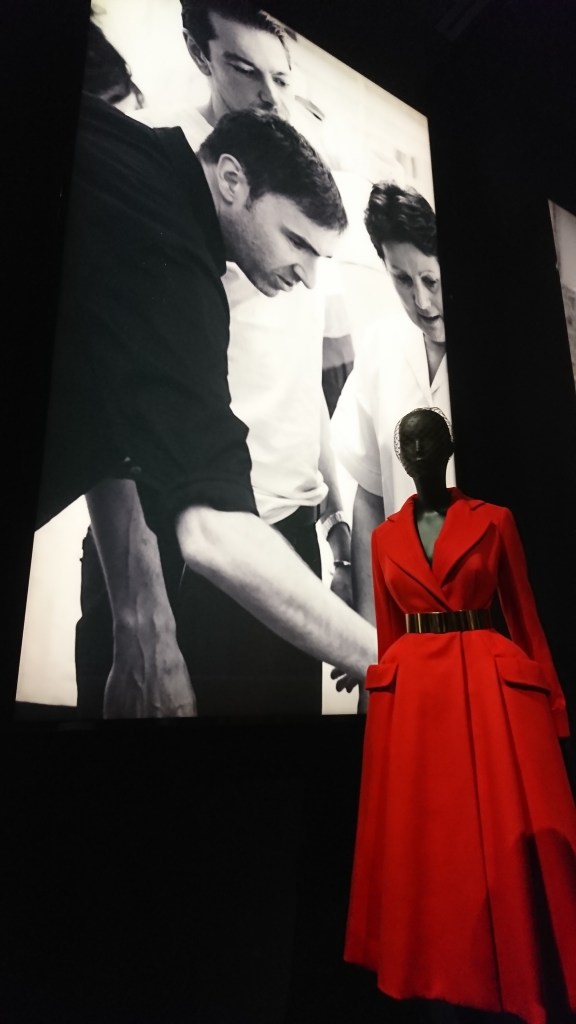
My first academic introduction to Dior came through the documentary, Dior and I: a fly-on-the-wall film that followed Belgian designer Raf Simons as he took up the mantle of creative director in 2012. I had been aware of John Galliano’s tenure, largely thanks to Lily Cole who was a veritable goddess in his designs, but had little actual passion for the house of Dior beyond that. I have a penchant for the theatrical in fashion, but I was more into Alexander McQueen, Vivienne Westwood and Marc Jacobs at Louis Vuitton at the time. Galliano was famously fired from Dior after an anti-Semitic rant outside a café in Paris, and this created a space at Dior for something new and different. The film introduced us to Raf Simons, with his refreshingly modern aesthetic and his endearing emotionality. Reading from Christian Dior’s autobiography and discussing art, it became clear that Dior was on the cusp of being reimagined for a new generation. I fell for the brand then and there.

Raf

I came to learn from Dior: Designer of Dreams that the fact that there is even a house of Dior is nigh-on miraculous. Christian Dior founded the label in 1947, creating the ‘New Look’: he divined an ultra-feminine silhouette, re-introducing women to sensuality after the austerity, deprivation and destruction that encompassed life during the Second World War. In no more than ten years, he built a booming, globally successful fashion house, placing his love for women at the very heart of his work. He introduced the H line, the Bar jacket and many other ingeniously crafted designs to emphasise curves, create drama and indelibly flatter. Tragically, he died in 1957; but in the short but very sweet time he had, he laid the foundations for one of the best-loved fashion houses of all time.

I believe the key to Dior’s success in his lifetime and beyond can be attributed to his commitment to women. Indeed, he seems to have dedicated his whole sartorial life to making women look and feel beautiful. He said:

‘Deep in every heart slumbers a dream, and the couturier knows it: every woman is a princess’.

It is one thing for men to say that they love and support women, but it is almost overwhelming how much Christian Dior repeatedly practiced and demonstrated that love through his creations. He knew how to make women feel special through the alchemical combination of silhouette, colour and craftsmanship. He in no way objectified women: instead, he placed womanhood and femininity on a pedestal to be absolutely adored. I used to be very sceptical of traditional notions of femininity: I’ve read my Judith Butler, I understand that gender is performance in many ways. However, where so much disrespect and abject hatred of women and their bodies has been witnessed and experienced throughout history, for a man to be so readily loving and devoted to women, is amazing. Similarly, I do not subscribe to monarchy or regal inequality in any way, but I think the reference to princess-hood can be read more archetypally. His work helps to bring women back to the sense of their own worthiness: that, yes, each one of us is unique and special, with dreams and ambitions, and a powerful capacity for conscientiousness, compassion, joy and love. All of these things make us inherently beautiful. I know a lot of women, including myself, have a hard time believing that, but Christian Dior is here to remind us, in a sartorial, fashionable way, that it is truly is the case.

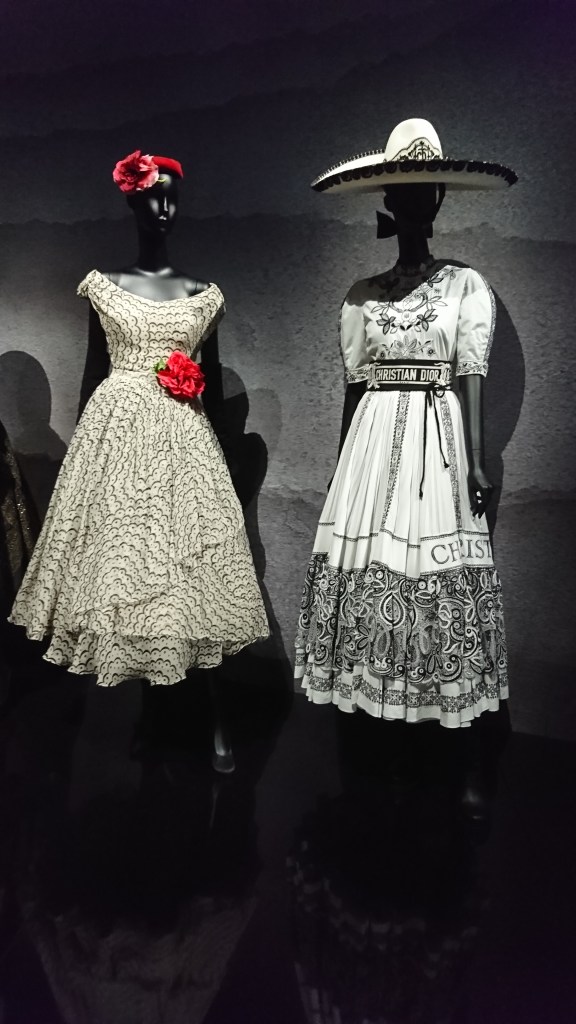
Christian Dior’s legacy has been kept intact thanks to a line of wonderful designers who placed women and what women want at the core of their work. Everyone, from Yves Saint Laurent to Maria Grazia Chiuri, have adhered to his silhouettes and inspirations, but subtly and ingeniously regenerated and refreshed them for each generation of women that passed their way. The exhibition presented and reflected this fact beautifully, placing pieces from all of Dior’s eras next to one another: for example, these two dresses from 1953 and 2019:

Mexican Dior

Both of these dresses nod to Dior’s interest in Mexican art and sartorial sensibility, speaking to each other across the years.[1] Although the Dior logo splashed across the dress on the right is a dead giveaway that it is a 21st century piece, they could both feasibly have come from the same collection. Similarly, the 18th century-inspired collections exhibit both continuity within the house of Dior and their individual designer’s unique perspective and flair:

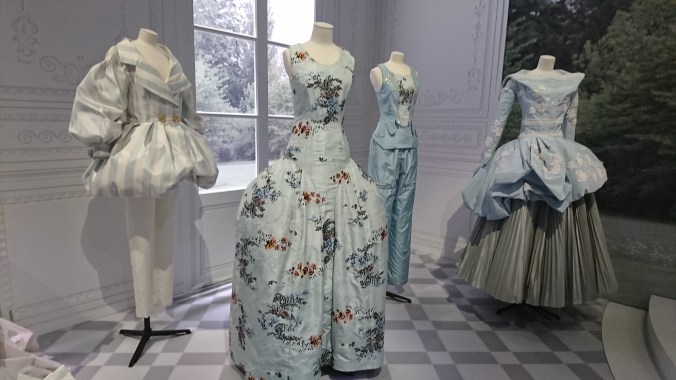
18th century Diors

On the far left we have Gianfranco Ferré’s imagining of an 18th century coat, followed by Raf Simon’s cornflower blue dress with drop-waist hip emphasis; then we have another Raf Simons creation, this time a two-piece of intricately embroidered top with combat trousers; and finally a theatrical John Galliano dress with a billowing top and voluminous pleated skirt. All of the pieces are intrinsically Dior and could have walked down the runway in exactly the same show. But, we are also introduced to the subtle modernity of Simons, somehow taking an archaic hip style and making it contemporary and cool; the free-spirited proportion-play of Gianfranco Ferré; and the drama and craftsmanship of Galliano. The accusation has been levelled (at Simons in particular) that these collections for Dior are archivist; however, we can see clearly how the directors have honoured the history and mystique of the house whilst also exploring their own creative interests and personal aesthetics. It makes the collections personal but also part of a fluid, historical whole.

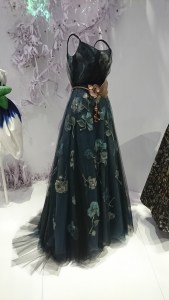
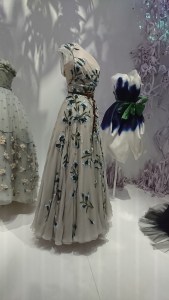
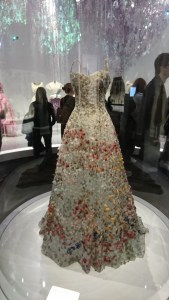
I will always have the softest of soft spots for Raf Simons because his work is just so polished, interesting and fun; but this exhibition formally introduced me to the work of Maria Grazia Chiuri. Up until now, I have reservedly watched Chiuri’s tenure blossom with popularity from afar. I was not convinced that slapping ‘We should all be feminists’ and ‘Why have there been no great women artists’ onto T-shirts to be sold for hundreds of pounds was particularly intersectional. I am still absolutely sure that capitalising on a buoyant new wave of feminism for commercial gain whilst reinforcing exclusivity and hierarchy is not how I want my intersectional feminism to look. However, this exhibition taught me that this woman bloody well knows how to make fabulous clothing. We wandered around the exhibition, pointing to one exquisite dress after another, exclaiming ‘I want that. I want that. I want that’, most of them originating from her sketchbook. Chiuri’s silhouettes are not as avant-garde as a Galliano, nor are they as refined and modern as a Simons, but they are dreamy beyond belief. Deceptively simple forms make way for frothy, fairytale content: her dresses become canvases for beautiful entwining flowers, embroidered constellations, elegant tulle and third eyes.

MGC3MGC2MGC5MGC6

MGC1MGC4MGC8MGC7

I have a newfound respect for what Chiuri is accomplishing at Dior. Namely, creating exceptionally designed clothing, luxurious without being fussy, whilst also, with those clean and elegant lines, very wearable. I would opt for any of these dresses in a heartbeat (please sartorial gods, please).

Without spoiling the exhibition too much for those who are still to visit, the final room was quite literally breathtaking. We audibly gasped and gaped at the twinkling ballroom setting we found ourselves in, debating whether or not we’d overreacted to the splendour on show. The gasps and squeals that came behind us as others entered the room confirmed not. The whole effect was magical: the glittering dresses, the rosy lighting, the cavernous space, everything. Time permitting, we could have sat in that room for ages just absorbing it all.

Dior: Designer of Dreams was another triumph for the Victoria and Albert museum. The layout and story of the exhibition is pitch perfect, demonstrating seamlessly the historical threads of the fashion house, as well as showcasing the individual contributions of the creative directors. The exhibition is a tribute to everyone who has been involved with the house: from Christian Dior himself and his creative directors, to the petit mains creating the designs at the atelier and the women chosen to represent the brand (it features dresses worn by Natalie Portman, Charlize Theron, Rihanna and Lupita Nyong’o). It celebrates womanhood, femininity and the princess within each woman, and the paradox that is a success built upon a winning and delicate combination of history and modernity. Needless to say, if you can get to it, go.


[1] What was also brilliant was that the curators had taken great pains to stress the pitfalls and damage of cultural appropriation, highlighting the ways in which Grazia Chiuri in particular sought practical help and input from Mexican women in the production and presentation of her Mexican-inspired collection.

Love Note: Skiing and Snowboarding

“I felt my lungs inflate with the onrush of scenery—air, mountains, trees, people. I thought, “This is what it is to be happy.”

I am fortunate enough to have spent many years learning how to ski and it is one of my favourite things on the planet. Esther Greenwood’s description of the sport in Sylvia Plath’s The Bell Jar (see above) is absolutely accurate and I couldn’t have put it better myself. I am aware that skiing is a leisure preserve of the middle class and is obscenely expensive; indeed I haven’t been on a skiing holiday in years because I can’t afford it. However, through skiing, I have had some life-changing experiences, met some amazing people and had a whole lot of fun:

Experiences like being five years old and falling off a drag lift and crying in despair (I thought I was lost forever). My instructor, Yannik, scooped me up, tucked me safely in front of him and got me safely up the mountain. There, he kneeled down next to me and pulled off his glove revealing that his right hand was missing. Seeing this shocked me into silence and he said warmly, ‘If I can ski with one hand, you can do anything’;

Bouncing through bumpy forest trails as part of a crocodile of squealing children, gasping with laughter, barely in control and skiing through the most magical wintry surroundings;

Having existential conversations with fellow ten year olds on chair lifts: kids I met and knew for a week, put the world to rights with and then never saw again. This included one British kid I met in Colorado who, after an extensive conversation about winning the lottery, turned out to be related to my P.E. teacher who had taken early retirement after winning the Lotto jackpot a mere two weeks before;

Battling my way down notorious slopes like ‘Sache’ in Val-D’Isère, ‘Shock’ in Breckenridge, ‘Creux Noir’ in Courchevel and ‘Ghengis Khan’ in Vail;

Experiencing the elements in a visceral way, whether it’s gliding around in brilliant sunshine and sparkling snow, or using your gloves as a makeshift mask when snow is hitting your face in sharp pellets;

Learning how to properly carve by an Australian called John who lived his best life teaching kids how to ski during the winter and working as a carpenter in the summer;

Witnessing and experiencing a multitude of mishaps and injuries, for example: falling off a chairlift due to a cacophony of communication errors; falling off a T-Bar with a friend due to a lot of bad luck (why am I always falling off things?!); watching my dad plough into a snow wall he couldn’t see because it was the same colour as the cloud we were skiing through (I almost wet myself laughing); chomping on my tongue during a fall and spitting blood for ten minutes; watching someone in my ski group snap a ligament in her leg and being tobogganed down the mountain; and, the worst, watching 18 year old Neal Valiton tumble to his death during the 2007 IFSA World Freeride Championship in Tignes.

Skiing is fun and some mistakes are unfortunate and unavoidable, but anyone who doesn’t take yours and their safety extremely seriously isn’t worth skiing with. The mountain is beautiful but it is not always your friend. In light of this, it can become an incredibly mindful sport: you plonk yourself on the side of a mountain and somehow you have to get down as safely as possible. For me, crazy as it sounds, what ensues is a very clear and concerted inner conversation with myself. I have to navigate my way through ice and moguls, through white outs with zero visibility and the chaos that are nursery slopes at the end of the day, deciding how big or short my turns have to be, how much speed I can afford to pick up and how the rest of my group are getting along. In the process I give myself pep talks, sometimes even sing to myself when I get a good rhythm, and the whole effect is ridiculously calming.

This was proved again last weekend when I had my first snowboarding lesson at the Tamworth Snow Dome. To begin with, it felt almost sacrilegious because I had abandoned skis and poles for extremely comfortable boots and a single plank with sharp edges. But, after a shaky start, which included screaming in the instructor’s face as he helped me to edge down the hill, I dropped down into that calm, mature inner place that doesn’t always make itself known on a day-to-day basis. It was clear and confident, and sounded like: ‘OK Harper, we’re here now, on a snowboard, slightly out of control, what are we going to do about it?’ I slowed down, becoming mindful of my body and it’s movements (including the limits of what I was currently able to do) and, in so doing, embraced this new and disorientating experience. I have realised that my work is to try and tap into this place a lot more often.


(Featured image is my photo of El Pas de la Casa resort in Andorra, 2015)