Love Note series – Mulan

Mulan, Mulan, 1998

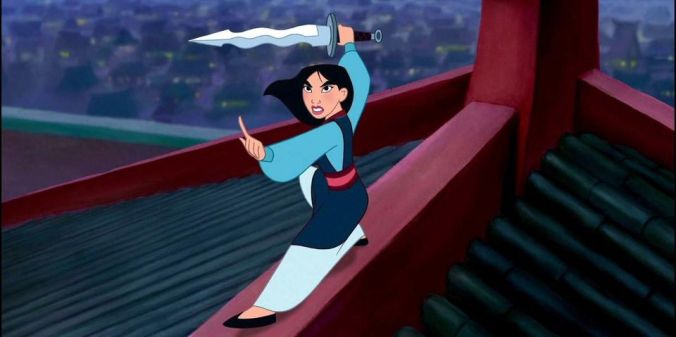
Mulan with shan yu sword

Mulan holds a very special place in my heart. She begins the film as a slightly disorganised, hapless, disgrace (by ancient Chinese standards) and then channels her strength, determination and courage into saving the whole of China from the Huns, both as a soldier and, when she becomes a disgrace again for doing that, in a traditional hanfu dress. Even from a short synopsis, we can see that over the course of the film, Mulan effectively redefines what it means for a woman to bring honour to her family in China, and shows that placing women in arbitrary boxes based on gender and capability is not in the interests of individual women or society as a whole.

Mulan and Little Brother

One of the things I love most about Mulan is that she is resourceful, a creative thinker and easily comes up with ideas and solutions to benefit herself and others. Over the course of the film, we see her attach a bone on a stick for her dog Little Brother to chase whilst simultaneously spreading chicken feed; out of her whole army unit, she is the first to understand how to use two weights to climb to the top of a pole and retrieve an arrow; she uses a cannon to trigger an avalanche that destroys the vast majority of the Hun army whilst saving the lives of all of her comrades; and she devises a plan to rescue the Emperor by having her mates drag up. Her ingenuity coupled with the strength and combat skills she acquires (in particular during the song ‘Dark Side of the Moon’ where the main refrain is ‘we are men’, the irony of which is amazing), make Mulan an incredible force to be reckoned with. No wonder she seems so threatening and at odds with the confining moral and social standards that prevail.
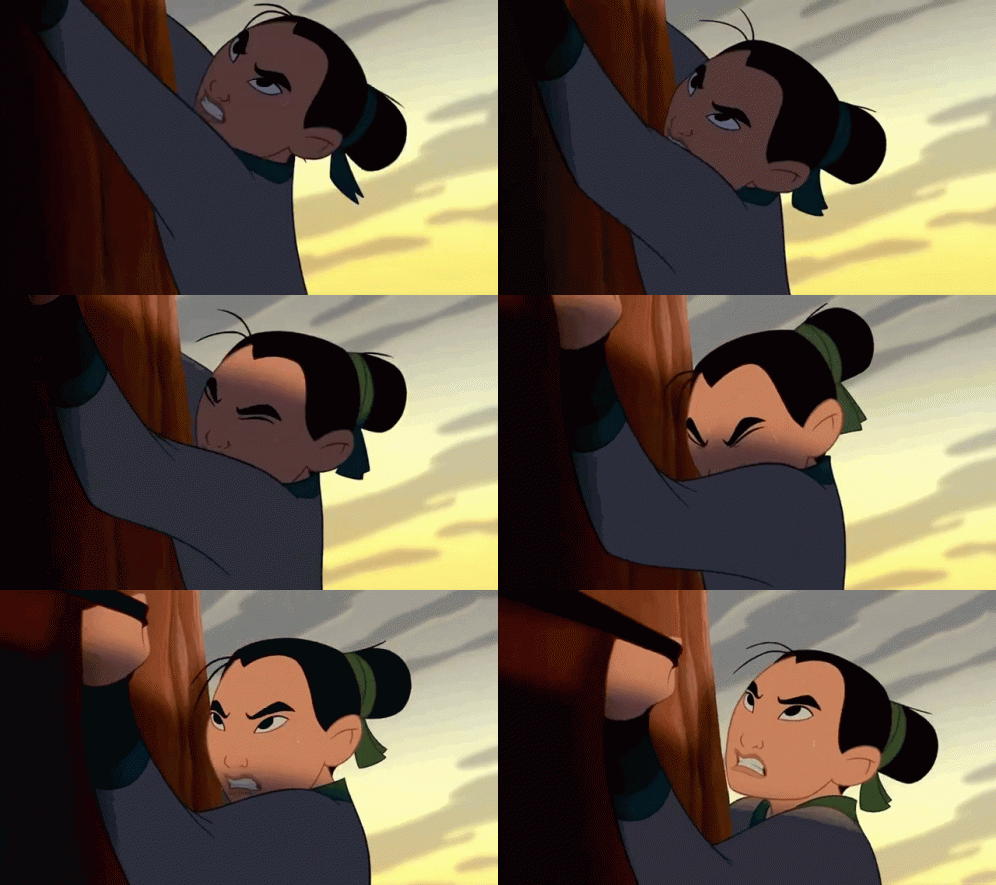
Mulan Climbing

Like Pocahontas and Esmeralda, Mulan also conveys incredible emotional sensitivity. She communicates with her dragon guardian Mushu, has a precious relationship with her horse Khan and is a deeply reflective individual. Her greatest desire, apart from saving the life of her father who is too old to fight in a war, is to become comfortable with her own identity. Her journey over the course of the film is to work out how she can be in the world and be comfortable within herself, whilst also serving the needs of her family and making them proud of her. Whilst, as is archetypal, she is met with set-backs and obstructions, where she takes the opportunity to assess what she has done and who she is. Ultimately though, her self-perception and her own sense of failure all fades in the wake of her needing to make a choice to do the brave and right thing, which she almost always does.

When shit hits the fan with Shan Yu and his allies surviving the avalanche and moving to attack the Imperial City, Mulan doesn’t think twice about gathering herself together and going to raise the alarm and fight back. In doing so, she carves out a place for herself and ultimately earns the respect and gratitude of an entire country. As such, Mulan shows us that in spite of the negative voices around us and within us that tell us that we are not good enough, that we don’t belong and that we have nothing to contribute to the world, we should stir up enough courage to carry on anyway. Ultimately we are defined not by who we or others think we are, but by the actions we take and the way we conduct ourselves in the world. If we live by this principle, of trying to be good and doing the best we can no matter whether it’s fighting in a war or feeding some chickens, that is enough. The rest of the world will fall into place around you.


Crowd bwing to Mulan

Love Note series – Pocahontas

Pocahontas, Pocahontas, 1995

download

Pocahontas is vastly underrated and one of my all-time favourite Disney films. I was transported from the very opening shots: America, covered in woodland and accompanied by indigenous drumming, makes me think of how truly astounding the continent must have looked and been before the environment and its native people were decimated and destroyed by white European colonial invaders. Pocahontas is not only an incredibly bittersweet interracial love story, but is a strong rebuke to colonialism and a love letter to Native American culture. Indeed, Russell Means, who voiced Pocahontas’s father Chief Powhatan, remarked that this film is the greatest representation of Native American culture and life ever seen in a Hollywood motion picture.[1] The screenwriters’ and animators’ attention to detail is second-to-none: from casting Native American actors, using indigenous language in the script, the inclusion of intricate jewellery and body art down to the positioning of the teepees at the beginning of the film, which all face in the same Eastern direction as they would have done in the seventeenth century, this film gives a sensitive and conscious platform to a beautiful culture. And at the figurehead of it all we have Pocahontas, described by the animators as Disney’s first depiction of a woman, not a teenager, in the animated title role.[2]

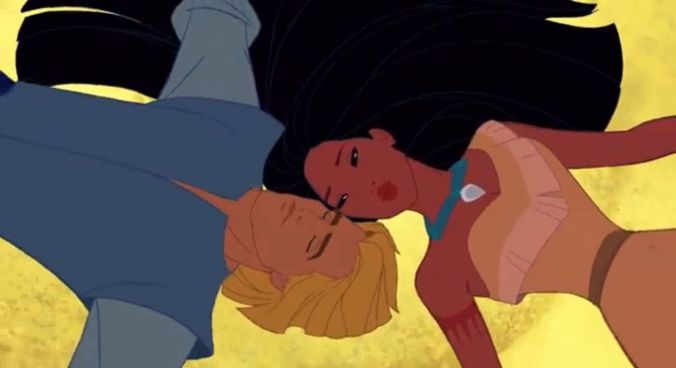
Pocahontas and John SMith

It does seem that Pocahontas operates on a different maturity level to most of the Disney princesses that precede her. I think this may have been because she was an actual historical figure, so extra sensitivity was required in the representation of her and her story, despite the heavy poetic license taken in the film. She risks a lot for the sake of a man she has fallen in love with, but the price for that isn’t losing her voice or developing Stockholm Syndrome (I’m so sorry Beauty and the Beast fans, I still cannot deal with that relationship dynamic!). She is presented as spiritual, closely connected to the animals, plants and people around her, demanding respect for her community whilst showing fascination for John Smith’s. She prevents a war and helps guide both sides to a place of tentative love and acceptance over hatred. And yet, she still manages to keep things light-hearted and sassy, as the situation requires.

Pocahontas lol

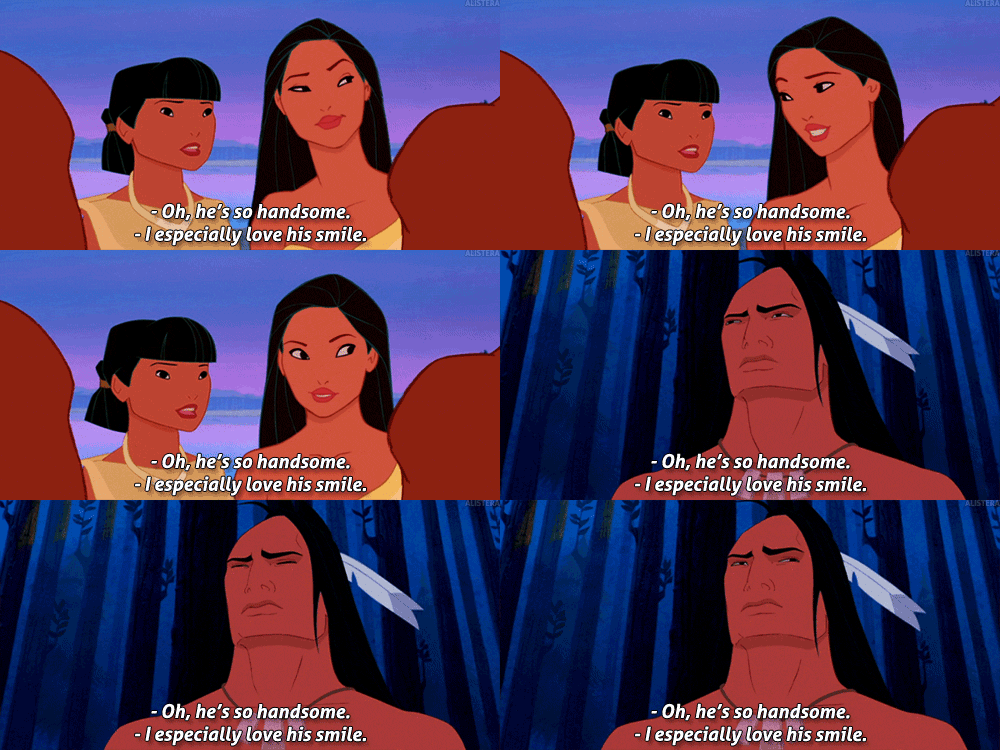
I love Pocahontas because she is playful, free-spirited and boundlessly curious. I love her relationship with best friend Nikomma who will happily tell her when she’s being a show off, which reminds me very much of my own relationship with my sister (I’m the show off). Indeed, my sister and I used to pretend to be Pocahontas and Nikomma when we were playing outside in the garden or on the beach (I was Pocahontas and Nicole was Nikomma, naturally). Pocahontas is deeply in tune with nature and her inner world, looking to the plants and animals around her, as well as her dreams for guidance and comfort. Her relationship with Grandmother Willow reminds me of mine and my sister’s relationships with our own beloved Grandma, and I love that she is willing to sit crossed-legged in front of her Elder to ask questions, heed advice and dialogue with her so that she might cultivate her own inner wise Self. Indeed, in many ways Grandmother Willow is Pocahontas’ inner wise Self, it depends on if you believe if she is actually real or just a figment of her imagination.

Pocahontas

Nowhere is this exploration of wisdom and connection with the natural world better explored in the film than during the song ‘Colours of the Wind’, written by Alan Menken and Stephen Schwartz. The song is accompanied by some of the most stunning animation that Disney has ever produced, and sees Pocahontas effectively deconstruct racist colonial narratives of who is considered civilized and who is considered savage. It is beautiful because the pithiness of the white colonial small-minded and deeply destructive dualistic ideology is visually dwarfed by the outstanding and overwhelming beauty of the natural world and the deep connection that Pocahontas sings of. My favourite line is ‘Come run through the hidden pine trails of the forest / Come taste the sun-sweet berries of the earth / Come roll in all the riches all around you / And for once, never wonder what they’re worth’. In other words, get over your racist capitalist bullshit John Smith and connect to something more powerful, more beautiful and more unifying.


[1] https://www.youtube.com/watch?v=RoHTikVNvbU [09:19, accessed 2nd July 2019].

[2] https://www.youtube.com/watch?v=RoHTikVNvbU [12:53, accessed 2nd July 2019].

Love Note series – Disney Women (part one, Esmeralda)

Before I went on holiday last week I had a burst of writing energy and, before I knew it, had four posts ready to be published. They are quintessential Harping On taking-silliness-seriously, and I am very excited to provide a little bit of light relief for myself and anyone reading this. I didn’t post last week because I was busy reading, swimming and sunning myself (more thoughts on that coming soon), so I hope that this Love Note series will more than make up for it.

As some of you will know, Disney holds a particularly big place in my heart. Fantasia is one of my top five favourite films of all time; Disney films in general are veritable nostalgia-fests when you need them; they provide the ultimate songbook for shower sing-a-longs; and can be hot topics for debate whenever the situation arises. Deconstructing Disney has long been one of my favourite past times (see here for an example), and I think it is a worthwhile endeavour. Like the fashion industry, such is the Walt Disney company’s power and reach that whatever its commercial and creative decisions, both good and bad, it affects us all even if we don’t care about them. I’d rather keep my eyes and ears open to Disney and what they are doing than to keep myself ignorant.

In light of this, and on a lighter note, I have written my series of blog posts on four of my favourite Disney leading women. They are each inspiring, interesting and courageous in their own ways and have taught me a lot about what it looks like to be a woman with conviction, especially in the face of patriarchal bullshit. I hope you enjoy them!

First up…

Esmeralda, The Hunchback of Notre Dame, 1996

Esmeralda featured image

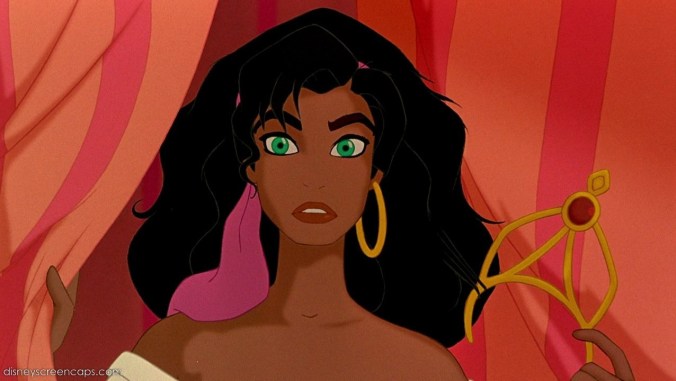
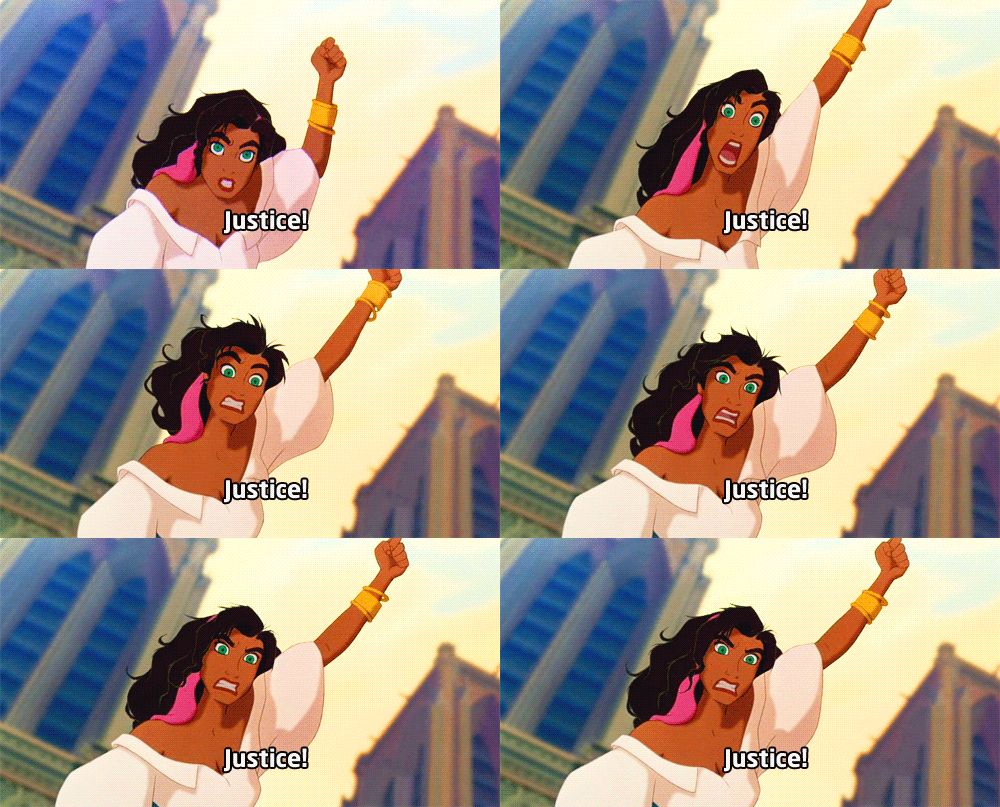
Harping On legend has it that when I met Esmeralda at Disney World on my 5th birthday, I ‘lost my shit’. Esmeralda was very, very important to me. I had two Esmeralda dresses, a Disney’s Hunchback of Notre Dame pencil case, an Esmeralda doll and a tambourine. She was my absolute hero. She stood up to a repressed, privileged prick, Claude Frollo, who spent his entire life and career persecuting Roma gypsies like her, and actively abused and encouraged abuse of Quasimodo, whose mother he kills at the beginning of the film, who then hides behind his rampant sexual desire for her by calling her a witch. Like I said, a prick. She derides Frollo for his cruel treatment of those who are vulnerable and refuses to back down when told to do so. Esmeralda is uncommonly brave, standing up for what is right even though it comes at a great risk to her own personal freedom and safety.

Esmeralda

One of the most moving parts of the whole film comes during her song ‘God Help the Outcasts’, with music by Alan Menken and Stephen Schwartz. Whilst every around her prays for glory, wealth and fame, Esmeralda declares:

‘I ask for nothing, I can get by

I know so many, less lucky than I

Please help my people, the poor and down-trod

I thought we all were children of God’.

Here, she clearly declares that she doesn’t want to ask for anything for herself because she knows of people who are much more desperate and worse off than she is. Esmeralda is selfless in spite of her own hardship, putting the needs, trials and suffering of her community before her own.

What is interesting is that whilst she addresses ‘God’ throughout most of the song, Esmeralda actually begins the song by speaking directly to a statue of Jesus. She demonstrates that in spite of the way she stands up for others and for what she believes in, she has internalised some of the xenophobic elements of medieval Paris, providing the caveat:

‘Yes I know I’m just an outcast

I shouldn’t speak to you

Still, I see your face and wonder

Were you once an outcast too?’

It is a moment of complete vulnerability as she enters a conversation with Jesus and subsequently God, a divine power that is bigger than her and whose help and comfort she needs. By adopting the language of her persecutors, with the label ‘outcast’, it suggests that she holds an internal belief that she is not worthy or good enough for finding refuge in prayer or communicating with God so candidly. However, she then goes on to draw a line of comparison between the two of them, demonstrating a sophisticated knowledge of Christian doctrine by suggesting that because Jesus was also considered an ‘outcast’ in his time, and especially in the run-up to his death, then it must be appropriate for her to speak to him. He was vulnerable, tried to help the needy and stood up to and threatened power structures, just she like she does. It is a beautiful, heartfelt moment, giving us a window into her internalisation of her ‘outcast’ status as a gypsy but also her ability to appeal to that which is vulnerable and considered by society as ‘unworthy’ in others, thus rendering everyone truly equal.

Esmeralda’s kindness and humility, coupled with her fiery resistance, her don’t-give-me-shit attitude towards future honey Phoebus, and her divine friendships with Quasimodo and goat Djali, make her one of Disney’s all-time greats. She is one of the most important and indispensable characters in the story and a true inspiration. She taught me that resisting injustice and standing up for others who are more in need of help than I am requires an immense amount of courage and bravery; never easy to do, but important beyond measure.

Esmeralda and DJali

Love Note – A (Legolas) Mug of One’s Own

Over the weekend, I realised that this beautiful piece of crockery (see photos) is over 15 years old and my head nearly exploded. What better way to commemorate and celebrate it than to write a Love Note? None, I think you’ll agree.

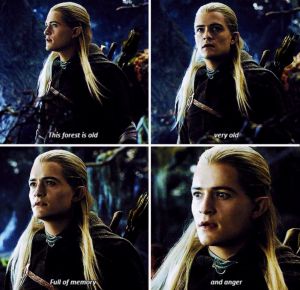
Whilst it has always been inherently more acceptable to fawn over Aragorn, Boromir or (in my case) Haldir from the Lord of Rings, who are all obviously and exceptionally lust-worthy, I have always had an incredibly soft spot for Legolas. Yes, I think it’s problematic to my ego that he has better hair, cheekbones and skin than me; but there was something about his inspired use of a bow and arrow, his bilingualism and his intuitive power of interpreting tree emotions that really captured my attention when I first saw the Lord of the Rings films aged 10.

1d14dc87060b176c6040ed1c02ee74fa

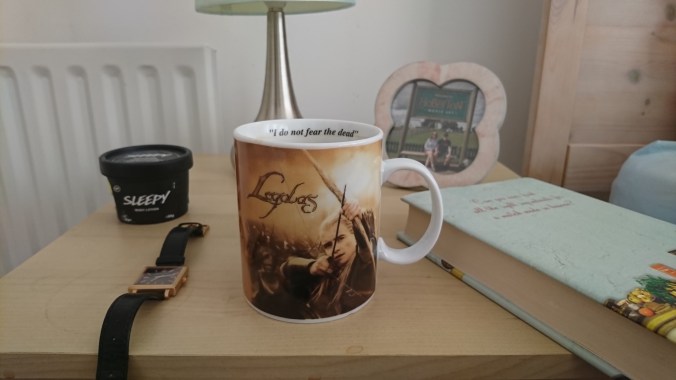
In the years that have since passed, and the numerous re-watches they have brought, I have noticed that Orlando Bloom’s line delivery perhaps isn’t as slick as his hair and his archery skills are actually impossible (you can’t shoot more than one arrow at once and expect them to both go in a straight line, more snaps for the visual wizardry at Weta). Nevertheless, my love for Legolas has been immortalised in this exquisite, now slightly ageing mug.

DSC_3632

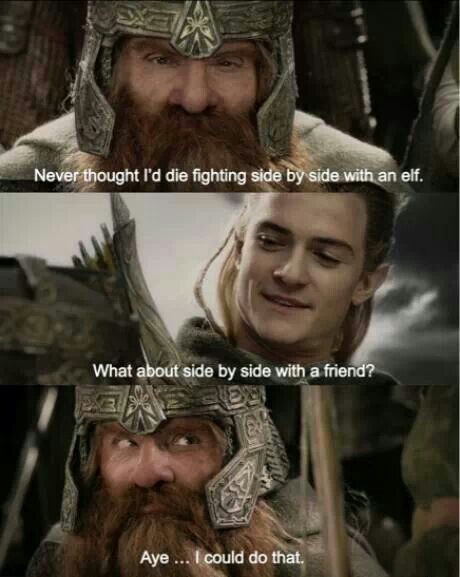
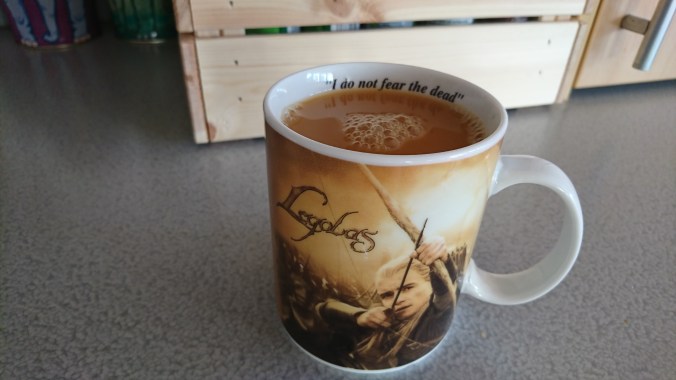
There he is, looking calm and slightly perturbed on the field of battle with his bow and arrow, the sepia tint adding historical and emotional weight to the whole situation. What is wonderful about Legolas, as with many of the rest of the Fellowship, is that he is willing to commit to a cause that is bigger than himself. From looking at his mug on this mug, he isn’t as consumed with his cheekbones and maintaining his lovely hair as people would have him; he is a representative for all the elves, putting his life on the line to rid the world of absolute fascist power, destruction and despair. He may not carry the charisma of Aragorn, but he carries the wisdom that 2931 years inevitably entails, so there is little wonder that he sometimes appears aloof and impenetrable. His camaraderie with Gimli by the end of the trilogy is the stuff of literary and cinematic friendship legend.

78179c5d329f1b75656e2c32f740a280

To say that this is my favourite mug is an understatement. Whenever I have felt anxious, this is the mug I have reached for; the mug that has seen me through the entirety of school, university, the existential, economic and sartorial chaos of post-adolescence, and, of course, Brexit; the mug I have proudly presented full of tea or hot chocolate (never coffee) when treasured friends and family have come to stay; the mug that has helped me to nurse myself and others back to health through the tens of colds, sniffles and lurgies that have snottily bloomed over the years; and the mug that has allowed me to proudly live my Lord of The Rings love on a regular daily basis.

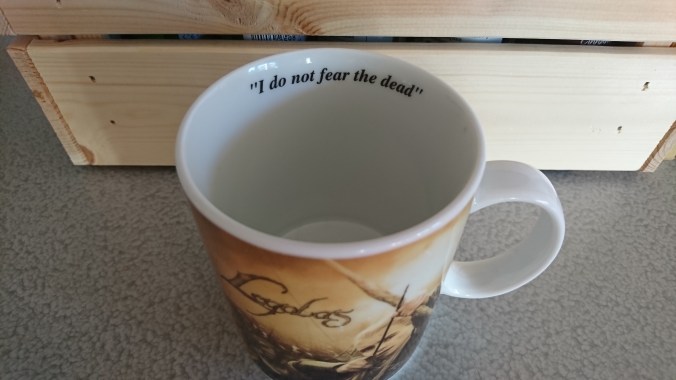
One of the many wonderful things about this mug is that it can help ascertain and flex the depth of knowledge and understanding of the Lord of the Rings franchise. The keen-witted amongst you will notice that Legolas does not actually say the line, ‘I do not fear the dead’, which is printed on the inner rim of the mug.

DSC_3623

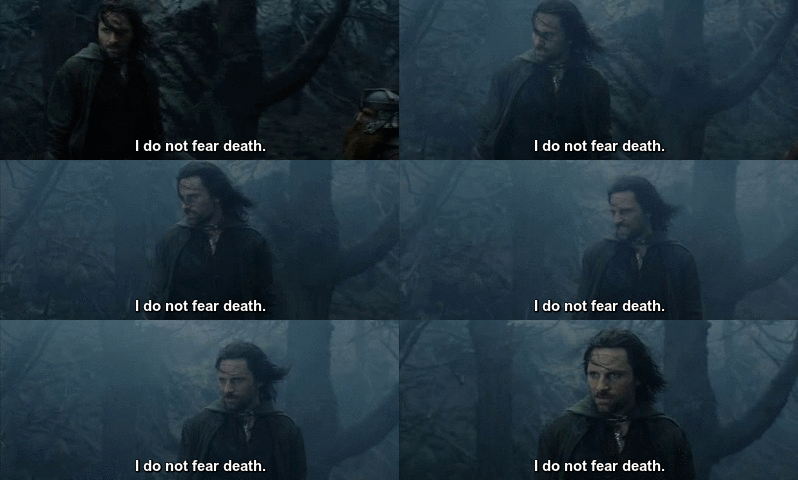
In fact, no one does. The closest anyone gets to saying this line is Aragorn in The Return of the King, who declares ‘I do not fear death’ as he descends into the Dwimorberg mountain to secure the allegiance of the Dead Men of Dunharrow.

tumblr_n07jwfpWBJ1r8dxhoo1_400

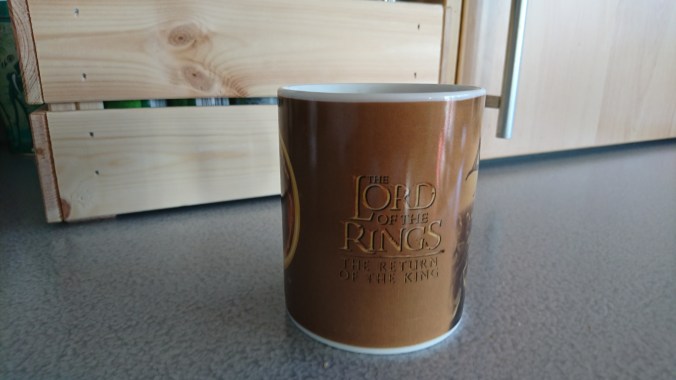
Additionally, this mug purports to be merchandise (unofficial I realised in light of these inaccuracies) for The Return of the King and yet from the armour of the enemy soldier looming behind him, I can deduce that, here, Legolas is fighting Uruk-Hai. This means this film still of Legolas actually comes from the Battle of Helms Deep in The Two Towers, where he, Aragorn, Gimli and Gandalf the White fought alongside Théoden of Rohan against Saruman, who helped to birth this breed Uruk-Hai in the first place. Not in The Return of the King.

DSC_3621

You may think that, in light of this, what is effectively, a cheap, inaccurate, probably knock-off mug is not really worth my un-ending love and devotion. In actuality, it makes me love it all the more. It is imperfect, evidently tried hard and just wants to serve up something warm and comforting, which it does every single time. I subscribe completely to Marie Kondo and basic tenets of Shinto philosophy that we must endeavour to surround ourselves and display in our homes belongings that spark joy in our lives. This mug helps to alleviate the doubts, frustrations and fears of my day: it is my absolute pleasure to bring it out and let it warm me.

DSC_3628

Love Note – Mustang

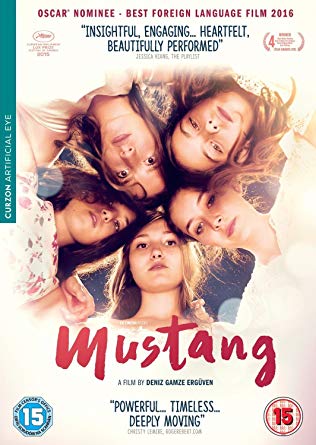
Sisterhood truly is the most potent, inspiring and exasperating relationship: where grievous bodily harm can magically turn into profound silliness, which can turn into deceptive and mysterious thefts of anything from books and clothes to biscuits, which can turn into profound existential bonding conversations about love, life and the Real Housewives (substitute RH with your mutual sisterly trash). Jane Austen knew it with Pride and Prejudice and Sense and Sensibility; Louisa May Alcott knew it with Little Women; Phoebe Waller-Bridge knew it with Fleabag; and Deniz Gamze Ergüven absolutely knew it with Mustang. I re-watched Mustang a couple of weeks ago and it is still one of the most compelling and emotionally charged films about sisterhood I have come across.

The plot revolves around five sisters: Sonay, Selma, Ece, Nur and Lale, and told largely through the point of view of Lale, the youngest. The sisters live with their ultra-conservative grandmother and uncle in a small village in northern Turkey. One day, after Lale tearfully says goodbye to her teacher who is moving to Istanbul, the sisters go to the beach with some male friends and play in the water. They are spotted and reported to their guardians, who effectively turn their house into a prison and arrange marriages for the girls. It is at times devastating, brilliantly funny and an incitement to free spiritedness in all teenage girls, especially when confronted with the deepest and darkest patriarchal forces.

And those patriarchal forces are well and truly horrifying. One of the scenes seared into my memory is at the wedding, where the girls’ uncle, Erol, who has proven himself to be aggressive and violent not only with the girls but with their grandmother (his mother), stands drunkenly and happily in the middle of the dancefloor, eyes closed, firing his gun into the air. Where the girls had at first been dancing, they cower around him, clamping their hands to their ears as he shoots and shoots. When I first watched the film, I thought to myself ‘Why on earth is he happy? Why is he celebrating?’ He cares nothing for the girls beyond keeping their virginity intact and, with hideous irony, it is heavily suggested that he sexually abuses two of them. Maybe he is just happy that they are no longer his responsibility and that he’d fulfilled some kind of patriarchal role in getting them married off? I think this is part of the way there: in this scene, ultimately, Erol is relishing his power. He is the one with his hand on the trigger, asserting and revelling in his dominance over the lives and fortunes of his nieces. It is sickening and infuriating to watch.

Additionally, watching Lale learn how to drive holds such urgency and pathos. Selma tells her that she was unable to escape because she couldn’t drive and Lale refuses for that to become her reality too. She tries and fails and tries again to learn how to drive, enlisting the help of truck driver Yassin, even though she is easily only 11 or 12 years old. Driving is a right we so take for granted in the UK, but is a fundamentally powerful means of power and control in religious and conservative countries. The importance of women being allowed to drive in countries like Saudi Arabia is all the more pertinent after watching a film like Mustang.

Amongst the hellish religious conservatism that the film actively exposes and challenges, we see the enduring and undimming power and pleasures of sisterhood, in all its multi-faceted manifestations. Indeed, the gentle intermingling of relatively light-hearted sisterly dramas with the devastating cultural power dynamics is what makes this film at once irreverent and tragic. We see the sisters defending one another from beatings; breaking out of the house to attend a women-only football match, then gossiping and messing around in their bedroom. One sister tells of how she radically subverts the injustice and intrusion of virginity tests by partaking in anal sex to prevent ‘losing her virginity’, before later on warning another sister that she’ll rip her head off if she steals her clothes again. As such, the film perfectly balances the magically mundane sisterly qualms and quarrels with the bigger, scarier patriarchal violence that determines their freedom and their happiness.

In this, I think the film goes a step further than Jeffrey Eugenides and Sofia Coppola’s The Virgin Suicides: the Lisbon sisters are only ever a mystical figment of the young boys’ suburban imagination, never fully realised as ostensible young women with desires, quirks, tempers or interests, Lux being, perhaps, the exception. Mustang shows that coursing underneath all of the patriarchal violence, double standards and unfairness of being a young woman living under religious conservatism, is the understanding, camaraderie and mutual struggle of being a girl and having female siblings. It is both heart-warming and heart-wrenching and speaks to anyone who has had a sister who has driven them absolutely mad but who will stand shoulder-to-shoulder with them through whatever chaos comes their way, patriarchal or otherwise.

81+T5SU2JGL._SY445_

Love Note – Vincent Van Gogh

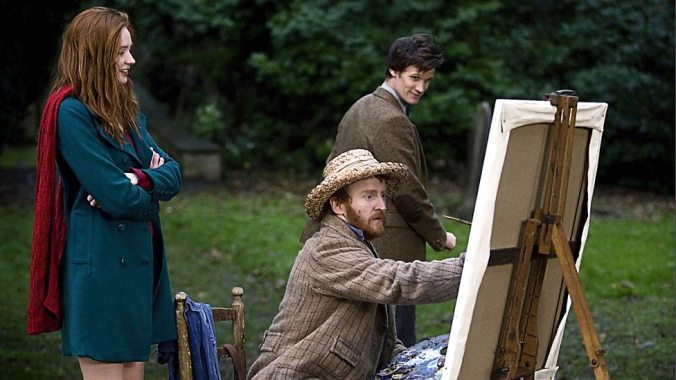
This is an anticipatory Love Note for when I get round to seeing a new film starring Willem Dafoe called At Eternity’s Gate. Dafoe stars as Vincent Van Gogh and charts the final years of his life in the South of France. I haven’t seen the film yet, so cannot possibly review or attest to how good the film is, but I am nevertheless excited to see one of my favourite painters depicted on screen. This is not the first time Van Gogh and his life has been depicted on screen: one of my favourite episodes of Dr Who brought Van Gogh to life through a very moving performance by Tom Curran.

vincent and the doctor

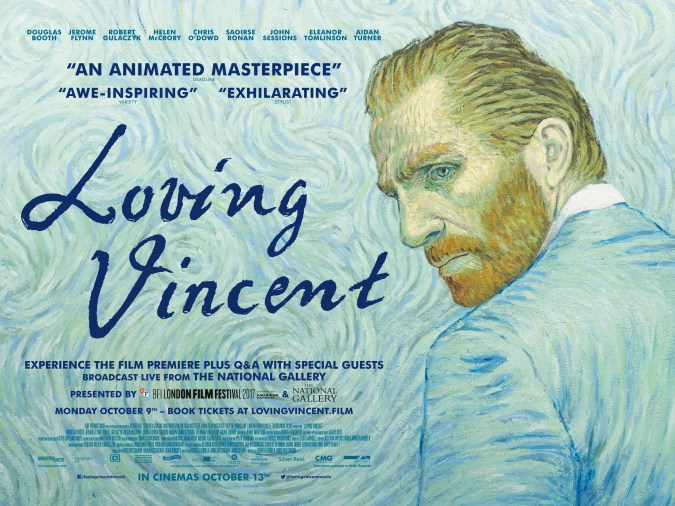
He was also represented in the visually stunning Loving Vincent, a truly extraordinary animated film that saw artists fluent in Van Gogh’s style paint frames telling the story of his final days. In both, Van Gogh was presented as tortured, immensely sensitive, almost living and breathing his wonderful art and terminally underappreciated and misunderstood.

loving vincent

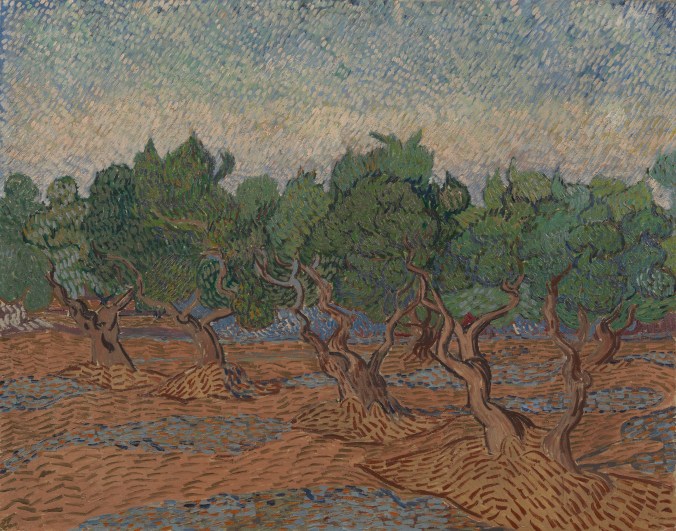
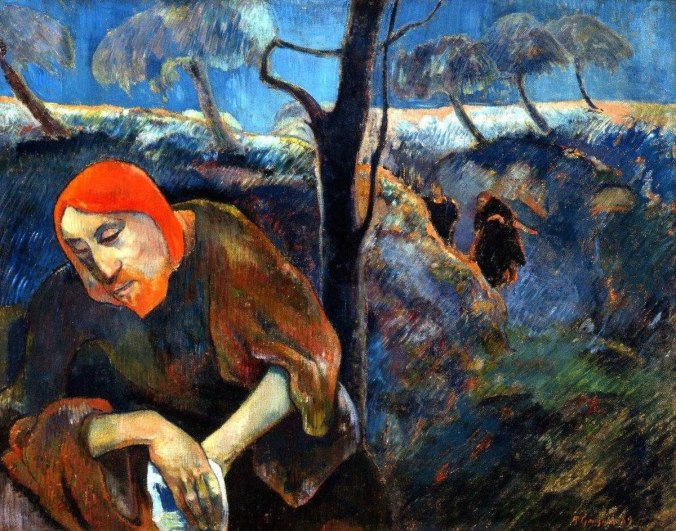
I have loved Van Gogh for a very long time and I think what made him extraordinarily gifted was his capacity to paint both places and people. His style captures the nuance and intricacy of whatever it is he is looking at, and his paintings almost hum with vibrancy, no matter whether he’s painting a field scene or exploring the lines of a weathered and weary face. Additionally, he only ever painted or represented the world around him. He may have done this in an utterly original and inspired way, but it was always a reflection of what he could actually see. This put him at odds with his contemporary Paul Gaugin, who drew from his imagination to create people and figures in his paintings. Van Gogh, on the other hand, would never do this. This aesthetic and practical difference can be seen in Van Gogh’s Olive Grove and Gaugin’s Christ on the Mount of Olives:

Van Gogh Olive Groves

1200px-Gauguin-christ-in-garden

This is not to say that Gaugin’s work is inferior in any way to Van Gogh’s (I actually think his Christ looks remarkably like Van Gogh in this painting, which is interesting), but it demonstrates a very interesting dynamic at work in Van Gogh’s art. His commitment to reflecting the world around him accurately, but with his own unique insight, makes his work at once highly personal and imaginative but always grounded in what is physical and real. It is endearing and almost egoless to bring such consciousness and attention to what he saw, rather than to emphasise the world by applying a story to it. Through Van Gogh’s art, we learn that the world itself is a story to tell, we don’t need to apply grand narratives of religion or myth to elevate it as such.

I have been fortunate enough to see Van Gogh’s paintings in the paint at both the Van Gogh museum in Amsterdam and from the Davies collection at the National Museum of Wales. What I learnt and what absolutely stood out to me, more than the tragic circumstances of his depression and his death, was that he was a masterful and learned technician. Whilst a lot of emphasis has been placed in popular culture on his naiveté and the impressionistic and emotional ecstasy of his paintings, what I learned was that he had an almost academic approach to art. Van Gogh developed his technique out of dedicated and meticulous study and practice. He took lessons from Anton Mauve in the Hague, studied colour theory through Charles Blanc’s colour wheel and through analysis of Eugène Delacroix’s paintings, explored pointillism and the un-mixing of colours through the work of Georges Sauret, experimented in a Japanese style through a study of Japanese woodcuts, and from his friendships with Toulouse Lautrec and Émile Bernard learnt about the versatility and vibrancy of pastels. Passionate and zealous as he famously was with his impressions and interpretations of the world around him, Van Gogh was a learned and masterful technician. I don’t think this should be overshadowed by the turbulence of his relationships or his volatile mental health. He may have found inspiration in his pain and darkness, but his expression of it came from hours, days and years of practice and development.

Here are some of my favourite pieces of Van Gogh’s work:

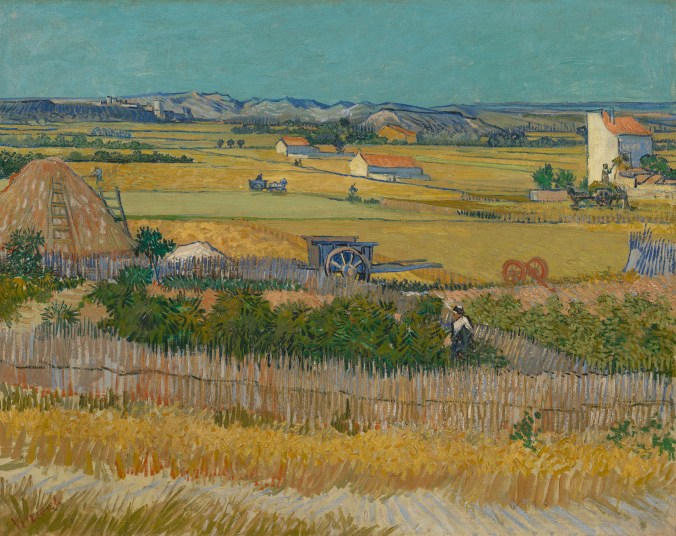
Van gogh the harvest

The Harvest, June 1888 – The warmth of the sun radiates in this painting, everything that summer should be.

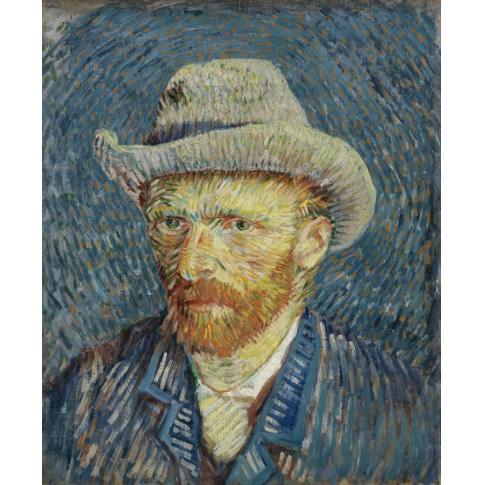
van gogh self portrait

Self Portrait with Grey Felt Hat, c.1887 – I have this painting on a postcard hanging up in my flat and I think it is beautiful. The sun-scorched orange of his beard complements the bright blue of his clothes and background, and the green tinges around his eyes and brow convey his deeper emotional sensitivity.

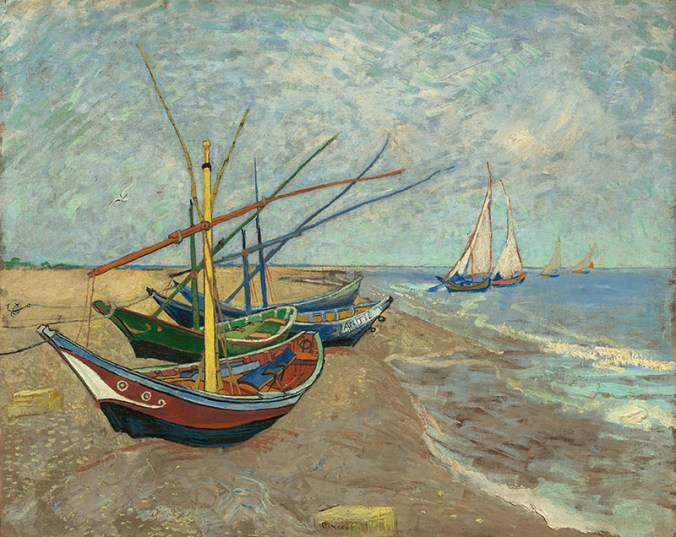
Vincent-van-Gogh-Vissersboten-op-het-strand-van-Les-Saintes-Maries-de-la-Mer-V006

Fishing Boats on the Beach at Saintes-Maries, June 1888 – This is another painting on a postcard that I have hanging in my flat (courtesy of my boyfriend who loves this particular painting). It is reflective of Van Gogh’s interest in Japanese art.

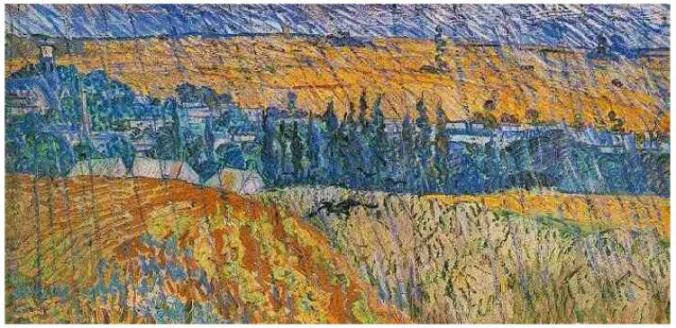
van-gogh-rain-auvers-1890

Rain – Auvers, 1890 – I saw this painting at the National Museum of Wales in Cardiff and it brought tears to my eyes. There is a battle going on here between the sunny warmth of the land and the deep, dark despair of the rain. It reminds me that no matter how depressed, anxious and afraid we may feel, the land needs to be watered to flourish; goodness, light and clarity come from embracing and moving through the dark and difficult times.

Love Note – Fantasia

Last week there was a Saturday matinee viewing of Disney’s Fantasia at Broadway cinema in Nottingham and I missed it. This was slightly devastating because Fantasia is a film that I have loved for a very long time and the prospect of seeing it on a big screen was very, very exciting. It is a stunning love letter to both the art of animation and classical music, which I’m sure were both sweeping in their scale on the big screen. And I bloody missed it.

It was through Fantasia, and the ingenuity of the art and story-telling teams that helped to create it, that my interest in classical music was sparked. As a child, and even now as a (more or less) adult, classical music has sometimes felt kind of ‘beyond’ me. When I was younger, it reeked of ‘posh’, of older people driving around in Volvo estates or wearing suits and nodding along knowingly to some movement of this piece by that dead guy. The classical music I enjoyed when I was little was music that explicitly told a story, for example Prokofiev’s Peter and the Wolf (even though, interestingly, the grandfather and wolf parts both scared me shitless) or that I could dance to. Fantasia captured my imagination and, subsequently, each of the pieces of music brought to animated life now has a special place in my heart.

Pastoral symphony

The combination of high musical art with the low brow familiarity of cartoon animation, rooted as it is in child-friendly bright colours, humour and anthropomorphic animals, is highly effective. Bringing both forms into conversation with one another undoubtedly broadens the way in which we think about both. The mass production and appeal of cartoon animation offers a friendlier introduction to the obscure and privileged world of classical music. Similarly the drama of classical music, and the requirement of animation to creatively and accurately interpret inflections, time signatures and important ideas within the pieces’ structures, elevates the artistry and production of animation.

Toccata and Fugue in D Minor EDIT 1

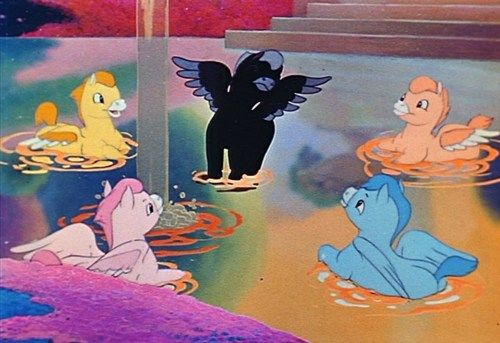
It’s hard to narrow down which segment of the Fantasia programme I like the most: I have a very soft spot for The Nutcracker Suite by Tchaikovsky, Dance of the Hours by Amilcare Ponchielli and Beethoven’s Pastoral Symphony (I really wanted to make friends with a pink unicorn or a flying horse, and my sister and I used to shelter all our cuddly toys under blankets during the storm).[1] As I’ve grown older, I have a renewed appreciation for Bach’s Toccata and Fugue in B Minor, which I initially thought was slightly boring but now find completely captivating.  However, I think it is Stravinsky’s The Rite of Spring that has been the most enduringly important piece of music that Fantasia introduced to me.

fantasia_pdvd_852

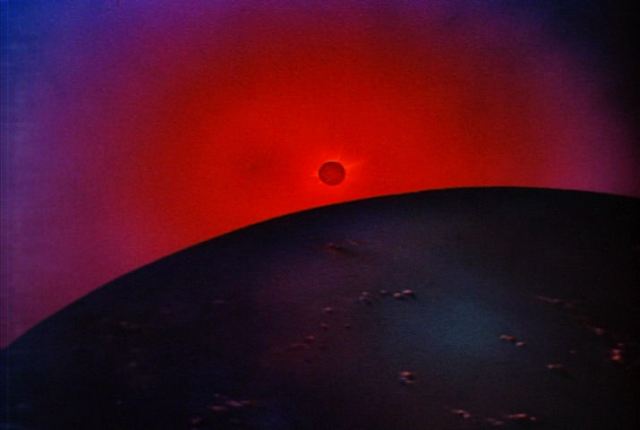
I remember listening to Deems Taylor’s introduction of the piece and referring to the music as originally written for a ballet, displaying ‘a simple series of tribal dances’. Listening and watching the unfolding animation had me begging desperately: How on earth could you do ballet to THIS?! My conception of ballet as a world of tutus, pointe shoes and graceful arabesques, incidentally seen elsewhere in Fantasia, was completely at odds with this frightening, stompy music. Music that helped to depict violent volcanic eruptions, a T-Rex fighting and killing a slow and considerably weaker stegosaurus, the eventual death march and extinction of all the dinosaurs, and an eerie eclipse hovering over this pockmarked, burnt out planet. The pained and wailing face of a diplodocus trapped in mud and burning in the heat is seared into my memory. No, this, whatever this was, was not conducive to ballet at all.

At the time, I had no idea that this type of music required an entirely different type of dancing, which I later explored at length in my Master’s dissertation. Indeed, I wouldn’t have written that dissertation at all if my interest hadn’t been piqued at such a young age. Fantasia rearranges the music of the original ballet quite significantly, but it is still an exceptional introduction to a truly staggering piece of music. I will no doubt bring The Rite of Spring to my blog at a later date, because it is such an important piece of music to me that has followed me around for many years. But for now, I want to appreciate just how wonderful Fantasia is and how grateful I am that, in spite of its limited commercial success in 1940, it has endured.

And I bloody missed it last week.


[1] I want to acknowledge here the problematic nature of Disney’s visualisation of The Pastoral Symphony in particular. This segment featured heavily racist stereotypes in the first production, which have since been edited out, and a beauty contest where the ‘pretty’ (read: not black) centaur women strut about and are picked one at a time by handsome centaur men to be their lovers. The racism and sexism is obviously unacceptable and makes for uncomfortable viewing.  

Death in fashion: Karl Lagerfeld

‘For fashion was never anything other than the parody of the motley cadaver’ – Walter Benjamin

Yesterday we heard the news that Karl Lagerfeld, the creative director at Chanel, Fendi and his own eponymous label, has died. Walter Benjamin would, perhaps, argue that Lagerfeld has been dabbling with death for his entire career (see this essay’s epigraph), but yesterday he passed away in Paris at the age of 85.  Fashion design was, undoubtedly, his entire life (apart from his love for his cat, Choupette), and such extraordinary dedication to his craft is what has made him legendary. Although he may not have openly exhibited the emotional naiveté of designers like Alexander McQueen or Raf Simons (two of my all-time favourite designers), by golly he was a figure of creative and commercial genius. Lagerfeld was able to fearlessly embrace both history and modernity, turn fashion shows into aspirational spectacles, and take his understanding of brand power to astronomical levels.[1] Those inter-locking Cs are immediately recognisable worldwide thanks to him. Although he claims that Coco Chanel would have hated his commercial transformation of the fashion house, he has adhered to her philosophy that fashion was dress-making: clothes are meant to be bought, sold and worn.[2] For Lagerfeld, as it was for Coco, fashion most definitely is not an art-form.

Karl has never been my favourite designer, even though his shows, clothes and perfume campaigns have made Chanel products ridiculously desirable (I wear Coco Mademoiselle because it smells divine and just because Keira Knightley). I am, however, not OK with the way in which he described Germany’s open-door refugee policy in 2017, which reeked of hateful Islamophobia.[3] I am not OK with the way that he has spoken about Adele, Michelle Obama or Pippa Middleton: I would find it very difficult to take if someone said that I should only show my back because my face isn’t pretty enough. It was undeniably a fucking mean thing to say.[4] For all of his designing excellence and great taste, he had a mean streak that was completely ungracious, unbecoming and offensive.

Nevertheless, his passing is deeply significant. It feels like the passing of one of modern culture’s greats, like the deaths of Seamus Heaney or Aretha Franklin. He is an icon of popular culture who has achieved the feat of having grown into a ripe old age, where so many creative lives have been cut short by illness or personal tragedy. He has traversed, witnessed and helped to create so much change over the course of the twentieth and twenty first centuries, evidenced in the fluctuations and ideas presented in his extraordinary backlog of visual work. His death leaves a large void in the cultural fabric of the 21st century, and it’s going to be interesting to witness the unfolding transition in the wake of his death both at Chanel and Fendi, and across fashion in general.

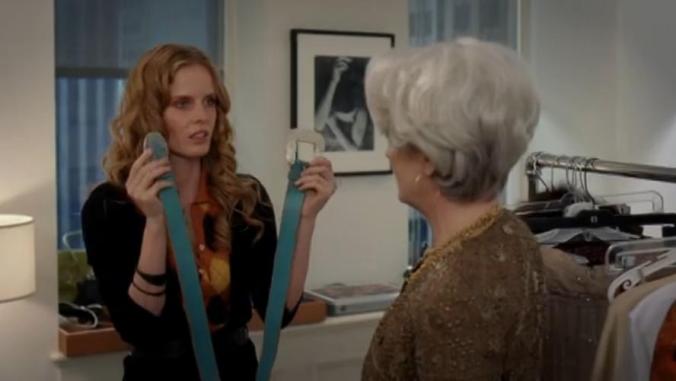
Fashion is a funny thing: I subscribe to Walter Benjamin’s conception of it as a dialectical social construct, encapsulating both commodity fetishism and the release of utopian desire and energy in a moment of historical awakening. It is both frivolous and fruitful. Whether you care about it or not, it shapes and literally dresses the world around us (please click on the picture below for the iconic scene from The Devil Wears Prada for further reference and explanation). Lagerfeld’s passing is another one of the great transitions we witness in life: the dying of the old ways, the liminality of not knowing what is going to come next and, ultimately, the emergence of something else, something we don’t yet know or understand. Whatever and whoever comes next, life in fashion and beyond, is going to continue to fascinate.

devilwearspradabelts

[1] Lagerfeld’s adeptness for creating and designing extraordinary fashion shows is particularly significant. Classic runway exhibitions have become increasingly outdated thanks to the industry’s demands for instant, immediate access to fashion, with collection turnarounds that beggar belief. (Again, it is important to emphasise here Lagerfeld’s enormous and unparalleled creative output: he worked tirelessly and wholeheartedly to produce collections for Autumn/Winter, Spring/Summer, Resort, Cruise and couture for three labels, as well as an additional Metiers d’Art for Chanel). By creating fashion shows that turn a collection presentation into a show and a spectacle (Lagerfeld took us to an enchanted forest, a beach, a jungle, a cruise ship, a brasserie, a rocket launch, an iceberg, a data centre, Ancient Greece and a barn amongst others) he not only preserved the sanctity of the runway when it had all but become a stale, outdated method of introducing new collections, but, indeed, breathed new life into it. A ticket to a Karl Lagerfeld Chanel show was perhaps the most covetable of all the fashion month shows, never mind just Paris, and were as Instagrammable as they come. As a side note, I would LOVE to compare the shows and performances of Alexander McQueen and Karl Lagerfeld at some point.

[2] ‘What I do, Coco would have hated. The label has an image and it’s up to me to update it. I do what she never did’. https://www.marieclaire.co.uk/fashion/karl-lagerfeld-quotes-120855 [accessed 14:36, 20/02/2019].

[3] https://www.thetimes.co.uk/article/chanels-karl-lagerfeld-claims-muslim-migrants-are-affront-to-holocaust-victims-cm2tr9prt

[4] https://edition.cnn.com/style/article/karl-lagerfeld-controversial-quotes-intl/index.html

Love Note – ‘Please Mr Kennedy’

The first Coen Brothers film I watched was Fargo when I was 18 and I really didn’t get it. The parody of a ‘true’ crime drama, with its humour and comic book violence, was all lost on me. As I’ve grown older, my awareness and appreciation of the Coen oeuvre has increased and expanded. My main Coen Brothers eureka moment came with A Serious Man, by way of True Grit and No Country for Old Men (I still need to watch The Big Lebowski and others). With Larry’s exasperated declaration that ‘I don’t want Santana Abraxis! I’ve just been in a terrible auto accident!’ I finally understood the full hilarious extent of the artful and subtle writing. Which brings me to Inside Llewyn Davis, which I find hilarious and joyful in its anger and misery, and it has become one of my favourites.

Llewyn is my favourite kind of grumpy arse who believes he should be an uber-successful musician but is blinded by pride, egotism and poor decision-making capabilities.[1] He has opportunities to help himself throughout the film, but prefers rather to wallow in his own self-importance and curse everyone around him for his short-sightedness, bad luck and inability to compromise. I love Llewyn because he is propelled by both intense delusions of grandeur but also a kind of endearing vulnerability that prevents him from being able to do anything else but be creative. The film was criticised by Suzanne Vega for turning the folk scene in 1960s New York into ‘a slow brown sad movie’, but I think this is to misunderstand what the Coens are getting at: there probably was a Llewyn in 1960s New York, just as there was probably a Llewyn at every point in artistic history. Wherever art and creativity are mixed up with commercial success, fame and recognition, there is going to be a Llewyn. Where there’s a Bob Dylan, there is a Llewyn. There has always been a Llewyn and there will always be a Llewyn.

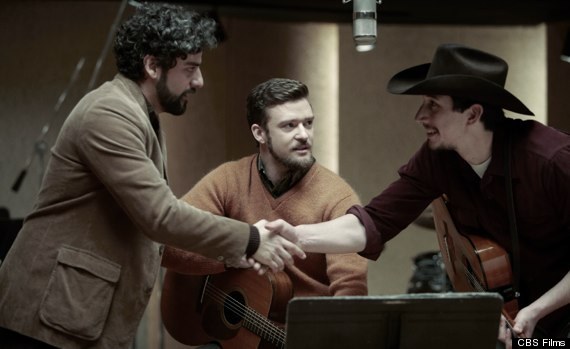
One of my favourite scenes in the film is where Llewyn records a childish, novelty song with Jim Berkey (Justin Timberlake) and Al Cody (Adam Driver). ‘Please Mr Kennedy’ gives me life and I frequently sing it around the house, getting it stuck in the heads of loved ones around me (you’re welcome). Click the photo below to have a watch:

hqdefault

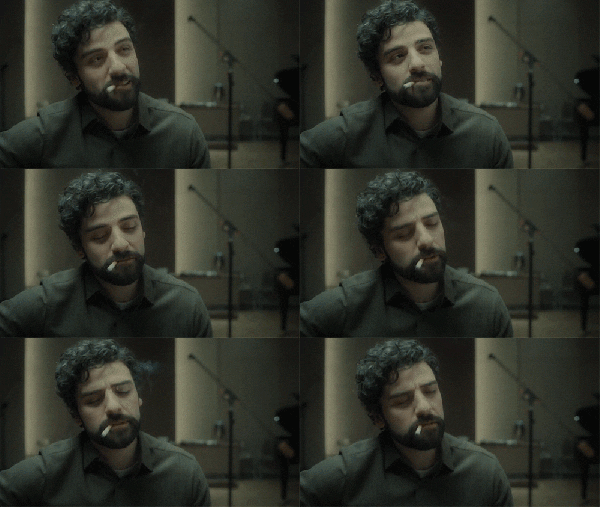
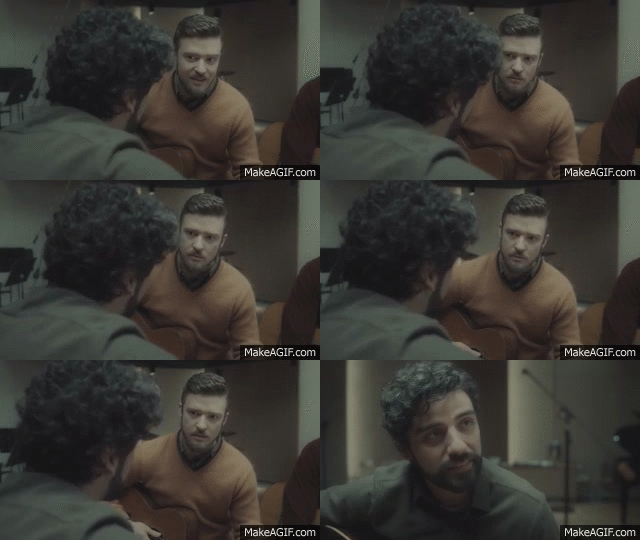
I love everything about this 2 minutes and 59 seconds. I love the hideousness of Justin Timberlake’s beige jumper; Oscar Isaac’s cooler-than-thou cigarette hanging from his mouth; the nauseating earnestness of Timberlake’s insistence of two ‘P Ps’ before ‘please’; I love that Llewyn thinks he’s too good for the song (Llewyn: Who wrote this? Jim: I did); I love Timberlake singing and staring God-wards as though he’s delivering the most profound song in the world, when it’s probably the most ridiculous; the series of surreal blurtings and ejaculations in the scene-stealing performance of Adam Driver (‘One second please!’ and ‘Uh Oh!’ being my favourite accompaniments); the cheesiness of Timberlake’s ‘Oh pleeeeeeease’ and Llewyn’s sterling attempts to meet him with his eyes closed; and I love the stupid lyrics and the stupid music. The whole thing is just hilarious.[2]

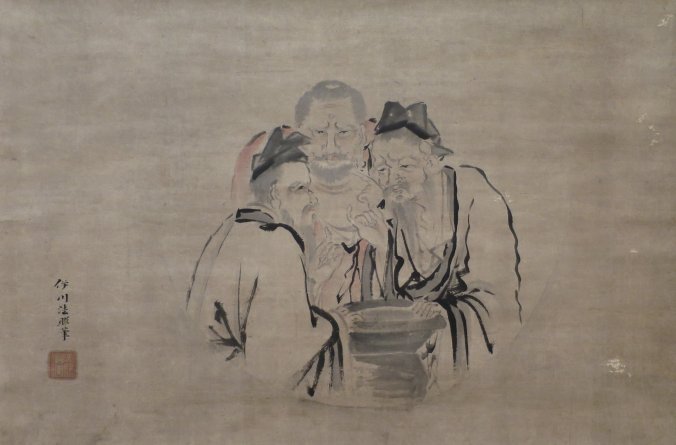
As well as being a bonafide ear worm, I love ‘Please Mr Kennedy’ because I realised that it loosely presents a bit of an allegory for life. It reminds me of a famous painting that depicts the three standard bearers of Eastern philosophy and spirituality: the vinegar tasters.

o-PLEASE-MR-KENNEDY-570

'The_Three_Vinegar_Tasters'_by_Kano_Isen'in,_c._1802-1816,_Honolulu_Museum_of_Art,_6156.1

The picture depicts Confucius, Buddha and Lao Tsu and represent the basic tenets of their belief systems: Confucianism, Buddhism and Taoism. We have Confucius, who perceives life as full of corruption and people needing saving from degeneration: he tastes vinegar as sour, as ‘polluted wine’. Llewyn, the archetypal mardy bum hates ‘Please Mr Kennedy’, thinks it’s crap and wants to blast his way through it to get to the folk music career he wants.

N7J4

Jim represents (in a very loose way, please indulge me), Buddha. Buddha sees that tasting vinegar exposes him to bitterness, life’s bitterness. We are offered the opportunity to practice not avoiding the difficulties and trials of life, but also to practice not being overwhelmed by them either. Jim understands that he cannot take responsibility for himself and his family by pursuing a career as a purist folk singer. Whilst he performs folk classics at The Gaslight Café, he also makes space for a crap novelty song, no less earnest and with no less integrity in his performance of it as he is of ‘500 Miles’. Either which way, he is performing, practising, trying to find a middle way.

giphy

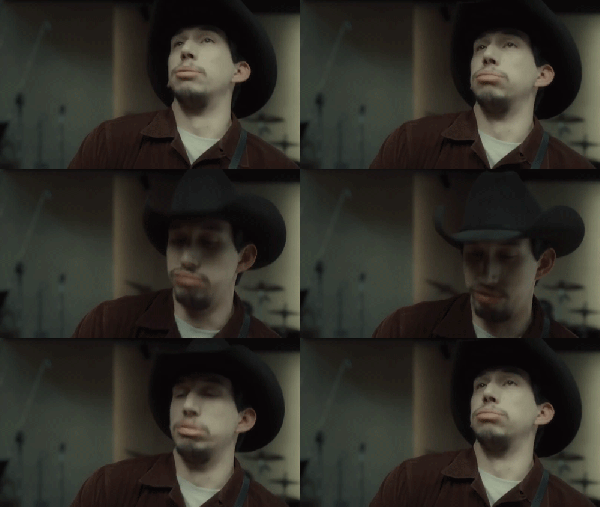
Al represents Lao Tsu and the Tao. Lao Tsu tastes the vinegar and rejoices in the vinegar-ness of the vinegar. It is sweet to Lao Tsu because it is manifesting according to its nature, exactly as it should: when life is appreciated as it should, it becomes sweet. In a similar way, Al Cody is committed to ‘Please Mr Kennedy’ for what it is, no qualms, no quarrels but with plenty of gusto and dedication. His singing part requires no less: a half-hearted ‘Outer Space!’ just wouldn’t work. As such, as I mentioned earlier, he pretty much steals the scene.

N7J3

‘Please Mr Kennedy’ is a shmuck song, artistically questionable, a real toe-tapper and perhaps the most important song in the entire film. To appreciate it speaks volumes and to not appreciate it speaks volumes. I think we have all three characters inside of us at any one point and they all have something to teach us. I’ve had many a Llewyn day, which is fine: Llewyn is great, I wouldn’t not be a bit Llewyn. But I would encourage myself, as much as possible, to be Al: to appreciate and revel in the nature of things just as they are. This sublimely ridiculous life, encapsulated in this sublimely silly song, requires just as much humour and healthy ridiculousness to meet it.

[1] Llewyn is Welsh for ‘lion’ or ‘leader’, which just feeds the wonderful irony about this miserable, supercilious protagonist.

[2] What makes this all even better, now that time and pop culture have elapsed since 2013, is that Oscar Isaac and Adam Driver now play adversaries Poe Dameron and Kylo Ren in the new Star Wars films. What a joy it is to see these two men, stars of the biggest sci-fi franchise of all time, strumming away singing the best stupid song about space ever written. Sarah Brightman’s ‘I Lost My Heart to a Star Ship Trooper’ must be the worst stupid song about space ever written.


Love Note – Non-Christmas Christmas Films

I am not a Christian, but I have always loved Christmas. I acknowledge that in many ways it has become a consumerist shadow of its former religious and spiritual self; but nevertheless, I have been lucky enough to have lived 26 Christmases so far full of fun and festivity. Additionally, the idea of ‘peace on earth and good will to all men’ has never felt timelier or more desperately needed. The story of a displaced family and the birth of their baby in the most humble and desperate of circumstances is still very much a story for our times.

The festive period is as much about the build up to Christmas as it is about Christmas Day itself. There is no shortage of Christmas activities to get involved with, for example listening to music, writing cards, ice skating, baking, wearing jumpers, drinking mulled wine and eating all the food available with family and friends. Watching films has always been an excellent way of tapping into the Christmas spirit and I don’t need to tell you that there are a plethora of films about Christmas that are worth digging out every year. In addition, I have a few favourites that always make their way out in December that aren’t necessarily specifically festive, but embody a little bit of what Christmas should be all about.

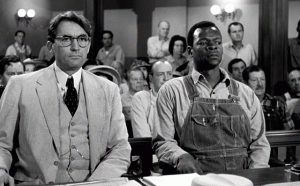
MockingbirdCourtroom

To Kill a Mockingbird, 1962 – A gorgeous old film based on a gorgeous book about justice, growing up and both protecting and fighting for the vulnerable. In place of a bearded man in a red coat handing out gifts, we have Gregory Peck’s masterful turn as Atticus Finch: wise, caring and as much of a sensitive, commanding presence on his porch as he is in the courtroom. This film is the gift that gives on giving.

edward_scissorhands_hug

Edward Scissorhands, 1990 – The tenuous Christmas link comes with the large presence of snow that Edward creates with his scissorhands (and the fact that the magical Danny Elfman score has been used in a plethora of Christmas adverts over the years). This film is a fairytale set in sugary suburbia, rooting for the societal underdog against the backdrop of fickle public opinion. It is important to note that I have fallen out massively with Johnny Depp over recent years, but I am still so here for Winona Ryder.

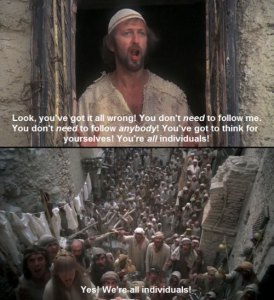
life-of-brian

The Life of Brian, 1979 – This could technically be classed as a Christmas film because it begins with the nativity of Jesus and Brian, and then follows their lives up until the latter’s crucifixion. But I am including it here because as well as being absolutely hilarious, the film propagates heavily for critical thinking as opposed to mob-like sheep mentality. Plus there’s a useful Latin lesson in there for anyone interested.

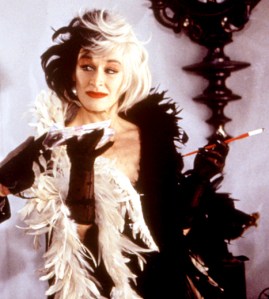
MSDONHU_EC034_H_Glenn-Close-Cruella-De-Vil-101-Dalmatians-467

101 Dalmatians, 1996 – This film’s stars are adorable spotted puppies and Glenn Close as Cruella De Vil, leaving little else to be said. I have written previously about how, killing animals and psychopathy aside, Cruella might just be one of the greatest style icons of all time and that view still stands. Fashion aside, however, this film primarily revolves around family unity, adventure and features delightful snowy countryside. Perfect Christmas fodder.