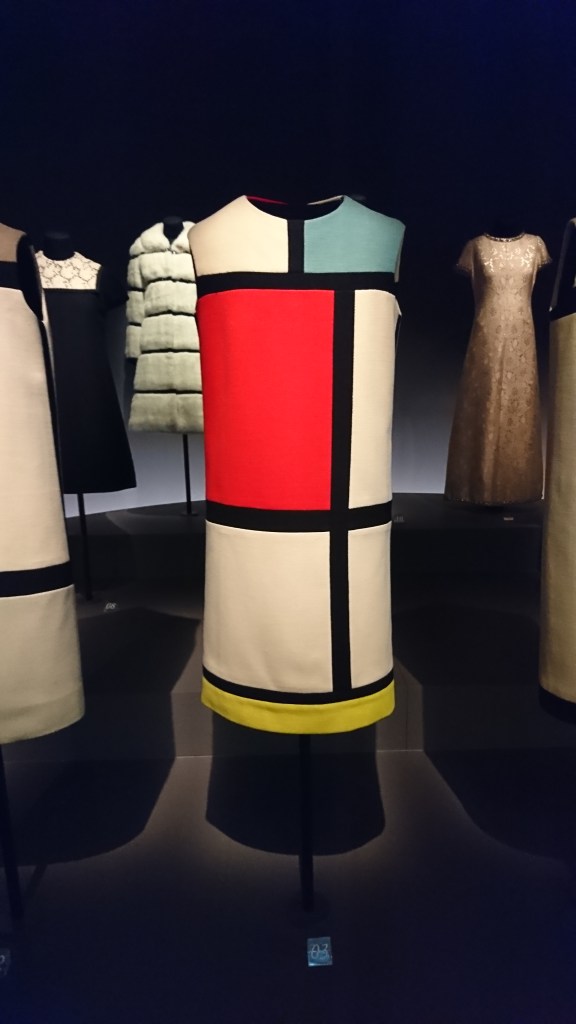
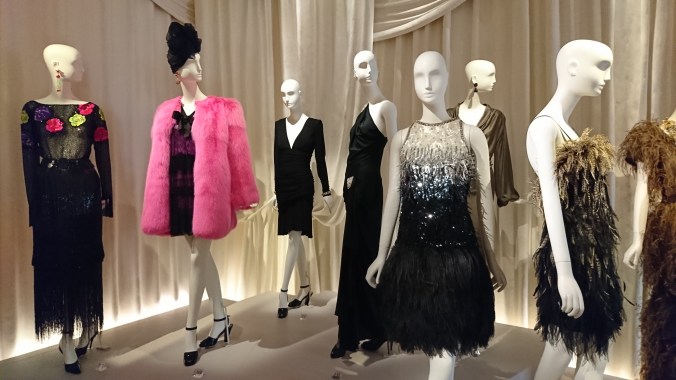
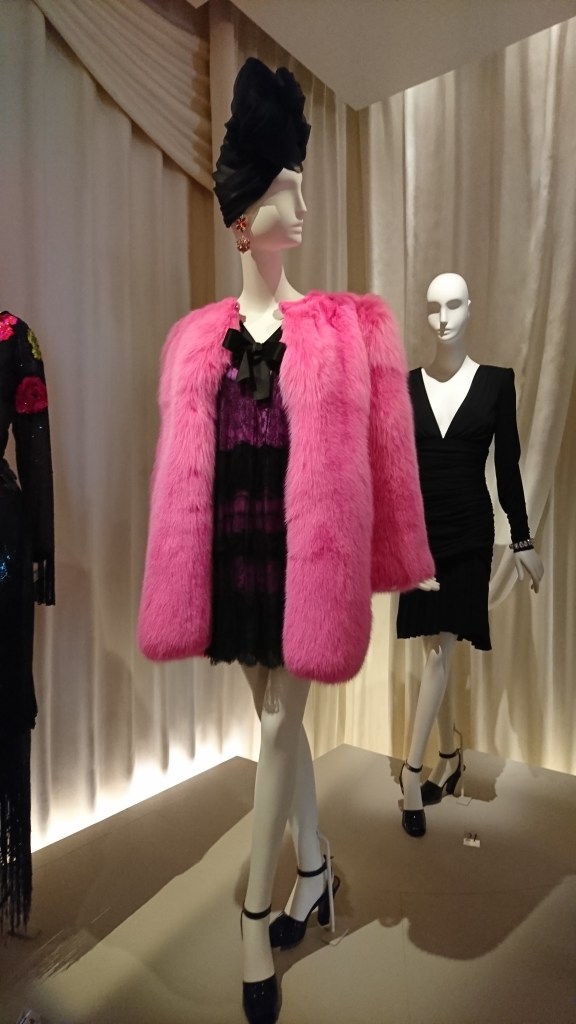
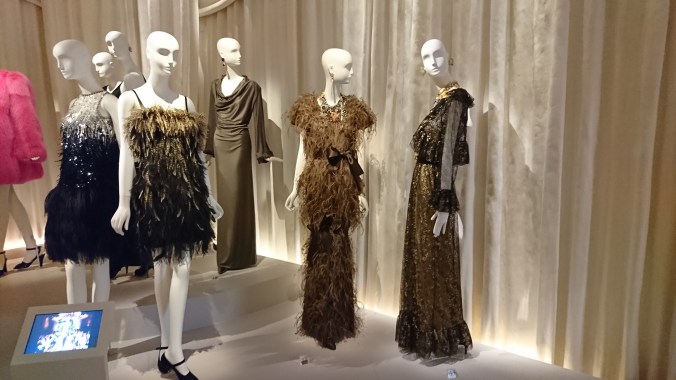
Love Note – Yves Saint Laurent photo reel

This week has been, in a word, intense.

I went on the hen weekend to end all hen weekends last week (6 hours sleep in 48 hours); in a related move, I am now hideously ill and was confined to my sickbed all day yesterday sneezing, coughing and croaking my way through seminal teen film ‘Clueless’ and ‘Animal Farm’ by George Orwell; and I started my PGCE in English on Monday. There are emotions, curricula and pathogens flying all over the place in this house.

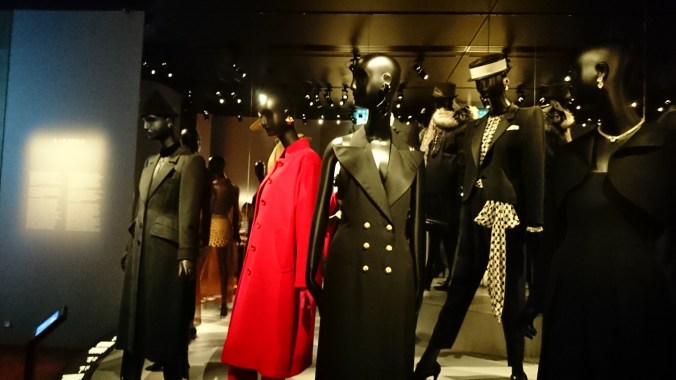
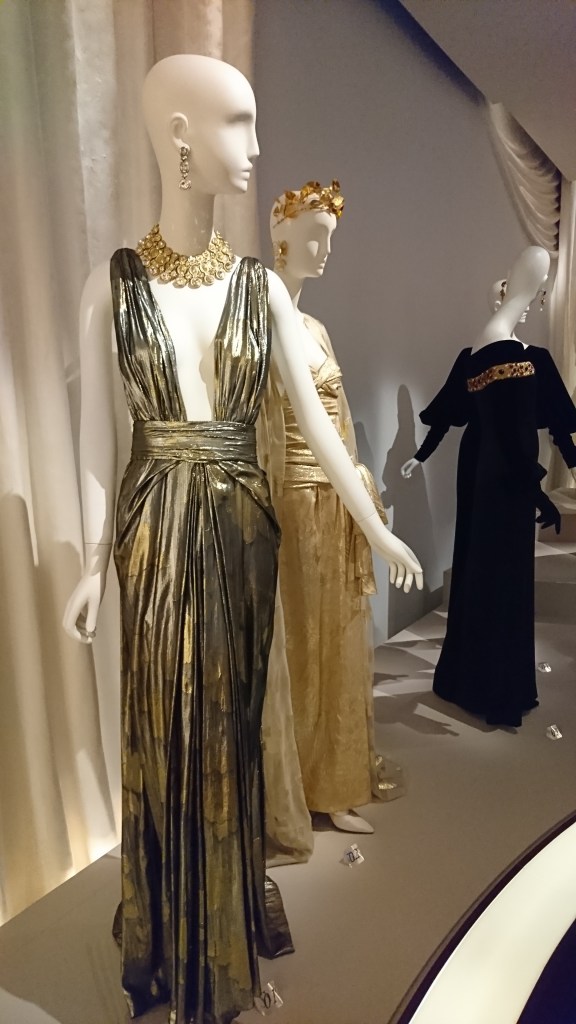
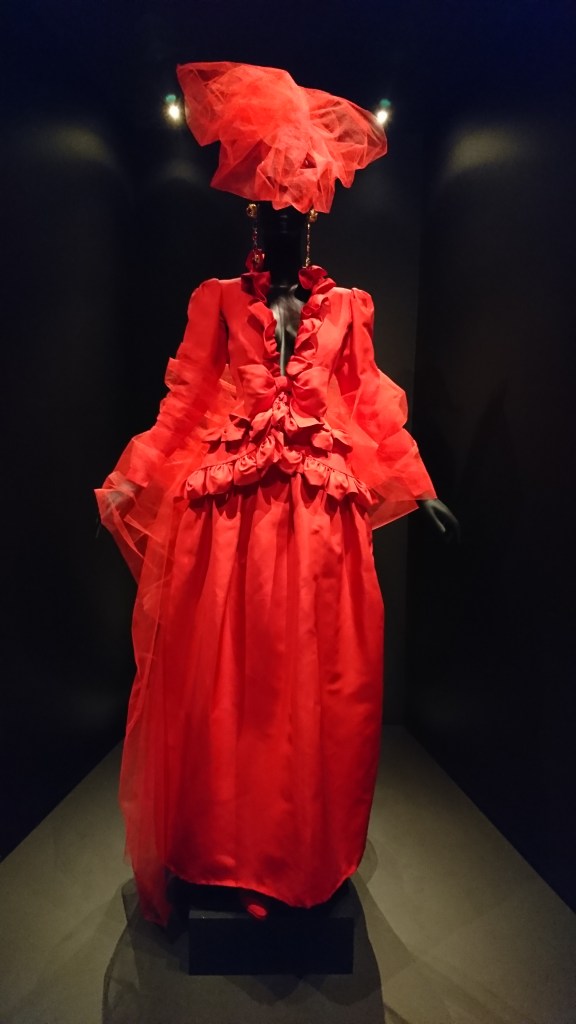
As such, and whilst still in the thick of my pity party, I am going to post the photos from my trip to the Yves Saint Laurent Museum in Paris. We’re in the thick of Fashion Month, with Paris just round the corner, so it feels pretty time-appropriate; plus there is nothing like pretty clothing to raise your spirits when you’re spluttering your way through multiple life transitions.

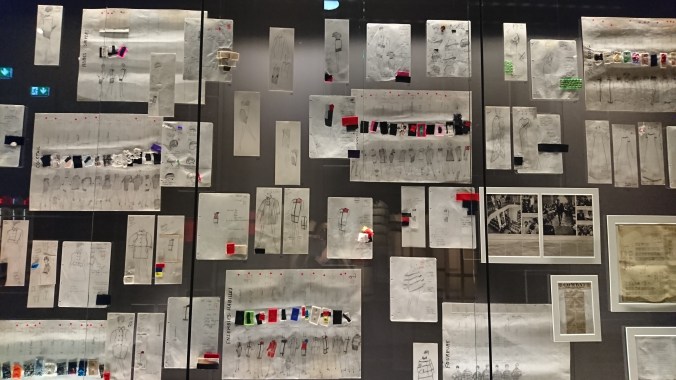
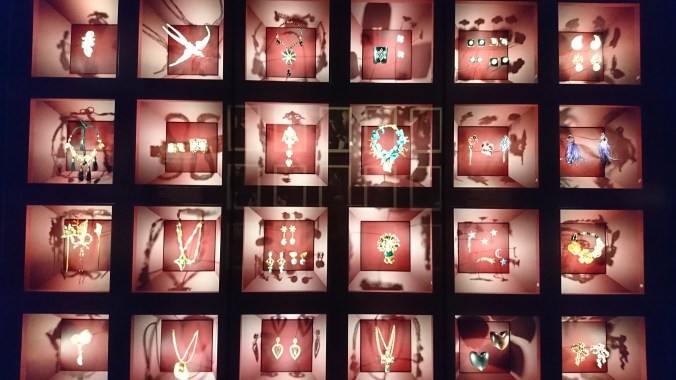
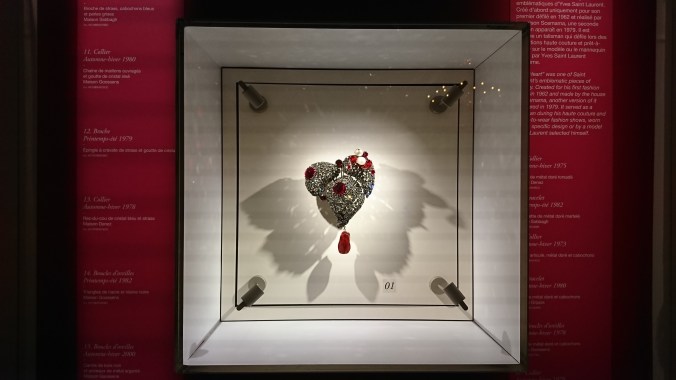
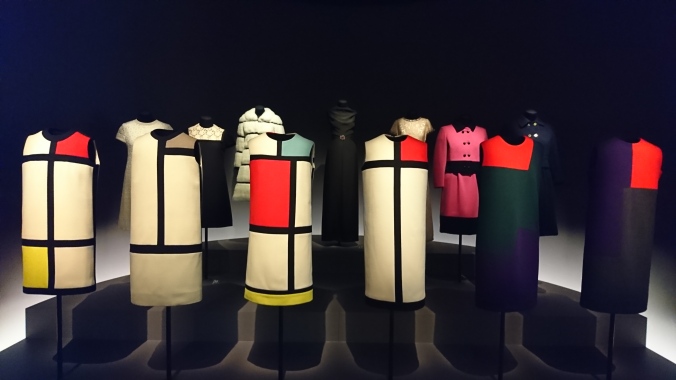
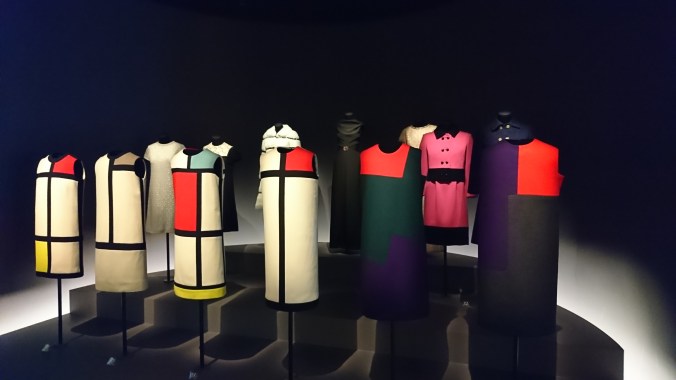
So here we have it, Yves Saint Laurent, with his epoch-changing Mondrian dresses, elegant evening wear and exquisite accessories. I also managed to get a snap of his reconstructed studio and design notes, which made the whole experience even more magical and intimate. If this doesn’t pick your spirits up on a rainy day, I don’t know what will.

DSC_4347


DSC_4342


DSC_4344


DSC_4351


DSC_4352


DSC_4353


DSC_4346


DSC_4345


DSC_4356


DSC_4354


DSC_4355


DSC_4350


DSC_4357


DSC_4361


DSC_4340

Rodin and the politics of sculpture

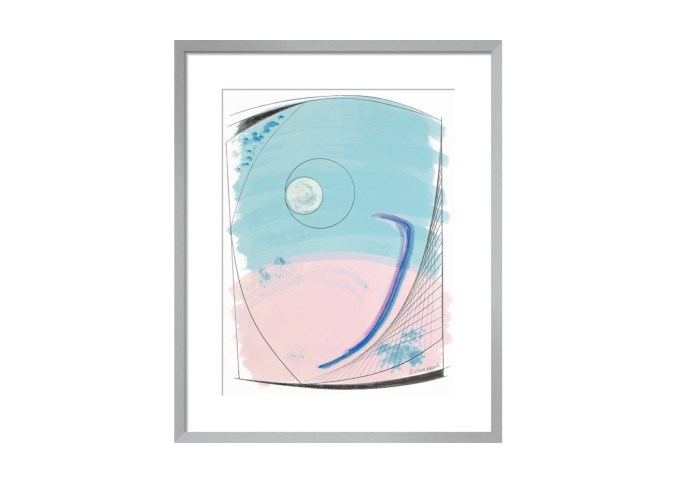
I didn’t start deeply caring about sculpture until I saw Auguste Rodin’s The Kiss at the National Museum of Wales in Cardiff.[1] Prior to that visit, I had a vague admiration for Barbara Hepworth, but found more enjoyment in her abstract painting Winter Solstice:

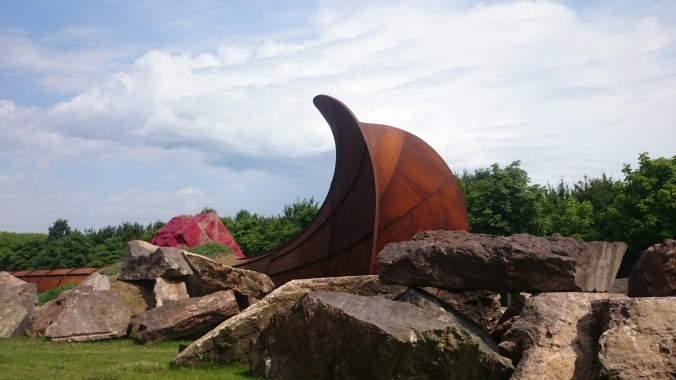
BARBMy dad had also instilled in me an appreciation for Anish Kapoor, whose Sky Mirror is pride of place outside the Nottingham Playhouse theatre, and who created a rusty horn bursting out of the immaculate gardens of Versailles in 2015:


DSC_0858.JPG

On a very basic level, I just didn’t understand sculpture. A childhood filled with questionable pottery lessons chiselled down my interest in the form, even though I have long thought of all art as important. Just because I did not feel able to understand sculpture did not mean that there was nothing to it. For a long time, sculpture did not have the appeal to me that painting, film and other art forms have.

However, it was seeing two figures entwined and necking that really captured my imagination and re-framed what I thought sculpture was all about. I am sure there are many wonderful sculptors that I am overlooking in this capacity, that Rodin is an unimaginative choice to fawn over and that I am probably incapable of conveying academically why I think Rodin’s work is so brilliant, and yet here I am. A critic of art and art history I am not, but I am an enormous fan and advocate for both, and I am inspired enough to write a little something about some works that I have really connected with, starting with The Kiss.

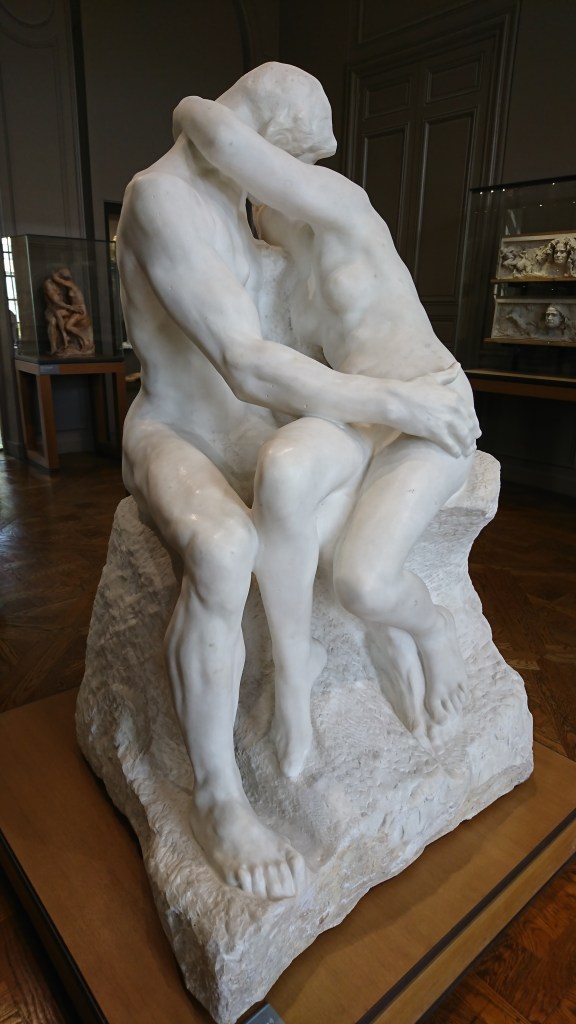
Whilst in Paris earlier this month, we visited the Rodin museum on the Left Bank and it was perhaps the best museum we went to all holiday. The sculpture garden is endlessly dreamy and the chateau, Rodin’s home for a time, was charming and delightfully  littered with Rodin’s sketches, plaster casts, practice sculptures and works he’d collected himself, including pots and fragments from antiquity, as well as a couple of Monet , Munch and Van Gough paintings dotted about. The Kiss was here too:

The Kiss

We can see, as with many of Rodin’s marble sculptures, that he was influenced by Classical figures from Ancient Greece. And yet, in his portraiture of people through sculpture, Rodin does not merely recreate or appropriate Classical styles. He uses Classicism as a base note, but goes on to mold his ideas through the language of limbs, faces, the fluidity of bodies in a way that is nothing other than modern. It is hard to comprehend just how challenging the blatant sexuality and passion of this sculpture would have been to receive at the turn of the century when it was produced. Additionally, the sculpture seems to have been carved with a nod to what Charles Baudelaire described as ‘the transient, the fleeting, the contingent’ that defines modernity:  as with many of his sculptures, Rodin employs here the technique of juxtaposing the smooth carvings with marble left rough and rugged, not just at the base, but rising up and between the intricately rippling bodies. It appears the exquisite smoothness of the marble is reflected in the unbridled intimacy of the figures kissing, a flicker of bright, divine and transcending light bursting out of the obscurity of what is rough and earthly. And yet, the figures could so easily return to rubble. By maintaining the rough marble and bringing it into the structure of the figures kissing, Rodin has created a piece of work that recognises the transitory moment of modernity: the Classical-style bodies occupying the eternal and the marble left rough indicating the flighty present, nigh-on impossible to pin down.

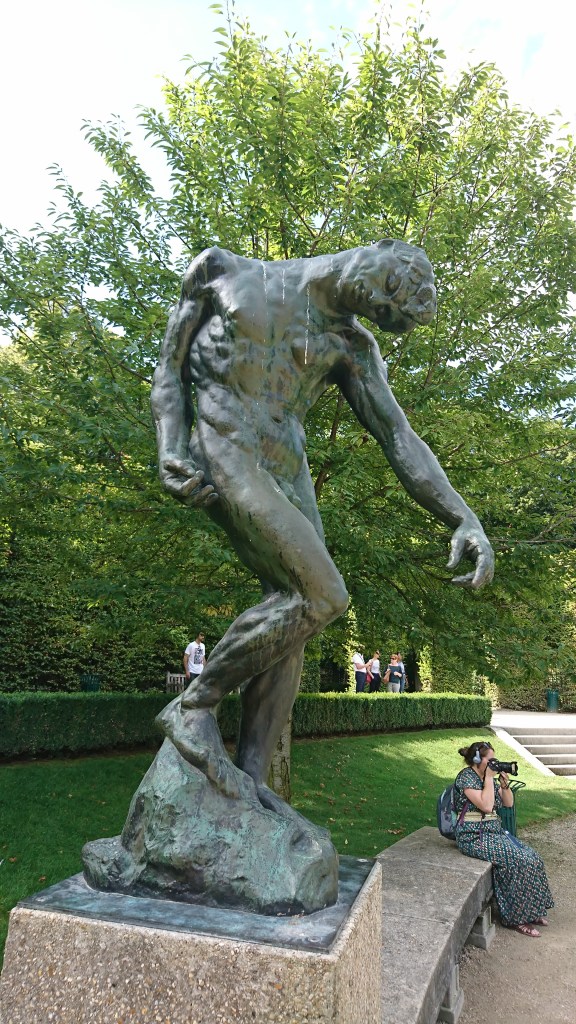
This is an idea that is seen everywhere in his sculptures: in the marble with what is jagged and uneven left propping up or invading the figures represented, or in bronze where forms rise out of the molten into something vaguely less fluid. What I loved about Rodin’s bronze work was how these majestic figures rise from the oneness of liquid bronze embodying the impulse and awkwardness of individuation and self-determination. To show this, Rodin ensured that he injected quirks and oddities in his work to create a sense of visual discomfort. In one sculpture, the head- the centre of Cartesian rational thought and the Jungian ego-mind- is heavy, too heavy, as though burdened with the constant, revolving noise of the mind, dangling awkwardly to the side and creating one long awkward line from the neck across to the shoulder.

Awkward Rodin

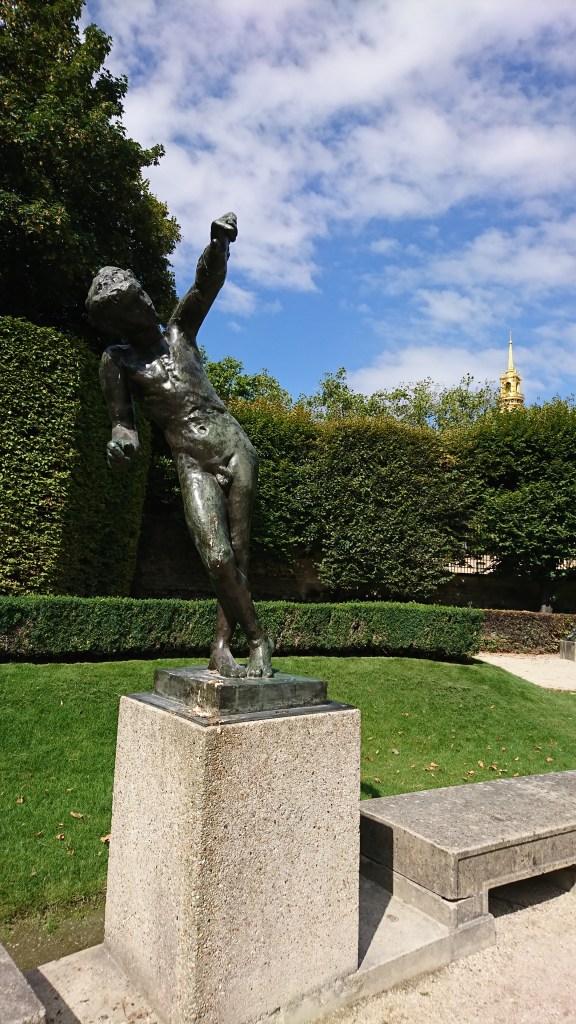
Elsewhere, a sculpture leans over slightly too far; it looks uncomfortable, like the sculpture is in danger of falling: the arms are flung out as though for balance; emergent from what is whole and one, bursting forth but still reliant on the whole to provide it with strength and structure. In these sculptures in particular, I would argue that Rodin could be making a criticism of the modern world, defined as it is by commodity capitalism, where the drive and inevitable fallout of being an individual, separated and alienated from the collective, is mired in suffering, contortion and pain.

Leaning Rodin

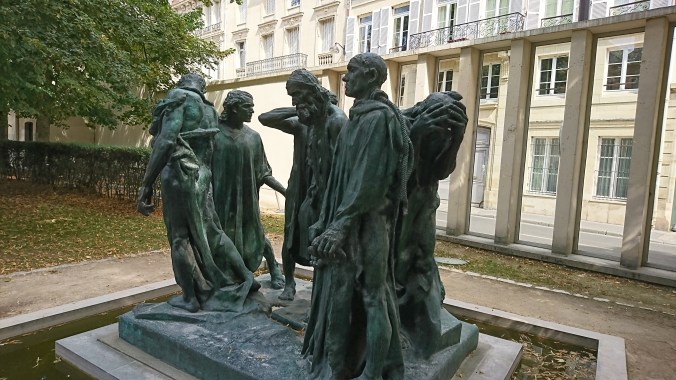
The final sculptures that really stood out for me were a series of bronze sculptures called The Monument to the Burghers of Calais, made in 1887. These six sculptures commemorate six dignitaries who surrendered themselves and the key to the city of Calais to the King of England during the One Hundred Years War. I was neither familiar with these works nor the story surrounding them until our visit to the Rodin museum. On display were the six grouped together, as well as the six individual sculptures dotted around elsewhere.

Burghers Six.jpg

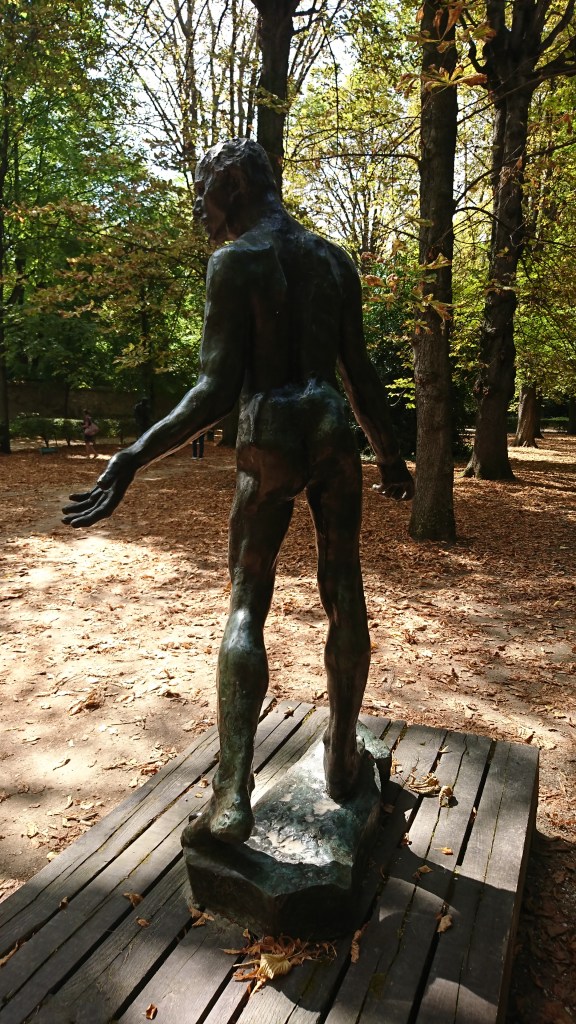
There are lots of ideas and emotions conveyed in these sculptures, the predominant being incredulity, despair, sadness, dignity and acceptance. Some of the sculptures are fully clothed, regal in their gait; others are naked and exposed. The Burgher that stood out to me the most was naked, arms outstretched, enquiring and admonishing, barely believing the cruelty of his own fate and asking on-lookers, at the time and of tourists traipsing around the Rodin sculpture garden whether we are going to settle for the injustice that attempts to quell and control us.

Burgher naked

They felt pertinent to me at the time for a number of different reasons: because I have such a limited knowledge of the One Hundreds Year War; that they are a reminder of the suffering that has occurred throughout history that I feel barely able to comprehend or quantify; and of the vulnerability of being a human being, tossed around and seemingly inconsequential in the rough seas of man-made war, devastation and chaos. Here, again, we can see why art is so important. The attempt to capture these seemingly obscure men from a time long since past is both an act of remembrance and an act of resistance. What fools we are if we believe that the turmoil we face today has not been passed down, like a chain of trauma, throughout the generations. Art offers us the insight and the ability to cut through the churned up homogenous events that we might call ‘history’; to give us the mirror and the platform to reflect and re-think our assumptions and orthodoxies. It is and always will be vital; no wonder the Tories don’t want people studying it.

On a day like today, where the British government, helmed by Boris Johnson, has decided to prorogue Parliament, I think about the Burgher of Calais sculptures: I think about the Burgher standing with his arms outstretched imploring his viewers to think about who they are and what they are doing; I think about the frosty-faced Burgher, handing of the keys to the city, a metaphor for freedom, both personal and societal, a moment where freedom is now longer a gift or a right, but something that has been forfeited. Maybe it is no coincidence that I am more attracted to sculpture at this present cultural moment. We are living in a time where our freedoms feel so much more restricted, that large societal forces, whether it’s Facebook, Amazon, Google, Apple, the Government, fossil fuel companies and others, are hell-bent on controlling us, harvesting our data, relentlessly trying to sell us things and destroy our planet. In sculpture, we see space being claimed and occupied. Much like Rei Kawakubo’s iconic fashion house Comme des Garcons, whose pieces verge on the sculptural in every single collection, there is power in sculpture’s ability to take up space, be large, voluminous, making it impossible to ignore. Maybe the Kapoor sculpture at Versailles was my biggest clue before my full on awakening with Rodin. Kapoor’s disruption of the sanctity, historical and otherwise, at the clipped and coiffed Palace of Versailles, appealed to me and began to broaden my understanding of what sculpture does. Our ability, as tourists, to take photographs of the pristine lawns and fountains was disrupted by this rusty looking horn, which had erupted out of the ground, churning up the grass. The stronghold of France’s ancien regime and absolutist monarchy was ripped up, long after the first flickers of revolution in the 18th century. I enjoyed the frustration.

The radicalism of sculpture lies in its ability to take up space and to morph and manipulate visual reality. What I love specifically about Rodin’s work is that it revolves around people and their bodies, making his work deeply vulnerable, personal as well as political. I was greatly impressed by his work, highly recommend the museum in Paris, that is completely self-funded, and relish future opportunities to explore and learn about sculpture. In these times where the world becomes scarier and where democracy and freedom do not feel or look like absolute givens, sculpture is an art form that offers challenge and defiance.

Le Penseur

[1] Two sisters, Margaret and Gwendoline Davies, together amassed an enormous collection of Impressionist and 20th century art, 260 works in total, which they then bequeathed to the public. The collection is on display and free to access in the Welsh capital. I can’t recommend it enough.

Love Note – Paris report

We’ll always have Paris.

I have just returned from seven days in Paris and, predictably and gratefully, had a wonderful time. Prior to the trip, I concocted a three page day-by-day itinerary filled with activities, but also consciously carved out some time for some more spontaneous and impulsive things too (anxious traveller, moi? Absolutement).
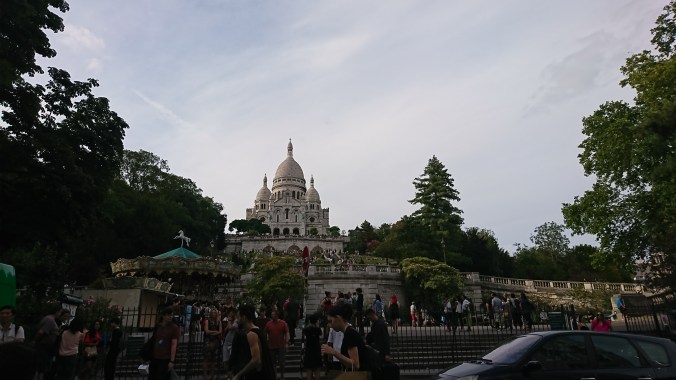
Sacre Coeur

August is a famously quiet time in the city because many of the locals go away on holiday. However, we found the first week in August to be a pretty excellent time to visit: our Eurostar tickets (booked in November) were £52 each for a return (less expensive than it is to get from Nottingham to London on the train…); certain museums in the city are free to enter on the first Sunday of the month and, because it was quieter, the queues were short (we managed the Musée de l’Orangerie and the Musée d’Orsay for free, but also available were The Louvre, the Musée National d’Art Moderne at the Centre Pompidou and many others); and going later in the summer meant that even with temperature highs of 29°C, we avoided the sweltering and sticky heats of June and July.

The benefit of spending a whole week in Paris is that we left barely any of the city unexplored. From our AirBnB base near the Place de Clichy in the 18th arrondissement, a delightful intersection of four arrondissements and in close proximity to my all-time favourites Montmartre and Pigalle, the whole city was at our fingertips. I would like to share some of my favourite places and moments from the trip. These may be food for thought if you are or intend to go to Paris at any point in the future, or if you just want to while away an afternoon thinking about those cobbled streets, beautiful buildings and all the amazing food. Like I will be.

Vegan food

Virginia Woolf’s old adage ‘One cannot think well, love well, sleep well, if one has not dined well’ is one that I take very personally, seriously and ecstatically live my life by. Therefore, first thing’s first: the food we ate. We did a lot of our own cooking to cut down costs, but we did have some fantastic vegan meals out:

Abattoir végétal

Abattoir Vegetal.jpg

This is a lovely restaurant in the 18th arrondissement with a neon sign outside, fresh-feeling interiors and lots of hanging plants. They specialise in seasonal dishes, organically sourced food and organic wines by the glass and bottle. We went a couple of times to this restaurant and sampled the Green Augustine Buddha bowl of legumes, raw and cooked vegetables, smoky tofu and fresh leaves in a smoky balsamic glaze; the Funky Burger made with beetroot, vegan cheddar, pickles and sweet potato fries on the side; and the Hot without Dog made with falafel, grated carrot, red cabbage, ketchup, mustard and sweet potato fries. For dessert we had chocolate cake, and drank our way through both meals with a bottle of organic red. I couldn’t deal with it then, I can’t deal with it now. So much yumminess.

SO NAT – Notre Dame de Lorette

SO NAT

If I went into this trip sceptical about the tastiness of Buddha bowls and their capacity to actually fill you up, I stand completely surprised and corrected. The large Buddha bowls at this cute little café in the 9th arrondissement, down from Pigalle and just before Opéra, were delicious, hearty and required no emergency snack afterwards. My Buddha bowl contained breaded aubergine, pomegranate seeds, lentil dahl, all sorts of colourful veggies and leaves, vegan sour cream and red quinoa. It was ridiculous. MW’s had ginger, rice, BBQ tofu and, again, veggies on veggies on veggies. It was all fresh, came in big portions, was so healthy and tasted rich and delicious.

Maoz

One of the many amazing things we encountered on our trip to New Zealand last year was the healthy fast food franchise Pita Pit: a Subway of sorts that features meat but also specialises in falafel. Add to that some humus, pitta bread and multiple veggie accompaniments (lettuce, tomatoes, cucumber, red onion, carrot, sweetcorn, jalapenos, olives etc.) and you have the beginnings of an addiction. We visited roughly 15 over the course of six weeks and have no regrets. We have found nothing to compare in Nottingham, so when we found Maoz, a falafel and pitta shop, in the Latin Quarter, we were stupidly excited. The novel difference here? The assortment of Middle Eastern fillings (pickles, fatoush, salads, onions etc.) was presented as self-service. We had a joyful time stuffing our own pita pockets full to bursting with fresh, perfectly seasoned toppings. Maoz is unmistakeably a delicious, quick vegan lunch option, right next to Notre Dame Cathedral and Shakespeare and Company.

Bike Rental
Holland Bikes

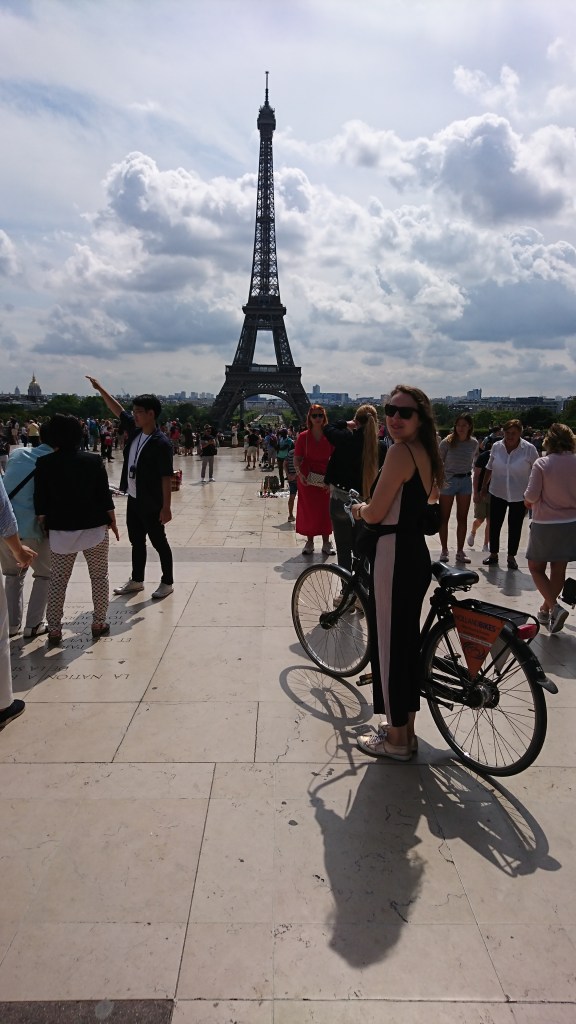
In a city like Paris, tours of all shapes and sizes are prolific. We would have loved to have done a tour: I had high ambitions for some form of a champagne booze cruise. Alas, this did not happen but we were very much content to explore on our own. Holland Bikes are a well-reviewed tour and rental service in the city and around France, so we decided to use the Pick and Go service to rent two Dutch bikes from the Arc de Triomphe depot. Renting a bike is so much fun and you can cover so much ground in a short space of time. Plus, Paris has excellent infrastructure for cyclists and e-scooter riders, so despite the heavy traffic in parts (we categorically avoided the wacky races of Place de la Concorde and Étoile de Charles de Gaulle) it felt very safe getting around. We cycled from the Arc de Triomphe down to and around the Bois de Boulogne, then back up and around to Trocadéro, the Champs de Mars, Invalides and along the Seine. We had so much fun.

Parc Monceau
Park Monceau.jpg

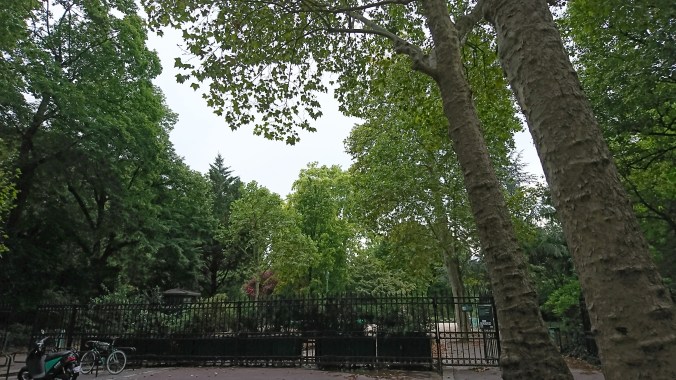
There are so many beautiful and shaded places to relax in Paris, which I am sure were absolutely essential during the 40°C+ heats the residents experienced this summer. The Place de Vosges in Le Marais came highly recommended, and we enjoyed the classic Tuileries gardens and Luxembourg gardens on the Left Bank. Whilst walking home on our last afternoon, we headed for the Parc Monceau which is in the 8th arrondissement, just off the Boulevard de Courcelles. Although the park has stylised elements like a little Venetian bridge, a Classical colonnade to emulate ruins and the most charming old carousel, there was something about more primeval about this park, compared to the more clipped and manicured lawns of the big jardins. We sat on a little green bench people-watching for a good long time in this prettyish wilderness.

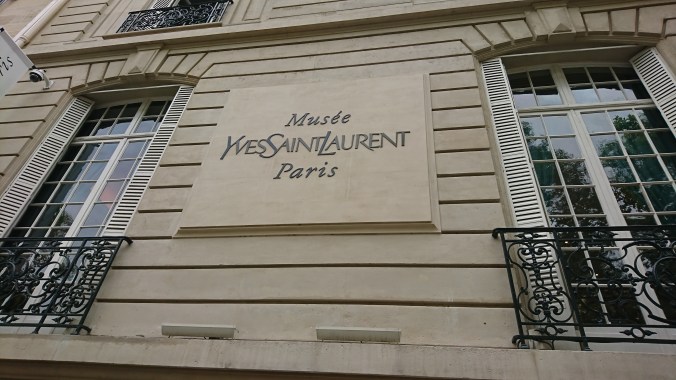
Musée Yves Saint Laurent Paris
YSL Museum.jpg

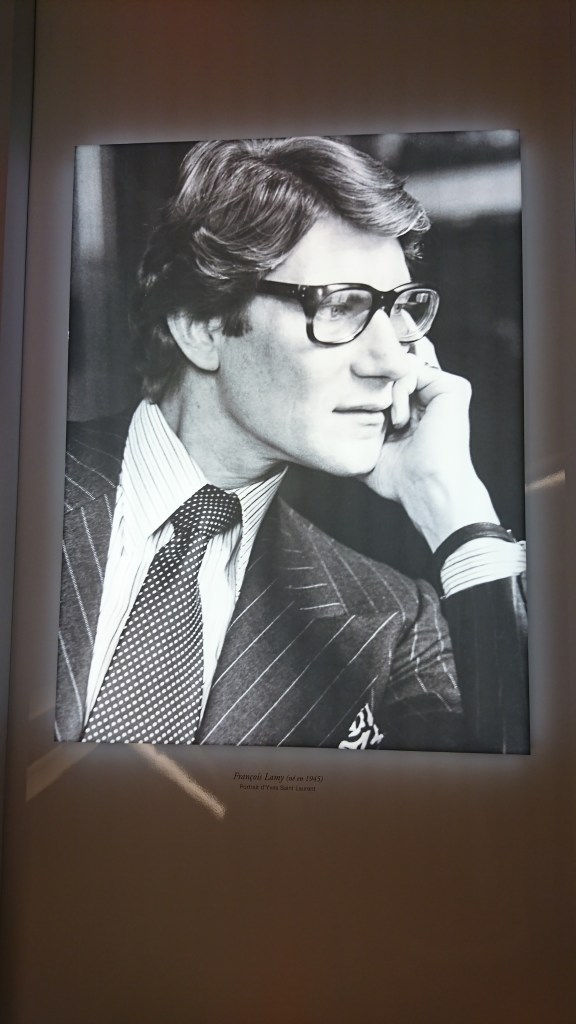
Oh boy. Pour moi, a trip to Paris was never going to be complete without a slice and dice of fashion history. I plan to write a longer post about the YSL Museum, but it’ll summarise it briefly here for now. Yves Saint Laurent never used to be one of my favourite designers; perhaps controversially, I have been more of a fan of the edgier Saint Laurent incarnation of the brand under Hedi Slimane and Anthony Vaccarello. I was, however, aware that he is an inescapable part of fashion history, after being made head of Dior at the age of 26 and for the successful couture house he built in his own right. What became clear to me from the exhibits in the museum was that, like Christian Dior (you can read my analysis here), Saint Laurent’s prime aim in design was to make a woman feel her most confident and beautiful. I find this to be such a validating and comforting thing. Even though fashion is so much to do with comparison, beauty standards, perfectionism, ageism, white and able-washing, what I have noticed is that oftentimes at the centre of a brand is a sensitive, empathic and deeply creative person who just wants to make women feel good. I really appreciate that in Yves Saint Laurent and his contributions to fashion. Furthermore, he was famously one of the first designers to champion the use of non-white models, pioneered the trouser suit and established his Rive Gauche collection to make fashions accessible and affordable to ordinary people.[1]
Mondrian dresses.jpg

The building on the Avenue Marceau is home to his formidable archive, including the epoch-defining Mondrian dresses, the extensive jewellery collection and this absolutely perfect ensemble:
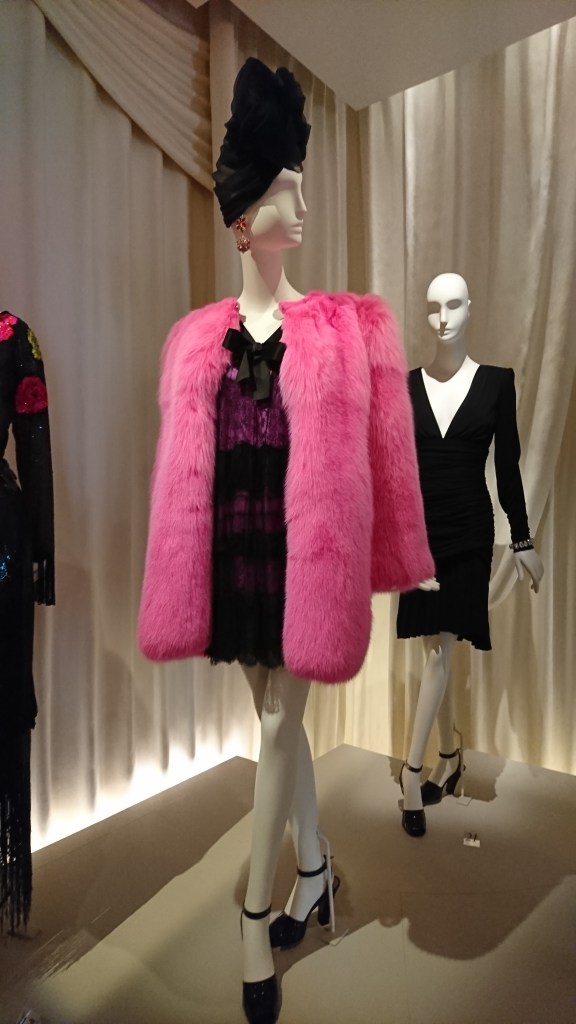
YSL dress


I was able to walk through a reconstruction of his study, watch films about his work and his partner Pierre Bergé and soak up the beautifully presented collection pieces. I must also add that the museum is wonderfully air conditioned, was relatively quiet and, all-in-all, a genius way of preserving Saint Laurent’s creative legacy.

Montmartre cemetery

Montmartre Cemetery.jpg

This was a go-to last time we came to Paris and, being so close to our apartment, was definitively on our itinerary again. Cemetery-visiting may seem like quite a morbid activity, but I believe that visiting cemeteries helps to really contextualise a place and the people in it. To really know and understand a city and its different people, to get an insight into what they value, treasure and, ultimately, to understand their approach to living life, a clue can be found in exploring how they treat their dead and the way they design and use their communal and private spaces of remembrance and reflection. Even if we have not visited Paris, many people are aware that it is a city associated most commonly with love, art and revolution. This, I would argue, is reflected in their cemeteries, which are uniquely Gothic and gorgeous. There is a joie de vivre and gravitas evident in the Parisian cemetery, and Montmartre in particular, which makes it a space in which life, family and creativity are celebrated and revered. Of course, I couldn’t help thinking that it is only the wealthy and respectable who could have afforded such exuberant graves. Additionally, in no other cemetery have I felt that the burial of the dead is used to so confirm and validate the people left behind. It is in this capacity that I think gloom seeps into the cemetery: both in the potentiality that the wealthy dead were desperate to be remembered and that the living left behind were so desperate to build something in place of their lost loved ones.

Many famous people are buried in this city, and their resting places are free to visit and open for visitors to pay respects. Whilst Père Lachaise is one of the biggest and most famous- we saw the graves of Edith Piaf, Oscar Wilde, Jim Morrison and the Mauthausen Holocaust memorial- Montmartre cemetery is smaller and nestled into the Western corner of the village. Stretching underneath the Rue Caulincourt bridge, it is easily visible from the road and its fantastical rows of grand crypts and family sepulchres look like something from The Phantom of the Opera. We visited specifically to lay a rose at the grave of Vaslav Nijinksy, the lead dancer of the Ballets Russes, choreographer of The Rite of Spring and, I recently found out, a passionate vegetarian. I have mentioned here before that The Rite of Spring has been a very important piece of music and dance to me, and I wanted to show my gratitude to this extraordinary sensitive and surreally gifted man who helped collaborate on and create such an awe-inspiring piece of cultural history.

Nijinsky


[1] https://www.nytimes.com/interactive/projects/cp/obituaries/archives/yves-saint-laurent-models-couture [accessed 14:41, 13th August 2019].
Love Note – The Vogue Colouring Book

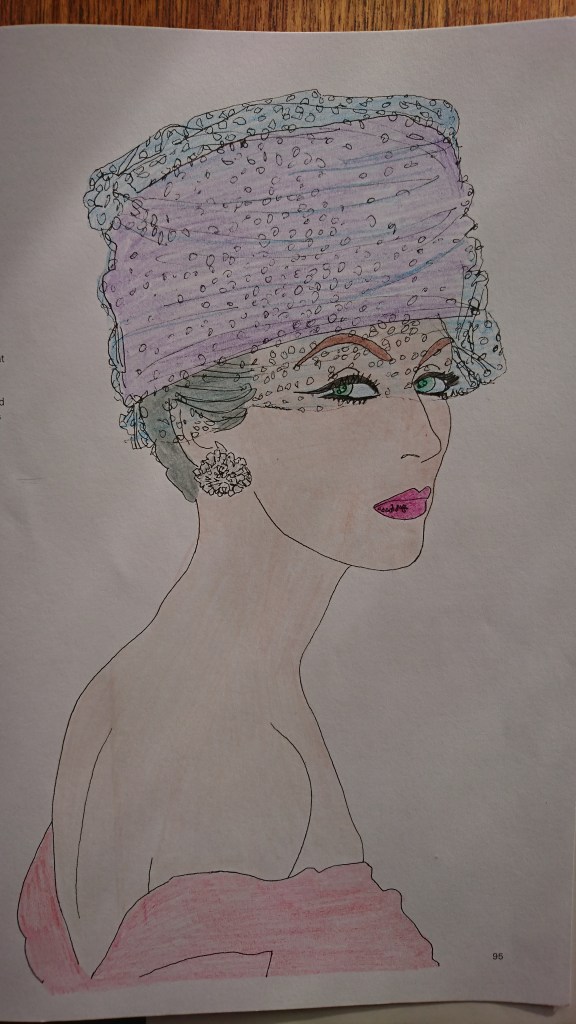
I hate/love to sound like a two year old, but I was inspired to buy a colouring book after seeing my friend’s. She has a Harry Potter-themed one and had done a beautiful job of meticulously colouring in the scene of Harry and Ron flying Arthur Weasley’s Ford Anglia. Her shading was gorgeous. Where I would have coloured Harry and Ron in pink, she had expertly blended a combination of peach, yellow and cream to re-create the colour of white skin. I realised that good colouring requires a lot more skill than just picking a crayon and keeping between the lines. I had some arty things to learn.

When the Vogue colouring book was published I was all over it like it was a Selfridges sale (top tip you guys: Paige jeans. The best fitting jeans you will ever wear, will last forever if you wash them cold, ethically made in Los Angeles, £350 in real life but often reduced to £70 in the Selfridges sale. You can thank me later). As much as I would like to make clothing, I have never learnt how and it is unlikely to happen anytime soon. I tried my hand at designing clothing when I was in secondary school, have binged on multiple episodes of Project Runway and have taken a particular interest in fashion writing for many, many years, so the opportunity to colour in some glorious illustrations from the 1950s seemed like too much fun to miss. I nabbed a copy after visiting the Vogue 100 exhibition at the National Portrait Gallery in 2016.

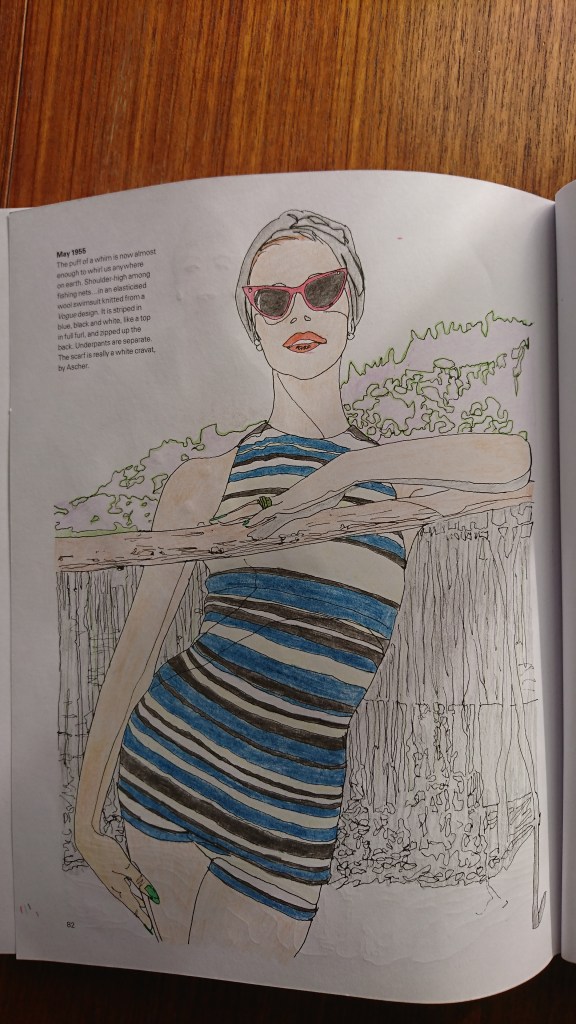
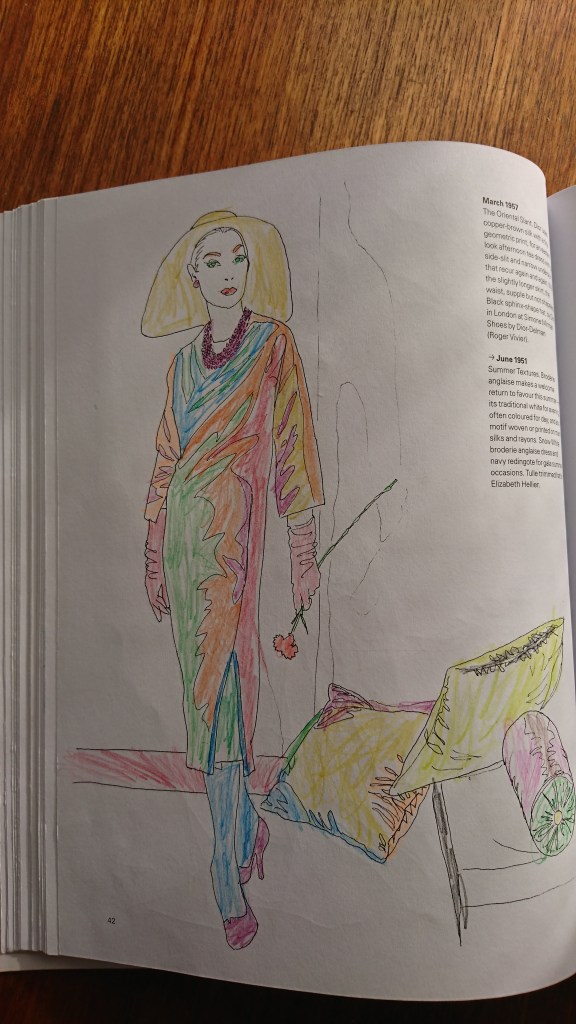
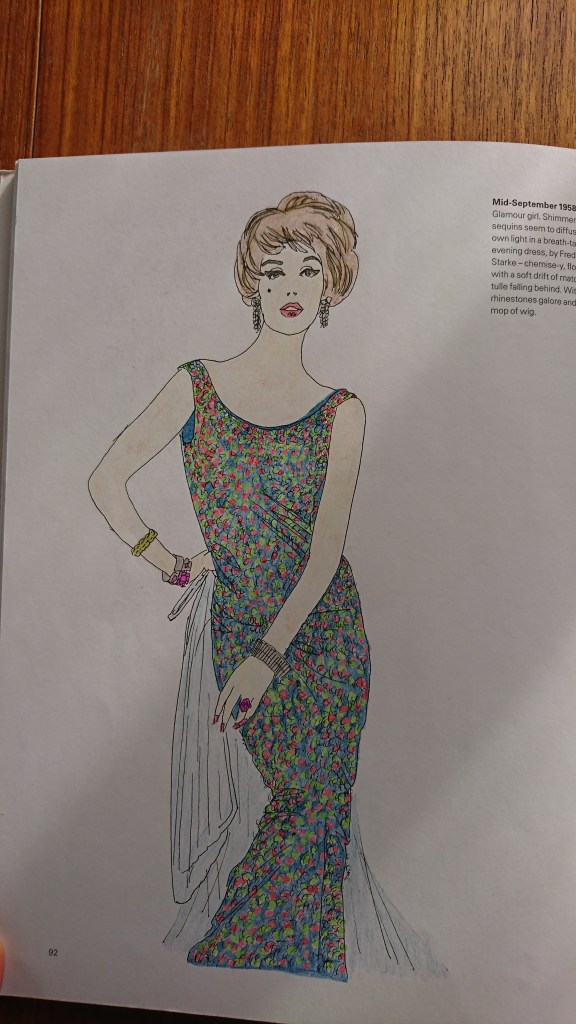
Ever since then, all of my fashion designing delusions of grandeur have been released in a healthy safe, way. I rarely follow the original description copy in the book, choosing to blaze my own (ridiculous) trail. With my box of crayons, I have tested my sartorial eye by colour clashing, at times imagining myself as Alessandro Michele, Raf Simons and Phoebe Philo, and even put Hubert de Givenchy to shame with a great replication of an LBD. Aside from colouring one woman’s arm in purple by accident, there have been no huge disasters.

It might all be a bit silly but I can safely say that I’ve had a whole lot of fun, expressed myself in a creative capacity when I’ve been bored and tempted to scroll through Instagram, and I’ve given myself a bit of styling education and practice. Here are some of my favourite exhibits and design notes:

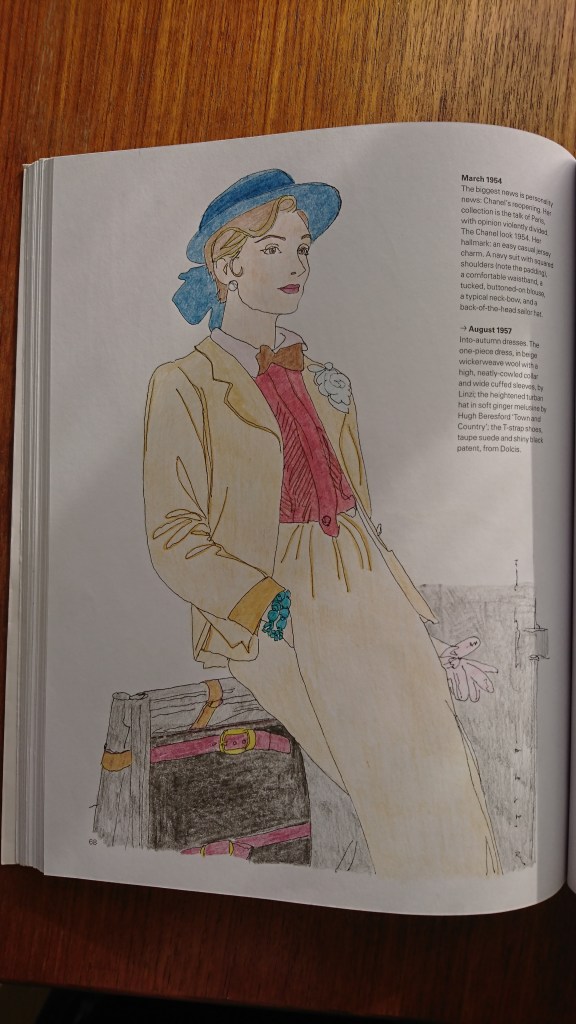
Woman in beige

Kate Moss once said in conversation with Nick Knight that she would be loath to wear a beige suit, so I decided to try and make a beige suit look nice. I think it’s OK.


Woman in turqouise

This woman encapsulates all my turquoise-mermaid-dress-and-turban-combo ambitions. I love this look.


Woman who looks like Meryl Streep

This woman is spits of Meryl Streep. It’s ridiculous.


Woman in stripes

Beachwear that dreams are made of but I wish I’d done the glasses in tortoiseshell #hindsight #designerproblems


Woman done by Stanley

Sharing is caring and I let a little family member colour this woman in. I have to say, I’m liking the psychedelic vibes.


women-by-nicole-and-i.jpg

Similarly with these women. My sister did some really quite expert shading for the woman on the left, whilst I went for statement (millenial?) pink on the right. I also did the dog.


Woman who looks fabulous

This dress was inspired by Jennifer Lawrence’s dress at the SAG Awards in 2014. I don’t know why I remember that dress so clearly, but I do. Textbook Raf Simons.


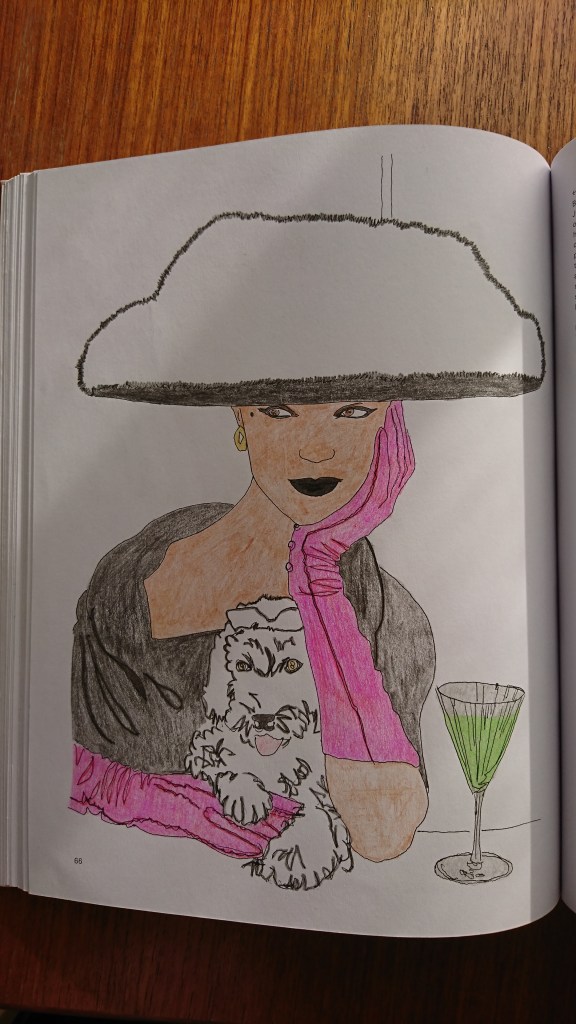
Woman with dog and absinthe

So many life goals right here: cute dog in hand, a glass of Absinthe, killer hat, sassy gloves and black lipstick done well.


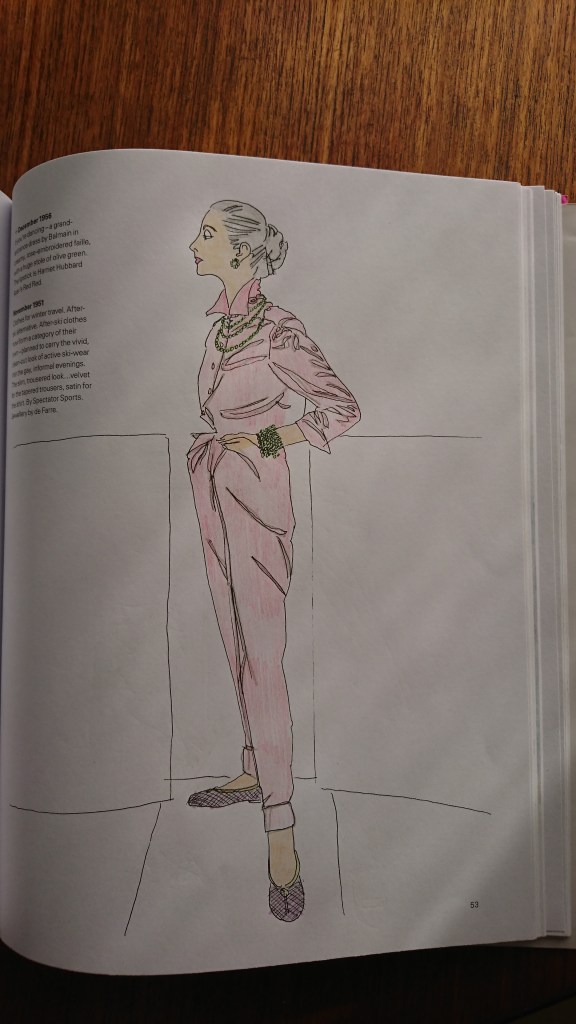
Woman in red

This woman reminds me of the fabulous Jacquie ‘Tajah’ Murdock, who was cast in a Lanvin advertising campaign in 2012 at the age of 82. When I am an older woman, I hope to pull off a red jumpsuit with this much grace.


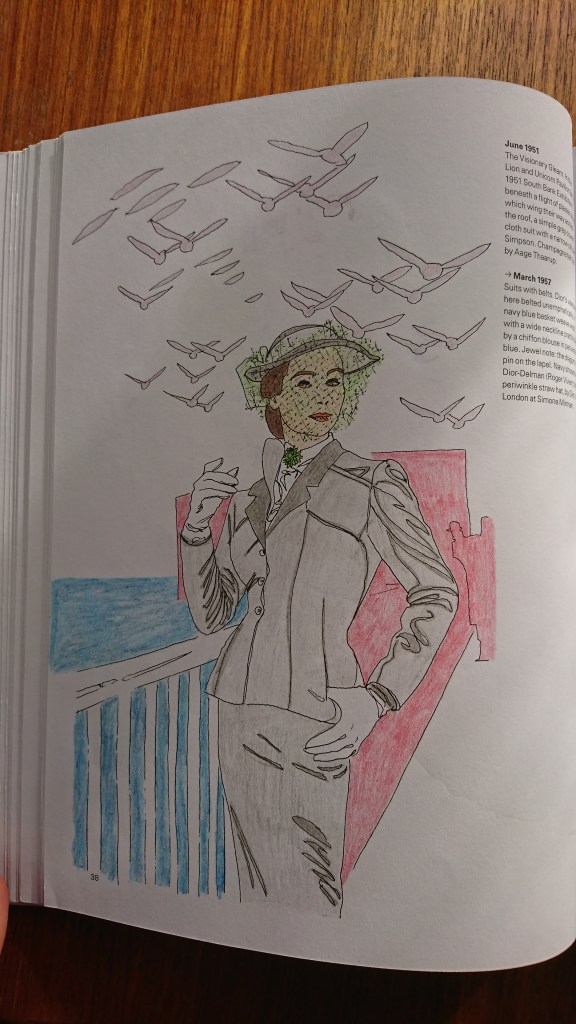
Woman who looks like a Hitchcock film

I feel like I created a Hitchcock heroine here and I am thrilled. I didn’t realise that skirt suits come great in a cool grey, a green veil is all I’ve ever dreamed of and that all seagulls should be pink.


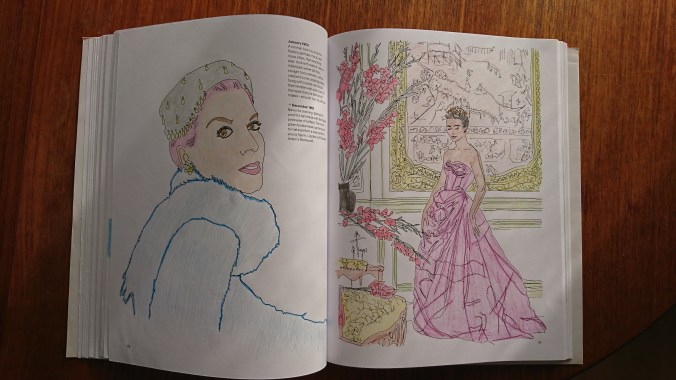
Pink hair don't care

Pink hair don’t care (I would LOVE to give this a go one day.). And yes. The Balmain sweepy on the right makes me weepy. I need a moment like this in a dress like that in the future sometime (please sartorial gods).

Death in fashion: Karl Lagerfeld

‘For fashion was never anything other than the parody of the motley cadaver’ – Walter Benjamin

Yesterday we heard the news that Karl Lagerfeld, the creative director at Chanel, Fendi and his own eponymous label, has died. Walter Benjamin would, perhaps, argue that Lagerfeld has been dabbling with death for his entire career (see this essay’s epigraph), but yesterday he passed away in Paris at the age of 85.  Fashion design was, undoubtedly, his entire life (apart from his love for his cat, Choupette), and such extraordinary dedication to his craft is what has made him legendary. Although he may not have openly exhibited the emotional naiveté of designers like Alexander McQueen or Raf Simons (two of my all-time favourite designers), by golly he was a figure of creative and commercial genius. Lagerfeld was able to fearlessly embrace both history and modernity, turn fashion shows into aspirational spectacles, and take his understanding of brand power to astronomical levels.[1] Those inter-locking Cs are immediately recognisable worldwide thanks to him. Although he claims that Coco Chanel would have hated his commercial transformation of the fashion house, he has adhered to her philosophy that fashion was dress-making: clothes are meant to be bought, sold and worn.[2] For Lagerfeld, as it was for Coco, fashion most definitely is not an art-form.

Karl has never been my favourite designer, even though his shows, clothes and perfume campaigns have made Chanel products ridiculously desirable (I wear Coco Mademoiselle because it smells divine and just because Keira Knightley). I am, however, not OK with the way in which he described Germany’s open-door refugee policy in 2017, which reeked of hateful Islamophobia.[3] I am not OK with the way that he has spoken about Adele, Michelle Obama or Pippa Middleton: I would find it very difficult to take if someone said that I should only show my back because my face isn’t pretty enough. It was undeniably a fucking mean thing to say.[4] For all of his designing excellence and great taste, he had a mean streak that was completely ungracious, unbecoming and offensive.

Nevertheless, his passing is deeply significant. It feels like the passing of one of modern culture’s greats, like the deaths of Seamus Heaney or Aretha Franklin. He is an icon of popular culture who has achieved the feat of having grown into a ripe old age, where so many creative lives have been cut short by illness or personal tragedy. He has traversed, witnessed and helped to create so much change over the course of the twentieth and twenty first centuries, evidenced in the fluctuations and ideas presented in his extraordinary backlog of visual work. His death leaves a large void in the cultural fabric of the 21st century, and it’s going to be interesting to witness the unfolding transition in the wake of his death both at Chanel and Fendi, and across fashion in general.

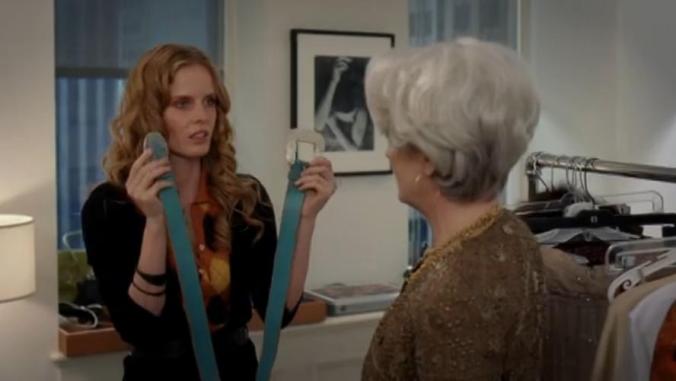
Fashion is a funny thing: I subscribe to Walter Benjamin’s conception of it as a dialectical social construct, encapsulating both commodity fetishism and the release of utopian desire and energy in a moment of historical awakening. It is both frivolous and fruitful. Whether you care about it or not, it shapes and literally dresses the world around us (please click on the picture below for the iconic scene from The Devil Wears Prada for further reference and explanation). Lagerfeld’s passing is another one of the great transitions we witness in life: the dying of the old ways, the liminality of not knowing what is going to come next and, ultimately, the emergence of something else, something we don’t yet know or understand. Whatever and whoever comes next, life in fashion and beyond, is going to continue to fascinate.

devilwearspradabelts

[1] Lagerfeld’s adeptness for creating and designing extraordinary fashion shows is particularly significant. Classic runway exhibitions have become increasingly outdated thanks to the industry’s demands for instant, immediate access to fashion, with collection turnarounds that beggar belief. (Again, it is important to emphasise here Lagerfeld’s enormous and unparalleled creative output: he worked tirelessly and wholeheartedly to produce collections for Autumn/Winter, Spring/Summer, Resort, Cruise and couture for three labels, as well as an additional Metiers d’Art for Chanel). By creating fashion shows that turn a collection presentation into a show and a spectacle (Lagerfeld took us to an enchanted forest, a beach, a jungle, a cruise ship, a brasserie, a rocket launch, an iceberg, a data centre, Ancient Greece and a barn amongst others) he not only preserved the sanctity of the runway when it had all but become a stale, outdated method of introducing new collections, but, indeed, breathed new life into it. A ticket to a Karl Lagerfeld Chanel show was perhaps the most covetable of all the fashion month shows, never mind just Paris, and were as Instagrammable as they come. As a side note, I would LOVE to compare the shows and performances of Alexander McQueen and Karl Lagerfeld at some point.

[2] ‘What I do, Coco would have hated. The label has an image and it’s up to me to update it. I do what she never did’. https://www.marieclaire.co.uk/fashion/karl-lagerfeld-quotes-120855 [accessed 14:36, 20/02/2019].

[3] https://www.thetimes.co.uk/article/chanels-karl-lagerfeld-claims-muslim-migrants-are-affront-to-holocaust-victims-cm2tr9prt

[4] https://edition.cnn.com/style/article/karl-lagerfeld-controversial-quotes-intl/index.html

Love Note – Avant gardish style (AKA anything but athleisure)

The fashion editor in me has been lying a little dormant for a while, but today, I feel like unleashing her a little. I’m sorry if this comes across a bit Blair Waldorf, but I’m sure this will be good for all of us.

I am well aware that fashion trends can envelope us one and all: I myself have been very open about my questionable adolescent boho phase, which attempted to walk in the shoes of Noughties Sienna Miller but ended up looking like a big old brown mess. I did not have the sartorial maturity to master both neutral, earthy hues and long hemlines. It taught me that just because something is in fashion, it doesn’t mean you should buy it and wear it. Especially if everyone else is buying it too. With this in mind, I am turning my critical fashion gaze to a trend that is beginning to get my goat: athleisure.

Everywhere I have been for the past couple of years, I have seen them: young people shuffling about in a combination of gym leggings, trainers, crop tops and enormous puffer jackets. I see them on university campuses, on the bus, going round Aldi, at the cinema, everywhere. I am not one to bash young people for their choices because being young is a lot more difficult than many older people remember. There is heaps of pressure to be successful, smart, have excellent socials whilst attempting to look after your mental health and a Brexit-ful future to look forward to. There is no doubt that being young in 2019 is hard. I understand that times are tough and we need every last inch of comfort and softness to get us through cold weather and political chaos, and I can see how athleisure helps in this. Why bother dressing properly to leave the house when everything else is going to shit? Having said that, this perpetual state of sartorial proto-gymming has to have an endpoint. Why would I want to wear clothes that remind me that: a) I should be in the gym doing exercise because I eat like a heifer and b) remind me of the horror of the exercise that punctures my week with a whole lot of sweating and my biceps and triceps being ripped to shreds? (Thanks Body Pump combined track).

Now, I am not suggesting that we all leg it to Comme de Garçons to snap up some silhouette-obscuring, proportional challenging Rei Kawakubo garb, even though that would be a whole lot of fun. But something has to be done about the on-going proliferation of athleisure. Yes, things are uncertain and shit at the moment but in times of existential discomfort, we are also given an invitation to grow and challenge old habits. Are we really going to approach this day, 24 hours we will never be given again, with the innumerate possibilities and opportunities it brings, in gym leggings? It’s like watching supermodels turn up for the Met Gala without having heeded the theme: lazy and atrocious.

I really don’t care what you do: whether you opt for layering, colour clashing, minimalism, extravagant knitwear, modest cuts, androgyny or a ball gown, and whether you experiment with the understated chicness of a classic T-shirt and jeans or the all-out geeky Renaissance flamboyance  of Gucci, handmade flowers and all, just make it interesting and make it personal.  Oh the joy of seeing someone who has committed themselves wholeheartedly to their aesthetic, no matter what their style. I just love it.

Finally, I ask you: are we really going to let history remember us for wearing cycling shorts? The pariah of the P.E. kit allegedly made cool because they were worn by a Kardashian? People, I challenge you, for your generation’s own good, to do yourselves a favour and leave the gym leggings in the bloody locker. This period of history is being defined by Trump and Brexit as it is: don’t let athleisure taint the 2010s even further.

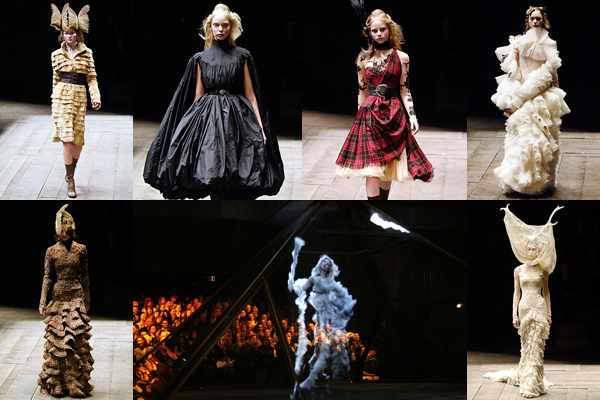
Remembering Alexander McQueen: Allegory

This article was first written in September 2015

The multi-faceted and heterogeneous nature of Alexander McQueen’s collections, as discussed in my essay on McQueen and the ‘abyss’, leaves it next to impossible to not say more about the Savage Beauty retrospective at the Victoria & Albert Museum. McQueen’s clothes in both their physical and metaphysical composition, I argued, see them occupy an abyssal limit. As a result, what we are able to say about McQueen’s collections cannot simply end there. There are so many more things that can be argued and posited about his clothes, intertwined with what they present, represent and how they exist in a world created for them and by them. For the purpose of this essay, I want to suggest that McQueen’s work is greatly involved with death, history and, ultimately, allegory.

One aspect of McQueen’s work that I find particularly intriguing is the visceral historicity of his clothes. He used images of Hieronymus Bosch’s 14th century triptych The Garden of Earthly Delights to form the background of dresses in his last collection; he used silhouettes and tailoring from the Victorian period; and, perhaps most famously, used fiery red tartan in Highland Rape and The Widows of Culloden, his 1995 and 2006 shows inspired by the eradication and cultural smudging of Gaelic and Celtic life in Scotland. These latter two collections were very personal elegies to a culture that has almost entirely diminished as a result of English colonialism, and incorporated fragments of tweed, tulle and antique lace with the tartan to help convey this semblance of trampled upon Scottish identity. Seeing these clothes on show at the V&A, clothes which project and embody history almost as a physical presence, helps to throw a fascinating light on the idea of the retrospective itself. We remember Alexander McQueen by looking at his clothes, which in turn are fragments and objects that remember and bear witness to the past.  As previously mentioned, Scottish history was a key concern in his collections, but so was McQueen’s multiple collection tributes to Isabella Blow. Blow was a renowned fashion editor who was Phillip Treacey’s muse and is credited with having ‘discovered’ Alexander McQueen, who took her own life just three years before McQueen’s own suicide.  Many of his most famous collections, including Dante and The Widows of Culloden were personally dedicated to her and remembered her very personal influence on his life and art. As a result, we can see that the retrospective creates a chain of history and layers of remembrance which the clothes are an active part of, if not absolutely integral to.

Widows-of-Culloden

This undoes the idea that clothes are merely passive symbols that reflect culture like a mirror, or simply transcend the drudgery of everyday life in a fluffy artistic cloud. Marilyn J. Horn and Lois M. Gurel argue that fashion has ‘a silent language communicated through the use of visual or nonverbal symbols’.[1] Whilst their case is very convincing, that clothes and fashion form an arbitrary system of signs and signifiers, I would argue that clothes have a much more complex social relationship with people than by simply manifesting as symbols. Clothes certainly do help to ‘fashion’ the world we live in through their colours, silhouettes and materials, and because the only way in which we discuss clothing is through language. They are, however, also borne from language, history and experience which the concept of ‘symbolism’ simplifies and renders impotent.

Walter Benjamin sees the sentimental application of and the Romantic idea behind symbolism as tyrannical and ‘illegitimate […] destructive extravagance’ partly because it ‘fails to do justice to content in formal analysis and to form in the aesthetics of content’.[2] He argues that whilst insisting upon the unity of form and content, symbolism does not allow for a dialectical analytic approach and, therefore, neither form nor content are rigorously interrogated. Imposing the idea of ‘clothes-as-symbols’ onto fashion collections, and for my own purposes, upon Alexander McQueen’s collections, embodies the tyranny that Benjamin rejects. This is because by privileging the idea that the clothes we read and interpret are purely symbolic, we overlook the power structures in place that facilitated the clothes’ production and the way in which we receive them. Instead, I would approach McQueen’s collections as allegory because, as Benjamin argues:

[…] in allegory, the observer is confronted with the facies hippocratica of history as a petrified, primordial landscape. Everything about history that, from the very beginning, has been untimely, sorrowful, unsuccessful, is expressed in a face- or rather a death’s head […] it significantly gives rise not only to the question of human existence, but also the biographical historicity of the individual.[3]

He suggests that symbolism idealises destruction, which can be seen in the way in which history is silenced and becomes a void when the idea of symbolism is arbitrarily imposed on language and literature, essentially saying that one thing is actually another and not conveying its own story or history. There is no potential for digression or for the multiplicity of ideas when such a dead weight is imposed on literature and, for my purpose, clothing. Allegory, on the other hand, gives us an insight into history’s fragmented state wrought with failure and sadness, and the individual’s existence within it and in relation to it, ultimately bringing us into contact with our own sense of mortality.

Through McQueen’s collections Highland Rape and The Widows of Culloden with the ruined, hybrid compositions of tartan, lace and tulle, we are confronted with the death and destruction that were met by the historical peoples of Scotland. [4] More specifically, McQueen focuses on the experience of women, with his explicit reference to sexual violence and with the term ‘widows’ used to convey the heavy burden associated with womanhood, battle-loss and mourning. Importantly, this confrontation with violence and destruction presented in the clothing perhaps speaks for the continued death and destruction we experience in our own times. We are given a much more comprehensive and disturbing study in historical failure through fragmented form which expresses a fractured, mournful past instead of privileging an empty aesthetic idea. To emphasise this, McQueen, in Widows of Culloden, had his models wearing antlers, feathers and other animalistic paraphernalia in their hair and on their heads in addition to lace, tulle and tartan. These simultaneously detract from the historical argument being presented but also open up history to other perspectives, corporealities and existences. Allegory, although heavily involved with death and destruction ironically helps to expand our understanding of historical experience that cannot just be limited to human suffering, but giving light to the suffering of animals and the natural world.

History cannot be pinned down. It is fluid, interchangeable and slippery, which is what makes remembrance such a difficult and perhaps even a futile task. Thinking of art as allegory, however, opens up our awareness of history and means we never fall into the trap that we live in a world that is fixed, stable and where we can impose absolute meaning on anything, from literature and art to fashion. Allegory helps to dispel fallacy whilst creating fallacy, and McQueen’s clothing is all the more interesting, important and extraordinary as a result of the allegorical fragments and components that structured what we saw when they were first unveiled to us and to what we see now.


[1] Marilyn J. Horn and Lois M. Gurel, The Second Skin (Boston: Houghton Mifflin Company, 1981), p.150.

[2] Walter Benjamin The Origin of German Tragic Drama trans. John Osborne (London: Verso, 2009), p.160.

[3] Benjamin The Origin of German Tragic Drama, p.166.

[4] 1,500-2000 member of Charles Stuart’s Jacobite army were killed at the Battle of Culloden (near Inverness) in 1745. They were attempting to overthrow the Hanoverian army who had secured the English throne and who lost only 54 men in comparison. After the battle, the government weakened the power of the Scottish clans and attempted to stamp out Gaelic culture to remove the threat of a future uprising. They succeeded: this was the last pitched battle on English soil and there was no subsequent rebellion.

Remembering Alexander McQueen: Abyss

This essay was first written in September 2015

British fashion designer and couturier Alexander McQueen took his own life in 2010 and five years later, his most famous collections were brought together in a triumphant and critically-lauded retrospective entitled Savage Beauty.  The exhibition, situated in the Victoria and Albert Museum having been initially shown at the Metropolitan Museum of Art in New York, was an overwhelming, grotesque and utterly fascinating spectacle. Seeing all of McQueen’s most famous pieces in one space was almost physically arresting and undeniable emotional: from the spray painted dress, the tartan, the ‘bumsters’ and all the tailoring, to the VTs of his catwalk shows playing all at once, his metal, woodwork and sea shell accessories, the Armadillo shoes, the millinery by Phillip Treacey, the feathers, the spectre of Kate Moss rising to the violin of John Williams’ Schindler’s List, the melancholy background music, and the fragments of his political and aesthetic musings stamped on the walls. Seeing everything all at once in one place confirmed that this exhibition and this designer worked beyond fashion, bleeding into the realms of theatre and performance art.

There was one aspect of the exhibition, however, that I would argue did not do the memory of McQueen justice. At the start of each new exhibit was a piece of introductory text imposed on the wall that described McQueen’s various inspirations in producing a specific collection or an idea that ran through his entire oeuvre. The descriptions relied heavily on two things: firstly, McQueen’s supposed use of binary oppositions in his aesthetic ideas which translated into his clothing, for example, light and dark, life and death, beauty and the grotesque etc. Secondly, they relied upon a seemingly endless string of ‘isms’ to help us garner some meaning from his work, for example romanticism, historicism, animalism and eroticism. This became particularly problematic when some of McQueen’s garments inspired by African tribeswomen were described as examples of primitivism in his work. Primitivism was an artistic movement that became fairly prominent in the late nineteenth and early twentieth century, under the influence of artists like Henri Rousseau with his jungle scenes, Gaugin’s Tahitian masks and Pablo Picasso’s African Period which formed a precursor to ‘Cubism’. One of the biggest sticking points with this artistic idea is that it involves the appropriation of the symbols and artefacts belonging to different cultures and using their ‘otherness’ to form art for a Western consumption. As Edward Said writes in Orientalism, ‘the Orient has helped to define Europe (or the West) as its contrasting image, idea, personality, experience’.  He argues that the concept of ‘the other’ is established to help create an exclusionary set of norms and conventions which the West can use to distinguish itself from the exotic East. In the most basic terms, therefore, primitivism, an artistic idea that walks hand in hand with appropriation and othering, is racist.

To pigeonhole McQueen under this label of ‘primitivism’ and thereby within this tradition is not fair and not very accurate. He rallied against the fashion industry’s racism, saying that ‘fashion can be really racist, looking at the clothes of other cultures as costumes’. Of course, just because he said this, it doesn’t mean he wasn’t racist in his designs, and his own reference to ‘tribalism’ in his work is relatively suspect. Authorial intent is all well and good but what is actually produced can undoubtedly undercut or undo whatever the author, or in this case, designer wanted to make. Regardless of this, I would argue that his designs deconstructed barriers, and ‘isms’, even his own, only seem to provide vague linguistic parameters that box in McQueen and his designs.

In The Animal That Therefore I Am, Jacques Derrida describes the difference between humans and animals as an abyssal limit:

One attempts to think what a limit becomes once it is abyssal, once the frontier no longer forms a single indivisible line but more than one internally divided line, once, as a result, it can no longer be traced, objectified, or counted as single and indivisible.[1]

He argues that the difference between humans and animals is not homogeneous and continuous, an almost tangible line distinguishing the two and placing them in nigh-on separate spheres of existence. Instead, Derrida suggests that the limit between humans and animals is comprised of a multitude of different differences, which serve to simultaneously thicken and fragment both the connection and division between the two.  Humans and animals are, therefore, inextricably linked; but this is only achieved through differences. I argue that the same logic can be applied to McQueen when we remember his work, except instead of an exploration of the relationship between humans and animals on show, his work occupies an abyssal limit between various other ideas, forms and entities. As a result, what McQueen produced renders the possibility of binary oppositions of light and dark, death and life, joy and sadness, so perpetuated by his curators, to be null and void. Although his work was also described as ‘blurring lines’ between oppositions, I would argue that McQueen’s work did not blur the lines between empty oppositions but actively made us acutely aware of all the different things that all at once constructed and were constructed by his clothing. McQueen had more to do with the thickening of limits, creating connection and division through difference; thus rendering his clothes multifarious and gargantuan in the Rabelaisian sense, rather than muddied or blurred.

Both McQueen’s collections and his shows thickened the limit between fashion and a host of other forms and media; for example, performance art in VOSS, theatre and performativity in Horn of Plenty and mechanical production with the infamous spray painting robots creating fashion/art/consumer fodder live. He was entirely of the fashion world having worked as an apprentice tailor on Savile Row and earning himself a Master’s degree from London’s hot-bed of design talent Central St Martin’s College of Art and Design, whose other notable alumni includes John Galliano, Stella McCartney, Sarah Burton and Riccardo Tisci. However to think of McQueen as synonymous with fashion is to remember him too simplistically, because whilst irrevocably attached to fashion with its consumer focus and its elite group of orchestrators, McQueen’s work was not separate from experimental art and spectacle. His work was neither fashion, nor was it in anyway separate from fashion. His models were stripped of their identities and became actors, pawns, victims and saboteurs. Furthermore, the people who attended his shows were not simply editors, fans or enthusiasts; they were audiences, witnesses, congregations and perpetrators of the violence that frequently unfolded on his runway. Perhaps his work was so disturbing, awe-inspiring and, ultimately, original because it forced us to re-examine our own distance from what we saw taking place: we were forced, compelled, tricked or willingly a part and component of the mechanics at work in his shows. Our relationship with his work and presentation was another abyssal limit: fragmented and heterogeneous with no clearly defined or tangible boundaries.

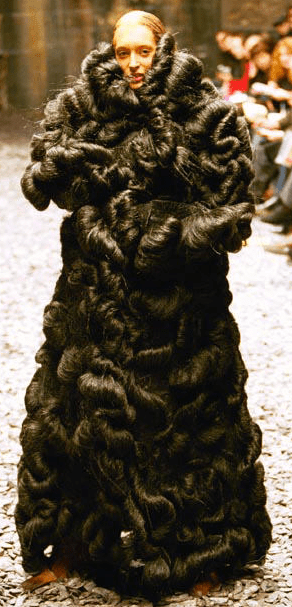
The hair coat, Eshu, Alexander McQueen

Eshu, Alexander McQueen

This was illustrated, I would argue, in one thick black coat from McQueen’s Autumn/Winter 2000-2001 collection Eshu, almost the lynch-pin of the entire retrospective. The coat is made from black synthetic hair, twisted and gnarled, forming layer upon layer of ruffles and knots. Derrida’s conception of the multifarious and fragmented limit is encapsulated in this garment, a coat that folds, enveloping itself and the model within it whilst also expanding outwards, bloated with its own heterogeneity. Whilst not one of McQueen’s most famous pieces, the coat represents an abyssal limit occupied by all of his collections, its undulations suggesting his work belongs to different spheres like art and theatre beyond fashion, but could only be articulated from within the linguistic and capitalistic confines of the fashion world.

Although language by its very nature is artificial, the language of the fashion world takes this artificiality to a whole other level of vapidity. McQueen’s work was a slippery beast that embodied everything it negated, fashion and capital, but also undercut the conditions and the context within which it was created through the thickening of various formal limits. The retrospective could only perpetuate this pigeonholing, and consigned the memory of McQueen to the umbrella phrase Savage Beauty. I don’t think language can ever do justice to the memory of anything, including McQueen: nothing we can say or write can fully articulate or pin down all the different things that McQueen created. This may go some way in explaining why and how we, perhaps inevitably, entrap the memory of people we admire and care about within the binding and empty confines of cliché.


[1] Jacques Derrida, ‘The Animal That Therefore I Am (More to Follow)’, Critical Inquiry, 28:2 (Winter, 2002), pp.369-418 (p.399).