Love Note – Beach Books

I love reading but, I am going to confess, I am pretty bad at investing in and dedicating time to contemporary literature. I have spent many years covering English and Russian classics from the nineteenth century, being swept away by Shakespeare and his (mostly male) contemporaries and reading novels, poetry and plays from the early twentieth century. Aside from the latest releases from Naomi Klein, Arandhati Roy and Margaret Atwood, I have tended to swerve away from contemporary literature for a long time and I don’t think this is particularly wise. I think reading amazing historical works of literature is always going to be important; but I don’t think this should be completely at the expense of what people are producing and writing right now.

Therefore, to accompany me on my beachy holiday (3 days and counting!) these are the contemporary novels I am packing with me:

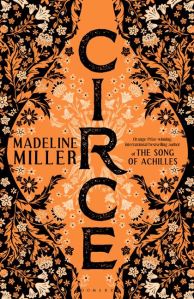
Circe

Circe – Madeline Miller, 2018

Why I’m excited about it:

This is my get out of jail free card: Circe is a re-telling of the Greek myth of Circe, one of the most interesting and famous characters in Homer’s Odyssey. So yes, even though the subject matter here is veritably ancient, it promises to be a contemporary, new perspective of a controversial character. If you’re not in the know, in Homer’s work she turns Odysseus’s men into pigs, seduces Odysseus, puts him and his men up for a year and loses some of her power. I studied Classical Civilizations at A Level where we read the Odyssey in its entirety, and I was always healthily sceptical of Odysseus’s heroic credentials (I am more of an Aeneas fan, but to each their own). In particular, I think the way he gets off with women left right and centre whilst his poor wife Penelope stayed at home for twenty years fighting off suitors is pretty questionable (read Margaret Atwood’s The Penelopiad for more). I am excited to see where Miller takes the Circe character and her story from Homer’s narrative: the whole single, powerful woman must be a witch thing needs a serious rethink.

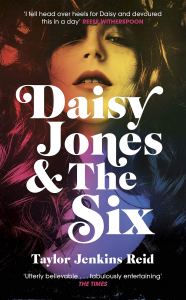
Daisy Jones

Daisy Jones and the Six – Taylor Jenkins Reid, 2019

Why I’m excited about it:

Reese Witherspoon is a pretty good weather vane for anything pop culture-related (see her performance and production credits for Legally Blonde, Big Little Lies, Gone Girl and Wild). Now, she is set be an executive producer on a TV adaptation of this book, only published in March 2019, which she claimed to have read in one day. Additionally, the first time I actually heard about Daisy Jones and the Six was on Claudia Winkelman’s Sunday evening show on Radio 2, where she absolutely gushed over it for how immersive and compelling it apparently is. My interest: officially piqued. The novel purposes to follow the lives and loves of a fictional seventies rock band, which screams of Fleetwood Mac levels of intrigue. If there is any time to pop on some rose-tinted glasses and have a wallow in seventies rock and roll, it’s on a warm beach.

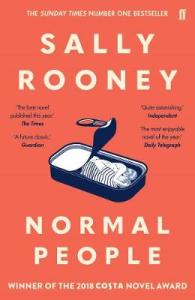
Normal People

Normal People – Sally Rooney, 2018

Why I’m excited about it:

This book was a bit of a sensation last year and I am curious about this bandwagon. The only bits of it I have seen have come from Zoe Kazan’s Twitter and apparently there are no speech marks. I find this disconcerting but I am willing to embrace the uncomfortable. I once took a crap version of James Joyce’s Ulysses on a Greek island holiday and failed to sufficiently commit to the challenge due to sea, sun and sand-induced lethargy. I am in no way comparing Normal People to Ulysses, but I am thinking it may, potentially, have the right amount of formal, linguistic and emotional difficulty to suit the serious lazing about I have planned. We’ll see what happens. I hear that Normal People is based in Ireland and that it follows a relationship between Connell and Marianne, both from the same rural town but from very different worlds. The novel promises a sweeping and refreshing love story about two people who can’t seem to escape each other or themselves. This excites me.

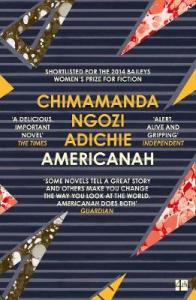
Americanah

Americanah – Chimamanda Ngozi Adichie, 2013

Why I’m excited about it:

Firstly, the cover of this book is beautiful and I like staring at it. Secondly, Adichie is a supremely articulate and intelligent woman. I loved her TED talk about the importance of feminism, the importance of teaching boys about gender equality and deconstructing toxic masculine stereotypes, and I encourage everyone to watch it. You can do so here. Even though this talk has been seen over 5 million times, Adichie is primarily a very successful writer of fiction. I have never read any of her novels or short stories before, and Americanah looks like a great place to start. The novel follows a Nigerian couple separated by war and dictatorship in their home country, who are forced to build new lives separately in the USA and UK. The novel tracks their separation, new experiences abroad, and their reunion. The novel explores the brilliance and pitfalls of globalization including, most specifically, the burden and barriers of race that Africans experience in the West, something these characters in particular don’t feel keenly in Nigeria. Americanah feels like it’s going to be an important, challenging read and I am ready for it.

Love Note – A (Legolas) Mug of One’s Own

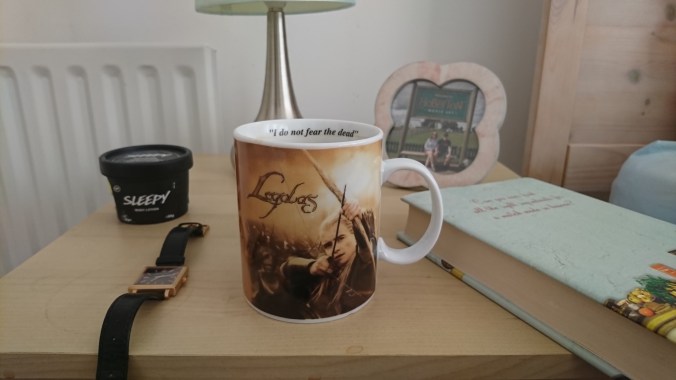
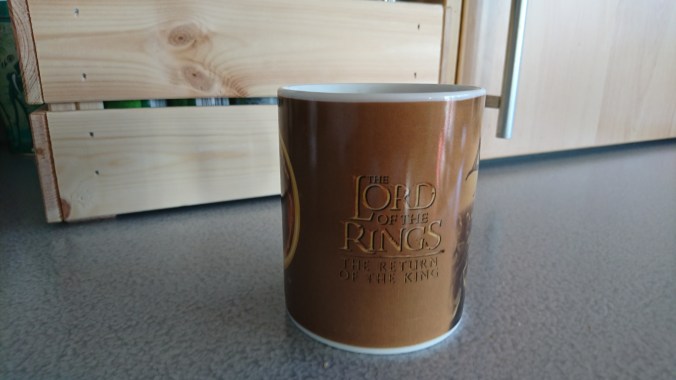
Over the weekend, I realised that this beautiful piece of crockery (see photos) is over 15 years old and my head nearly exploded. What better way to commemorate and celebrate it than to write a Love Note? None, I think you’ll agree.

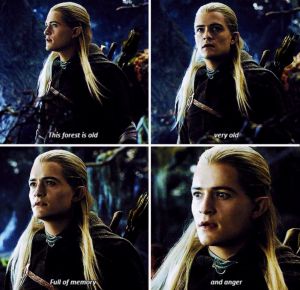
Whilst it has always been inherently more acceptable to fawn over Aragorn, Boromir or (in my case) Haldir from the Lord of Rings, who are all obviously and exceptionally lust-worthy, I have always had an incredibly soft spot for Legolas. Yes, I think it’s problematic to my ego that he has better hair, cheekbones and skin than me; but there was something about his inspired use of a bow and arrow, his bilingualism and his intuitive power of interpreting tree emotions that really captured my attention when I first saw the Lord of the Rings films aged 10.

1d14dc87060b176c6040ed1c02ee74fa

In the years that have since passed, and the numerous re-watches they have brought, I have noticed that Orlando Bloom’s line delivery perhaps isn’t as slick as his hair and his archery skills are actually impossible (you can’t shoot more than one arrow at once and expect them to both go in a straight line, more snaps for the visual wizardry at Weta). Nevertheless, my love for Legolas has been immortalised in this exquisite, now slightly ageing mug.

DSC_3632

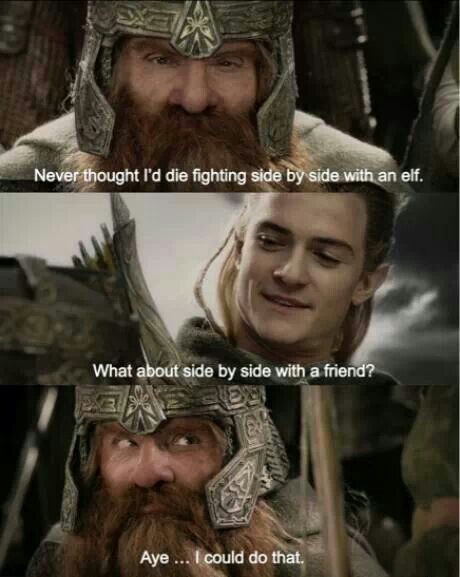
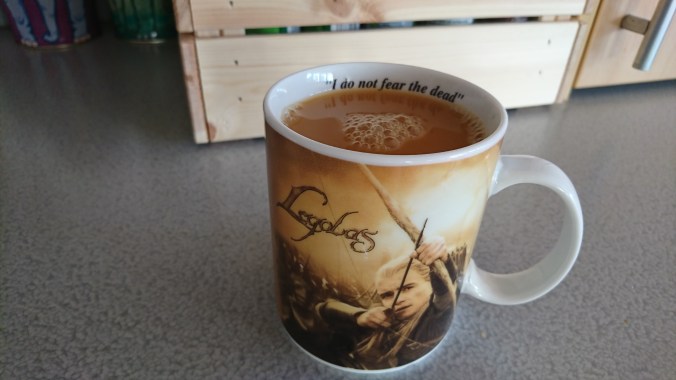
There he is, looking calm and slightly perturbed on the field of battle with his bow and arrow, the sepia tint adding historical and emotional weight to the whole situation. What is wonderful about Legolas, as with many of the rest of the Fellowship, is that he is willing to commit to a cause that is bigger than himself. From looking at his mug on this mug, he isn’t as consumed with his cheekbones and maintaining his lovely hair as people would have him; he is a representative for all the elves, putting his life on the line to rid the world of absolute fascist power, destruction and despair. He may not carry the charisma of Aragorn, but he carries the wisdom that 2931 years inevitably entails, so there is little wonder that he sometimes appears aloof and impenetrable. His camaraderie with Gimli by the end of the trilogy is the stuff of literary and cinematic friendship legend.

78179c5d329f1b75656e2c32f740a280

To say that this is my favourite mug is an understatement. Whenever I have felt anxious, this is the mug I have reached for; the mug that has seen me through the entirety of school, university, the existential, economic and sartorial chaos of post-adolescence, and, of course, Brexit; the mug I have proudly presented full of tea or hot chocolate (never coffee) when treasured friends and family have come to stay; the mug that has helped me to nurse myself and others back to health through the tens of colds, sniffles and lurgies that have snottily bloomed over the years; and the mug that has allowed me to proudly live my Lord of The Rings love on a regular daily basis.

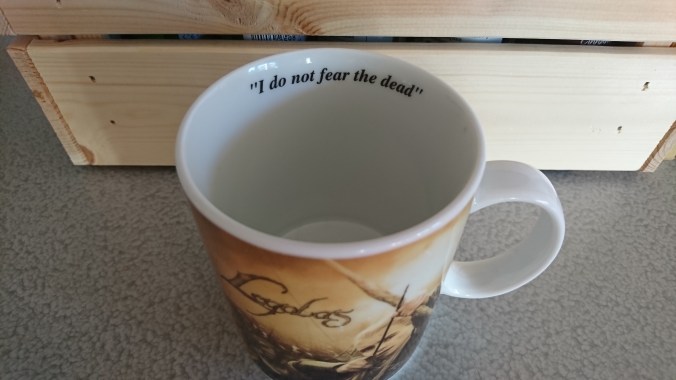
One of the many wonderful things about this mug is that it can help ascertain and flex the depth of knowledge and understanding of the Lord of the Rings franchise. The keen-witted amongst you will notice that Legolas does not actually say the line, ‘I do not fear the dead’, which is printed on the inner rim of the mug.

DSC_3623

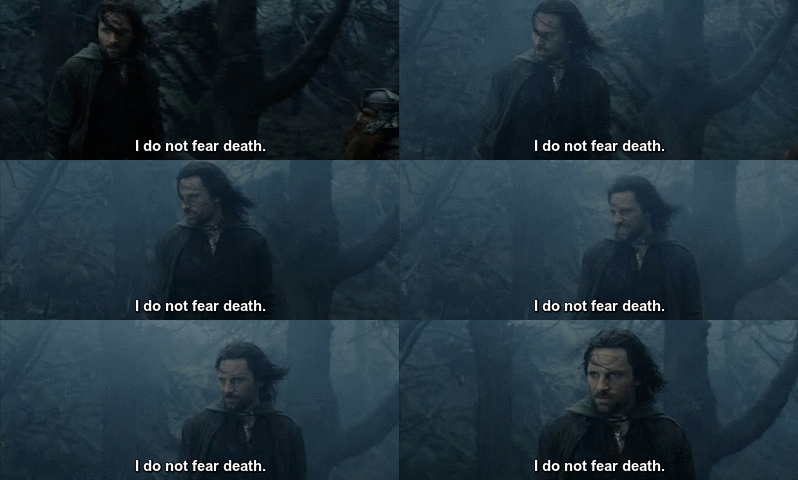
In fact, no one does. The closest anyone gets to saying this line is Aragorn in The Return of the King, who declares ‘I do not fear death’ as he descends into the Dwimorberg mountain to secure the allegiance of the Dead Men of Dunharrow.

tumblr_n07jwfpWBJ1r8dxhoo1_400

Additionally, this mug purports to be merchandise (unofficial I realised in light of these inaccuracies) for The Return of the King and yet from the armour of the enemy soldier looming behind him, I can deduce that, here, Legolas is fighting Uruk-Hai. This means this film still of Legolas actually comes from the Battle of Helms Deep in The Two Towers, where he, Aragorn, Gimli and Gandalf the White fought alongside Théoden of Rohan against Saruman, who helped to birth this breed Uruk-Hai in the first place. Not in The Return of the King.

DSC_3621

You may think that, in light of this, what is effectively, a cheap, inaccurate, probably knock-off mug is not really worth my un-ending love and devotion. In actuality, it makes me love it all the more. It is imperfect, evidently tried hard and just wants to serve up something warm and comforting, which it does every single time. I subscribe completely to Marie Kondo and basic tenets of Shinto philosophy that we must endeavour to surround ourselves and display in our homes belongings that spark joy in our lives. This mug helps to alleviate the doubts, frustrations and fears of my day: it is my absolute pleasure to bring it out and let it warm me.

DSC_3628

Love Note – Graphic Novels

The world is full of dark, difficult and complex issues that need to be sensitively and appropriately discussed. War, genocide, abuse, loss and our hopes of building a better life for ourselves are all incredibly difficult conversations that need to take place: but how? Is there are right way to talk about these things? How can we ensure that we get the greatest insight into the emotional and critical upheaval when unimaginable things happen? This is where art and literature have always been important. Film, visual art, poetry and novels have always helped to expand our understanding of what it means to experience life and all of the social, political and archetypal challenges that we face. Representation of experience is crucial in helping us to understand the world around us, but when what we are talking about is so traumatic or challenging, it is even more important to think about how these are presented.

Graphic novels, otherwise known as comics, are an almost niche area of textual production that are, in my opinion, some of the best media for representing conflict and its fallout. Edward Said, in his tribute to Joe Sacco’s Palestine wrote that:

‘In ways that I still find fascinating to decode, comics in their relentless foregrounding […] seemed to say what couldn’t otherwise be said, perhaps what wasn’t permitted to be said or imagined, defying the ordinary processes of thought, which are policed, shaped and re-shaped by all sorts of pedagogical as well as ideological pressures. I knew nothing of this then, but I felt that comics freed me to think and imagine and see differently’.[1]

Graphic novels help us to ‘see differently’ because they are a hybrid form that combines accessible, but no less wonderfully ambiguous and complex, art with punchy storytelling. They give an imaginative and, at times, extremely personal telling of stories, bringing drawings and language into conversation. Fragments of images, language and spatial organisation on a page builds an almost compulsive narrative that can at once expose and explode systemic injustice and power structures (what are complicit with Said’s ‘ordinary processes of thought’), whilst also attempting to make sense of the personal experience within them. I don’t think it’s a coincidence that some of the most famous graphic novels are autobiographical memoirs, which focus on the experience of the individual against the backdrop of something much greater and, oftentimes, misunderstood or difficult to represent. We have two confusing and compelling worlds clashing, the public and the private, and the graphic novel attempts to navigate us through both.

I find reading graphic novels to be an incredibly immersive and compelling experience. I recently finished reading Malik Sajad’s Munnu and had to share my thoughts on this text and some of my other favourite graphic novels. These texts take us to the depths and fringes of human experience, re-write what we think about the world, countries within the world, and the people within them. They blow open preconceptions and stereotypes that we are fed, and my understanding of conflict and world history, is all the more rich and nuanced as a result.

Maus, Art Spiegelman, 1980


Maus


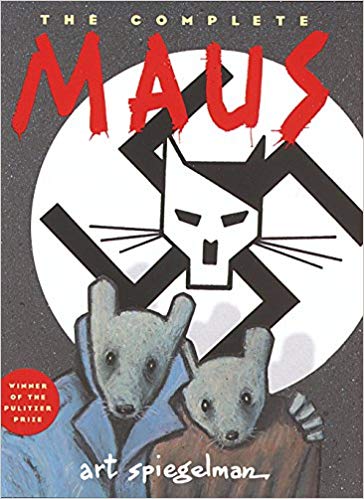
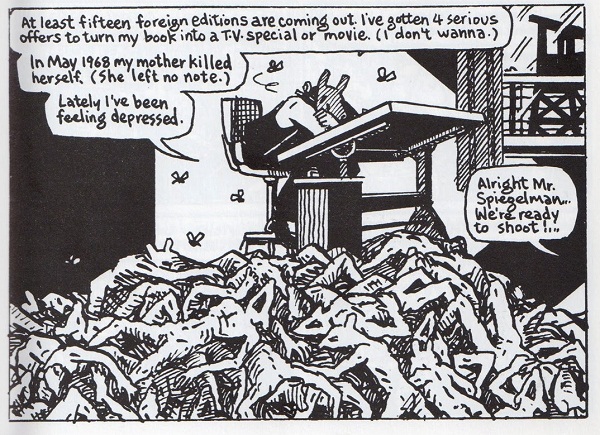
Maus is one of, what I consider to be, the Holy Trinity of graphic novels. It portrays Spiegelman as a young cartoonist, interviewing his father Vladek about his experiences during the Holocaust. The comic charts Vladek’s survival of Nazi atrocities, but also portrays Spiegelman’s oftentimes strained and difficult relationship with his father. The two regularly butt heads in ways family members often do when a deep amount of love and respect is patched over with trauma, neurosis and unrealistic expectations. Notably, the characters in Maus are all presented as animals to represent their different ethnic groups: Jews are depicted as mice, Nazis as Germans and Americans as dogs. One of the panels that stood out most to me is one that presents Spiegelman himself wearing the mask of a mouse, sat at his desk, talking about the opportunities that have come with his novel’s publication. Around him are littered the bodies of Holocaust victims.

maus2

This panel suggests that through the production of Maus, Spiegelman has assumed almost unwanted ambassador status for his presentation of Holocaust testimony. The artificial mouse mask, tied at the back of his head, points to the idea that in the telling of this story, he has almost performed his Jewish identity, and become a spokesperson for Holocaust victims and survivors in the process. He has achieved acclaim and appreciation off the back of so much death and horror, signified by the cadavers gathered around him and his drawing desk, yet still struggles to maintain his sticky relationship with his father. As a result, the dissonance between his success and the emotional burden his success has become weighs heavily on him, entangled as it is with feelings of guilt, misplaced responsibility and fraudulency. The Holocaust is such a difficult and upsetting subject to discuss and represent, and Spiegelman demonstrates great sensitivity and self-awareness in his handling of such a traumatic and barbaric event. The novel is not only a historical document of his own father’s survival, but also provides a platform for conversations about how we successfully represent the un-representable, and all the responsibility that brings.

Palestine by Joe Sacco, 1996

palestine cover

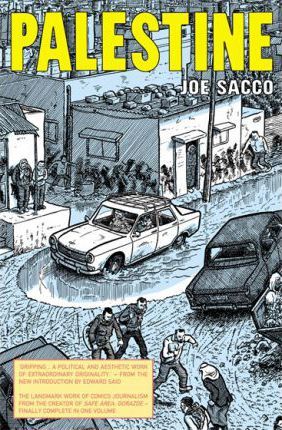
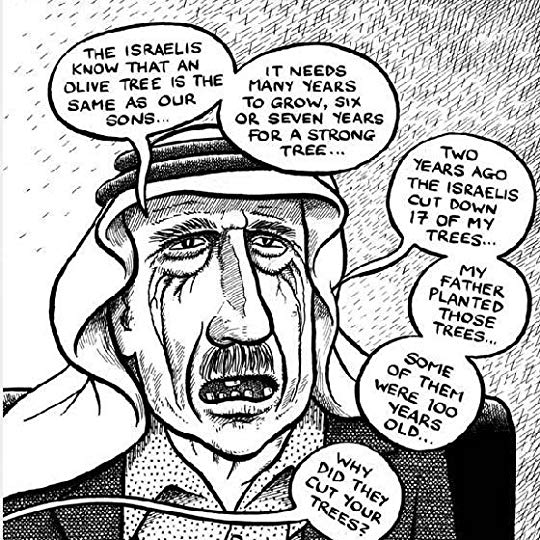
The second graphic novel in the Holy Trinity follows a Joe Sacco, an American journalist, travelling to Palestine and the Gaza Strip to witness and interview oppressed Palestinians during the Intifada. In the West we are given a very limited idea of the history and lived experience of Palestinians under Israeli occupation on the West Bank. This graphic novel has been hugely influential in its multi-dimensional perspective of conflict; and especially those conflicts that receive little traction in the news or are obscured by global and media power players. Sacco gives voices and faces to the seemingly unending hardship on the West Bank and in the Gaza Strip that easily bypasses the consciousness of many in the West. The violence and terror that Palestinian men, women and child experience on a daily basis is front and centre of Sacco’s novel, as he tracks his own journey from bystander and objective interviewer, to witness.


Palestine


Persepolis, Marjane Satrapi, 2000 and 2014

Persepolis cover

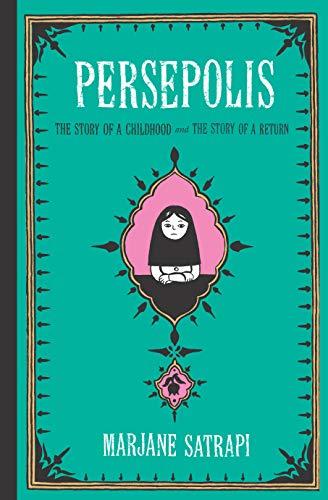
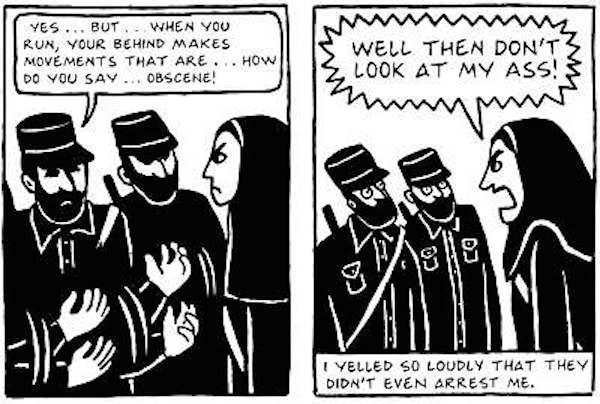
This novel is the third graphic novel in the Holy Trinity. Persepolis blew open what I knew and understood about Iran and Iranian history. As far as I was aware, when I first read this novel in 2010, Iran was a rogue bogeyman country, intent on making nuclear weapons to blow everyone up and destabilise the Middle East permanently, and that was the way things were and the way things always had been. As with my original perceptions of the Palestinian conflict, this graphic novel proved this idea of Iran to be completely limited and short-sighted. Through the story of her family and childhood, Satrapi presents Iran as a vibrant, secular country before the Islamic Revolution, and depicts the horror of war as Iran and neighbouring Iraq are drawn into a deadly conflict. She presents the oppressive practices and rules enforced in school and in public, in particular regarding women’s rights, whilst struggling with her own direction in life, with her time in Europe marred by racism and homelessness.

Persepolis

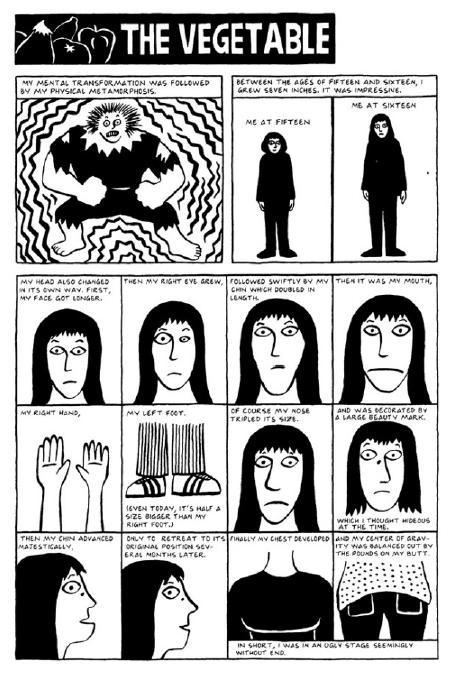
Persepolis is a coming-of-age story like no other, offsetting universal teenage angst and confusion (the start of The Vegetable chapter with panels of Satrapi’s face changing through puberty spoke to me like little else) with religious extremism and Western xenophobic bigotry. The novel provides both creative freedom for Satrapi to explore her own personal story and to shine a critical light on the injustices and pervasive power structures that successfully control people in both the East and West. At the same time, the graphic novel, with its black and white colour scheme and regular panels, successfully conveys the claustrophobia of living in a world where you are penned in by cultural expectations, conflict, bigotry and your own demons.

embodiment-1


Munnu: A Boy from Kashmir, Malik Sajad, 2015

Munnu

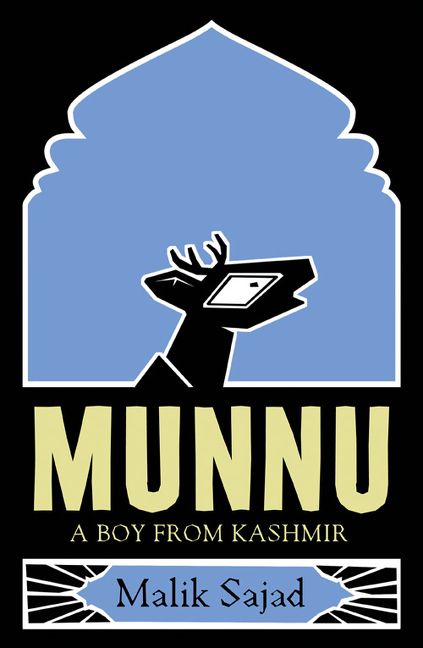
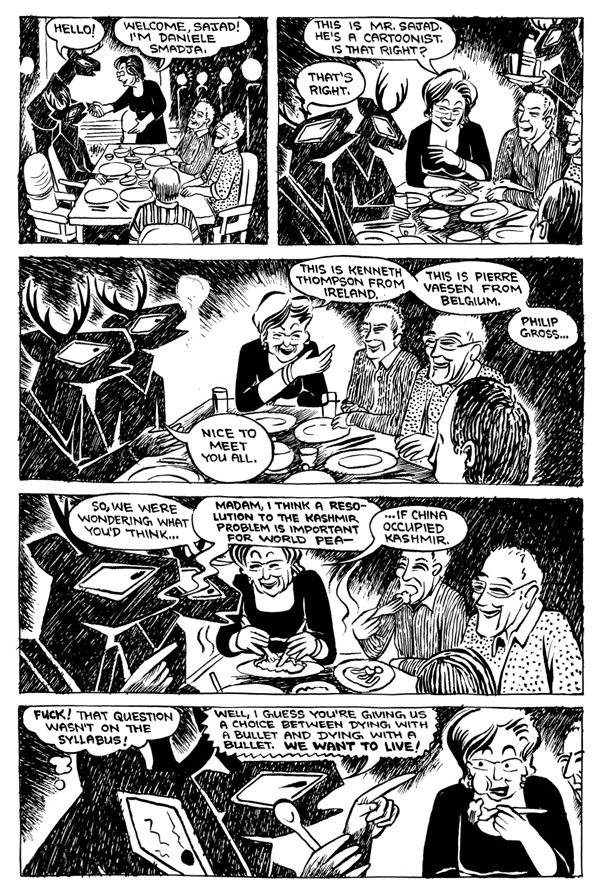
In the tradition of Maus, Persepolis and Palestine, Munnu follows the coming-of-age of the eponymous Munnu, the youngest member of a family living and hailing from war-torn and devastated Kashmir. In a similar vein to Maus, Sajad uses animals, specifically Kashmiri deer, to highlight Kashmiris’ endangered status as a free and independent people. The novel balances the intricacies and tensions surrounding the conflict and hypocrisies between Kashmir and India, Kashmir and Pakistan and amongst Kashmiri resistance groups, whilst also exploring family, existential anxiety and trauma as a result of conflict, and the power of cartoons to grant personal freedom. The final panel is particularly unnerving and unsettling, and I was most touched by young Munnu grappling with his fear of death. Munnu also critiques the West’s seeming inability to comprehend the severity of the conflict in Kashmir and its ineffectiveness in using diplomatic pressure and might to bring about a resolution.  I recently discovered that Munnu has not been published in India, which is very telling about the current tensions unfolding in Kashmir as a result of the occupation and how powerful, and thereby threatening, this graphic novel has been in exposing them.

eu-embed-sajad-malik


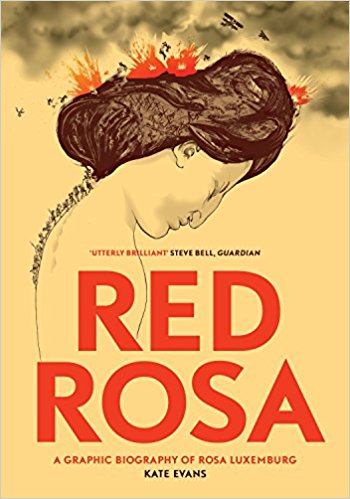
Red Rosa: A Graphic Biography of Rosa Luxemburg, Kate Evans, 2015

51DFPaAiudL._SX348_BO1,204,203,200_

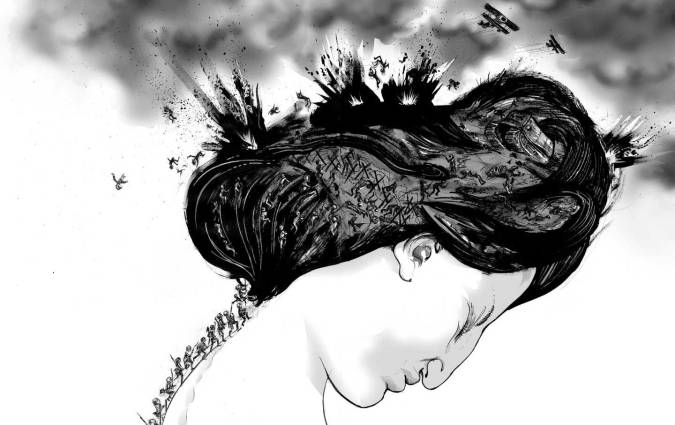
Rosa Luxemburg is a giant of the Left and nowhere else has her life and work been so beautifully presented and so articulately explained than in this graphic novel. Luxemburg’s philosophy that Marx was not beyond criticism, even though she took her political and economic position from his work, is a lesson for us all: nothing is beyond critical interrogation, especially the people we most admire and whose thinking has been the most influential for us. The concise and accessible exploration of Luxemburg’s philosophy includes her radical pacifism: my favourite panel coming with Luxemburg’s response to the First World War: head bowed, she is disturbed and weighed down by the destruction and wanton chaos of a war that will end nowhere and will result in the deaths of millions of working class people. Evans also gives us an insight into Luxemburg’s personal life, the incredible obstacles she overcame to become a writer and political leader, and her relationships with close friends, family and lovers along the way. This graphic novel, and its subject matter in Luxemburg, is absolutely inspiring.

RedRosa_extract_TheNation_img


Other graphic novels to explore:

Dragonslippers: This is what an abusive relationship looks like, Rosalind B. Penfold, 2006

Diary of a Teenage Girl, Phoebe Gloenecker, 2002

Threads: From the Refugee Crisis, Kate Evans, 2017

Tamara Drewe, Posy Simmonds, 2007


[1] Homage to Joe Sacco, http://journeyofideasacross.hkw.de/anti-narratives-and-beyond/edward-w-said.html [accessed 22/05/2019].

Love Note – Mustang

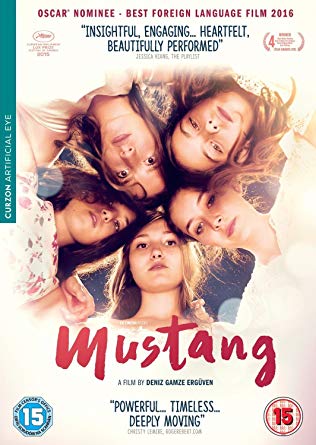
Sisterhood truly is the most potent, inspiring and exasperating relationship: where grievous bodily harm can magically turn into profound silliness, which can turn into deceptive and mysterious thefts of anything from books and clothes to biscuits, which can turn into profound existential bonding conversations about love, life and the Real Housewives (substitute RH with your mutual sisterly trash). Jane Austen knew it with Pride and Prejudice and Sense and Sensibility; Louisa May Alcott knew it with Little Women; Phoebe Waller-Bridge knew it with Fleabag; and Deniz Gamze Ergüven absolutely knew it with Mustang. I re-watched Mustang a couple of weeks ago and it is still one of the most compelling and emotionally charged films about sisterhood I have come across.

The plot revolves around five sisters: Sonay, Selma, Ece, Nur and Lale, and told largely through the point of view of Lale, the youngest. The sisters live with their ultra-conservative grandmother and uncle in a small village in northern Turkey. One day, after Lale tearfully says goodbye to her teacher who is moving to Istanbul, the sisters go to the beach with some male friends and play in the water. They are spotted and reported to their guardians, who effectively turn their house into a prison and arrange marriages for the girls. It is at times devastating, brilliantly funny and an incitement to free spiritedness in all teenage girls, especially when confronted with the deepest and darkest patriarchal forces.

And those patriarchal forces are well and truly horrifying. One of the scenes seared into my memory is at the wedding, where the girls’ uncle, Erol, who has proven himself to be aggressive and violent not only with the girls but with their grandmother (his mother), stands drunkenly and happily in the middle of the dancefloor, eyes closed, firing his gun into the air. Where the girls had at first been dancing, they cower around him, clamping their hands to their ears as he shoots and shoots. When I first watched the film, I thought to myself ‘Why on earth is he happy? Why is he celebrating?’ He cares nothing for the girls beyond keeping their virginity intact and, with hideous irony, it is heavily suggested that he sexually abuses two of them. Maybe he is just happy that they are no longer his responsibility and that he’d fulfilled some kind of patriarchal role in getting them married off? I think this is part of the way there: in this scene, ultimately, Erol is relishing his power. He is the one with his hand on the trigger, asserting and revelling in his dominance over the lives and fortunes of his nieces. It is sickening and infuriating to watch.

Additionally, watching Lale learn how to drive holds such urgency and pathos. Selma tells her that she was unable to escape because she couldn’t drive and Lale refuses for that to become her reality too. She tries and fails and tries again to learn how to drive, enlisting the help of truck driver Yassin, even though she is easily only 11 or 12 years old. Driving is a right we so take for granted in the UK, but is a fundamentally powerful means of power and control in religious and conservative countries. The importance of women being allowed to drive in countries like Saudi Arabia is all the more pertinent after watching a film like Mustang.

Amongst the hellish religious conservatism that the film actively exposes and challenges, we see the enduring and undimming power and pleasures of sisterhood, in all its multi-faceted manifestations. Indeed, the gentle intermingling of relatively light-hearted sisterly dramas with the devastating cultural power dynamics is what makes this film at once irreverent and tragic. We see the sisters defending one another from beatings; breaking out of the house to attend a women-only football match, then gossiping and messing around in their bedroom. One sister tells of how she radically subverts the injustice and intrusion of virginity tests by partaking in anal sex to prevent ‘losing her virginity’, before later on warning another sister that she’ll rip her head off if she steals her clothes again. As such, the film perfectly balances the magically mundane sisterly qualms and quarrels with the bigger, scarier patriarchal violence that determines their freedom and their happiness.

In this, I think the film goes a step further than Jeffrey Eugenides and Sofia Coppola’s The Virgin Suicides: the Lisbon sisters are only ever a mystical figment of the young boys’ suburban imagination, never fully realised as ostensible young women with desires, quirks, tempers or interests, Lux being, perhaps, the exception. Mustang shows that coursing underneath all of the patriarchal violence, double standards and unfairness of being a young woman living under religious conservatism, is the understanding, camaraderie and mutual struggle of being a girl and having female siblings. It is both heart-warming and heart-wrenching and speaks to anyone who has had a sister who has driven them absolutely mad but who will stand shoulder-to-shoulder with them through whatever chaos comes their way, patriarchal or otherwise.

81+T5SU2JGL._SY445_

Wastelands

I originally wrote and gave this paper in 2014. After a weekend reading T.S Eliot’s ‘Four Quartets’ for the first time, I decided to commit this paper to my blog. In the paper, I compare the fallout of conflict in ‘The Burial of the Dead’ form Eliot’s ‘The Wasteland’ and Titania and Oberon’s quarrel in Shakespeare’s ‘A Midsummer Night’s Dream’ (the featured image here is Vivien Leigh playing Titania in 1937).

*

Under this conference’s umbrella theme of war and literature, I am specifically interested in investigating the aftermath of conflict, seeing what literature has to say about war when it is over. T.S Eliot’s ‘The Wasteland’ is a seminal 20th century text, published four years after the 1918 Armistice and I would like to suggest that it is involved with a negotiation of the condition of modernity in the wake of the first terrible ‘Total War’. It is a text that in a number of ways bemoans war because of the death and decay it leaves behind it, but is simultaneously a violent and aggressive attack on preconceived notions of form and meaning, suggesting that it relies on war, indeed it is an act of war, to create something new and radical. I have restricted my close reading of ‘The Wasteland’ to the first part, ‘The Burial of the Dead’.

The title ‘The Burial of the Dead’ suggests a final action that commits dead bodies to the ground, keeping the spheres of the living and the dead completely separate and thereby allowing the living to continue with life. However, the poem opens with an image that suggests otherwise:

April is the cruellest month, breeding

Lilacs out of the dead land

We are presented with living things, lilacs, rising out of a ground that belongs to death, but is not necessarily dead in itself because it is involved with growth, not stagnation and inertia. Thus a paradox emerges: whilst the ‘burial’ of the title suggests a movement of taking extinguished life down to the ground, the opening of ‘The Wasteland’ suggests a movement of death bringing something life-like back to the surface. The poem emphasises that this is a ‘cruel’ movement instigated by April, a month that traditionally has a cultural relationship to spring and new birth, but here becomes the site of death becoming an inescapable presence that infects life and the living. The snow of winter covers this ‘land’ which enables us to temporarily ‘forget’ its disturbingly deathly quality and, potentially, the conflict that made it this way, (Winter kept us warm, covering / Earth in forgetful snow’) but April serves as a reminder that the earth is teeming with deathliness.

This is cemented by the speaker’s reference to lilacs, which are flowers with a mythological history: Syringa (the botanical name for lilac) was a nymph who hid from the amorous advances of the woodland god Pan by turning into a bush of flowers. Therefore, lilacs are involved with disguise and have a history that suggests that figuratively, there is more to them than what meets the eye. Within the context of ‘The Burial of the Dead’, the lilacs are masked harbingers of death, metaphors of bodies belonging to death that are hidden but nevertheless inherent to the post-war landscape. The use of the verb ‘breeding’ to describe the production of the lilacs complies with this, a word that is defined in the OED as ‘bringing to the birth’. It points to the bodily, inorganic quality of the lilacs that re-enter the sphere of the living hidden within the form of a flower. This image is echoed at the end of ‘The Burial of the Dead’ when the speaker calls out to Stetson:

“That corpse you planted last year in your garden,

Has it begun to sprout? Will it bloom this year?”

There has been a reversal in the terminology of growth and surfacing employed: whereas the lilacs are bred out of the ground like bodies, the corpse, it is proposed, will grow out of the ground like a flower, sprouting and blooming. This implies a commonality between the flowers and the corpse, suggesting that they are exchangeable and fluid.  The distinctions between them are done away with because they are both objects coming forth from death’s land, and we can see that the landscape inhabited by the living is at the mercy of a deathliness that seeps into it as a result of horrendous conflict, making the two states of life and death indistinguishable.

This can also be seen in the speaker’s description of London;

Unreal City,

Under the brown fog of a winter dawn,

A crowd flowed over London Bridge, so many,

I had not thought death had undone so many.

The repetition of ‘so many’ points to the extraordinary number of people that the war brought into contact with death in one way or another. The image suggests that in the aftermath of conflict, death controls and oversees existence, stripping life away from people left behind and reducing them to a deathly state whilst still alive. As a result of an existence defined by death blurring itself with life, the city and the people within it are ‘unreal’, occupying a liminal and disturbing position that they might not be able to properly identify themselves, hence the interchangeability of the lilacs with the corpse as previously mentioned. Death’s infection of life has become hegemonic, and is not challenged and questioned by the inhabitants of the city.

The image of the ‘brown fog of winter dawn’, a pervasive meteorological nuisance, helps to exacerbate the murky and indivisible landscape of deathly life, and also helps to develop the poem’s melancholic and depressive tone. It is at this point that I want to draw a comparison between ‘The Wasteland’ and ‘A Midsummer Night’s Dream’, a text produced 300 years earlier, where we are also presented with a traumatised landscape that has resulted from conflict. Eliot’s ‘fog’ recalls the image of the fog produced by Titania in her description:

But with thy brawls thou hast disturb’d our sport.

Therefore the winds, piping to us in vain,

As in revenge, have suck’d up from the sea

Contagious fogs.

This is one of numerous images of the sickly landscape described by Titania that has resulted from her conflict with Oberon over an Indian boy. The personified seasons and elements have been neglected by the fairies, and avenge this abandonment by unleashing nature’s fury, causing chaos, sickness and ‘distemperature’ through floods, rotten harvests and ‘rheumatic diseases’. Most importantly, however, and in a way that links to Eliot’s wasteland, is that Titania shows how these have caused the seasons to change and merge with one another:

[…] the spring, the summer,

The childing autumn, angry winter, change

Their wonted liveries, and the mazed world

By their increase, now knows not which is which:

And this same progeny of evil comes

From our debate, from our dissension;

We are their parents and original.

Titania warns Oberon that the seasons have inadvertently undone themselves and have exchanged and adopted the appearance of each other, in the process throwing off what categorises them individually. The identities that contain and separate them from each other have collapsed so that now it is no longer obvious what time of the year it is supposed to be, causing confusion and bemusement amongst human beings. This motion is similar to what is at work in ‘The Wasteland’, where the boundaries separating death and life have disintegrated and death has blurred and intermingled with life, manifesting explicitly in the realm of the living, meaning that it is now difficult to successfully differentiate between the two states. However, there is a significant difference between ‘The Wasteland’ and ‘A Midsummer Night’s Dream’: Titania delivers this speech during the middle of the conflict. Not only is there time for the situation between them to be resolved, which over the course of the play is achieved, she and Oberon have the power and the capability to reverse the deconstruction. As the fairy Queen and King, the parents of the seasons and the elements, they can restore the status quo through reconciliation and ending their conflict.

However, in ‘The Wasteland’, the conflict is already over and the speaker and humanity as a whole are left in a world that has not been restored to its previous state, but has seen the irreversible movement of death entering into the sphere of life and having an unwavering presence amongst the living. The speaker is not in a position, indeed no one is in a position to solve this, which is evident in the speaker’s assertion: ‘I was neither living nor dead, and I knew nothing’. Titania and Oberon know that if they reconcile and take up their parental responsibilities, the seasons will once again don the right appearance. However, the speaker in ‘The Wasteland’ is trapped between the states of life and death and has neither the power nor knowledge to resolve the conditions, and does not know how to continue existing within them. This is because death is the ultimate powerful force at work that has made itself an unquestionable presence that undoes people’s relationship with life, rendering them deathly whilst still alive. The poem suggests, therefore, that there is nothing more powerful and controlling than death in the post-war wasteland.

We have seen that the post-war environment that the speaker of ‘The Burial of the Dead’ presents is one that is mournful and aware of the presence of death that conflict has brought into the world. I would like to argue that this war has bred another war:  ‘The Wasteland’ as a poem that has been produced in a damaged and deathly world, has no choice but to carry on attacking, suggesting that the only way to exist is to perpetuate conflict. This it achieves through an attack of established poetic conventions, taking on the quality of the death it presents by rigorously undoing the standards we are familiar with. One of the last phrases of ‘The Burial of the Dead’s’ curious ending is ‘You! Hypocrite lecteur!’ which translates as: ‘You! Hypocrite reader!’ We can see that the speaker constructs a notion of readership through the use of ‘you’ that it immediately challenges by addressing the ‘you’ in French and by accusing ‘you’, this reader, of being a hypocrite, itself a curious insult that suggests that we are guilty of falsely professing some kind of virtuousness. I would argue that it points to the futility of people attempting to live life forgetting to acknowledge or pretending to not acknowledge that death is an almost tangible feature of the post-war landscape. Nevertheless, we can see that the poem aggressively sets up a concept that we might be familiar with, the position and audience point of a reader, but immediately undercuts it, throwing it into doubt and uncertainty through the use of a different language to the predominant one employed, and by using it imperatively to challenge and question. This is one of a number of ways in which the poem destabilises comfortable notions of poetic address, form and meaning, attacking conventions and norms in a threatening and war-like manner to create something new. Another example of this would be the endless references and inferences that are made in the body of the poem and for which Eliot provides notes at the end, which playfully lead to new references and inferences. It thus aims to send one on nothing short of a wild goose chase to uncover a meaning that the poem suggests, in doing so, does not exist.

Therefore, the poem, in this its first part, presents life post-war as not a unified thing, but is something pertaining to, undone and controlled by death. As a result of this, poetry itself is fragmentary, and can do nothing but arise from the ashes of one war to begin another, on the poetic form, and our conceptions of form and meaning. This, ‘The Wasteland’ suggests, is not wholly regrettable, and is an unmistakeable and undeniable condition of modernity post-1918.

Dior: Designer of Dreams

On Friday 5th April, I trundled down to London to visit two very excellent friends. We have partaken in a number of cultural weekends in the capital over the past few years, with trips to see the Savage Beauty exhibition at the Victoria and Albert Museum, The Vulgar: Fashion Redefined at the Barbican, the Vogue 100 exhibition at the National Portrait Gallery, the West End production of Tennessee Williams’s Cat on a Hot Tin Roof starring Sienna Miller and Jack O’Connell (where somehow we managed to get seats in a box, very jammy), amongst many other lovely, fun activities. This weekend was in every way just as lovely: in spite of a sketchy visit to a fancy restaurant off Regent’s Street where we were made to feel like actual scum, we shopped in Arket, visited the new Archlight cinema in Battersea, drank all the Taddy Lager at a Samuel Smith’s next to Liberty’s and spotted BBC Middle East correspondent Jeremy Bowen at Denmark Hill station and started smirking at him by accident. He definitely thought we were insane. The highlight of the trip, however, amongst all the other loveliness, was our visit to the Dior: Designer of Dreams exhibition at the Victoria and Albert Museum.

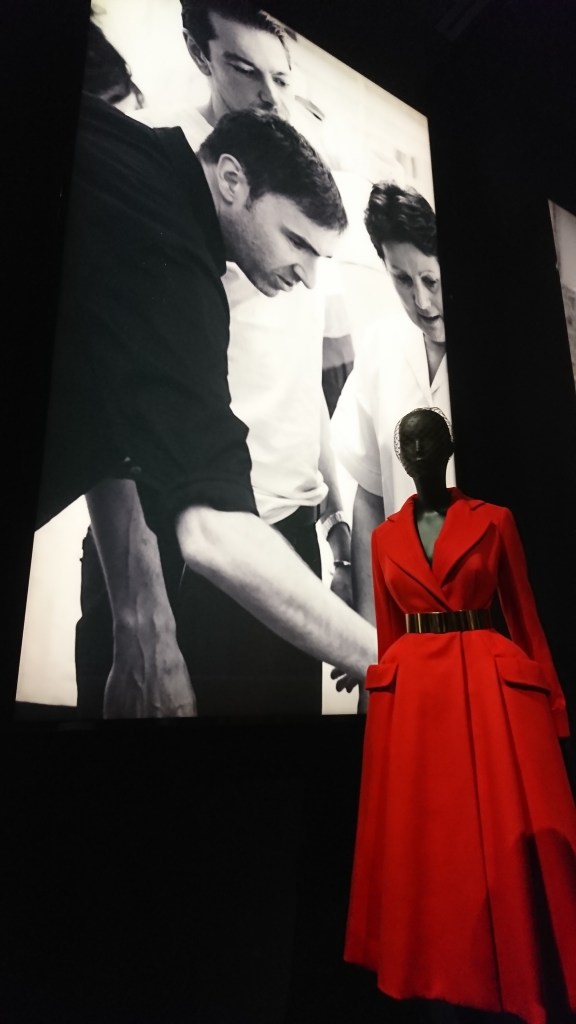
My first academic introduction to Dior came through the documentary, Dior and I: a fly-on-the-wall film that followed Belgian designer Raf Simons as he took up the mantle of creative director in 2012. I had been aware of John Galliano’s tenure, largely thanks to Lily Cole who was a veritable goddess in his designs, but had little actual passion for the house of Dior beyond that. I have a penchant for the theatrical in fashion, but I was more into Alexander McQueen, Vivienne Westwood and Marc Jacobs at Louis Vuitton at the time. Galliano was famously fired from Dior after an anti-Semitic rant outside a café in Paris, and this created a space at Dior for something new and different. The film introduced us to Raf Simons, with his refreshingly modern aesthetic and his endearing emotionality. Reading from Christian Dior’s autobiography and discussing art, it became clear that Dior was on the cusp of being reimagined for a new generation. I fell for the brand then and there.

Raf

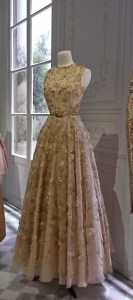
I came to learn from Dior: Designer of Dreams that the fact that there is even a house of Dior is nigh-on miraculous. Christian Dior founded the label in 1947, creating the ‘New Look’: he divined an ultra-feminine silhouette, re-introducing women to sensuality after the austerity, deprivation and destruction that encompassed life during the Second World War. In no more than ten years, he built a booming, globally successful fashion house, placing his love for women at the very heart of his work. He introduced the H line, the Bar jacket and many other ingeniously crafted designs to emphasise curves, create drama and indelibly flatter. Tragically, he died in 1957; but in the short but very sweet time he had, he laid the foundations for one of the best-loved fashion houses of all time.

I believe the key to Dior’s success in his lifetime and beyond can be attributed to his commitment to women. Indeed, he seems to have dedicated his whole sartorial life to making women look and feel beautiful. He said:

‘Deep in every heart slumbers a dream, and the couturier knows it: every woman is a princess’.

It is one thing for men to say that they love and support women, but it is almost overwhelming how much Christian Dior repeatedly practiced and demonstrated that love through his creations. He knew how to make women feel special through the alchemical combination of silhouette, colour and craftsmanship. He in no way objectified women: instead, he placed womanhood and femininity on a pedestal to be absolutely adored. I used to be very sceptical of traditional notions of femininity: I’ve read my Judith Butler, I understand that gender is performance in many ways. However, where so much disrespect and abject hatred of women and their bodies has been witnessed and experienced throughout history, for a man to be so readily loving and devoted to women, is amazing. Similarly, I do not subscribe to monarchy or regal inequality in any way, but I think the reference to princess-hood can be read more archetypally. His work helps to bring women back to the sense of their own worthiness: that, yes, each one of us is unique and special, with dreams and ambitions, and a powerful capacity for conscientiousness, compassion, joy and love. All of these things make us inherently beautiful. I know a lot of women, including myself, have a hard time believing that, but Christian Dior is here to remind us, in a sartorial, fashionable way, that it is truly is the case.

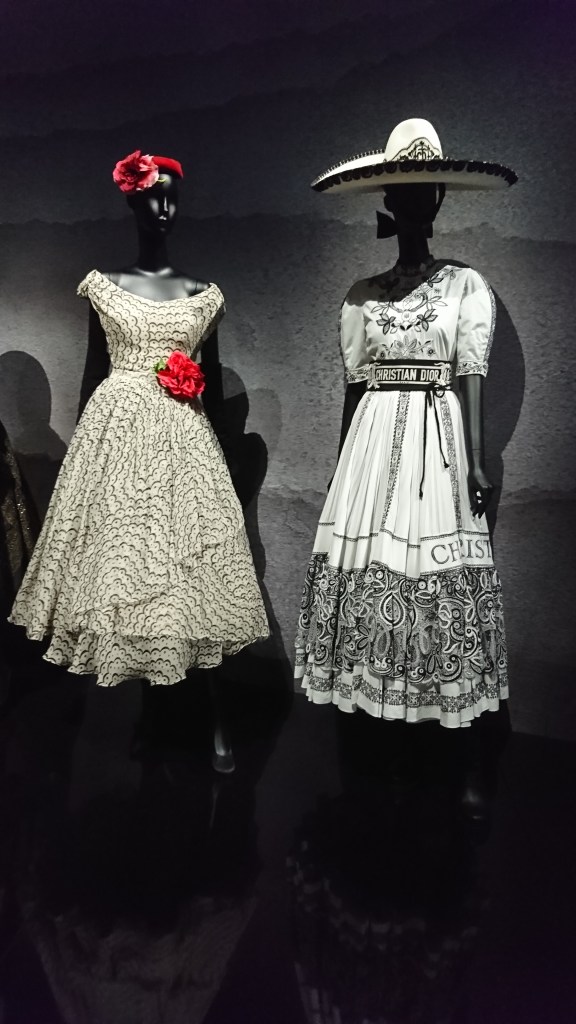
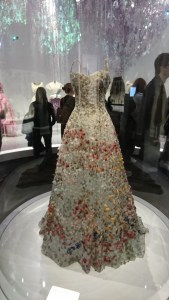
Christian Dior’s legacy has been kept intact thanks to a line of wonderful designers who placed women and what women want at the core of their work. Everyone, from Yves Saint Laurent to Maria Grazia Chiuri, have adhered to his silhouettes and inspirations, but subtly and ingeniously regenerated and refreshed them for each generation of women that passed their way. The exhibition presented and reflected this fact beautifully, placing pieces from all of Dior’s eras next to one another: for example, these two dresses from 1953 and 2019:

Mexican Dior

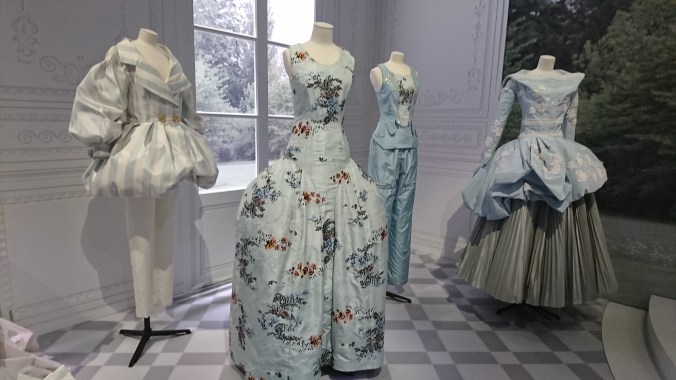
Both of these dresses nod to Dior’s interest in Mexican art and sartorial sensibility, speaking to each other across the years.[1] Although the Dior logo splashed across the dress on the right is a dead giveaway that it is a 21st century piece, they could both feasibly have come from the same collection. Similarly, the 18th century-inspired collections exhibit both continuity within the house of Dior and their individual designer’s unique perspective and flair:

18th century Diors

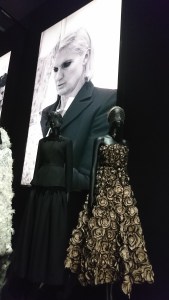
On the far left we have Gianfranco Ferré’s imagining of an 18th century coat, followed by Raf Simon’s cornflower blue dress with drop-waist hip emphasis; then we have another Raf Simons creation, this time a two-piece of intricately embroidered top with combat trousers; and finally a theatrical John Galliano dress with a billowing top and voluminous pleated skirt. All of the pieces are intrinsically Dior and could have walked down the runway in exactly the same show. But, we are also introduced to the subtle modernity of Simons, somehow taking an archaic hip style and making it contemporary and cool; the free-spirited proportion-play of Gianfranco Ferré; and the drama and craftsmanship of Galliano. The accusation has been levelled (at Simons in particular) that these collections for Dior are archivist; however, we can see clearly how the directors have honoured the history and mystique of the house whilst also exploring their own creative interests and personal aesthetics. It makes the collections personal but also part of a fluid, historical whole.

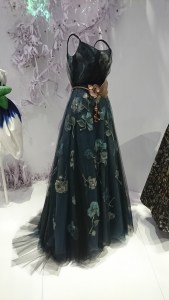
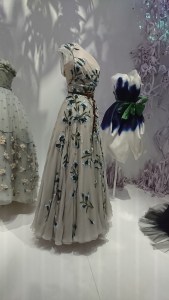
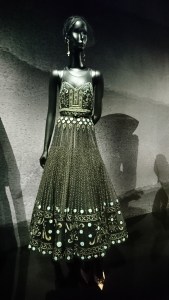
I will always have the softest of soft spots for Raf Simons because his work is just so polished, interesting and fun; but this exhibition formally introduced me to the work of Maria Grazia Chiuri. Up until now, I have reservedly watched Chiuri’s tenure blossom with popularity from afar. I was not convinced that slapping ‘We should all be feminists’ and ‘Why have there been no great women artists’ onto T-shirts to be sold for hundreds of pounds was particularly intersectional. I am still absolutely sure that capitalising on a buoyant new wave of feminism for commercial gain whilst reinforcing exclusivity and hierarchy is not how I want my intersectional feminism to look. However, this exhibition taught me that this woman bloody well knows how to make fabulous clothing. We wandered around the exhibition, pointing to one exquisite dress after another, exclaiming ‘I want that. I want that. I want that’, most of them originating from her sketchbook. Chiuri’s silhouettes are not as avant-garde as a Galliano, nor are they as refined and modern as a Simons, but they are dreamy beyond belief. Deceptively simple forms make way for frothy, fairytale content: her dresses become canvases for beautiful entwining flowers, embroidered constellations, elegant tulle and third eyes.

MGC3MGC2MGC5MGC6

MGC1MGC4MGC8MGC7

I have a newfound respect for what Chiuri is accomplishing at Dior. Namely, creating exceptionally designed clothing, luxurious without being fussy, whilst also, with those clean and elegant lines, very wearable. I would opt for any of these dresses in a heartbeat (please sartorial gods, please).

Without spoiling the exhibition too much for those who are still to visit, the final room was quite literally breathtaking. We audibly gasped and gaped at the twinkling ballroom setting we found ourselves in, debating whether or not we’d overreacted to the splendour on show. The gasps and squeals that came behind us as others entered the room confirmed not. The whole effect was magical: the glittering dresses, the rosy lighting, the cavernous space, everything. Time permitting, we could have sat in that room for ages just absorbing it all.

Dior: Designer of Dreams was another triumph for the Victoria and Albert museum. The layout and story of the exhibition is pitch perfect, demonstrating seamlessly the historical threads of the fashion house, as well as showcasing the individual contributions of the creative directors. The exhibition is a tribute to everyone who has been involved with the house: from Christian Dior himself and his creative directors, to the petit mains creating the designs at the atelier and the women chosen to represent the brand (it features dresses worn by Natalie Portman, Charlize Theron, Rihanna and Lupita Nyong’o). It celebrates womanhood, femininity and the princess within each woman, and the paradox that is a success built upon a winning and delicate combination of history and modernity. Needless to say, if you can get to it, go.


[1] What was also brilliant was that the curators had taken great pains to stress the pitfalls and damage of cultural appropriation, highlighting the ways in which Grazia Chiuri in particular sought practical help and input from Mexican women in the production and presentation of her Mexican-inspired collection.

Love Note – Vincent Van Gogh

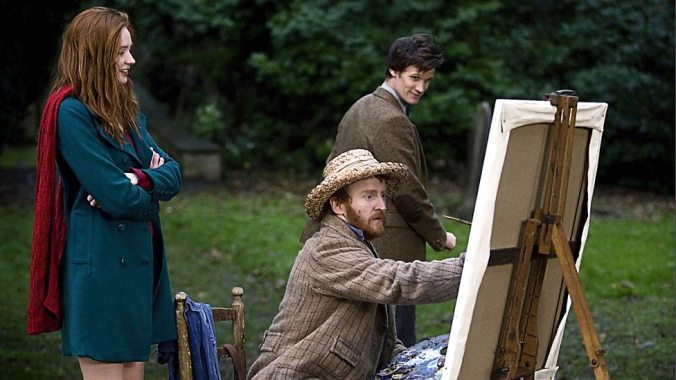
This is an anticipatory Love Note for when I get round to seeing a new film starring Willem Dafoe called At Eternity’s Gate. Dafoe stars as Vincent Van Gogh and charts the final years of his life in the South of France. I haven’t seen the film yet, so cannot possibly review or attest to how good the film is, but I am nevertheless excited to see one of my favourite painters depicted on screen. This is not the first time Van Gogh and his life has been depicted on screen: one of my favourite episodes of Dr Who brought Van Gogh to life through a very moving performance by Tom Curran.

vincent and the doctor

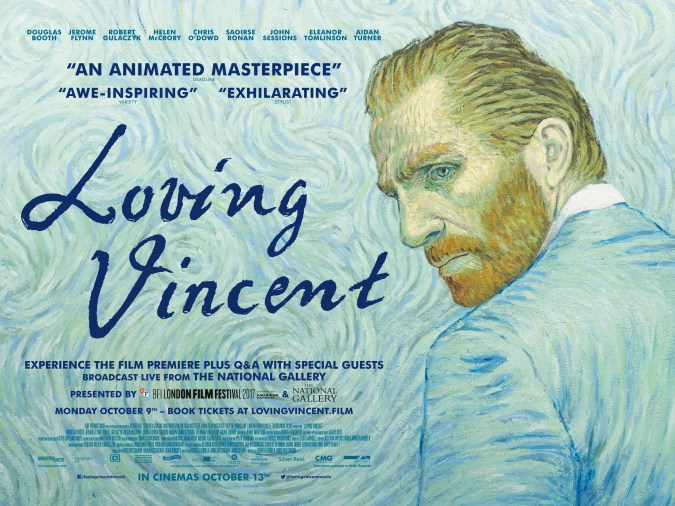
He was also represented in the visually stunning Loving Vincent, a truly extraordinary animated film that saw artists fluent in Van Gogh’s style paint frames telling the story of his final days. In both, Van Gogh was presented as tortured, immensely sensitive, almost living and breathing his wonderful art and terminally underappreciated and misunderstood.

loving vincent

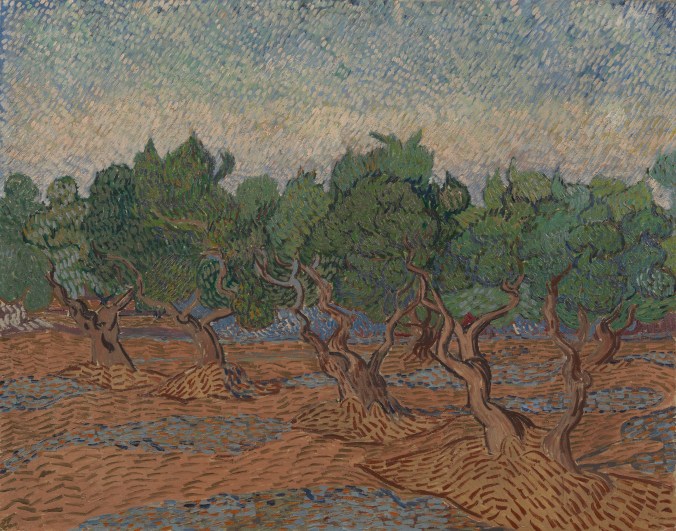
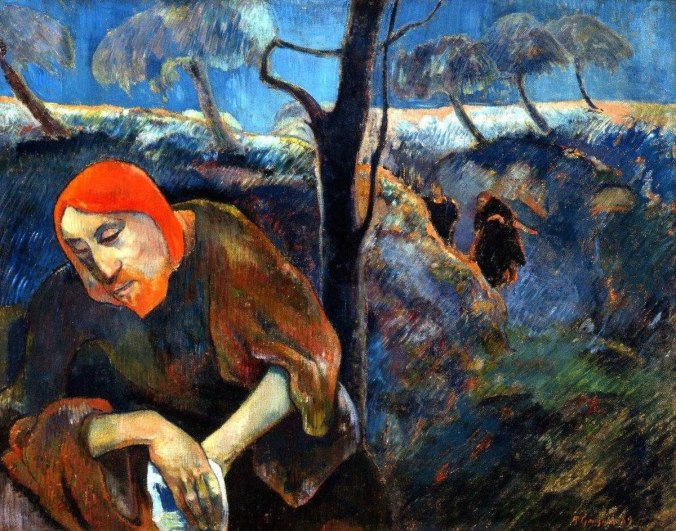
I have loved Van Gogh for a very long time and I think what made him extraordinarily gifted was his capacity to paint both places and people. His style captures the nuance and intricacy of whatever it is he is looking at, and his paintings almost hum with vibrancy, no matter whether he’s painting a field scene or exploring the lines of a weathered and weary face. Additionally, he only ever painted or represented the world around him. He may have done this in an utterly original and inspired way, but it was always a reflection of what he could actually see. This put him at odds with his contemporary Paul Gaugin, who drew from his imagination to create people and figures in his paintings. Van Gogh, on the other hand, would never do this. This aesthetic and practical difference can be seen in Van Gogh’s Olive Grove and Gaugin’s Christ on the Mount of Olives:

Van Gogh Olive Groves

1200px-Gauguin-christ-in-garden

This is not to say that Gaugin’s work is inferior in any way to Van Gogh’s (I actually think his Christ looks remarkably like Van Gogh in this painting, which is interesting), but it demonstrates a very interesting dynamic at work in Van Gogh’s art. His commitment to reflecting the world around him accurately, but with his own unique insight, makes his work at once highly personal and imaginative but always grounded in what is physical and real. It is endearing and almost egoless to bring such consciousness and attention to what he saw, rather than to emphasise the world by applying a story to it. Through Van Gogh’s art, we learn that the world itself is a story to tell, we don’t need to apply grand narratives of religion or myth to elevate it as such.

I have been fortunate enough to see Van Gogh’s paintings in the paint at both the Van Gogh museum in Amsterdam and from the Davies collection at the National Museum of Wales. What I learnt and what absolutely stood out to me, more than the tragic circumstances of his depression and his death, was that he was a masterful and learned technician. Whilst a lot of emphasis has been placed in popular culture on his naiveté and the impressionistic and emotional ecstasy of his paintings, what I learned was that he had an almost academic approach to art. Van Gogh developed his technique out of dedicated and meticulous study and practice. He took lessons from Anton Mauve in the Hague, studied colour theory through Charles Blanc’s colour wheel and through analysis of Eugène Delacroix’s paintings, explored pointillism and the un-mixing of colours through the work of Georges Sauret, experimented in a Japanese style through a study of Japanese woodcuts, and from his friendships with Toulouse Lautrec and Émile Bernard learnt about the versatility and vibrancy of pastels. Passionate and zealous as he famously was with his impressions and interpretations of the world around him, Van Gogh was a learned and masterful technician. I don’t think this should be overshadowed by the turbulence of his relationships or his volatile mental health. He may have found inspiration in his pain and darkness, but his expression of it came from hours, days and years of practice and development.

Here are some of my favourite pieces of Van Gogh’s work:

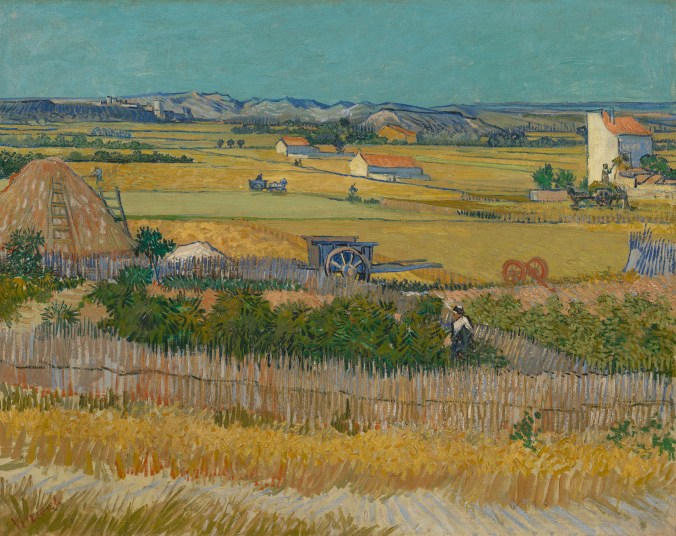
Van gogh the harvest

The Harvest, June 1888 – The warmth of the sun radiates in this painting, everything that summer should be.

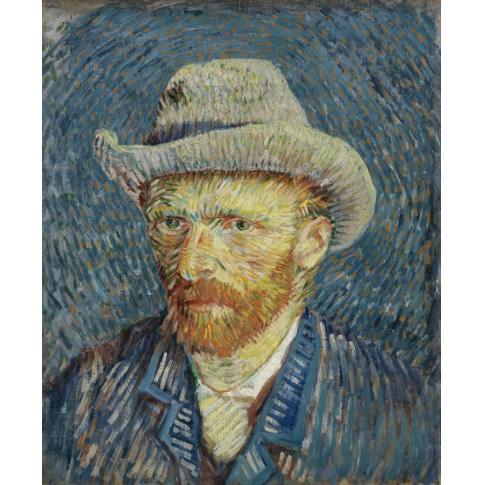
van gogh self portrait

Self Portrait with Grey Felt Hat, c.1887 – I have this painting on a postcard hanging up in my flat and I think it is beautiful. The sun-scorched orange of his beard complements the bright blue of his clothes and background, and the green tinges around his eyes and brow convey his deeper emotional sensitivity.

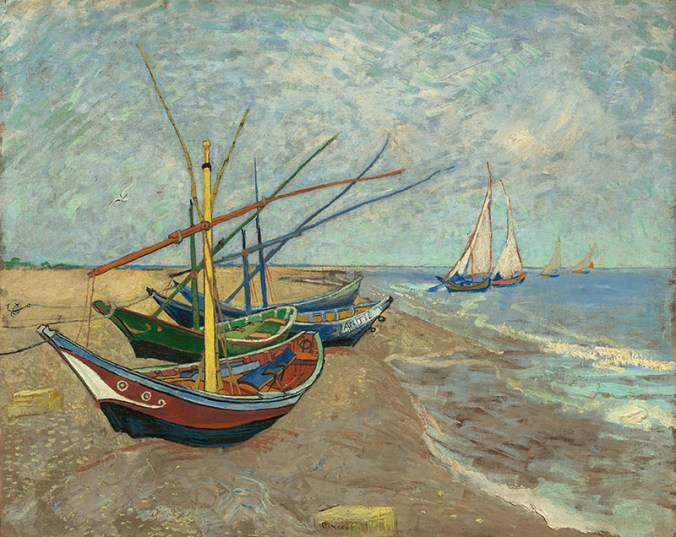
Vincent-van-Gogh-Vissersboten-op-het-strand-van-Les-Saintes-Maries-de-la-Mer-V006

Fishing Boats on the Beach at Saintes-Maries, June 1888 – This is another painting on a postcard that I have hanging in my flat (courtesy of my boyfriend who loves this particular painting). It is reflective of Van Gogh’s interest in Japanese art.

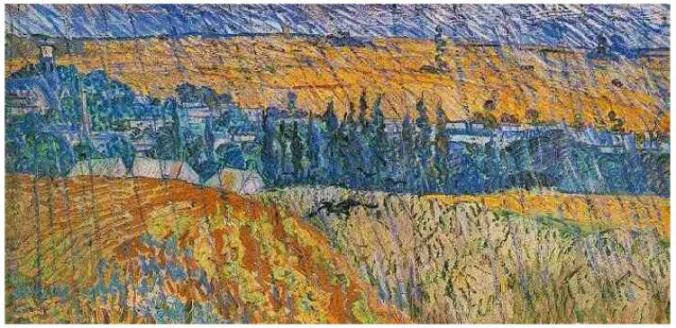
van-gogh-rain-auvers-1890

Rain – Auvers, 1890 – I saw this painting at the National Museum of Wales in Cardiff and it brought tears to my eyes. There is a battle going on here between the sunny warmth of the land and the deep, dark despair of the rain. It reminds me that no matter how depressed, anxious and afraid we may feel, the land needs to be watered to flourish; goodness, light and clarity come from embracing and moving through the dark and difficult times.

Love Note: Skiing and Snowboarding

“I felt my lungs inflate with the onrush of scenery—air, mountains, trees, people. I thought, “This is what it is to be happy.”

I am fortunate enough to have spent many years learning how to ski and it is one of my favourite things on the planet. Esther Greenwood’s description of the sport in Sylvia Plath’s The Bell Jar (see above) is absolutely accurate and I couldn’t have put it better myself. I am aware that skiing is a leisure preserve of the middle class and is obscenely expensive; indeed I haven’t been on a skiing holiday in years because I can’t afford it. However, through skiing, I have had some life-changing experiences, met some amazing people and had a whole lot of fun:

Experiences like being five years old and falling off a drag lift and crying in despair (I thought I was lost forever). My instructor, Yannik, scooped me up, tucked me safely in front of him and got me safely up the mountain. There, he kneeled down next to me and pulled off his glove revealing that his right hand was missing. Seeing this shocked me into silence and he said warmly, ‘If I can ski with one hand, you can do anything’;

Bouncing through bumpy forest trails as part of a crocodile of squealing children, gasping with laughter, barely in control and skiing through the most magical wintry surroundings;

Having existential conversations with fellow ten year olds on chair lifts: kids I met and knew for a week, put the world to rights with and then never saw again. This included one British kid I met in Colorado who, after an extensive conversation about winning the lottery, turned out to be related to my P.E. teacher who had taken early retirement after winning the Lotto jackpot a mere two weeks before;

Battling my way down notorious slopes like ‘Sache’ in Val-D’Isère, ‘Shock’ in Breckenridge, ‘Creux Noir’ in Courchevel and ‘Ghengis Khan’ in Vail;

Experiencing the elements in a visceral way, whether it’s gliding around in brilliant sunshine and sparkling snow, or using your gloves as a makeshift mask when snow is hitting your face in sharp pellets;

Learning how to properly carve by an Australian called John who lived his best life teaching kids how to ski during the winter and working as a carpenter in the summer;

Witnessing and experiencing a multitude of mishaps and injuries, for example: falling off a chairlift due to a cacophony of communication errors; falling off a T-Bar with a friend due to a lot of bad luck (why am I always falling off things?!); watching my dad plough into a snow wall he couldn’t see because it was the same colour as the cloud we were skiing through (I almost wet myself laughing); chomping on my tongue during a fall and spitting blood for ten minutes; watching someone in my ski group snap a ligament in her leg and being tobogganed down the mountain; and, the worst, watching 18 year old Neal Valiton tumble to his death during the 2007 IFSA World Freeride Championship in Tignes.

Skiing is fun and some mistakes are unfortunate and unavoidable, but anyone who doesn’t take yours and their safety extremely seriously isn’t worth skiing with. The mountain is beautiful but it is not always your friend. In light of this, it can become an incredibly mindful sport: you plonk yourself on the side of a mountain and somehow you have to get down as safely as possible. For me, crazy as it sounds, what ensues is a very clear and concerted inner conversation with myself. I have to navigate my way through ice and moguls, through white outs with zero visibility and the chaos that are nursery slopes at the end of the day, deciding how big or short my turns have to be, how much speed I can afford to pick up and how the rest of my group are getting along. In the process I give myself pep talks, sometimes even sing to myself when I get a good rhythm, and the whole effect is ridiculously calming.

This was proved again last weekend when I had my first snowboarding lesson at the Tamworth Snow Dome. To begin with, it felt almost sacrilegious because I had abandoned skis and poles for extremely comfortable boots and a single plank with sharp edges. But, after a shaky start, which included screaming in the instructor’s face as he helped me to edge down the hill, I dropped down into that calm, mature inner place that doesn’t always make itself known on a day-to-day basis. It was clear and confident, and sounded like: ‘OK Harper, we’re here now, on a snowboard, slightly out of control, what are we going to do about it?’ I slowed down, becoming mindful of my body and it’s movements (including the limits of what I was currently able to do) and, in so doing, embraced this new and disorientating experience. I have realised that my work is to try and tap into this place a lot more often.


(Featured image is my photo of El Pas de la Casa resort in Andorra, 2015)

World Book Day 2019

I have always loved World Book Day. At school, I loved receiving a book token and legging it to Waterstones to buy something new to read. I explicitly remember Roald Dahl’s ‘George’s Marvellous Medicine’ and Jacqueline Wilson’s ‘Lizzy Zip-Mouth’ being two of my World Book Day purchases, which I re-read about twenty times each.

You guys: World Book Day is not just for childhood, it’s for life. I continue to enjoy World Book Day because it gives me an excuse to happily blither on about books for a whole 24 hours (not that I ever really needed an excuse but, you know). Reading is such an incredible, immersive pastime, a treat for the imagination and important means of acquiring vocabulary in childhood. It is also so important to help explore the limits of language and to challenge our preconceptions about race, gender, age and sexuality. I think we should all be encouraged to read as much as possible. I know that our lives are so busy and we’re all perpetually tired, but I try to follow my Dad’s example: he will not end the day without reading, even if it’s just one page of a book. Not only does this help me wind down after a day of work, it means that I create distance between myself and my screens and helps to take me somewhere beyond my busy, chattering brain.

In light of World Book Day, I wanted to share with you some books that I really think you need to know about:

The books I have just finished

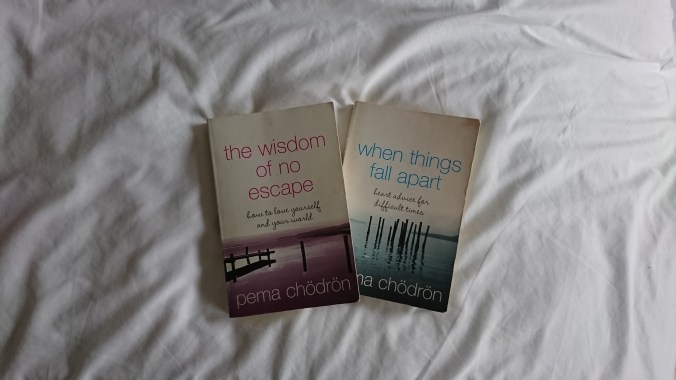
The Wisdom of No Escape and When Things Fall Apart both by Pema Chodron

Pema Chodron

I have always been interested in spirituality and these books, written by Buddhist nun Pema Chodron, introduce basic concepts of the Buddhist dharmas in an accessible, relatable way. They have become a go-to for me when I feel anxious, uncertain and groundless. Every single word of these books is steeped in wisdom: I almost wish I could have eaten them so that I could digest it all properly. I have enjoyed learning about Tonglen meditation, which is a practice that involves breathing into anxiety, uncertainty, fear and anger etc. and breathing out clarity, spaciousness and peace for yourself and behalf of everyone else who is suffering. With Chodron’s help (and that of another great Buddhist friend) I have learnt how to embrace the impermanence that characterises life, making our relationships all the more precious; and the importance of compassion, non-judgement and moving from a place of loving-kindness. I saw on Twitter recently someone’s opinion that ‘being kind’ is a wishy-washy, beige way of living life: after a read of Chodron’s work, however, I couldn’t disagree more. I have come to realise that there is perhaps nothing more radical or fearless than accepting egolessness and consciously moving from a place of joy, compassion and care for the world and everyone else in it.

The book I am currently reading

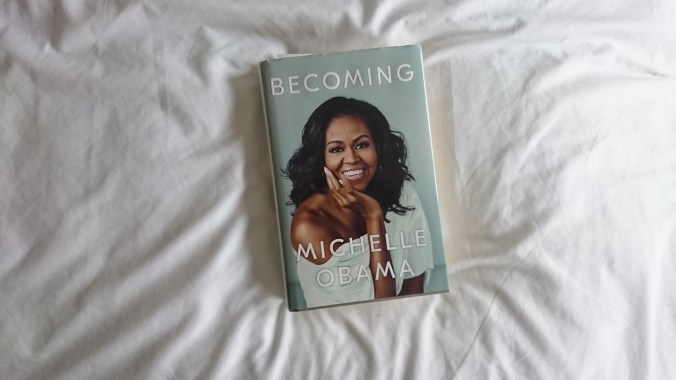
Becoming by Michelle Obama

Michelle Obama

I am half way through the former First Lady’s memoir and I am enjoying it immensely. Her story is compelling and characterised by a complex mixture of personal drive, determination and striving, whilst juggling her African American heritage with the white patriarchal power structures of Ivy League universities and law firms. Race is central to the book, as Obama recounts the frustration of the lack of opportunity afforded to her talented, smart grandfather and uncles and her own frustration of being caught between not being black enough (a cousin/classmate asks her early on why she ‘talks like a white girl’) and not being white enough (she finds herself outnumbered by predominantly white men at Princeton, Harvard and in the law firm Sidley and Austin). As such, it is a really important read that directly challenges the unthinking white privilege of many of the readers who are likely to pick up her tome. Obama also gives us a tour of her treasured friendships, her family and, of course, her relationship with Barack Obama. I know I get mushy really easily but, seriously, their story is bloody romantic. I know that she opens up about marriage counselling later on in the book, and I am very much looking forward to reading a refreshingly un-Disney account of what it really takes to be in a long-term relationship. And Trump. I can’t wait to see what she’s written about him.

The book everyone should read

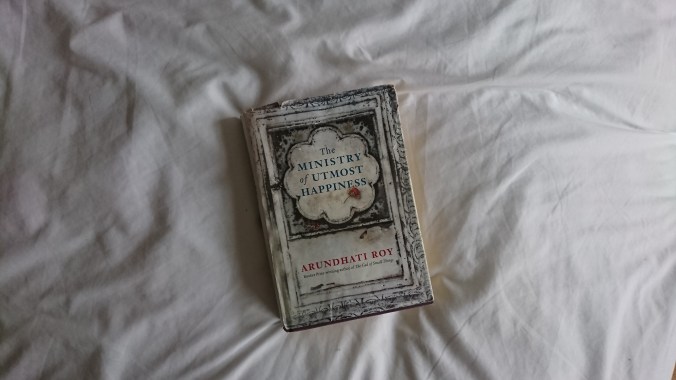
The Ministry of Utmost Happiness by Arundhati Roy

Arundhati Roy

This book is beautiful but was definitely a tricky one to get into at first. After 100 pages I was still not finding myself suitably immersed, which is a testament to how brilliantly challenging this book is. I persevered because I am slightly loathe to leave a book I’ve started reading unread, and was so glad I did. 100 pages in, and after a lengthy and hilarious description of various groups of people protesting various political and religious in a central Delhi square, I was swept away. The novel features a myriad of interesting characters, but centres on Anjum, a transgender hijra living in a cemetery in the heart of Delhi. Infused with Urdu poetry, political satire and witticisms, Roy’s novel investigates love, conflict and chaos in the colourful and brutal Indian capital, through the life of an extraordinary character. Reading this novel feels all the more pertinent now that tensions are once again flaring up over the region of Kashmir, which features heavily in the novel’s second half. I learnt so much about Indian culture and politics in this book, in particular regarding the country’s Muslim population, and was entranced by the unfolding drama and Roy’s bewitching prose. As such, I would recommend this novel time and time again.

 The books I’m going to read next

This is both my most and least favourite predicament: I have easily 50 books on my shelf that are lined up for reading and I get choice paralysis every time I need to decide what to read next. The main contenders include:

Milkman by Sarah Burns

Natives by Akala

A Return to Love by Marianne Williamson (really interesting that she is running for the Democratic nomination in the 2020 US election)

War and Peace by Leo Tolstoy

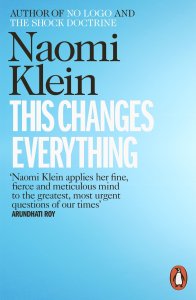
This Changes Everything by Naomi Klein

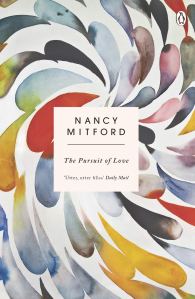
The Pursuit of Love by Nancy Mitford

Milkman AkalaMarianneWar and PeaceNaomi againNancy Mitford

Love Note – Inspector Javert and Alyosha Karamazov

AKA men who look at the stars

Last Thursday, I went to see the touring production of Les Misérables at the Palace Theatre in Manchester. In a signature Elizabeth Harper move, I bawled my eyes out pretty consistently throughout the entire production [SPOILER ALERT]: during ‘I Dreamed a Dream’, ‘On My Own’, when Gavroche was shot, when Éponine was shot, when Enjolras was shot, when Marius sings ‘Empty Chairs at Empty Tables’ and, finally, during Jean Val Jean’s death with the lyric ‘To love another person is to see the face of God’. I’m not a Christian, but I just think that is the most beautiful idea: there is something spiritually transcendental about loving another human being from your very core.

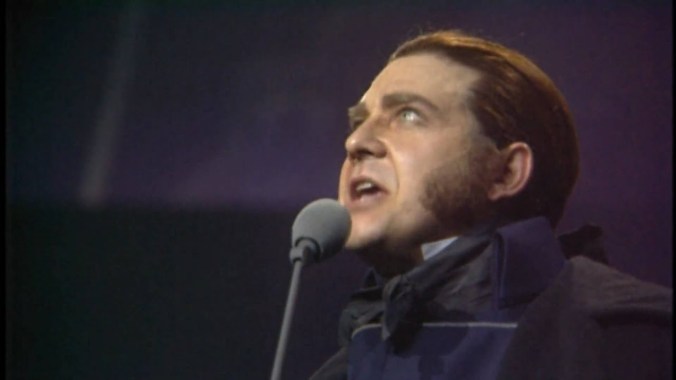
Turning into a weeping willow aside, I enjoyed Les Misérables because I got to see one of my favourite characters being performed in the flesh: Inspector Javert, who sings ‘Stars’, my favourite song in the musical.[1] Javert reminds me of another of my favourite male characters, who I like for very different reasons but, incidentally, also has a beautiful and interesting relationship with the stars. I am going to offer a short and snappy comparison between Inspector Javert and Alyosha Karamazov from Dostoevsky’s The Brothers Karamazov.

On a very basic level, I want to sit Javert down and tell him that everything is going to be OK and that he just needs to ease up on life. For those who are not familiar with the story, Javert is born in jail to parents embroiled in poverty and crime and raises himself in life through his dedication to the law and authority. He becomes obsessed with Jean Valjean, who, in Javert’s singularly black and white worldview, is a thief and an inherently ‘bad’ person. Javert looks to the stars as his guiding lights of order and control within the chaos of revolutionary France, and of his own personal history:

‘Stars

In your multitudes

Scarce to be counted

Filling the darkness

With order and light

You are the sentinels

Silent and sure

Keeping watch in the night

Keeping watch in the night


You know your place in the sky

You hold your course and your aim

And each in your season

Returns and returns

And is always the same

And if you fall as Lucifer fell

You fall in flame!’[2]

Click here for Philip Quast’s rendition of the song: 
maxresdefault

He sees stars as pinpricks of certainty, surrounded by a dark, unknowable vastness. He is invested in certainty, predictability, of a specific and very dichotomous construction of what is ‘good’ and ‘bad’. He perceives Jean Valjean as Lucifer: a rebel, a traitor, and someone who must be brought to justice. In his search, he is unrelenting, and has no room for mercy or any sense of moral ambiguity. I find Javert so endearing and interesting because he believes completely and utterly that order and control are what keep himself and the world a safe and just place. As a character, I think he speaks to anyone who, at one point or another, has believed that ‘being good’ has in some way protected them from the storminess of life and the people within it. Certainty, however, is an illusion. It is his inability to accept that life is impermanent, fluid and precisely uncertain that leads to his loss of faith: in, what is for Javert, an unprecedented act, Jean Valjean spares his life, thereby undercutting the embodiment of ‘badness’ that Javert has spent decades projecting onto him. It leads to Javert in turn sparing Jean Valjean’s life, which he cannot fathom, he cannot reconcile with:
 

‘I am reaching but I fall,

And the stars are black and cold,

As I stare into the void, of a world that cannot hold.

I’ll escape now from that world;

From the world of Jean Valjean.

There is nowhere I can turn. There is no way to go on!’[3]


The world of Jean Valjean is a world of disorder and chaos that overwhelms Javert. He feels abandoned by the stars, consumed by the darkness that he has kept at bay all throughout his life by being so devoted to a very literal interpretation of law and order, good and bad. This, eventually, leads him to take his own life. Interestingly, he does this by throwing himself into the running waters of the Seine, the river being a stark embodiment of the fluidity and tumult that Javert could not accept.

Alyosha Karamazov, on the other hand, rediscovers his faith and love for all of humanity through looking at the stars. His spiritual guide and mentor, the Elder Zosima, dies midway through the novel. His corpse begins to rot, which sends shockwaves throughout the monastery: the superstition is that a truly holy man’s corpse would not rot, but would instead stay pristine and intact. Young and still slightly naïve, Alyosha is swayed by the mutterings of his fellow monks, and begins to doubt the spiritual integrity of the Elder Zosima. Throughout the novel, Alyosha is presented as a character whose goodness, his joy and his desire to help the flailing and chaotic people around him are all expressed through his face. If you’re interested, this essay (‘The Faces of the Brothers Karamazov) is a brilliant summary of the various faces within the novel. One of Alyosha’s faces that the writer of this essay doesn’t mention, however, is Alyosha’s face after the rotting of the Elder Zosima’s corpse. Where his face is closely related to beauty and youth before this point, it changes, at what the narrator refers to as a ‘critical moment’:

‘Alyosha suddenly gave a twisted smile, raised his eyes strangely, very strangely, to [Father Paissy] the one to whom, at his death, his former guide, the former master of his heart and mind, his beloved elder, had entrusted him, and suddenly, still without answering, waved his hand as if he cared nothing even about respect, and with quick steps walked towards the gates of the hermitage’.[4]

In this moment of doubt, which is confirmed as such in the next chapter by the narrator, Alyosha’s normally bright and entreating face becomes different, almost cynical and manic. To see someone described as almost angelic become ‘strange’ signifies an unnerving change in the character. In a novel where much of the action involves the men of the Karamazov family passionately rushing about with Alyosha in their wake trying to tie up all the loose ends, here we see Alyosha himself caught in a storm. This is further emphasised by the uncomfortably long sentence, broken apart by commas, almost as if the words are panted with the effort of hurrying.

Yet, it is the stars that help Alyosha to re-discover his faith, hope and love for life and all of humanity. The following is one of my favourite pieces of writing I’ve ever read. Gear up, it’s a long one:

‘Filled with rapture, his soul yearned for freedom, space, vastness. Over him the heavenly dome, full of quiet, shining stars, hung boundlessly. From the zenith to the horizon the still-dim Milky Way stretched its double strand. Night, fresh and quiet, almost unstirring, enveloped the earth. The white towers and golden domes of the church gleamed in the sapphire sky. The luxuriant autumn flowers in the flowerbeds near the house had fallen asleep until morning. The silence of the earth seemed to merge with the silence of the heavens, the mystery of the earth touched the mystery of the stars… Alyosha stood gazing and suddenly, as if he had been cut down, threw himself to the earth.

He did not know why he was embracing it, he did not try to understand why he longed so irresistibly to kiss it, to kiss all of it, but he was kissing it, weeping, sobbing, and watering it with his tears, and he vowed ecstatically to love it, to love it unto ages of ages. “Water the earth with the tears of your joy, and love those tears…,” rang in his soul. What was he weeping for? Oh, in his rapture he wept even for the stars that shone on him from the abyss, and “he was not ashamed of this ecstasy.” It was as if threads from all those innumerable worlds of God all came together in his soul, and it was trembling all over, “touching other worlds.” He wanted to forgive everyone and for everything, and to ask forgiveness, oh, not for himself! but for all and for everything, “as others are asking for me,” rang again in his soul. But with each moment he felt clearly and almost tangibly something as firm and immovable as this heavenly vault descend into his soul. Some sort of idea, as it were, was coming to reign in his mind-now for the whole of his life and unto ages of ages. He fell to the earth a weak youth and rose up a fighter, steadfast for the rest of his life, and he knew it and felt it suddenly, in that very moment of his ecstasy. Never, never in all his life would Alyosha forget that moment. “Someone visited my soul in that hour,” he would say afterwards, with firm belief in his words…’[5]


Where Javert lost his faith in order and the dichotomy of ‘good’ and ‘bad’, the stars for him turning into a great void of chaos and confusion, in The Brothers Karamazov, Alyosha is humbled and overcome by the joy of life because of the stars. Under the celestial wonder of the Milky Way, Alyosha comes to understand and appreciate the depth and beauty at work in every human being. Whilst Javert is consumed by the abyss, Alyosha cries with joy, ‘even for the stars that shone on him from the abyss’. Furthermore, where Javert throws himself into the waters of the Seine, Alyosha accepts the uncertainty and ecstasy of a life of difference and love, and throws himself to the floor, finding himself on solid ground. It is this paradoxical acceptance of uncertainty, chaos and tumult that helps Alyosha to find a sense of stability, and of his place in the world. Ultimately, and again unlike Javert in the most tragic sense, Alyosha’s reconciliation with mystery and ambiguity leads him to a place of forgiveness and gratitude. It brings him to love himself and all of mankind, no matter what has been done or whatever will be done. It is a moment of irreverence, peace and boundless love, steeped in the wonder of living life hopefully. In short, a piece of writing everyone would do well to keep in mind.

These men remind us that in looking at the stars we have a choice about how we perceive ourselves, our place in the world and, indeed, the universe. Javert’s story is poignant in its tragedy; Alyosha’s for its eruption of joy. Carl Sagan said that ‘we are a way for the Cosmos to know itself’: these two beautifully crafted characters, in their relationship to the stars above them, provide two compelling and very moving blueprints. In the musical and in the novel, we see them play out the archetypal human experience of living with uncertainty and mystery in their own very different but no less endearing ways.


[1] My assessment of this character has purely come from the way in which he is portrayed in the musical version of the novel (I will get round to reading it at some point) but considering how well-loved and culturally important the musical is, I think that is enough.


[2] ‘Stars’, Les Misérables, Claude Michel Schonberg / Alain Albert Boublil / Herbert Kretzmer

[3] Ibid.

[4] The Brothers Karamazov, Fyodor Dostoevsky transl. Larissa Volokhonsky and Richard Pevear (London: Vintage Books, 2004), p.337.

[5] Ibid., p.362-3.