A case for Lockwood and Dean in Emerald Fennell’s new adaptation of ‘Wuthering Heights’

As it does for many students, the third year of my university degree course entailed an extended independent project: a culmination of two and a half years building academic expertise in research, negotiating criticism and secondary material, deep and thoughtful analysis of language all framed within the construction of an elegant yet convincing argument. Whilst my department opted for a 7000-word long essay over a dissertation of 12,000-15,000 words (with one staff member morbidly commenting that they didn’t want to give students ‘too much rope with which to hang themselves’) it was still a rigorous task that began with a scintillating and frightening proposition: what on earth to write about?

Making any kind of decision for me initiates a period of profound reflection and soul-searching: I spent my early twenties distracting myself and others no-end with ‘Which Disney princess are you?’ Buzzfeed quizzes (answer: Pocahontas), and making a collage ‘All About Me’ at work a few years ago triggered something of an existential crisis. Before eventually deciding to write my long essay on the concept of ‘nothing’ in the elegiac and ekphrastic poem ‘Phantom’ by Don Paterson, a topic I picked the day before the deadline for submitting the topic, I was in torment trying to work out what I wanted to write about. I landed on a number of different options which, compounding my own purgatorial sense of ‘who am I and what shall I write about?’, were batted away by various academics.

These included one idea I had about the number three appearing in folklore (I still don’t understand the reservation about that one; Freud’s ‘Theme of the Three Caskets’ was going to anchor the thing, and my subsequent interest in Jungian analysis would open up my ideas in numerous different ways). Similarly, and most relevant for this essay, was an idea I had about cinematic adaptations of ‘Wuthering Heights’, and why, in my opinion, they never seemed to work. Another tutor dissuaded me from this task, citing either Queenie Leavis or Virginia Woolf in an attempt to communicate his perception that this topic was somewhat juvenile and I should do something more mature.

With the news that Emerald Fennell is writing, producing and directing a new adaptation of Wuthering Heights, which started production in 2025, I have decided to return to my juvenile project. Instead, however, of performing a deep-dive into the adaptations that have come before, I will consider what I hope will emerge in this new adaptation. There has already been plenty of comment and controversy surrounding the casting of her adaptation – Margot Robbie and Jacob Elordi would certainly not have been my choices for Cathy and Heathcliff, and I think many others agree – but I want to focus more on what I hope to see: which characters will be given prominence, will all of the idiosyncrasies, physical violences and clipped unhinged moments of the novel – biting, blows, ravings, hair-pullings – be woven in?

The first place to start was with re-reading the novel, which I did in the summer of 2024 in the waning months of pregnancy. The last time I read Wuthering Heights was when I was eighteen and studying it alongside Milton’s Paradise Lost and Webster’s The White Devil for A-Level. Back then, Gothic themes were prevalent not just in my studies but in noughties teenage culture at large, with the figure of the vampire in particular famously resurging in the Twilight novels and subsequent films, weekly doses of The Vampire Diaries on ITV2 and its spin-off The Originals, and True Blood for a more risqué proponent of the genre. The Noughties vampire craze is certainly something worth exploring in and of itself, and whilst I wasn’t the most adamant Twi-hard, I was certainly enamoured with the Gothic’s propensity for danger and romance. Wuthering Heights was no exception, with the emotional melodrama from all and sundry, the family saga and the theatricality of the various settings, from the Yorkshire moors to the two homesteads of Wuthering Heights and Thrushcross Grange. These are all, undoubtedly, kindling for the teenage imagination, which became ever so apparent upon returning to the text as a heavily pregnant 32 year-old woman. I am curious to see if Fennell’s new adaptation will ring in a new wave of Gothic story-telling, perhaps already begun with the re-make of Nosferatu and Ryan Coogler’s Sinners, and what that will tell us about the cultural moment in which we find ourselves.

Wuthering Heights remains a vivid and dramatic novel, with every character demonstrating a degree of emotional dysregulation, impetuousness and violence; characters I raged alongside as a teenager but now seem astonishingly unhinged in that unnerving, hopeless, hilarious and deeply endearing way that adolescents often are. This is because much of the action is being played out by just them: teenagers. As adaptations of The Great Gatsby are in danger of following Nick’s cue and romanticising its protagonist and anti-hero Jay Gatsby, adaptors of Wuthering Heights are in danger of imbuing this novel, and its key protagonists Catherine Earnshaw and Heathcliff, with a sage maturity that is not adolescent when it really should be.

After all, this novel does not start with the mad entanglements and upheavals of the Earnshaws, Lintons and Heathcliffs, with the relationship between Catherine Earnshaw and Heathcliff in particular eclipsing most of the rest of the novel’s drama in our collective imagination. The novel, in my mind, starts at ‘the sea-coast’ with a pompous, avoidantly attached man who shrinks ‘icily into [himself] like a snail’ when the girl onto whom he has heaped attention starts to return his affection, causing her to ‘doubt her own senses’ and leave with her mother.[1] In the aftermath, and fancying himself a misanthrope who wants to remove himself from society, he decamps to Yorkshire and arrogantly plunges himself into the company of Mr Heathcliff, his new landlord. It is through him, Mr Lockwood, that Nelly Dean’s history of the families of Wuthering Heights and Thrushcross Grange emerges.

Adaptation, like translation, is an art form in and of itself, and it is inevitable that changes and modifications to a literary text are made when it is fashioned from, in the case of Wuthering Heights, a novel into a film or television screenplay. The end goal cannot be to lean into translating the novel too literally for the screen; however, the success of the novel, I argue, relies as much upon its structure as it does on its characterisation, and to do away with any sense of framed narrative, the sense of a story-within-a-story that is created through the use of Lockwood and Dean, erroneously indulges and intensifies the most melodramatic parts of the work. I want to see an adaptation of Wuthering Heights that makes much of these two and the containment they provide. For, in my mind, Wuthering Heights is not a psychological novel, even though the psychology of the characters is absolutely central to the development of the plot, with trauma, addiction, grief, abuse and emotional breakdown all exhibited. Without minimising the severity of any of these, I still see Wuthering Heights as Gothic adolescent drama; what elevates it to greatness as a novel is through its considered structure, the theatrical blocking of various scenes – the various entrances and exits of characters between rooms and locations reads almost like a play – and the way in which Bronte skilfully maps pathos onto a most singular and evocative environment: the Yorkshire moors. Personally, I am thrilled that we are not in the heads of Catherine Earnshaw, Heathcliff, Hindley, Catherine Linton and Linton Heathcliff and whoever else. These characters are so erratic, dogmatic, cruel and selfish that we absolutely need distance from them. Bronte’s genius is that she gives us two characters, Lockwood and Dean, who are two imperfect filters for the chaos and sheer ridiculousness of the rest of the characters: they make Catherine, Heathcliff and Hindley et al. bearable, but they do not hold a sense of moral superiority over them.

Primarily, far from being a vacant empty vessel of character into whom the story is poured, as one might argue Captain Walton is in Mary Shelley’s Frankenstein, Lockwood is consistently presented as creepy, malevolent, egotistical and, yes, ridiculous. He presumes to visit Heathcliff at the start of the novel and before much happens gets into a scrap with some dogs after ‘winking and making faces at them’, driving the bitch, and seeming matriarch of the pack, to break into ‘a fury’, leaping onto him and inciting the others to ‘assault’ his ‘heels and coat-laps’, thus requiring him to fend them off with a poker before calling for help.[2] Here, Bronte presents a scene of buffoonery that is also laced with something sinister, as buffoonery often is: Lockwood offers no culpability, explaining his decision to make faces, which caused the ruckus, with an entitled degree of passivity – ‘I unfortunately indulged’ – as though it wasn’t completely his fault for winding them up. As such, within the first couple of pages, our narrator is presented as a ghosting fuckboy who wantonly upsets women, and I like to think of the bitch as some retributive symbol for the girl he messed about at the seaside.[3] Bronte continues her characterisation of Lockwood as a man who is conceited towards the workers at Thrushcross Grange, affronted as he is by prescribed mealtimes (‘a matronly lady taken as a fixture along with the house, could not, or would not comprehend my request that I might be served at five’) and a ‘servant-girl’ cleaning a fireplace and ‘raising an infernal dusk’; and who takes a predatory interest in young Catherine who he describes as ‘scarcely past girlhood’ but who is physically ‘irresistible’ and ‘exquisite’.[4] Indeed, later on in the novel he pursues his interest in young Catherine indirectly, revealing to us that he ‘should like to know [the] history’ of ‘that pretty girl-widow’ and remonstrances himself with regards to her personality: that he should ‘beware of the fascination that lurks in Catherine Heathcliff’s brilliant eyes. I should be in a curious taking if I surrendered my heart to that young person, and the daughter turned out a second edition of the mother!’[5] Here, we see one of the many instances that Bronte provides of his predatory and wolfish behaviour, with repeated reflections that dwell on her physical appearance and his consistent overestimation of his own desirability.  

As such, we can see that Lockwood is as dogmatic and deluded as many of the other characters. I would argue that his name also reflects this, with the image of ‘lock’ hinting that there is something extremely limited and limiting in his social ineptitude, that his perspective is unmoving and even, perhaps, that there is something in his nature that is controlling and desires to dominate, something that Heathcliff appears to be drawn to in the first chapter, loosening up and relaxing into ‘a grin’ as he does when Lockwood threaten to enact violence on the dogs: ‘If I had been [bitten], I would have set my signet on the biter’.[6] It is this fixedness that ultimately makes him the perfect character to dream Cathy’s visitation in Chapter 3: he is outsider enough to be unfamiliar with the family history and, thereby, experiences the full terror of the ghostly child at the window, and his cynicism and pragmatism about the presence of a ghost or a spirit, even in the dream realm, makes it all the more believable that the past has an almost supernatural presence in the lives of the living at Wuthering Heights. Lockwood is perplexed and perturbed at Heathcliff’s sobbing and crying out for Cathy, remarking that ‘there was such anguish in the gush of grief that accompanied this raving, that my compassion made me overlook its folly, and I drew off, half angry to have listened at all, and vexed at having related my ridiculous nightmare, since it produced that agony’.[7] He is convinced that nothing actually happened, with his reference to Heathcliff’s ‘folly’ and ‘raving’, clearly showing his belief that Heathcliff is acting irrationally and is annoyed at himself for having stoked it by relaying his dream. He doesn’t want to feed the psychodrama that is playing out in front of him and promptly leaves, taking us with him, and is drawn into it only in so much as he feels embarrassed and guilty by, what he perceives to be, Heathcliff’s extreme emotional response and the part he played in exacerbating it. In a novel teeming with emotional outbursts, we need Lockwood as this container of the chaos, and I think an adaptation’s success relies on it too.

Of course, Lockwood is not alone in his containment of the drama: Bronte teams him up with Nelly Dean in the relay of the tale, thus ensuring the essential distance we feel from the emotional tumult. These two characters become ‘companionable’, not only in the way in which they spend time almost cosied up storytelling together in the novel, but through Bronte’s use of them to construct and elevate the drama of the novel itself.[8] They are essential. Like Lockwood, Bronte presents Nelly as removed enough from the action and entanglements of the main characters by tracking her movements beyond the others, but she is inherently bound up with them too and is, thereby, able to deliver and weigh in on the emotional upheaval, because it is partly hers too. This is most evident in the scene in Chapter 17 where Doctor Kenneth relays Hindley’s death to her and knows that she’ll need to ‘nip up the corner of [her] apron’ for the tears that will come, which they do. He reflects that Hindley died ‘barely twenty-seven […] that’s your own age; who would have thought you were born in one year?’ To which Nelly responds that ‘ancient associations lingered’ around her ‘heart’ and she ‘sat down in the porch, and wept as for a blood relation’.[9] This scene reminds us that Nelly is relatively young and not the matronly or even crone-like figure that she has embodied in the cinematic imagination. Whilst she tends to Cathy, Heathcliff and Hindley as almost a nurse when they are young, for example when they all fall ill with measles, we are reminded of the fact that she is practically one of them by Bronte not only having her describe how she played with them before Heathcliff’s arrival, but in the way in which she describes joining in with Hindley’s campaign of physical violence towards Heathcliff when he has been admitted to the household, revealing that she ‘plagued and went on with him shamefully’ along with Hindley, and subjected him to ‘pinches’. [10] This has led to some critics, for example the academics on the ‘In Our Time’ episode on the novel to somewhat simplistically label her narration as ‘unreliable’, which is, in my mind, a moot point.[11] Reliability, I would argue, is not something that we should be aiming for or looking for, especially from a first-person narrator, as though there is some ultimate truth to be found. Furthermore, what is so mysterious and evocative about this novel is that we don’t really ever see the full drama play out: we mostly hear about it through recounts of events from dishevelled and upset characters. The energy, however, is conducted through Nelly, who Bronte brings close enough to the core of the drama for them to be somewhat enveloped by the emotion, and at times becomes an active participant and instigator, but who is still able to contain the drama as a whole.

In all likelihood, Fennell’s adaptation will centre on Cathy and Heathcliff, indeed most of the press attention has already fixated on them. As a culture, we are strangely obsessed with their story, fascinated as we are with their wildness, their desire for the disintegration of their physical boundaries to become one ego (‘I am Heathcliff’) which, I reiterate, is a movingly adolescent perception of love and relationships.[12] This, in spite of the fact that Cathy dies around half way through the novel, and we spend as much time, if not more, with her daughter. As a side note, the opportunity to explore doubling and doppelgangers is ripe here, and I think that David Lynch could have made a very curious and provocative adaption of Bronte’s work. I really hope that Fennell uses the gifts of Lockwood and Nelly Dean to contain and conduct the narrative. Looking at the cast list, I am heartened and excited to see Hong Chau playing Nelly Dean, with a younger version of the character being played by Vy Nguyen. This is a casting choice that suggests that Fennell is offering a truly reimagined Nelly, taking us away from the staid matrons of old to give us a more dynamic character who more accurately reflects Nelly in the novel: a peer of the main protagonists alongside whom she effectively grows up.

There is no sign of a Lockwood yet; we can but hope.   


[1] Wuthering Heights, Emily Bronte (London: Penguin 1985), p. 48.

[2] Ibid, p. 49.

[3] https://www.urbandictionary.com/define.php?term=fuck%20boy accessed 15:03, 10/05/2025.

[4] Ibid, p.51; 53.

[5] Ibid, p. 74; p.191.

[6] Ibid, p. 49.

[7] Ibid, pp.71-71.

[8] Ibid, p.76.

[9] Ibid, p.220.

[10] Ibid, pp.78-79.

[11] https://www.bbc.co.uk/sounds/play/b095ptt5, 20:10 [accessed 14:50, 10/05/2025].

[12] Ibid, p.122.

A squeeze of the hand

A squeeze of the hand

and then I was off, alone,

entering my cathedral:

arches of gold vermilion

crowning my gaze,

the mud underfoot, dark,

littered with

leaves who had rejoiced

their decline,

drifting, falling

to become food for the worms.

I placed

my raging head

against the brow

of a veined and shimmering

birch, whispering

greetings and thanks

in gasps of relief.

No one but me

and the breath of trees and

a squirrel gathering sweetly,

a magpie or two

like flashes,

shots of blue and black in the

corners of my vision,

with the others

more-than-human.

I smelt the sweetness

of exalting life and decay,

a scent that

I used to bathe in

under purpling childhood skies,

but that feels more

remote to me now.

I breathed in the past,

I breathed in homecoming.

The path winds and splits

and reunites.

And although I stepped gently onwards

I began to care not that

my feet would become dirty,

feeling, sensing

the pad of paws always

following, leading me

Love Note – Corona-party

On Tuesday 17th March 2020, I was told at 15:20, after a full day of teaching, that my placement was to be suspended with immediate effect. At this point, I am aware that my course will continue with online learning and seminars, that I have up-coming assignments that I will need to prepare and I have a stack of journal articles to read, but that I will be housebound for the foreseeable future. This has presented me with something of a paradox: being at home is both unnerving and reassuring; liberating from the busy-ness of normal life but may also create a void of emptiness that will leave me climbing the walls. As such, I am doing my best to come up with a daily routine of interesting things to do that will keep me calm. I think that, in spite of all the chaos, this is a really pertinent opportunity for me to dig into some of my interests and hobbies, learn some new things and keep staying curious. At this point, and it is still early days,  I have three books on the go, which I can barely believe myself, I am filling my days with interesting tasks and activities that prevent me from binging on television, and I am keeping positive and cheerful in light of a perfect storm of governmental confusion, media confusion and general upheaval.

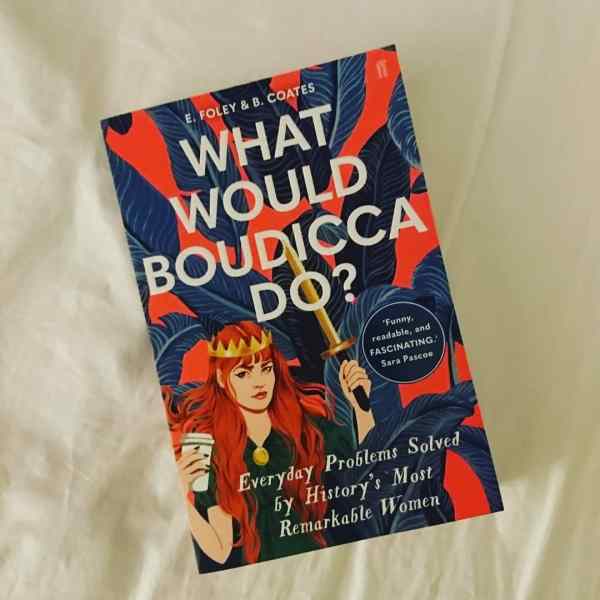
‘What Would Boudicca Do?’ by E. Foley and B. Coates

Boudicca

This was a New Year’s gift from a dear friend and is a fun whistle-stop tour of remarkable women from history. I have decided to read a chapter a day over the course of whatever it is that is happening (am I self-isolating, in quarantine, living out a course suspension? Who knows). So far, I have read condensed histories of Boudicca and Mary Wollstonecraft. Tomorrow, Mae West. The book is fun, digestible, full of nuggets of important intersectional feminist history and reading just a chapter a day gives me something to look forward to for tomorrow.

Duolingo

Duolingo

I downloaded and started learning through Duolingo before the corona-party started, and I am now even more committed to keeping at it. Currently, I am refreshing and building up my French and I have started learning Welsh from scratch. I was inspired to start by a friend who is on a 200-day streak and I loved his commitment to the cause. Additionally, I was stunned by the fact that whilst I’ve been chugging away nonchalantly speaking, reading and writing in English alone, over half the world’s population is bilingual. Language learning is going to become more and more essential for Britons, especially in light of our new (sob) relationship with the EU, so I think it’s important that learning new languages and, by proxy, understanding the cultural contexts of different countries and their peoples, becomes more of a priority. French has always been of interest to me (I have delusions of grandeur about moving to Paris) and Welsh is an important part of my own personal heritage. My mum is a native speaker, as is my Grandma on my Dad’s side. Hilariously, they speak different dialects so can’t communicate with one another. Nevertheless, learning Welsh has been an absolute joy. I can just about tell people that I am a vegetarian from memory (dw’in ddim yn bwyta cig) and it is just delightful learning how to speak and write a language that so liberally uses the letters ‘w’ and ‘y’. Duolingo isn’t perfect, but it’s exactly what I need it to be right now: good for my brain, good for my cultural awareness and a diversion from binge-watching TV. Speaking of which…

The Good Place, Netflix *slight spoilers*

The Good Place

Of course a bit of Netflix was going to feature. MW and I are on the final series of this hilarious sitcom that incorporates trashbagism with the central tenets of moral philosophy. The writing is sharp, effortlessly condenses complex philosophical ideas into twenty minutes segments, has truly mind-blowing twists and a range of characters that I absolutely adore. Up there for me is Jason Mendoza, a hapless dimwit from Jacksonville, Florida, who has a heart of gold. Jason is one of the most stupid and naive characters I have ever encounterd but is extraordinarily emotionally intelligent. Whilst head haunch Michael has to scam and manipulate everyone else to get them to do the right thing, Jason is receptive, honest and the most in touch with what he needs. Our time with the show is coming to an end and I am going to miss it enormously.

Going for a walk

The Park Nottingham

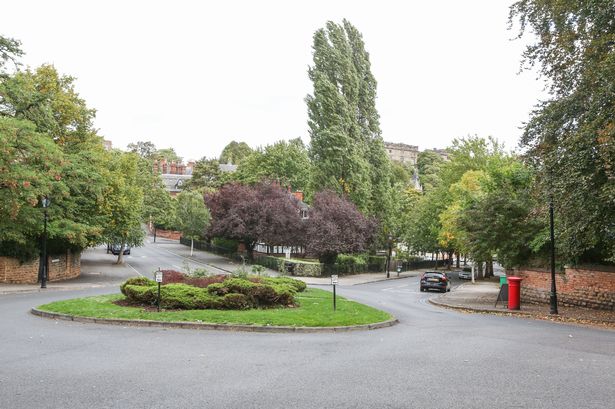
MW and I went for a half an hour walk around the Park Estate in Nottingham today. We saw the first of the cherry blossoms coming out; a cute dog with a bandage on its paw who was still tugging its owner along; beautiful Lady-and-the-Tramp Fothergill architecture; my favourite cedar tree; and we talked about everything and nothing. It started trying to rain at one point and we both arrived home with rosy cheeks. Going for a walk was such a nice break from the work of the morning. We felt refreshed by it, we’d had some good exercise, and it helped us to disengage from our screens.

Staying connected

Meme FINAL

I don’t mean this in a mindless, compulsive way: more like checking in with friends and family members on a regular basis, if you can. I have had hilarious and lovely chats with my mum and Grandma today, as well as touching base with a variety of WhatsApp groups where the memes, bad jokes and cute pet photos are flowing. I think it would be quite easy to become very insular and isolated at this time. As much as it is nice to hole up for a while, we need to stay connected and active in a healthy way. Additionally, we need to be mindful of the isolation others may be feeling, particularly older people who are having to self-isolate. Age UK run a befriending service that I volunteered for last year, and I am sure they would appreciate more people signing up at this time. I wrote more about the importance of building relationships with older people here

 Yoga with Adriene, YouTube

Yoga With Adriene

As many of you know from my incessant ramblings, I have sworn by Adriene Mishler’s YouTube channel for years. It is free, full of warmth, wisdom and fantastic yoga practices, and is a go-to for grounding and exercise. Life is always uncertain, but we are experiencing that all the more keenly at this point: yoga is an amazing way to breathe into the uncomfortable feelings, emotions and sensations that may arise, especially if you are prone to anxiety. Her 30 day yoga journey, released in January and prophetically entitled ‘Home’ (where I am spending an awful lot of time at the moment), is one I will be gravitating towards. She also announced today a new yoga playlist that contains videos of practices that pertain to uncertainty and crisis. Just twenty minutes of tuning into my breath and dropping down into my body makes such an incredible difference to my day.

Pema Chodron

Pema

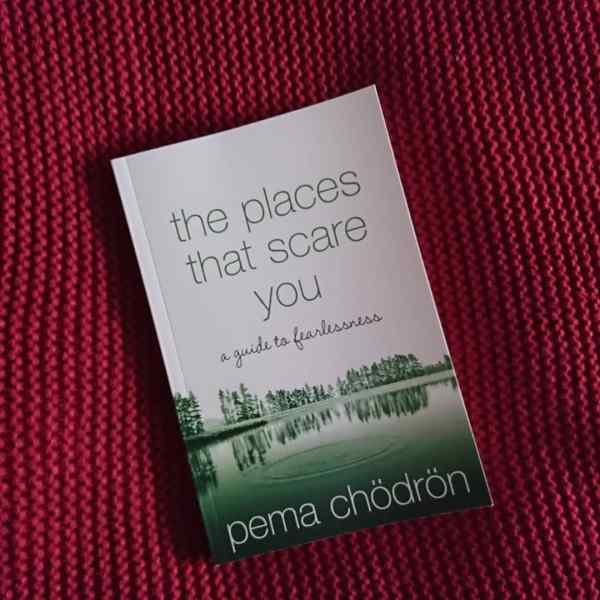
I couple my practice with reading a chapter of Pema Chodron’s ‘The Places That Scare You: a guide to fearlessness’. Chodron is a cornerstone of Buddhist wisdom and guidance, encouraging us to see our fears, anxieties and stuck points as opportunities for growth, self-knowledge and integration. Instead of pushing away or resisting old patterns that no longer serve us, we can get to know them, allow them to pass through, and grow our compassion for ourselves and, as a result, all human beings. We all struggle. We all have our edges that push us to our limits. In this time of collective uncertainty, chaos and fear, we have a real chance to see our lives clearly: we may not like what we see, but that’s OK. It’s better to be conscious of our choices than to live in ignorance or stuck in cycles of self-abandonment.

Music

Music

Over the past couple of days, I have revisited a lot of my musical favourites. I was partially inspired by Daniel Radcliffe’s ‘Desert Island Discs’ which was an absolutely delight. Since then, I have been listening to Father John Misty, Bob Dylan, Sade and Agnes Obel, with a little bit of Andrew Lloyd Webber thrown in (he did a Twitter poll for a song to perform and ‘All I Ask Of You’ from The Phantom of the Opera cam out on top. The whole thing is lovely: check it out). Normally at this time of the year I have my annual Stravinsky Rite of Spring binge due to the impending seasonal transition: it definitely still freaks me out even after all these years, but I wouldn’t be without it. I have started reading Tolstoy’s description of the Russian spring in Anna Karenina as a companion to Stravinsky. The violence and the vibrance of spring, with its renewal and rebirth, is both excruciating and profoundly beautiful.


N.B

I genuinely believe that coronavirus is forcing us to re-assess our social structures and our places within them. At no other time has such a compelling case been made for Universal Basic Income; the free childcare labour of grandparents has been shown to be so underappreciated; the undervaluing of the NHS, teaching, and ‘low skill’ jobs such as cleaning and delivery work has been exposed and challenged; rates of pollution dropped in China because of lockdown etc. This is a confusing and uncertain time, but it can be a fascinating time. I think it is giving us the chance to evaluate what most certainly is not working for us and what we can change in the most positive way. Business as usual wasn’t working before coronavirus, it certainly isn’t working now, and we would be fools to let this opportunity to enact progressive, socially aware and compassionate policies post-coronavirus to just slip away. I am not completely fluent in politics, I don’t know what the right answers are; but it is clear that we are in a unique situation where we can move to build a fairer, more just world where everyone is taken care of. I wish that people would stop worrying about market volatility as though it were something that wasn’t invented and perpetuated by humans in the first place. Let’s build something else.

Love Note Year in Review: 2019

Like 2016, 2019 has, in many ways, been a stellar year for me, but has been societally shambolic and difficult to digest. Here, I have written about some of the films, music, TV shows and podcasts that have been my companions along the way. These have all inspired me, taught me new things, expanded my thoughts and given me a richer understanding of the world and the people in it. Enjoy and do let me know what you think.

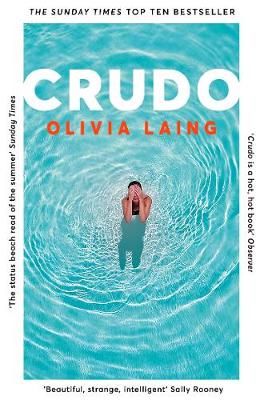
Book: Crudo by Olivia Laing

Crudo 2

I have read a few books this year that have completely blown me away, including Americanah by Chimamanda Ngozi Adichie  and Circe by Madeline Miller. Here, however, I want to discuss dearest Crudo. I bought this book from Shakespeare and Company whilst in Paris on the recommendation of a great friend with great taste. Crudo is a very short book but it is an absolute gut punch of hilarity, darkness and tenderness. Indeed, it’s hard to really pin down exactly what happens in it because it is such a heady mixture of consciousness, recollection, projection and commentary. For me, this spells perfection: I have always loved character studies and don’t think an exacting plot is always necessary all the time. What I can get to with Crudo is that it centres on Kathy, who is getting married but has all sorts of qualms and skeletons to negotiate with first. Almost every page I declared ‘I LOVE THIS BOOK’ as it twisted and turned unpredictably through the mental chaos of anxiety, exhaustion, eating, friendship, loss, Twitter and drunken chaos in beautiful Italian locations. It is a love letter to anyone who is in despair at recent political turns of events, sardonically laughing at the ridiculousness of the situation whilst also grieving and mourning the rise of hatred, fear and intolerance in the West. I think this book will benefit from many readings, and I cannot wait to sink my teeth into it again.

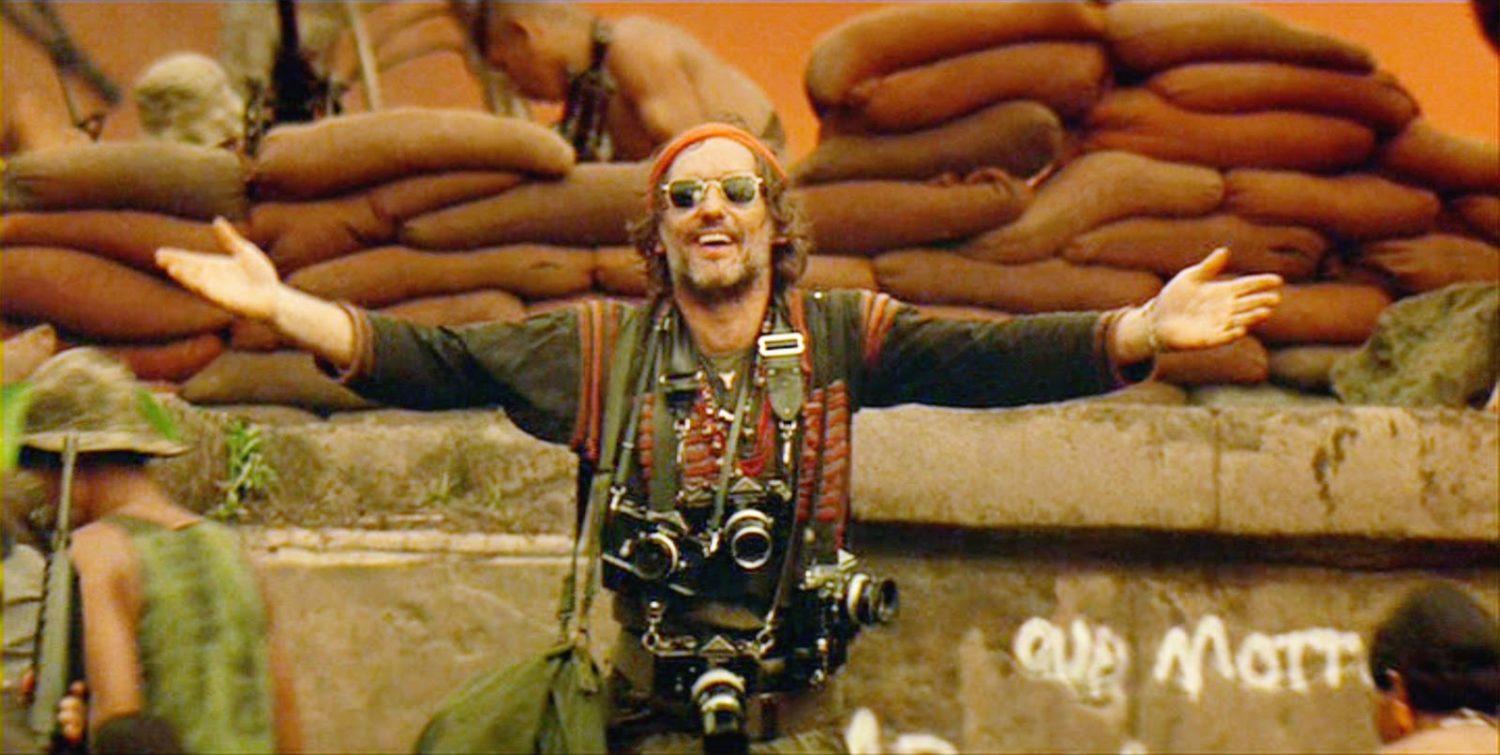
Film: Apocalypse Now

11365761493_ec95cd78d6_o-1500x755

I was horrendously late in joining this film’s bandwagon, but was so glad when I did earlier this year. From that first shot of palm trees and the withering notes of The End by The Doors floating in like a breeze before the chaos, I was completely enthralled. This film is one of the greatest examples of a disorientating, arthouse viewing experience blended with the hallmarks of an epic: dramatic helicopter sequences and iconic lines offset with simmering delusion and madness all the way throughout. One such line, ‘I love the smell of napalm in the morning’, is a case in point: the line is delivered so much more softly than I thought it would be. I imagined that line to be a yelled declaration in the heat of conflict, but it is almost a tender revelation: an insight into how war and nationalism has warped and disfigured these men’s emotional engagement with the world around them. Amongst a host of spectacular performances, and there really isn’t a bad one in the whole film, Dennis Hopper stood out for me. With cameras draped around his neck like beads, Hopper plays a sycophantic, voyeuristic photojournalist, an unnamed self-declared ‘little man’ who has been brainwashed by Colonel Kurtz and is always ready to get a picture. An embodiment of a culture and a media that will transmit horror without reflection, Hopper’s photojournalist is the keenest harbinger of the shit state that is our current retinue of communication and media affairs.

Music: Beware of the Dogs, Stella Donnelly

StellaDonnelly_BewareOfTheDogs

Music-wise, this year has been a stunner. With the returns of Lana Del Rey (who I wrote about here), Michael Kiwanuka, fka Twigs and Nick Cave amongst many others, and Billie Eilish’s brilliant debut, this year has felt particularly golden. I want to give my attention here to singer-songwriter Stella Donnelly, whose album Beware of the Dogs is undoubtedly one of my favourites from the brace of brilliance that was 2019. If there were to be any soundtrack to the #MeToo movement, it would be this album. From a sassy , beachy opener that holds a ‘grabbing’ middle-aged man to account, in what I would argue is a direct middle finger up to the likes of Donald Trump, to the searing and devastating ‘Boys Will Be Boys’, Donnelly keenly and devastatingly  confronts rampant toxic masculinity and a patriarchal culture that is riddled with sexual assault and violence. And yet, even with these serious concerns, the album is undeniably fun. With a contents list that features the maddening performativity of relationships, the deconstruction of awkward family dynamics and cake allergies in a register that nods to Noughties Lily Allen and Kate Nash (but with plinky plonky music exchanged for a wilting easy-breezy Australian nonchalance), this album feels assured, mature and endlessly witty. I can’t recommend it enough.

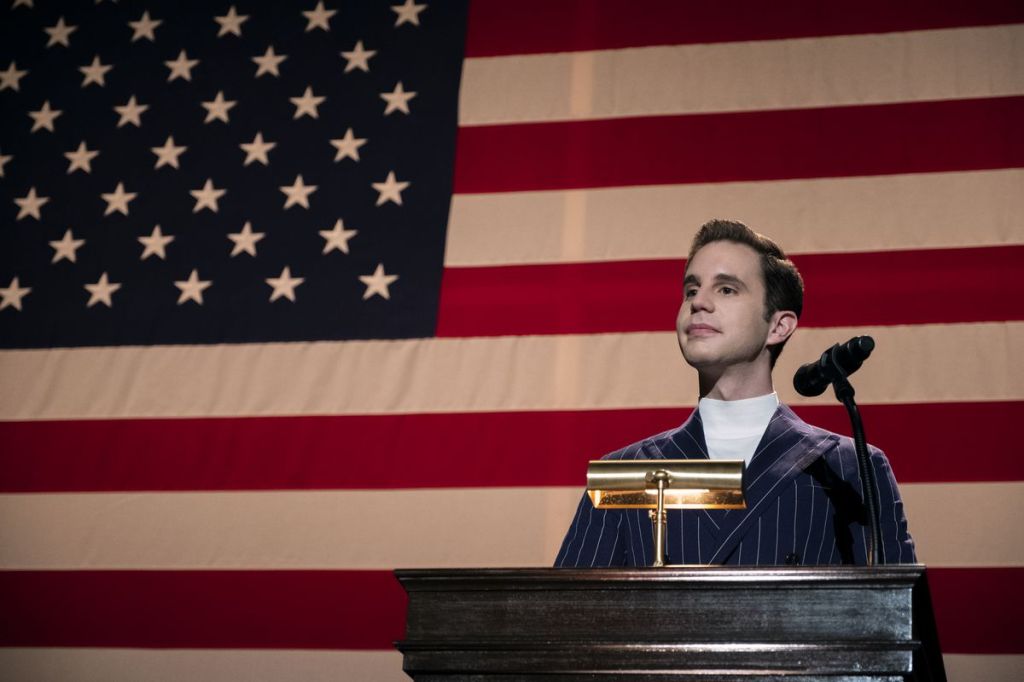
TV: The Politician, Netflix

The Politician

As the Golden Age of Television enters its late period of peak saturation, this year has once again been brilliant, if not slightly exhausting. Shows I loved included Stranger Things, Big Little Lies, The Real Housewives of New York City which, quite frankly, deserves an Emmy (that trip to Miami, in particular the first night, was the trip to end all Bravo trips), The Last Czars, which expertly wove dramatic reconstruction with historical analysis, and His Dark Materials. The Politician, made by the producers behind Glee (which I never much cared for) is an absolutely hilarious, obscene, outrageous drama which follows a group of Californian uber-rich teenagers taking part in a high school election campaign. Whilst this may ring with all the hallmarks of another glossy, predictable teen drama, The Politician is hilarious, piercingly dark and shocking, with some of the biggest knots of twists and turns I have seen on a TV show. We had to take a break after watching the first couple of episodes because it was so intense. Yet, the show’s astute political and social commentary feels absolutely essential in a ravaged post-truth Western world, in particular the stand alone episode ‘The Voter’, which serves as a microcosm of the lives of undecided and politically disaffected members of the electorate. With a soundtrack reminiscent of Western revenge tragedies and dramas, and a wardrobe department to rival seminal teen show Gossip Girl, The Politician is a sensory riot, and one of the most groundless viewing experiences I have had: I had absolutely no idea what was going to happen next or which bizarre direction the drama was going to take. This all serves to make it utterly compelling and brilliant television.

Podcasts

I have found it impossible to pick one podcast that has stood out as my favourite this year. Different podcasts serve very different moods and purposes, and there is no singular podcast to be drawn from my list of regulars and favourites.

Reasons

Reasons to Be Cheerful – Ed Miliband and Geoff Lloyd’s podcast forms the audio backdrop to my Monday mornings. This podcast has introduced me to many exciting concepts and policy ideas that I hope will become a part of the fabric of our politics in the future. Favourite episodes included topics like social care for the elderly, tax on frequent fliers, music and history education, the power of protest, community organisation, architecture and town planning and sustainable fashion. I am also exceedingly proud that my email on green fashion alternatives and tips was read out by Ed himself. #goals

Dressed.jpg

Dressed: The History of Fashion – This podcast fills the gap that glossy magazines have left in my life (I still buy the September issue of Vogue and the December issue of Harper’s Bazaar but that’s just about it). Instead, I have a podcast full of incredible interviews and explorations into the personal and cultural stories of my favourite designers and some of the clothes I wear on a day-to-day basis. I have enjoyed listening to episodes on The Met Gala, fashion and physique (mapping the female body), the history of the penny loafer, the biography of Cristóbal Balenciaga, the history of the French haute couture industry (Worth, Vionnet and Louis Vuitton being some of the most interesting stories) and a compelling conversation with Dr Monica Germanà about Bond girl style, looking at sexual, racial and colonial implications of women’s bodies and women’s dress in the franchise. I have shunned James Bond for many years but this conversation, with its focus on masculine and imperial anxiety, has shifted my perspective entirely.

DIDs

The Desert Island Discs Archive – This year, I discovered the delights of conversations and the musical favourites of some of Western culture’s greats. Tucked away in the archive, I found Powell and Pressburger, Leonide Massine, Tennessee Williams and Lauren Bacall amongst others. Gregory Peck was as dreamy as I hoped he would be and had a great story about the filming of Moby Dick, which coincidentally was shot down the road from where my grandparents lived in Wales; Jessica Mitford was hilarious and sassy; Roald Dahl was a bit of a snob; and P L Travers wasn’t as scary as I thought she’d be and picked a list formed exclusively of recordings of poetry being read aloud. One such recording was of Alec Guinness’s reading ‘Little Gidding’ from T.S Eliot’s Four Quartets, which was a balm I never knew I needed. Utterly transporting listening.

One last thing…

Joseph Campbell and the Power of Myth, Netflix

Joseph Campbell

Originally broadcast in 1988, and which I watched on Netflix this year but has now been removed, this series of six conversations in six episodes between comparative mythologist Joseph Campbell and Bill Moyers is one of the most fascinating TV shows I have ever seen. Combining conversation, story-telling, animation, archive footage and film clips, this series takes a deep look into the psyche and collective unconscious of human beings. Campbell takes us on a bewildering but utterly brilliant journey through indigenous ritual, Jungian archetypes, the world religions, Western capitalism, the sacred feminine, the interplay of symbols and allegory, the sublime, the liminal passage and many other areas to present a multi-faceted, deep and intriguing portrait of human behaviour, interconnectedness and culture. Every single episode had something profound to learn from it, but the episode that stood out to me the most centred on animal-human relations, including the role of sacrifice, the transcendence of Death and the horror of a world where human beings are divorced from where they get their food, their clothing, almost everything. Additionally, I loved Campbell’s ideas that stemmed from the Buddhist teachings: that the present is all there is, and in the present, when you sit wholly aware, unblinkered and unfettered from trappings of ego (fear, envy, jealousy, anger, boredom etc.) we are witness to and subjects of, what could be called, the divine. I have never thought of myself as a religious person, and I still don’t think I am, but I found immense power in what Campbell had to share. There are iterations of ancient behaviours and beliefs all around us, and Campbell’s myth work is a great source of inspiration and an anchor when the ocean of chaos, anxiety and societal disruption feels too overwhelming. His work prioritises the power of metaphor beyond what is material, and it has enriched my life immensely.


Masculinity in crisis: ‘The Catcher in the Rye’ and ‘Norman Fucking Rockwell!’

Trigger warning: this essay has mentions of suicide, self-harm, sexual harassment and sexual abuse.

From the cultural grapevine, I came to be aware of The Catcher in the Rye as both a young man’s coming-of-age-story and, through fraught and bitchy Twitter threads, that liking this novel, in particular men liking this novel, was a hallmark of being a ‘nice guy’ or possessing generally bad literary taste. I don’t take my cues from what my fellow literature graduates lounging about on Twitter say is good or worth reading, but I can honestly say that I did avoid The Catcher in the Rye until recently. I am a big fan of American Literature and writers: Maya Angelou, Kate Chopin, F. Scott Fitzgerald, Arthur Miller, Maggie Nelson, Nathaniel Hawthorne are big favourites,  and the length of Salinger’s novel is hardly anything to get stressed about. Yet, the novel does carry somewhat of a baggy reputation for centring on a privileged young man getting into scrapes in New York and being generally ‘rebellious’. Like Jessie Thompson, in an essay for Penguin, it didn’t necessarily feel like a priority for me to read it.[1] That was, until, my boyfriend told me it was one of his favourite books. In fact, the first time I had a conversation about The Catcher in the Rye was with a friend at university; he said that it was the sort of writing that made him want to write. How could it be that two men I knew well, trusted their opinions, could like a novel that was elsewhere reviled and pointed to poor cultural taste?

At the beginning of the summer, I read the novel for the first time. What I found was sardonically funny, obviously full of angst, but also a profoundly moving piece of writing. I read the story of a young man who feels at odds with the world around him, who sees education as pointless in a world of privilege and bullshit; who suffers from intense self-hatred, and finds his only solace in the company of his sister and some nuns. Although Salinger has Holden Caulfield compare himself, through negation, to David Copperfield, the nineteenth century figure he reads most as an iteration of, I would argue, is Raskolnikov from Dostoevsky’s Crime and Punishment. Of course, the plots of these novels are very different, but the same disillusionment seeps through both. Where, however, Raskolnikov fashions his antipathy, anger and resentment into murder, Caulfield directs his inward; as much as he hates the world and the people in it, famously using the moniker ‘phonies’ to describe people throughout the novel, he struggles with himself the most. So much so, he tends towards self-harm: having obsessive thoughts about being shot (‘what I’d do, I’d walk down a few floors- holding onto my guts, blood leaking all over the place’), purposefully winding people up so that they’ll hurt him (the fight with Stradlater on p.39 sees Caulfield provoke a violent response for two pages), and wandering around Central Park in the freezing cold having wet his head, thinking about his dead brother Allie, ‘pneumonia and dying’.[2]

Not only did this novel move me, but it became obvious that reading it was vital. I have long joked about ‘masculinity in crisis’ when I see or experience sexist behaviour, and I think it is as important to laugh at the likes of Donald Trump as much as to resist and protest him, his disgusting ideologies and all that he represents, with anger and derision. However, it is important that we do have serious, constructive conversations about masculinity and what it means to be an emotionally healthy man. In The Catcher in the Rye Caulfield is explicit about his depression, stating that ‘what I really felt like, though, was committing suicide. I felt like jumping out the window’. It could not be clearer that Caulfield does not see his life as worth living. Furthermore, towards the end of the novel, after hastily leaving his old teacher Mr Antolini’s apartment after an incident verging on sexual harassment, Caulfield reveals that ‘when something perverty like that happens, I start sweating like a bastard. That kind of stuff’s happened to me about twenty times since I was a kid. I can’t stand it’.[3] It is heavily suggested here that he has suffered sexual abuse and harassment as a child which, along with the trauma of losing his brother and seeing a fellow student kill himself, serves as an understandable and very deep root for his depression and disaffection. This novel is not the ramblings and larking about of a ‘rebellious’ teenager, even though it is at points dry and funny; it is about a young man struggling to cope with a plethora of horrifying events. It surprises me that the novel has been, by certain factions, culturally maligned; almost in tandem with the way in which men’s mental health has been diverted from and underplayed since time immemorial.

And yet, what is so beautiful about The Catcher in the Rye is that in spite of Caulfield’s trauma and his anger with his peers and the adults in his life, he evidently cares a great deal about his sister, Phoebe, and children in general. Phoebe is integral to Caulfield’s happiness, and he finds support and comfort in her: ‘Old Phoebe didn’t say anything, but she was listening. She always listens when you tell her something’.[4] Phoebe is presented as an old soul in spite of her youth, who will give him the space and time to talk and be heard. He refers to her repeatedly throughout the novel, even buying a record for her pre-emptively, before accidentally breaking it. He tells her that the only thing he ‘wants to be’ in life, is stood at the edge of a cliff:

‘What I have to do, I have to catch everybody if they start to go over the cliff – I mean if they’re running and they don’t look where they’re going I have to come out from somewhere and catch them. That’s all I’d do all day’.[5]

Caulfield effectively tells Phoebe that he wants to act as some kind of protector or safety net, preventing children from falling to their deaths whilst they are running around and having fun. In spite of all of the pain he carries around with him, Caulfield is ultimately someone who wants to help, who wants to be of service to others, in particular those who are young, innocent and temporarily free from the trappings and traumas of adulthood. It is a really noble aspiration. This cements the idea, for me, that this is a novel about a young man having serious difficulties orientating himself in a world that has made him suffer, full of people who do not acknowledge his and, most likely, their own pain.

*

When I first planned to write about The Catcher in the Rye, I thought a worthwhile comparison could be made with Sylvia Plath’s The Bell Jar, a novel with a challenging and dark insight into depression, trauma and recovery in a young woman. This novel shook me, scared me and deeply connected with me when I first read it in 2014. I think it is important that if we take the representation of mental illness seriously in The Bell Jar, the same gravity should be extended to The Catcher in the Rye; it should not be undermined because it focuses on the suffering a young, white man. When we are living in the middle of an epidemic of young men taking their lives, understanding the root cause of such terrible pain is essential.[6] As such, I am reluctant to draw the two into such a completely direct conversation here, because I do not think it is wise to compare and contrast the experiences of mental illness between men and women in the space of a blog post. The roots of both, I believe, lie, to an extent, in the way in which patriarchy and capitalism prioritise a rampant toxic hyper-masculinity that leaves no place for the more traditionally feminine realm of feelings and emotions. Compounded with trauma, loss and the myriads of emotional pain that a human being is able to experience, depression and anxiety abound. Of course, men and women experience all of this in different ways, and it is important to remember and honour that distinction. Luckily, something else came along only this week that offers a much keener opportunity for comparison of masculinity, whilst also, clearly acknowledging Plath and the experience of women.

NFR

On 30th August 2019, Lana Del Rey released her sixth studio album Norman Fucking Rockwell! It is brilliant in so many ways and whilst I’ve loved all of her work, her interplay of satire and authenticity in this album is at its most sophisticated. Upon listening to it, I noticed that the people and relationships she discussed were separated and mingling between several positions. We had Del Rey’s typical ‘golden bad boy’ and ‘a sad girl in a mess in a party dress’ dynamic; we also have a withering partner who half-lovingly mocks her ‘man-child’ partner who indulges and wallows in his own misery, blaming his bad poetry ‘on the news’.  But we also saw something more obviously serious. We have repeated references to a man struggling with his wellbeing and sense of self in ‘California’, a man who pretends to be stronger than he is, who wishes he was ‘doing better’. In the same breath Del Rey presents a woman who is a fixed point of strength and comfort, telling him ‘And honey, you don’t ever have to act cooler than you think you should / You’re brighter than the brightest stars’. She acknowledges the pressure that this man is under to appear and conduct himself in a certain way in the world, in particular as a strong, cool man who has no insecurities or worries. She is there to tell him, from a position of acceptance, that he is OK, just as he is.

Del Rey expands on this further, and gloriously, in ‘Mariners Apartment Complex’. She tells her partner ‘You lose your way, just take my hand / You’re lost at sea, then I’ll command your boat to me again / Don’t look too far, just where you are, that’s where I am / I’m your man’. This is such an important, playful line because she holds the position of a healthy, anchored woman in this relationship, and yet refers to herself as ‘your man’. It harks to the Leonard Cohen song ‘I’m Your Man’, where Cohen unpicks what it means to be a man in a romantic relationship, by effectively declaring to his partner that he’ll be anything she wants him to be: ‘If you want a driver, climb inside / Or if you want to take me for a ride / You know you can / I’m your man’. Of course, in a healthy relationship, such a degree of self-effacement is problematic, but Cohen’s play with what it means to be a man is nevertheless important. What both singers suggest is that what it means to be a healthy man is a lot more fluid, and maybe, perhaps, feminine, than a dominant patriarchal culture suggests. By feminine, I don’t mean necessarily a defined gender category, but something more archetypal: that which is nurturing, loving and spacious; as opposed to the masculine that is determined by boundaries, order and discipline. All of which, I might add, are absolutely fine and necessary. However, when what is masculine is privileged and prioritised culturally and societally, these morph into authoritarianism, perfectionism and aggression and their offsets: disdain for emotion of any kind, depression, isolation and alienation. In Norman Fucking Rockwell! Del Rey suggests that the conception of hyper-masculinity that her lovers struggle with can be deconstructed; similarly, she presents herself, in these songs at least, as an embodiment of both masculine and feminine, yin and yang; a grounded, integrated woman in a position to offer support, understanding, protection, love and hope. Again, I want to emphasise that this is not a limiting conception of what it means to be a woman or a man, but are archetypal facets that exist in and embody all human beings, no matter which gender you identify with.

As such, we can see that it is, perhaps, not an accident that Holden Caulfield turns to the comfort of his sister and some nuns during his deepening existential break down. As esteemed Jungian psychotherapist Marion Woodman suggests, over centuries we have culturally disavowed, repressed and persecuted the feminine; and yet, the feminine is what we need and yearn for to bring balance to the patriarchal shit show that continues to cause such violence and misery. It was so in the 1940s of The Catcher in the Rye as it is today, as explored in Norman Fucking Rockwell!. After meeting the nuns and giving them money, Caulfield says:

‘I couldn’t stop thinking about those two nuns. I kept thinking about that beat-up old straw basket they went around with when they weren’t teaching at school […] that’s what I liked about those nuns. You could tell, for one thing, that they never went anywhere swanky for lunch. It made me so damn sad when I thought about it, their never going anywhere swanky for lunch or anything. I knew it wasn’t too important, but it made me sad anyway’.[7]

He compares the nuns with other women he knows, his mother and his friend’s mother, who would not get involved with any charity work akin to the nuns’ collecting, if it meant standing out in the cold, being bored or not getting any recognition for giving up their time (or, as Caulfield describes it, ‘the only way she could go around with a basket collecting dough would be if everybody kissed her ass’). I would argue that Caulfield feels sad because the nuns, their charity, their kindness to him and their interest in literature (all displayed in the previous chapter) are marginalised and excluded from ‘swankiness’; the trappings of patriarchal capitalist society, with its expensive restaurants, and its hierarchies predicated on wealth and social class. Furthermore, on a deeper level here, I think he mourns the superficial incarnation of femininity in women that props up the hyper-masculine status quo that being ‘swanky’ represents. He feels sad that the simplicity, honesty and good faith of the nuns is not rewarded or as valuable as status.

Of course, Del Rey’s conversation about masculinity and femininity does not end with ‘Mariner’s Apartment Complex’: she pertinently turns her attention to the specific suffering and demons that women carry with them. In the album’s last searing and deceptively simple waltz ‘hope is a dangerous thing for a woman like me to have – but I have it’, she references The Bell Jar writer by name, as she has been ‘ tearing around in my fucking night gown /  24/7 Sylvia Plath’. Like The Bell Jar, which is full of the vague promises offered by fashion magazines, internships, graduate school and ski trips (the ‘swanky’ mentioned in The Catch in the Rye), in this song Del Rey references the vacuous but toxic draw of superficial perfection: the world of debutantes, pink dresses, bright smiles, yachts and all. She does not find belonging in that world, instead finding home on the stage. And yet, she softly sings that she is ‘A modern day woman with a weak constitution, ’cause I’ve got / Monsters still under my bed that I could never fight off /A gatekeeper carelessly dropping the keys on my nights off’. This suggests that in spite of the work she has done to represent everything that a modern woman should- success, renown, independence, sexual freedom and financial stability- she is still plagued late at night or when she feels emotionally and spiritually weak by the monsters under her bed. The insecurities, fears, shadows and darknesses of psyche that, to an extent, we can never fully get rid of. The song is a defiant ode to the womanhood that is so rejected in patriarchal culture, but also a tentative and terrified look into the malevolent eyes of the difficulties, restrictions and fears women live with and have learnt to internalise.

I believe that The Catcher in the Rye and Norman Fucking Rockwell! speak to each other well on this important issue of masculinity and male pain. I consider the two to be allies in this regard. I think it is important that both texts highlight the potential of the feminine to relieve suffering: if men and women are going to be free from both subtle and overtly blatant violence and injustices of patriarchy, a re-examination of what it is to be a man is essential, which involves re-integration of the much maligned feminine (think about every single time a boy has been told not do x ‘like a girl’). I think a cultural re-reading of The Catcher in the Rye would be extremely useful, so that we can collectively learn not to minimise men’s pain, reducing it to ‘rebelliousness’ or simply angst. Furthermore, I think it is important that Del Rey has made the effort to distinguish clearly between the different types of male and female pain, whilst presenting so many positions and perspectives on her album. She has been careful to not pit men and women against one another, weighing one type of pain or suffering as more important, which I think is a very mature and brilliantly-handled.


[1] https://www.penguin.co.uk/articles/2019/jun/i-thought-catcher-in-the-rye-was-just-for-obnoxious-teenage-boys.html

[2]The Catcher in the Rye, J.D Salinger, (London: Penguin, (1958) p.93; p.140

[3] Ibid., p.174.

[4] Ibid., p.151.

[5] Ibid., p.156.

[6] ‘Suicide is the single biggest killer of men aged under 45 in the UK. In 2015, 75% of all UK suicides were male’ https://www.thecalmzone.net/help/get-help/suicide/ [accessed 4th September 2019].

[7] Ibid, p.103.

Abyssal Cuteness

This essay was first written and published on Everyday Analysis in 2014.

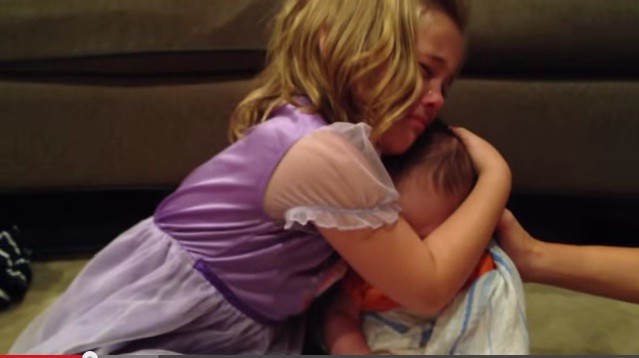
One of the latest videos to go viral in recent weeks (note: this video was also published in 2014 and now has 42,195,765 views) centres around a young girl howling with despair at the thought of her baby sibling growing up, and her own fear of dying ‘at one hundred’. You can watch it here and by clicking on the image below:

Abyssal Cuteness

The general cyber consensus of this video is that this is a moment of undeniable ‘cuteness’, a claim that is perpetuated by saccharine blogging sites who share the video, for example ‘Hello Giggles’. ‘Cuteness’ may, perhaps, warrant its own analysis for its pervasive presence on the internet, with the innumerable animal/baby/animal and baby/ baby and animal and baby animal videos that continue to appear on social media. Here, however, I would make the case that the video captures an abyssal moment in this girl’s life where, like King Midas capturing Silenus the companion of Dionysus, we learn that ‘the very best of all things is completely beyond your reach: not to have been born, not to be, to be nothing’.[1] She does not want her brother to grow up and stop being ‘little’, and she simultaneously bemoans her own inevitable aging that will ultimately lead to her death.

The terror and horror of her and her brother’s existence is conveyed not through her language but in a choking cry half way through and at the end of the video, which the subtitles describe as ‘inaudible’. She is audible, because we can hear that she makes noise, however the noise she makes in her terror is seemingly outside of language and also beyond our ability to articulate in language. The girl, therefore, embodies the Dionysian impulse where, as described by Nietzsche, ‘the whole excess of nature in pleasure, pain and knowledge resounded to the point of a piercing scream’.[2] Her panicked coughing moan is the expression of her pleasure at the baby’s ‘cute smiles’, her affection for him, which is repeatedly conveyed in her kissing his forehead, and her pained fright at her recently acquired knowledge that both she and him are aging and finite.

This expression of the Dionysian that sees the girl intoxicated by the truth of her existence and thrown into self-oblivion is, however, still engaged in a dialectical tension with its alter drive, the Apollonian, without which it could not emerge. Nietzsche describes the condition of the Apollonian as ‘an existence in which everything is deified, regardless of whether it is good or evil’.[3] Although in western culture we no longer exist with a pantheon of anthropomorphic gods, I argue that an economic system of consumer capitalism sees every literal ‘thing’ similarly deified, spawning an exuberant culture of commodities which construct and offer identity. This is prefigured in the video in the princess dress that the girl wears, an item that enforces societal norms of gender and hierarchy which, therefore, enables a moderated self for the girl to be constructed. The Dionysian impulse that envelopes her destabilises this appearance of heteronormativity which appears to have structured her life.

With reference to Raphael’s painting Transfiguration, Nietzsche suggests that the Apollonian and Dionysian are reciprocal and depend upon each other. This is achieved because the Apollonian gives way to the Dionysian, which is redeemed with the reinstatement of the sublime Apollonian image. In this video, the re-establishment of the Apollonian, which has already been prefigured in the girl’s princess dress, comes in the way this video has been elevated to a position of ‘cuteness’, from the comments on YouTube to the chat shows that have had ‘exclusive’ interviews with the girl post-abyss. Whatever ‘cuteness’ may mean, the perpetuation of this word perhaps allows people, or more specifically adults, to semi-patronisingly reflect on this girl’s struggle with the chaotic state of her existence in this abyssal moment. However, it is not beyond the realm of possibility that ‘cute’ has also become a barrier for those whose lives are too structured by the Apollonian culture of ‘things’, and who resist the tormenting Dionysian impulse that, we have come to understand, is never too far away.

[1] Friedrich Nietzsche, The Birth of Tragedy trans. Douglas Smith (Oxford: Oxford University Press, 2000), p.27.

[2]Ibid, p.32.

[3] Ibid, p.27.
Love Note – Beach Books Reviews

Whilst on holiday, I managed to get through three books out of the stack of four that I took with me and, as you can probably imagine, I took great pleasure in spending the majority of my day reading. I was helped along by the books themselves, and what started off as me playing catch up with the most popular contemporary literature from the past few years became an interesting immersion in literary bingeing. Thanks to a combination of formal and linguistic trickery, the novels I read signalled to me that binge-culture has made one giant leap from television to literature. Of course, there have been many page-turners that people have read at record speeds, with many others being described as un-put-downable, I’m thinking Gone Girl, The Da Vinci Code, every murder mystery or thriller ever published. But, there is something to be said for the novels currently trending that have a swept-away-in-one-sitting quality to them that is immensely enjoyable, but also indicates that we are, perhaps, as bad as ever at taking our time to enjoy our media and entertainment, allowing the experience of enjoying them to mature and mellow over the course of days or weeks. This is not a criticism per se, but something I became quite aware of.

Here are my reviews of the novels I managed to read, and I would love to hear your thoughts!

Normal People – Sally Rooney

Normal People

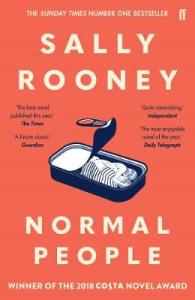
I enjoyed reading this novel more than I actually enjoyed the novel itself. The lack of speech marks is one of the most discussed and obviously experimental aspects of the novel and there are a number of reasons why I think Rooney opted for removing formal punctuation. Primarily, its absence helped to propel the pace along as quickly as possible. Speech, internal dialogue and description in the novel melt into one another seamlessly, and before I knew it I was flying through the novel at electric speed. The subtle mingling among and between Connell and Marianne’s internal and external worlds is compelling, and perhaps goes some way to perform the confusion and fluidity of their romantic entanglements. These were powerful, to an extent: Connell’s struggles with social status, class and privilege combined with Marianne’s abusive family trauma form a murky, disorientating bedrock to their sexual and emotional relationship. Yet, whilst they were immersive, these entanglements began to wear thin for me. Of course, culturally and artistically we are rarely given an insight into healthy, responsible relationships to aspire to, but Connell and Marianne’s story really did begin to feel like a rather prolonged game of kiss chase that could have been resolved with some honesty and proper communication. Whilst I enjoyed the fast pace, the story became increasingly frustrating.

The novel has been revered as a refreshing insight into modern relationships, yet all I saw was prolonged adolescence. The question that arose during my reading of it was: why don’t people talk to one another honestly about what they want, need and expect from a relationship? Of course, many people do not have the answers to these questions themselves, which is why the romantic landscape has always been a mass of tension, confusion and a channel for our own neuroses, precisely because the terrain is so horrifyingly vulnerable. I think I would like to see stories where people grapple more with the deeper core fears that relationships can elicit than indulge in surface-level dabbling. This is because for Connell and Marianne, like with everyone else, there is ample emotional material to explore. For example, it is heavily suggested that Marianne has an eating disorder, but there seemed to be no exploration of this, and I think with such a big, important and truly devastating area of mental health, vague allusions are irresponsible. Normal People is absolutely compelling formally, but the story and characters lacked the maturity and deep excavations of relationship politics that I may have come to the novel expecting.

Daisy Jones and The Six – Taylor Jenkins Reid

Daisy Jones

Just as Sally Rooney fiddled with formal punctuation to create a sweeping, pacey narrative for Normal People, Taylor Jenkins Reid did away with conventional prose altogether to construct the mock-oral history that is Daisy Jones and The Six. The language is presented like a play or a screenplay, rapidly interchanging between characters, their opinions and their contrasting perceptions of how past events unfolded.  This, as with Normal People, makes for an extremely fast-paced and romping read, and I scoured my way through the drug-filled emotional and musical rollercoaster that is the rise and collapse of fictional rock band ‘Daisy Jones and the Six’. It does not surprise me at all that Reese Witherspoon picked this up for production so quickly: the screenplay layout of the novel lends itself to a visual medium so well, and the construction of authenticity and, almost, reality of this fictional band is begging for actors and musicians to literally flesh the whole thing out. Additionally, the novel harks back to the seventies and the loves, losses, betrayals and creative headiness of the Fleetwood Mac era; a band history integral to the fictional machinations and dalliances that we see unfold in the novel. It manages to effectively combine warm nostalgia, with, and rightly so, a thorough dissection of emotional pain, addictions and toxic relationships, and I think it is on the whole successful.

The novel follows Daisy Jones, the child of rich, famous and self-absorbed parents who do not seem to care about their only daughter. She seeks refuge in narcotics, drinking and a rock and roll groupie lifestyle on the Sunset Strip at the age of fourteen. Billy Dunne and his brother Graham hail from small town Pennsylvania; their father leaves them early on in their childhoods, and as teenagers, they found a band that goes on to be called ‘The Six’. Billy develops addictions to alcohol, drugs and sex with groupies, whilst his loyal, passionate and amazing wife Camila waits at home for him. In fact, Camila, for me, was the best character in the novel. Whilst Daisy is super beautiful, glamorous and an emotionally tortured Bambi, Karen Karen is a veritable badass, Graham is a sweetheart and Billy is an endearing and somewhat extremely self-righteous mess, Camila is an unwavering beacon of solidity and support whilst the people around her flail and crash about, high on concoctions of drugs, fame, creativity and self-hatred.

Whilst there are many excellent pearls of wisdom and sassy quips in the novel, exploding bullshit around sexism, music, friendship and love, one of her quotes stands out to me the most: ‘I think you have to have faith in people before they earn it. Otherwise it’s not faith, right?’ She supports and believes wholeheartedly in the best versions of her loved ones when they’re at their absolute worst, even when that has meant she has suffered as a consequence of their actions. There are so many times when she could have chucked in the towel with her relationship with Billy, and some would argue that perhaps she should have. Camila, however, doesn’t tolerate terrible behaviour and she definitely does not stay in a relationship where red flags abound: she sets boundaries, expectations and trusts in her husband’s best self and ultimately propels him on his road to recovery. Sure, her story isn’t a romanticised and drug-addled one, which I think, despite a lot of its efforts, the novel still constructs for the enigma that is Daisy Jones, Camila is strong, knows herself and is the responsible adult we should strive to be. It is for this reason that the ending of the novel is incredibly bittersweet and I would love to discuss it here and with people at some point. Send me your thoughts please!

Circe – Madeline Miller

Circe extract

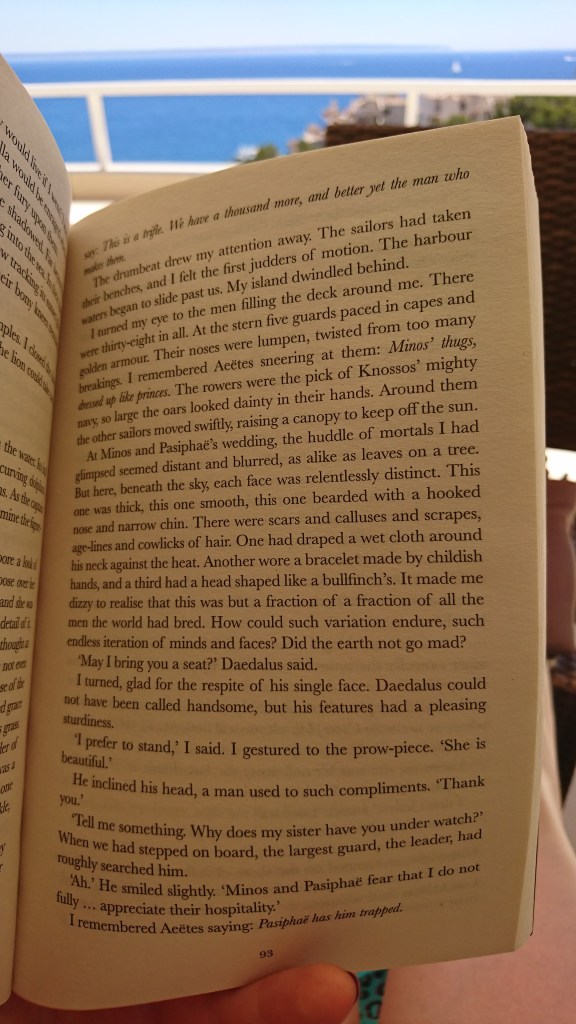
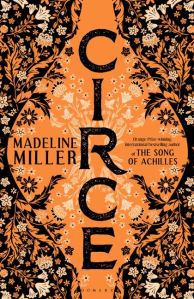
This was hands-down my favourite out of the three books I read (and the only one I thought to take a holiday snap of!). It was heart-wrenching, magical, modern and yet felt beautifully and brilliantly in-keeping with the ancient framework from which it hailed. The story, whilst a reimagining, felt bedded in Homer’s mythology: all the key ancient rituals and practices were present, for example xenia, or guest-friendship, which is illustrated so beautifully in the novel as a dance of wits, manners, generosity and covert motive-seeking between host and visitor. It enlivened what the original treats as a societal staple, illuminating it with nuance and tension. We also got a crash course in the wars of the Titans, various mythological characters like Daedalus, Medea, Jason and Ariadne, alongside the predictable and anticipated arrival of Odysseus, and the very unpredictable arrival of Penelope and Telemachus (I loved this!). The novel was able to powerfully break apart some of the simplistic tropes that the character of Circe has carried with her for thousands of years. No longer does she carry the motiveless malignity of the original: the scheming nasty witch woman who seduces Odysseus and turns all of his men into pigs. She is sensitive, attuned to the natural world, desperate for approval she never gets, uses violent magic in self-defence, but isn’t immune to the fear and anger-based trappings of ego. Ultimately she becomes the source of her own very particular, self-cultivated power, and it is immensely joyful to read.

I did disagree, however, that Miller presented Circe as some two dimensional empowered ‘superwoman’, as reviewed by The Times.[1] This is a novel where the central protagonist constantly aches: she aches for belonging, she aches from the sweetness and loss of love, whether that’s with a partner, siblings or children, and she aches from the bullying and torture at the hands of her horrible family and the all-powerful, oftentimes selfish, meddling gods. This does not mean to say she is weak, but she is certainly not presented as some all-powerful, sassy superwoman. What strength Circe has is developed from her ability to endure, and what a whole host of trials she is forced to deal with. Whether it’s being confined to an island, acting as a midwife at the birthing of the Minotaur, living under the wrath of Athena, being manipulated by Hermes or being raped by sailors, this woman is put through the absolute wringer. She emerges all the more patient and trusting in herself and her capability of putting up with bullshit, but, again, not a superwoman, whatever that even means.

What I loved about this novel was that Miller actively redistributes the motiveless malignity accusation with which Circe has been cast around the hosts of horrors that is the supporting cast of gods, demigods and men, who act with violence, without fear of repercussion, because they can. She is repeatedly trapped and confined by the whims and desires of others and, of course, fate itself. Over the course of the novel, she learns that in spite of having magic, she is powerless to resist the power of the gods, the desires of the human heart, and the unrelenting changeability that characterises life, whether it’s defined by mortality or immortality. 300 years pass over the course of Circe’s story, making it perhaps one of the most comprehensive coming-of-age stories I have ever read, because it spans enough to time to develop that most important hallmarks of maturity: perspective. Maybe that’s why so many of us never get there.

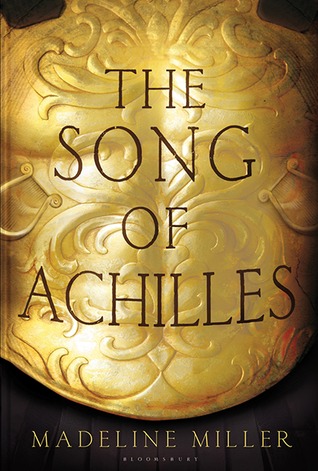
I really could not have enjoyed this novel more and I am racing to get a copy of Miller’s early novel ‘The Song of Achilles’, which tracks the relationship between Achilles and his lover, Patroclus.

Song of Achilles


[1] ‘Circe by Madeline Miller – back as superwoman’, Siobhan Murphy https://www.thetimes.co.uk/article/review-circe-by-madeline-miller-back-as-superwoman-37kctxgss [accessed 10th July 2019].

Love Note – Beach Books

I love reading but, I am going to confess, I am pretty bad at investing in and dedicating time to contemporary literature. I have spent many years covering English and Russian classics from the nineteenth century, being swept away by Shakespeare and his (mostly male) contemporaries and reading novels, poetry and plays from the early twentieth century. Aside from the latest releases from Naomi Klein, Arandhati Roy and Margaret Atwood, I have tended to swerve away from contemporary literature for a long time and I don’t think this is particularly wise. I think reading amazing historical works of literature is always going to be important; but I don’t think this should be completely at the expense of what people are producing and writing right now.

Therefore, to accompany me on my beachy holiday (3 days and counting!) these are the contemporary novels I am packing with me:

Circe

Circe – Madeline Miller, 2018

Why I’m excited about it:

This is my get out of jail free card: Circe is a re-telling of the Greek myth of Circe, one of the most interesting and famous characters in Homer’s Odyssey. So yes, even though the subject matter here is veritably ancient, it promises to be a contemporary, new perspective of a controversial character. If you’re not in the know, in Homer’s work she turns Odysseus’s men into pigs, seduces Odysseus, puts him and his men up for a year and loses some of her power. I studied Classical Civilizations at A Level where we read the Odyssey in its entirety, and I was always healthily sceptical of Odysseus’s heroic credentials (I am more of an Aeneas fan, but to each their own). In particular, I think the way he gets off with women left right and centre whilst his poor wife Penelope stayed at home for twenty years fighting off suitors is pretty questionable (read Margaret Atwood’s The Penelopiad for more). I am excited to see where Miller takes the Circe character and her story from Homer’s narrative: the whole single, powerful woman must be a witch thing needs a serious rethink.

Daisy Jones

Daisy Jones and the Six – Taylor Jenkins Reid, 2019

Why I’m excited about it:

Reese Witherspoon is a pretty good weather vane for anything pop culture-related (see her performance and production credits for Legally Blonde, Big Little Lies, Gone Girl and Wild). Now, she is set be an executive producer on a TV adaptation of this book, only published in March 2019, which she claimed to have read in one day. Additionally, the first time I actually heard about Daisy Jones and the Six was on Claudia Winkelman’s Sunday evening show on Radio 2, where she absolutely gushed over it for how immersive and compelling it apparently is. My interest: officially piqued. The novel purposes to follow the lives and loves of a fictional seventies rock band, which screams of Fleetwood Mac levels of intrigue. If there is any time to pop on some rose-tinted glasses and have a wallow in seventies rock and roll, it’s on a warm beach.

Normal People

Normal People – Sally Rooney, 2018

Why I’m excited about it:

This book was a bit of a sensation last year and I am curious about this bandwagon. The only bits of it I have seen have come from Zoe Kazan’s Twitter and apparently there are no speech marks. I find this disconcerting but I am willing to embrace the uncomfortable. I once took a crap version of James Joyce’s Ulysses on a Greek island holiday and failed to sufficiently commit to the challenge due to sea, sun and sand-induced lethargy. I am in no way comparing Normal People to Ulysses, but I am thinking it may, potentially, have the right amount of formal, linguistic and emotional difficulty to suit the serious lazing about I have planned. We’ll see what happens. I hear that Normal People is based in Ireland and that it follows a relationship between Connell and Marianne, both from the same rural town but from very different worlds. The novel promises a sweeping and refreshing love story about two people who can’t seem to escape each other or themselves. This excites me.

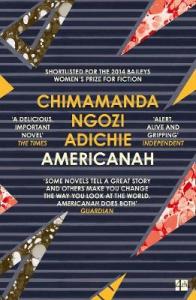
Americanah

Americanah – Chimamanda Ngozi Adichie, 2013

Why I’m excited about it:

Firstly, the cover of this book is beautiful and I like staring at it. Secondly, Adichie is a supremely articulate and intelligent woman. I loved her TED talk about the importance of feminism, the importance of teaching boys about gender equality and deconstructing toxic masculine stereotypes, and I encourage everyone to watch it. You can do so here. Even though this talk has been seen over 5 million times, Adichie is primarily a very successful writer of fiction. I have never read any of her novels or short stories before, and Americanah looks like a great place to start. The novel follows a Nigerian couple separated by war and dictatorship in their home country, who are forced to build new lives separately in the USA and UK. The novel tracks their separation, new experiences abroad, and their reunion. The novel explores the brilliance and pitfalls of globalization including, most specifically, the burden and barriers of race that Africans experience in the West, something these characters in particular don’t feel keenly in Nigeria. Americanah feels like it’s going to be an important, challenging read and I am ready for it.

Love Note – A (Legolas) Mug of One’s Own

Over the weekend, I realised that this beautiful piece of crockery (see photos) is over 15 years old and my head nearly exploded. What better way to commemorate and celebrate it than to write a Love Note? None, I think you’ll agree.

Whilst it has always been inherently more acceptable to fawn over Aragorn, Boromir or (in my case) Haldir from the Lord of Rings, who are all obviously and exceptionally lust-worthy, I have always had an incredibly soft spot for Legolas. Yes, I think it’s problematic to my ego that he has better hair, cheekbones and skin than me; but there was something about his inspired use of a bow and arrow, his bilingualism and his intuitive power of interpreting tree emotions that really captured my attention when I first saw the Lord of the Rings films aged 10.

1d14dc87060b176c6040ed1c02ee74fa

In the years that have since passed, and the numerous re-watches they have brought, I have noticed that Orlando Bloom’s line delivery perhaps isn’t as slick as his hair and his archery skills are actually impossible (you can’t shoot more than one arrow at once and expect them to both go in a straight line, more snaps for the visual wizardry at Weta). Nevertheless, my love for Legolas has been immortalised in this exquisite, now slightly ageing mug.

DSC_3632

There he is, looking calm and slightly perturbed on the field of battle with his bow and arrow, the sepia tint adding historical and emotional weight to the whole situation. What is wonderful about Legolas, as with many of the rest of the Fellowship, is that he is willing to commit to a cause that is bigger than himself. From looking at his mug on this mug, he isn’t as consumed with his cheekbones and maintaining his lovely hair as people would have him; he is a representative for all the elves, putting his life on the line to rid the world of absolute fascist power, destruction and despair. He may not carry the charisma of Aragorn, but he carries the wisdom that 2931 years inevitably entails, so there is little wonder that he sometimes appears aloof and impenetrable. His camaraderie with Gimli by the end of the trilogy is the stuff of literary and cinematic friendship legend.

78179c5d329f1b75656e2c32f740a280

To say that this is my favourite mug is an understatement. Whenever I have felt anxious, this is the mug I have reached for; the mug that has seen me through the entirety of school, university, the existential, economic and sartorial chaos of post-adolescence, and, of course, Brexit; the mug I have proudly presented full of tea or hot chocolate (never coffee) when treasured friends and family have come to stay; the mug that has helped me to nurse myself and others back to health through the tens of colds, sniffles and lurgies that have snottily bloomed over the years; and the mug that has allowed me to proudly live my Lord of The Rings love on a regular daily basis.

One of the many wonderful things about this mug is that it can help ascertain and flex the depth of knowledge and understanding of the Lord of the Rings franchise. The keen-witted amongst you will notice that Legolas does not actually say the line, ‘I do not fear the dead’, which is printed on the inner rim of the mug.

DSC_3623

In fact, no one does. The closest anyone gets to saying this line is Aragorn in The Return of the King, who declares ‘I do not fear death’ as he descends into the Dwimorberg mountain to secure the allegiance of the Dead Men of Dunharrow.

tumblr_n07jwfpWBJ1r8dxhoo1_400

Additionally, this mug purports to be merchandise (unofficial I realised in light of these inaccuracies) for The Return of the King and yet from the armour of the enemy soldier looming behind him, I can deduce that, here, Legolas is fighting Uruk-Hai. This means this film still of Legolas actually comes from the Battle of Helms Deep in The Two Towers, where he, Aragorn, Gimli and Gandalf the White fought alongside Théoden of Rohan against Saruman, who helped to birth this breed Uruk-Hai in the first place. Not in The Return of the King.

DSC_3621

You may think that, in light of this, what is effectively, a cheap, inaccurate, probably knock-off mug is not really worth my un-ending love and devotion. In actuality, it makes me love it all the more. It is imperfect, evidently tried hard and just wants to serve up something warm and comforting, which it does every single time. I subscribe completely to Marie Kondo and basic tenets of Shinto philosophy that we must endeavour to surround ourselves and display in our homes belongings that spark joy in our lives. This mug helps to alleviate the doubts, frustrations and fears of my day: it is my absolute pleasure to bring it out and let it warm me.

DSC_3628

Love Note – Graphic Novels

The world is full of dark, difficult and complex issues that need to be sensitively and appropriately discussed. War, genocide, abuse, loss and our hopes of building a better life for ourselves are all incredibly difficult conversations that need to take place: but how? Is there are right way to talk about these things? How can we ensure that we get the greatest insight into the emotional and critical upheaval when unimaginable things happen? This is where art and literature have always been important. Film, visual art, poetry and novels have always helped to expand our understanding of what it means to experience life and all of the social, political and archetypal challenges that we face. Representation of experience is crucial in helping us to understand the world around us, but when what we are talking about is so traumatic or challenging, it is even more important to think about how these are presented.

Graphic novels, otherwise known as comics, are an almost niche area of textual production that are, in my opinion, some of the best media for representing conflict and its fallout. Edward Said, in his tribute to Joe Sacco’s Palestine wrote that:

‘In ways that I still find fascinating to decode, comics in their relentless foregrounding […] seemed to say what couldn’t otherwise be said, perhaps what wasn’t permitted to be said or imagined, defying the ordinary processes of thought, which are policed, shaped and re-shaped by all sorts of pedagogical as well as ideological pressures. I knew nothing of this then, but I felt that comics freed me to think and imagine and see differently’.[1]

Graphic novels help us to ‘see differently’ because they are a hybrid form that combines accessible, but no less wonderfully ambiguous and complex, art with punchy storytelling. They give an imaginative and, at times, extremely personal telling of stories, bringing drawings and language into conversation. Fragments of images, language and spatial organisation on a page builds an almost compulsive narrative that can at once expose and explode systemic injustice and power structures (what are complicit with Said’s ‘ordinary processes of thought’), whilst also attempting to make sense of the personal experience within them. I don’t think it’s a coincidence that some of the most famous graphic novels are autobiographical memoirs, which focus on the experience of the individual against the backdrop of something much greater and, oftentimes, misunderstood or difficult to represent. We have two confusing and compelling worlds clashing, the public and the private, and the graphic novel attempts to navigate us through both.

I find reading graphic novels to be an incredibly immersive and compelling experience. I recently finished reading Malik Sajad’s Munnu and had to share my thoughts on this text and some of my other favourite graphic novels. These texts take us to the depths and fringes of human experience, re-write what we think about the world, countries within the world, and the people within them. They blow open preconceptions and stereotypes that we are fed, and my understanding of conflict and world history, is all the more rich and nuanced as a result.

Maus, Art Spiegelman, 1980


Maus


Maus is one of, what I consider to be, the Holy Trinity of graphic novels. It portrays Spiegelman as a young cartoonist, interviewing his father Vladek about his experiences during the Holocaust. The comic charts Vladek’s survival of Nazi atrocities, but also portrays Spiegelman’s oftentimes strained and difficult relationship with his father. The two regularly butt heads in ways family members often do when a deep amount of love and respect is patched over with trauma, neurosis and unrealistic expectations. Notably, the characters in Maus are all presented as animals to represent their different ethnic groups: Jews are depicted as mice, Nazis as Germans and Americans as dogs. One of the panels that stood out most to me is one that presents Spiegelman himself wearing the mask of a mouse, sat at his desk, talking about the opportunities that have come with his novel’s publication. Around him are littered the bodies of Holocaust victims.

maus2

This panel suggests that through the production of Maus, Spiegelman has assumed almost unwanted ambassador status for his presentation of Holocaust testimony. The artificial mouse mask, tied at the back of his head, points to the idea that in the telling of this story, he has almost performed his Jewish identity, and become a spokesperson for Holocaust victims and survivors in the process. He has achieved acclaim and appreciation off the back of so much death and horror, signified by the cadavers gathered around him and his drawing desk, yet still struggles to maintain his sticky relationship with his father. As a result, the dissonance between his success and the emotional burden his success has become weighs heavily on him, entangled as it is with feelings of guilt, misplaced responsibility and fraudulency. The Holocaust is such a difficult and upsetting subject to discuss and represent, and Spiegelman demonstrates great sensitivity and self-awareness in his handling of such a traumatic and barbaric event. The novel is not only a historical document of his own father’s survival, but also provides a platform for conversations about how we successfully represent the un-representable, and all the responsibility that brings.

Palestine by Joe Sacco, 1996

palestine cover

The second graphic novel in the Holy Trinity follows a Joe Sacco, an American journalist, travelling to Palestine and the Gaza Strip to witness and interview oppressed Palestinians during the Intifada. In the West we are given a very limited idea of the history and lived experience of Palestinians under Israeli occupation on the West Bank. This graphic novel has been hugely influential in its multi-dimensional perspective of conflict; and especially those conflicts that receive little traction in the news or are obscured by global and media power players. Sacco gives voices and faces to the seemingly unending hardship on the West Bank and in the Gaza Strip that easily bypasses the consciousness of many in the West. The violence and terror that Palestinian men, women and child experience on a daily basis is front and centre of Sacco’s novel, as he tracks his own journey from bystander and objective interviewer, to witness.


Palestine


Persepolis, Marjane Satrapi, 2000 and 2014

Persepolis cover

This novel is the third graphic novel in the Holy Trinity. Persepolis blew open what I knew and understood about Iran and Iranian history. As far as I was aware, when I first read this novel in 2010, Iran was a rogue bogeyman country, intent on making nuclear weapons to blow everyone up and destabilise the Middle East permanently, and that was the way things were and the way things always had been. As with my original perceptions of the Palestinian conflict, this graphic novel proved this idea of Iran to be completely limited and short-sighted. Through the story of her family and childhood, Satrapi presents Iran as a vibrant, secular country before the Islamic Revolution, and depicts the horror of war as Iran and neighbouring Iraq are drawn into a deadly conflict. She presents the oppressive practices and rules enforced in school and in public, in particular regarding women’s rights, whilst struggling with her own direction in life, with her time in Europe marred by racism and homelessness.

Persepolis

Persepolis is a coming-of-age story like no other, offsetting universal teenage angst and confusion (the start of The Vegetable chapter with panels of Satrapi’s face changing through puberty spoke to me like little else) with religious extremism and Western xenophobic bigotry. The novel provides both creative freedom for Satrapi to explore her own personal story and to shine a critical light on the injustices and pervasive power structures that successfully control people in both the East and West. At the same time, the graphic novel, with its black and white colour scheme and regular panels, successfully conveys the claustrophobia of living in a world where you are penned in by cultural expectations, conflict, bigotry and your own demons.

embodiment-1


Munnu: A Boy from Kashmir, Malik Sajad, 2015

Munnu

In the tradition of Maus, Persepolis and Palestine, Munnu follows the coming-of-age of the eponymous Munnu, the youngest member of a family living and hailing from war-torn and devastated Kashmir. In a similar vein to Maus, Sajad uses animals, specifically Kashmiri deer, to highlight Kashmiris’ endangered status as a free and independent people. The novel balances the intricacies and tensions surrounding the conflict and hypocrisies between Kashmir and India, Kashmir and Pakistan and amongst Kashmiri resistance groups, whilst also exploring family, existential anxiety and trauma as a result of conflict, and the power of cartoons to grant personal freedom. The final panel is particularly unnerving and unsettling, and I was most touched by young Munnu grappling with his fear of death. Munnu also critiques the West’s seeming inability to comprehend the severity of the conflict in Kashmir and its ineffectiveness in using diplomatic pressure and might to bring about a resolution.  I recently discovered that Munnu has not been published in India, which is very telling about the current tensions unfolding in Kashmir as a result of the occupation and how powerful, and thereby threatening, this graphic novel has been in exposing them.

eu-embed-sajad-malik


Red Rosa: A Graphic Biography of Rosa Luxemburg, Kate Evans, 2015

51DFPaAiudL._SX348_BO1,204,203,200_

Rosa Luxemburg is a giant of the Left and nowhere else has her life and work been so beautifully presented and so articulately explained than in this graphic novel. Luxemburg’s philosophy that Marx was not beyond criticism, even though she took her political and economic position from his work, is a lesson for us all: nothing is beyond critical interrogation, especially the people we most admire and whose thinking has been the most influential for us. The concise and accessible exploration of Luxemburg’s philosophy includes her radical pacifism: my favourite panel coming with Luxemburg’s response to the First World War: head bowed, she is disturbed and weighed down by the destruction and wanton chaos of a war that will end nowhere and will result in the deaths of millions of working class people. Evans also gives us an insight into Luxemburg’s personal life, the incredible obstacles she overcame to become a writer and political leader, and her relationships with close friends, family and lovers along the way. This graphic novel, and its subject matter in Luxemburg, is absolutely inspiring.

RedRosa_extract_TheNation_img


Other graphic novels to explore:

Dragonslippers: This is what an abusive relationship looks like, Rosalind B. Penfold, 2006

Diary of a Teenage Girl, Phoebe Gloenecker, 2002

Threads: From the Refugee Crisis, Kate Evans, 2017

Tamara Drewe, Posy Simmonds, 2007


[1] Homage to Joe Sacco, http://journeyofideasacross.hkw.de/anti-narratives-and-beyond/edward-w-said.html [accessed 22/05/2019].